Game Ramblings #132 – Atelier Ryza: Ever Darkness & the Secret Hideout

More Info from Koei Tecmo

  • Genre: JRPG
  • Platform: PS4
  • Also Available On: Switch, Steam

I’ve always been a general fan of the Atelier series, even back to the days of the PS2. There’s always been a fun loop there of going out into the world, finding materials, then coming back and using alchemy to create new items and gear. However, it wasn’t often that I was actually completing the games. They were generally pretty mechanically light, so while they were fun, they wore out their welcome before the end. Ryza is the one that feels like they’ve finally pulled it all together. This is still a distinctly AA JRPG, but improved combat and the return of the fun alchemy loop have really moved the series forward in a good way.

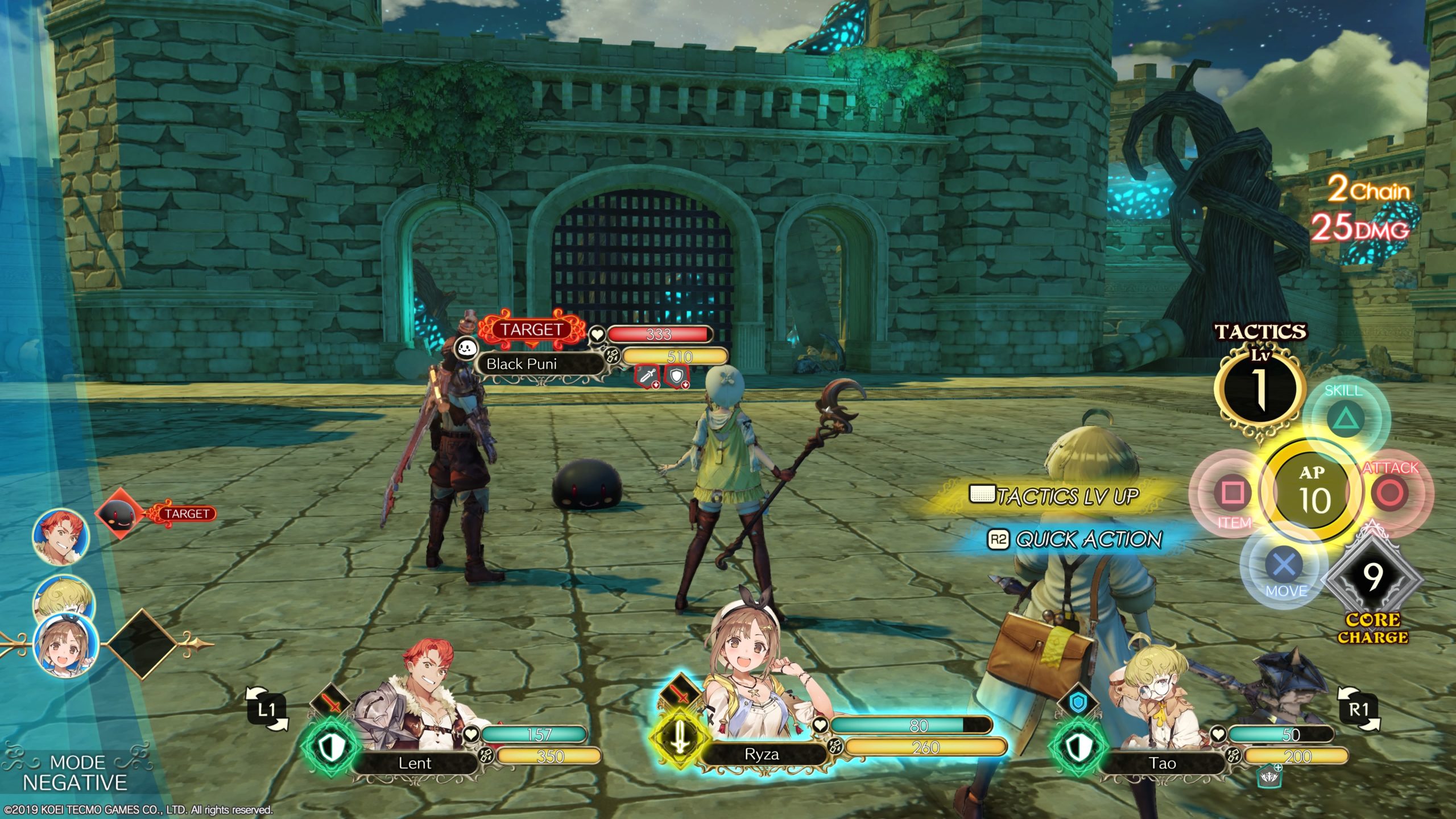
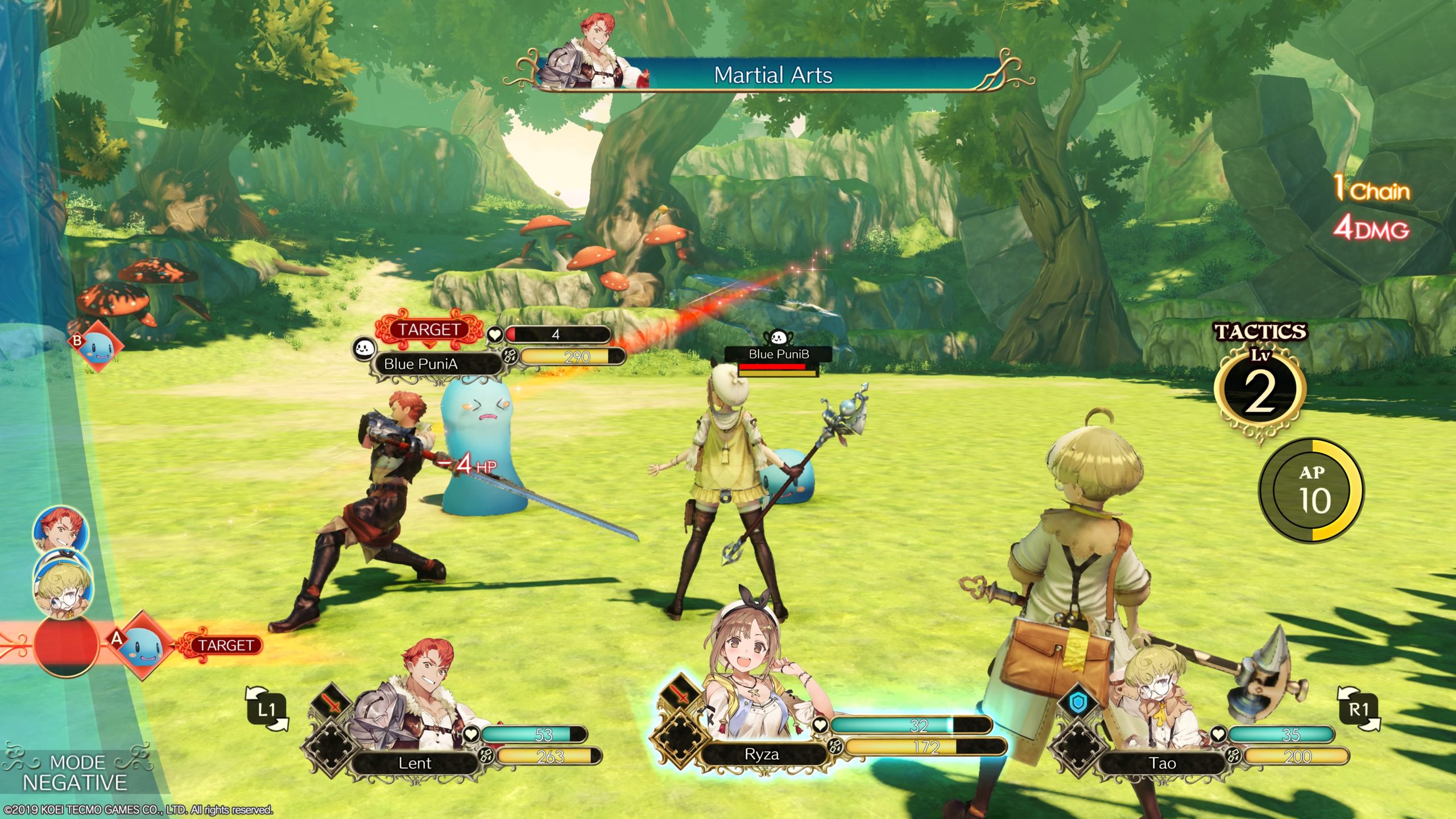
If all a JRPG has is good combat, it’s more than likely going to be a game that I enjoy, and Ryza really went and nailed that. This one has an interesting mix of different mechanics at play. It’s got a real time turn meter, a mix of skills and items for offensive and defensive maneuvering and front/back rows for some light positioning. Those mechanics should feel instantly familiar. It also brings in the stun meter that Final Fantasy 15 and 7 Remake used. What it does that’s unique is the tactics meter, combined with action points.

The action point system feeds into the rhythm of combat, and that’s something that I’ve mentioned here before. When combat is working well it feels like a rhythm, and that comes together here. Action points are built up by basic attacks. You’ve got two choices – you can use them to execute skills or you can save them up and increase the team’s tactics level. Increasing the tactics level makes skills stronger and opens up longer basic attack chains, at the cost of losing all existing action points. For boss fights, this is where the rhythm comes in.

You can play defensively and keep your action points around in case you need to dump them into heels. On the other hand, you can increase your tactics level to build up AP faster and make your skills stronger, at the potential cost of not having any AP ready for healing if the boss hits you hard. This puts the boss fights into a situation where you kind of play in waves – dump a bunch of AP to get a tactics increase, then hold back a bit to refresh the party before going back on the tactics offensive. The boss will then occasionally go into a mode where they have a telegraphed nuke attack, and at that point it’s all hands on deck dumping every item and skill attack into the boss to try to stun it before the nuke.

When executed well, this back and forth is extremely gratifying. You get to a point where you can really plan out rounds ahead what you’ll need to be doing, what your plan will be, and how to get there. When it turns out right, it’s as good as any turn-based JRPG out there. When it turns out wrong? Well, you learned something for the next attempt.

The alchemy side is just as gratifying, even if it’s where some UX improvement needs start to show up. Everything you do in the game ends up being important to alchemy. Killing things gets ingredients, gathering things in the world gets ingredients, side quests and activities get ingredients. You take all of that junk back and spin it into things that are actually useful for you. Crafting the right combination of ingredients to get a new weapon with a ton of extra stats? Fantastic feeling. Use the right material to get some life drain onto your gear? You’ve just actively made combat easier. Want to go into a high attack power glass cannon build? It’s up to you, add +attack instead of +defense to your armor, and play it how you want to. It’s a system that is incredibly good at allowing you to tailor your builds to how you want to play the game, and it really doesn’t do anything to prevent you from trying extremely stupid shit. It’s the best thing that can happen when a game lets you go nuts and in response the game rewards your freedom and exploration.

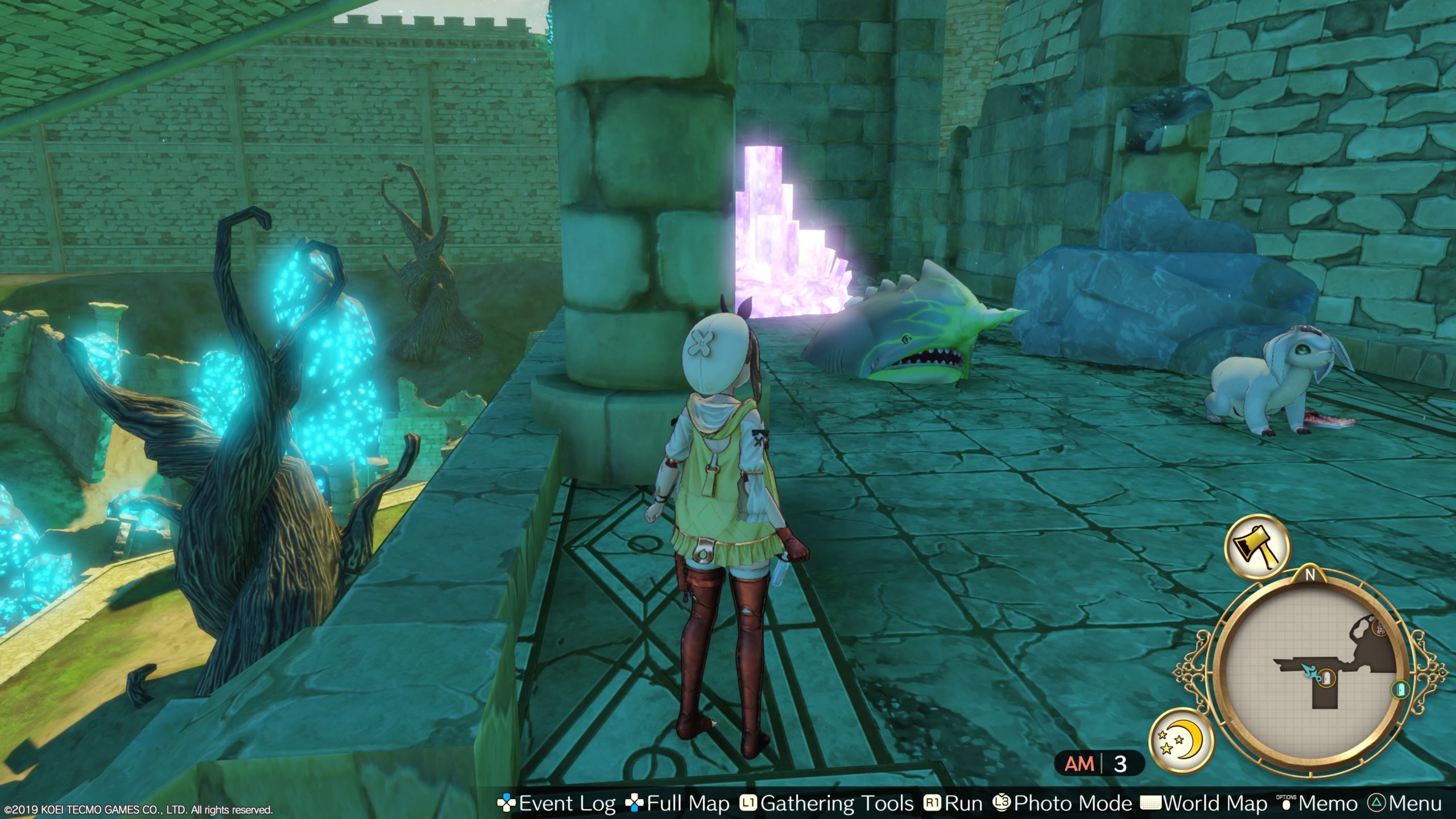
My main problem is that the user experience around this could use some cleanup. Need a specific crafting item? Well, you can dig through the journal to find out what zone it’s in. What it doesn’t tell you is where to get that item (is it in a rock? a plant? a tree?) or what action is needed (do I hit the rock with a hammer? an axe? my staff? These each grant different items). At the same time, if the item requires a crafted item you can’t just click on that item to start crafting it. You’ve got to dig around in your alchemy list and find it manually. When you start getting into having 100+ recipes to choose from and hundreds of potential materials, it’s a huge hassle to start figuring out where to get or make all of these things.

Luckily for me, once I’m down to complaining about small user experience cleanup, it’s really a sign that a series has reached a great point. I’m no longer worried about combat being a hassle or poor story getting in the way. I’m simply wanting things that work well to work even better, and Ryza has gotten the Atelier series to that point. This is the best that combat has been in the series by a long shot, and it’s combined with what has always been a fun alchemy loop to really push this series to a new high.

This also now means I can get around to starting Ryza 2….

Game Ramblings #124 – Yakuza: Like a Dragon

More Info from Sega

  • Genre: JRPG
  • Platform: PS4 / PS5
  • Also Available On: Xbox One / Series, Steam

It shouldn’t be a surprise that this series successfully moved into the JRPG genre, but it kind of is. The previous titles had a lot of things typical of the genre already in place – great story, characters, and settings, your typical array of shops for items and gear, a strong levelling system, lots of things to do on the side. However, they were always first and foremost an action game, and since they moved to a new engine on the PS4 they were perhaps the BEST action-focused series out there. Despite it all, they changed to a JRPG and still ended up with something that feels straight up fantastic.

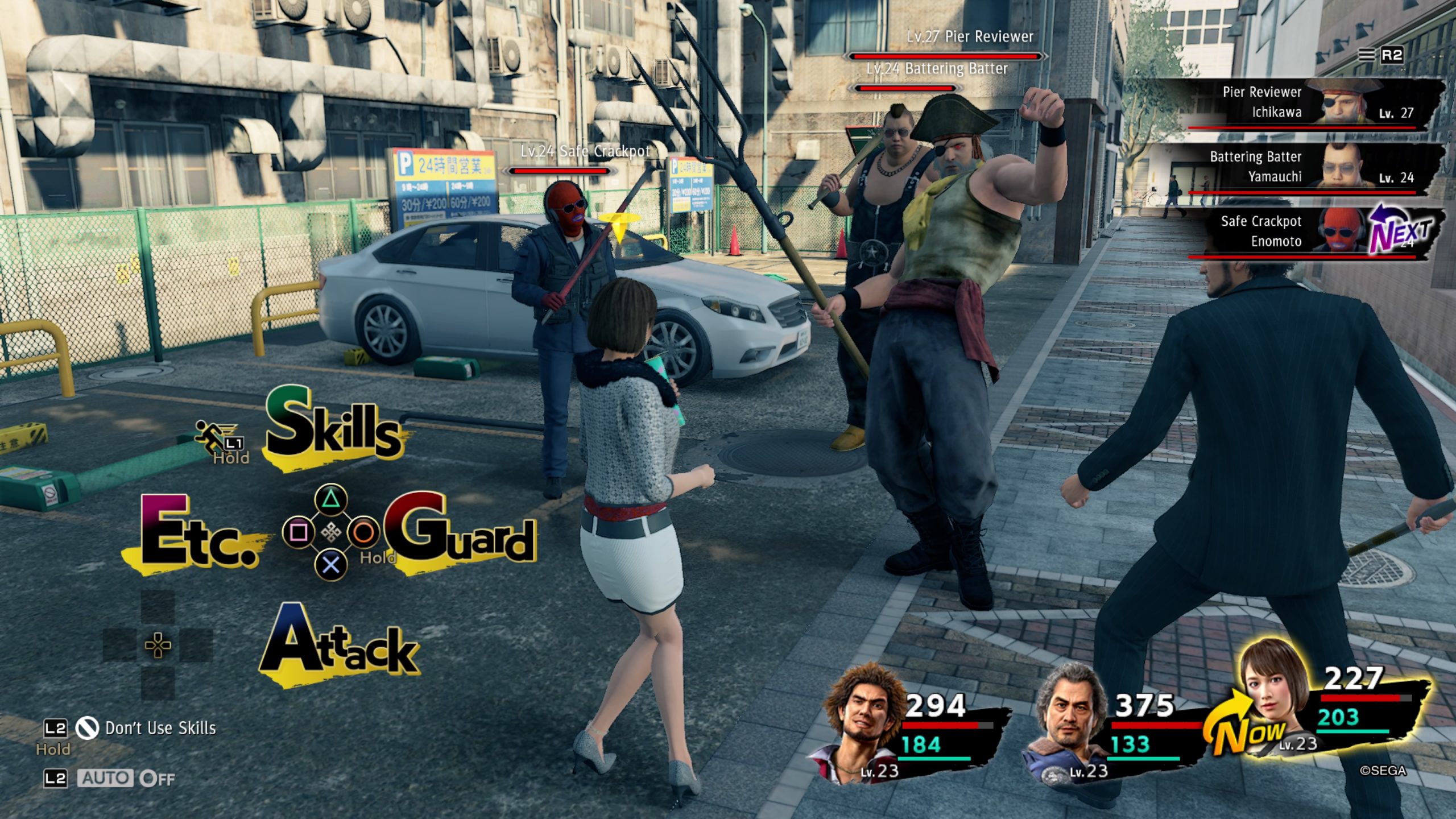
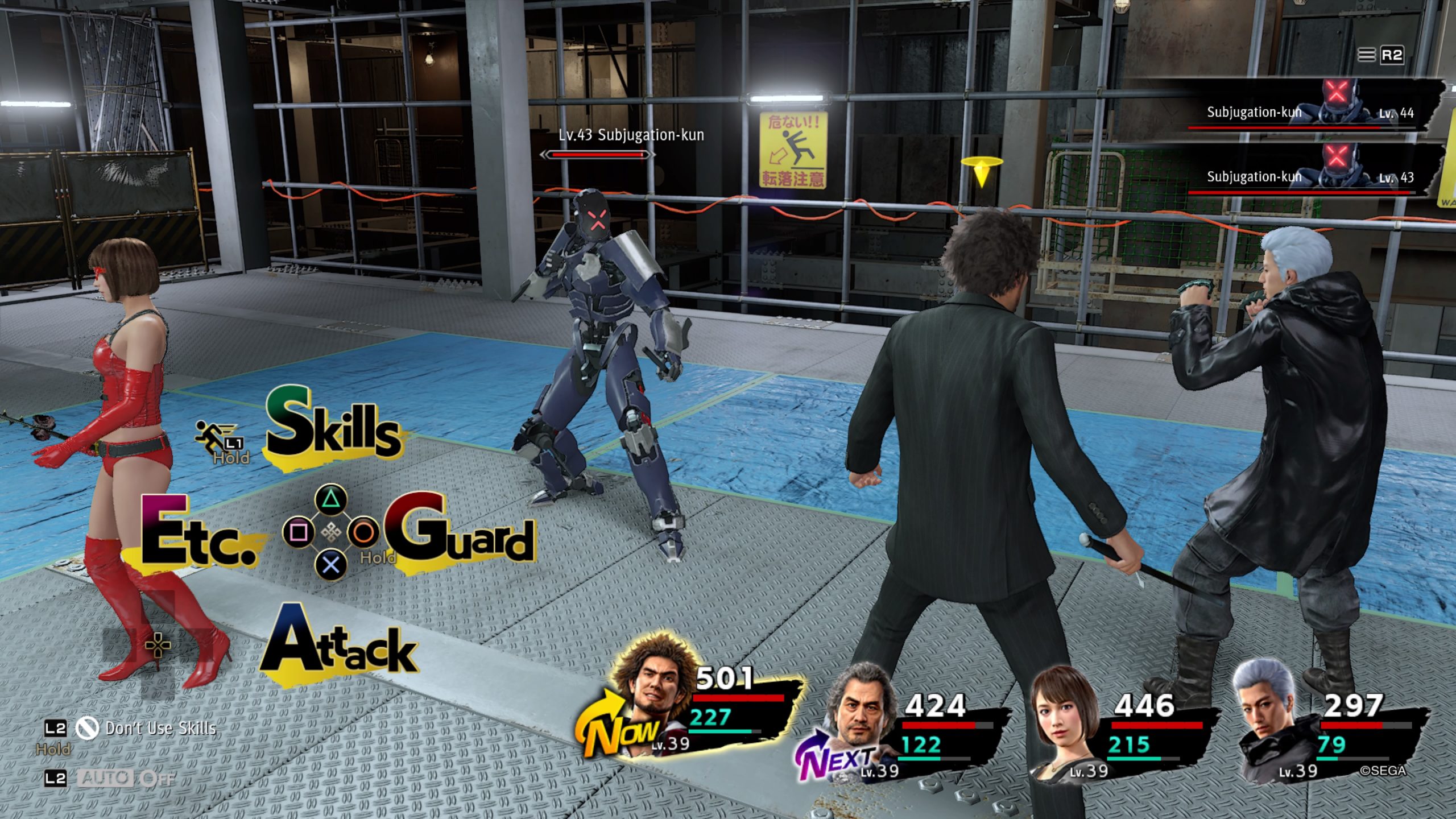
Given the change, I guess combat is the place to start. The thing to really know is that the entire genre switch and the fact that I’m up there fighting a 7 foot tall pirate all comes down to one thing – the lead character is a huge fan of Dragon Quest and has delusions of leading a party of heroes throughout Japan, just like in the game.

How fucking perfect is that?

It sets your expectations of what combat should be – purely turn based. Now, it’s not exactly as classic as Dragon Quest, and that’s a good thing. It’s got a timing-based defense mechanic similar to games like Super Mario RPG. It’s got a D&D-style opportunity attack where enemies can interrupt you if you try to run past them to attack someone else. It’s got a strong job system with job-based skills, leveling, and permanent stat gains. It’s got weaknesses and resists to different types of weapons. Basically, it takes a bunch of features from a bunch of JRPGs, and wraps it all into a combat system that feels classic, but with a modern touch. And it works really well.

I think more than anything, the reason it feels good is that everything still feels impactful. There’s a clear sense here that they’re bringing their action knowledge to this genre in how things react to combat. Big hits don’t just throw a big number, they cause knock downs. Knockdowns don’t just cause an animation – they put enemies in a weak state that causes them to take increased damage. When characters go flying, they don’t just fly, they also hit and damage anyone else they hit (including knocking down your own friends if you aren’t careful). If there’s something in the environment, your attacks can take advantage of that and use it instead of your weapon. It’s everything that made sense and worked well in an action combat system, but now just turn-based. It’s a bit slower, it’s a bit more strategic, it’s a big less reactionary, but it all feels fantastic.

That’s not to say that they completely converted over well to a JRPG-style. This game’s biggest issue is really around grinding, and that happens in two places.

The first is really around equipment. you hit a point fairly early in the power curve of the game where you just can’t buy better equipment. I hit it around the 60% mark of the game. From that point on, you have to craft better equipment to improve gear stats. Crafting is fine on its own, but the crafting building requires significant investment to upgrade it far enough to craft the end game gear. From there, the gear then also costs a ton of money and crafting items to put together. I did one stretch to do an armor upgrade pass, and it required me to do about 4 million yen in investments, 2 million yen per-piece of armor, and approximately another half million yen in crafting item value. Keeping in mind that normal fights were dropping 3-5 thousand yen, you can see the issue.

Around the same time, I started needing to do XP grinding because the bosses were jumping 5-10 levels ahead of me. At this point I was probably needing to get around 100 thousand XP per-level and only getting around 1000 XP per fight. Again, you can see the issue. I could get some more permanent stat boosts by switching jobs, and taking advantage of the quick early job levels when switching, but it was a pretty slow process overall.

At this point in the game it basically resulted in me using one specific spot, floors 16-18 of the Sotenbori battle arena. That could net me about 300 thousand yen and about 150 thousand XP. It was fast, it was efficient, and it was boring. It was clearly what was intended for fast leveling, but it felt awkward compared to just having a higher XP/money curve in the wild and letting the player more naturally level.

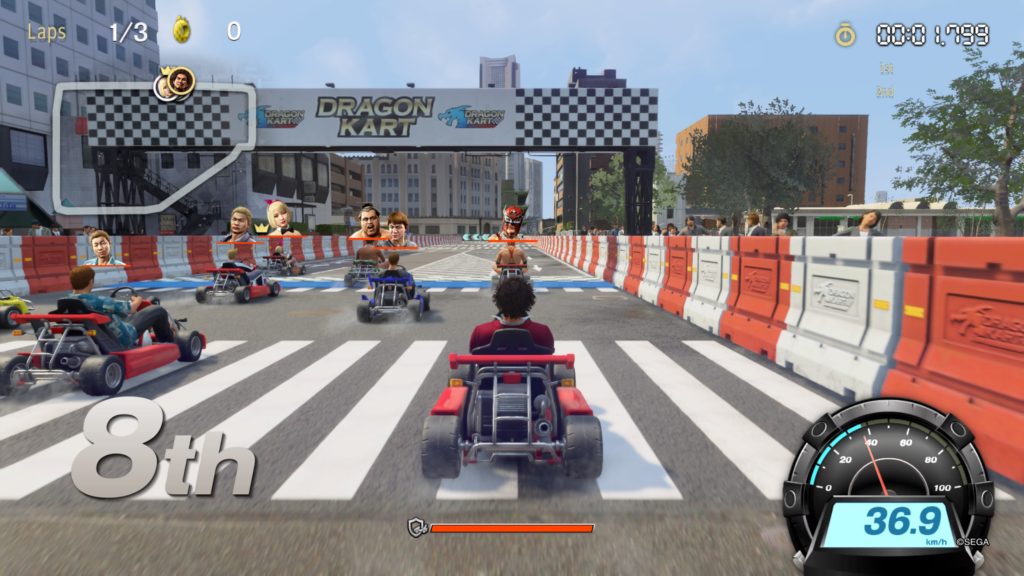
On the other hand, the side content is both plentiful and a lot of fun if I needed a distraction. Some of it is just side quests where I get some entertaining side story content. Some of it is your standard item collection faire. However, there’s also things like the Mario Kart inspired mode above to keep me distracted. There’s also a really deep management simulation worth noting as another good distraction (and source of money later on in it). I knew I could fall back on these things when I needed a break, and it allowed me to fall off of doing the same content grind on repeat while still having some benefit to my team in the long run.

Ultimately this isn’t a perfect transition from ARPG to JRPG, but as a first-try at the genre I was super impressed with the game. It kept things that worked really well in the series in the past, gave a pretty entertaining reason to switch genres, and ran with it. If they felt they had reached the peak of what they thought they could do as an action title, this certainly gives them a strong reset. It also puts them in a place where they still have room to improve. If the next title is still a JRPG, they could do a much better job of managing their power and XP curves to make the experience more linear and less prone to slow grinds when power jumps occur. However, as a first-pass this is still one of the best JRPGs of the year and is definitely worth checking out if you’re a fan of the genre.

Game Ramblings #117 – Paper Mario: The Origami King

More info from Nintendo

  • Genre: JRPG-ish
  • Platform: Switch

This one was surprising to me, but only in ways that are relevant to the recent history of the series. If taken by the original game and Thousand Year Door, this being good isn’t a surprise. Even with Super Paper Mario, we saw some capability of the series to have spinoffs that are still quality. However, Sticker Star and Color Splash introduced combat focused on really obnoxious collectibles, and it felt like the series had gone off the rails. The Origami King in that regard is an oddity. It’s sort of an RPG, or at least feels closer to one than the last couple of titles. However, its progression isn’t based on XP, it doesn’t really have turn-based battles, and to some extent battles aren’t typically all that necessary. However, the systems in place – while not working great 100% of the time – still work well enough to make this one a really fun experience.

Being realistic, I guess the place to start with these ramblings is with combat. Combat has been the major downfall of the last couple of titles. In this one, it’s at times a blessing and a curse, but it’s at least unique and not surrounded by obnoxious collection anymore. The main catch for combat is that everything is based on setting up patterns in a ring. At the start of a turn, you’re presented with enemies pseudo-randomly placed on a ring, and with a limited set of moves you’re meant to slide and twist them into either a column for jump attacks or a 2×2 for hammer attacks. Do it right and you get a big damage boost. Do it wrong and you don’t.

That little detail though ends up being a blessing and a curse for combat. You want the damage boost because it lets you avoid taking damage yourself. It also results in you gaining a significant amount more coins in finishing. The reason you want more coins is so you can buy better items, since the upgraded attack items break every few battles. However, there’s no reason to need to buy a ton of items if you aren’t really battling. If you aren’t battling, then you won’t use the items and won’t need to battle to get more coins. It’s a weird sort of pull where combat for the sake of combat often feels super rewarding, but because your goal is to one shot everything it also ends up feeling inadvertently easy. Because you don’t really need to battle, you end up avoiding battles. Because you end up avoiding battles, combat feels inconsequential.

That said, there is something to be said for how satisfying combat feels when you do engage in it. Getting your board pattern right is a big positive gameplay boost. Seeing the big damage numbers is really gratifying, and even better when you see enemies explode in a flurry of coins and particles. This is enhanced by the typical timing-based bonuses from past Paper Mario titles where timing things just right gives you damage or defense bonuses in active combat.

However, bosses flip this all around. Rather than being in the middle of the board fighting outward, you’re starting on the outside of the board and moving inwards. You push and spin the board to line up a series of arrows and attack pieces to attempt to move you into the right position for maximum damage in a turn. Everything I’d read in previews of this game seemed to indicate that these fights could be grindy and boring, but honestly I found them anything but.

Admittedly, yes they can be long fights. However, they’re generally only grindy if you make them so. Each boss has a handful of core mechanics that really give you a ton of damage. Figure these out and you’re getting through the fights in a small handful of turns. Don’t figure them out, or don’t do your board setup right in a turn, and you could be in for a world of pain, or a turn with no damage output. From that perspective, I can see where some of the criticism comes from. In some cases, the mechanics at play are probably more vague than they should be. However, it’s incredibly rewarding to figure out one of these mechanics and really lay into a boss. Seeing a third of a health bar disappear in one turn will never feel bad, and this one definitely has that happen if you’re playing your cards right.

There were also a handul of real-time combat bosses that caught me off guard in the best way. The Blooper fight above is one example, where I’m dodging and jumping over different attack patterns trying to hammer the tentacles. Another example had me fighting a gigantic Papier-mâché Pokey while driving around a desert in a boot. These little real-time segments were never necessarily a core focus of the game, but had a habit of turning up at just the right time to let the game breathe a bit. They acted as a fun little challenge to tie into some portion of the story without forcing a turn-based fight. They stretched the overworld mechanics a bit to provide something the player could hop right in without a tutorial, but still be challenged in new and interesting ways.

As far as the rest of the RPG-ish stuff goes, it’s there in small ways that provide a power curve, but remove complexity from the genre. There’s no built-in XP system, but you’re provided fairly regular health and damage upgrade bonuses to give regular power growth. There’s no real gear system, but you can buy accessories to provide battle and world bonuses. There’s no weapon upgrades, but there’s an ever increasing strength of weapon items that you can buy, which do break, but cost far less in practice than the amount of coins you gain in winning a bunch of regular battles. It’s in an interesting place where they kind of take the RPG elements that work for the game, but don’t push into all the expectations of the genre. I’d be lying if I said I wouldn’t have preferred something more akin to Thousand Year Door here, but for what it’s worth it ends up working out well, and at the very least doesn’t end up getting in my way.

The rest of the experience is core Paper Mario, and if the battle system doesn’t scare you off, you don’t need to know anything here to know you’ll enjoy it. The origami visual style is phenomenally gorgeous, and they strongly use that to differentiate the paper people from the origami enemies. The writing is top notch and often laugh out loud hilarious. You’ll see creatures and characters from all walks of the Mario life, and you’ll see them in ways that are often very different from how they’re presented in the core platformers, but again that’s no big surprise here.

End of the day there’s really just one thing here to be said about this game – pleasantly surprising. The previous two games in the series really lowered my expectations coming into this one. As much as I was being cautiously optimistic about the combat, seeing another non-traditional turn-based system had me pretty nervous about the state this one would land in. Luckily, it landed pretty well. There’s definitely some oddities around how necessary combat ever is in this game, but engaging in combat is at least fun on its own. Even better, the boss fights are super interesting with some twists on the core mechanics at play within them. Again, I’d be lying if I didn’t admit I would have preferred a more direct sequel to Thousand Year Door, but for the time being this one still leaves me pretty happy.