Game Ramblings #218 – Trails in the Sky 1st Chapter

More Info from Falcom

  • Genre: JRPG
  • Platform: PS5
  • Also Available On: Switch, Switch 2, Steam

I played the original release of this game on PSP but admittedly it’s been long enough that I don’t really have much of a consistent memory of the experience. I do know I enjoyed my time with it, but I feel vaguely not enjoying the grind of leveling. Going into this I was a bit suspicious of whether that would happen again. Luckily what I found was a game that felt like a heavily modernized JRPG in terms of how it respects the player time, but this is definitely not a game without problems.

The thing that increasingly makes JRPGs live and die for me is combat, but not necessarily how good it is. It’s more often than not how much I need to engage in combat at this point. In particular, how much I need to engage in useless combat. I hate combat for the sake of combat because it feels like wasted time to me. The remake of Trails 1st really does a lot of good things to reduce that.

Similar to PSP, enemies are visible in the overworld, which on its own does a lot to reduce my need to engage in combat. However, there’s a number of things that reduce my need to be in combat. For one, there’s XP scaling based on level. At a surface level this allowed me to simply avoid combat with enemies that are lower level than me by knowing that the rewards are no longer relevant. On the opposite side though, this meant that I could effectively power level by engaging in combat with things higher level than me. What this really meant is that I was always in a level band that was relevant to the gameplay of the story around me. As a balance point it reduced my need to be in combat to just when it was important or worthwhile.

This is combined with the fact that you can do some basic real-time combat in the overworld, allowing me to mow through weak enemies simply to get rewards without being in the slower turn-based combat. If I needed specific items for cooking or Sepith, I could quickly dispatch a bunch of weak enemies and get them. This change also meant that running past enemies allowed me to simply run past them because the game no longer has the JRPG mechanic of battle starting immediately on first contact. It’s a small mechanical change with huge implications to the flow of the game.

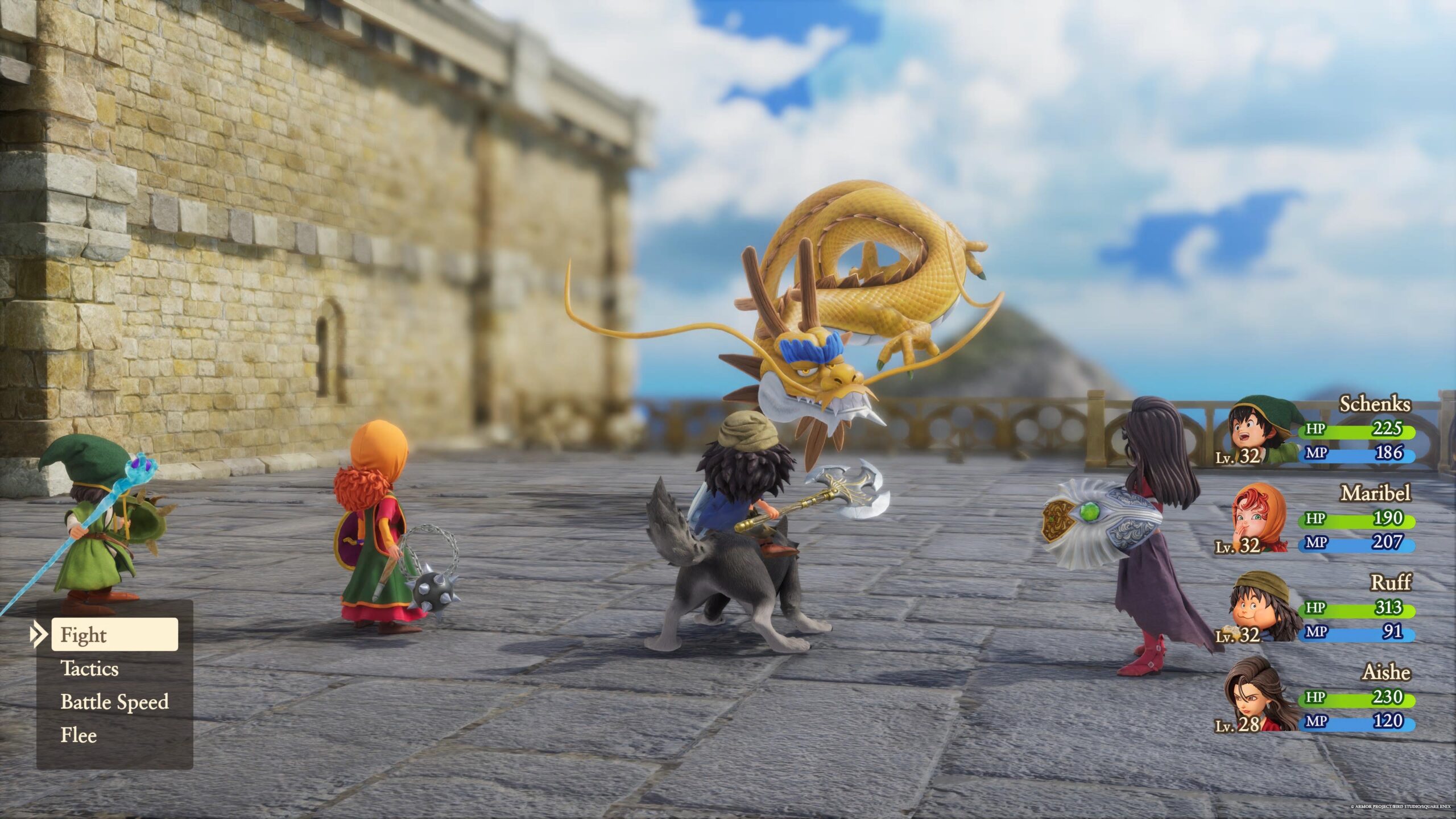
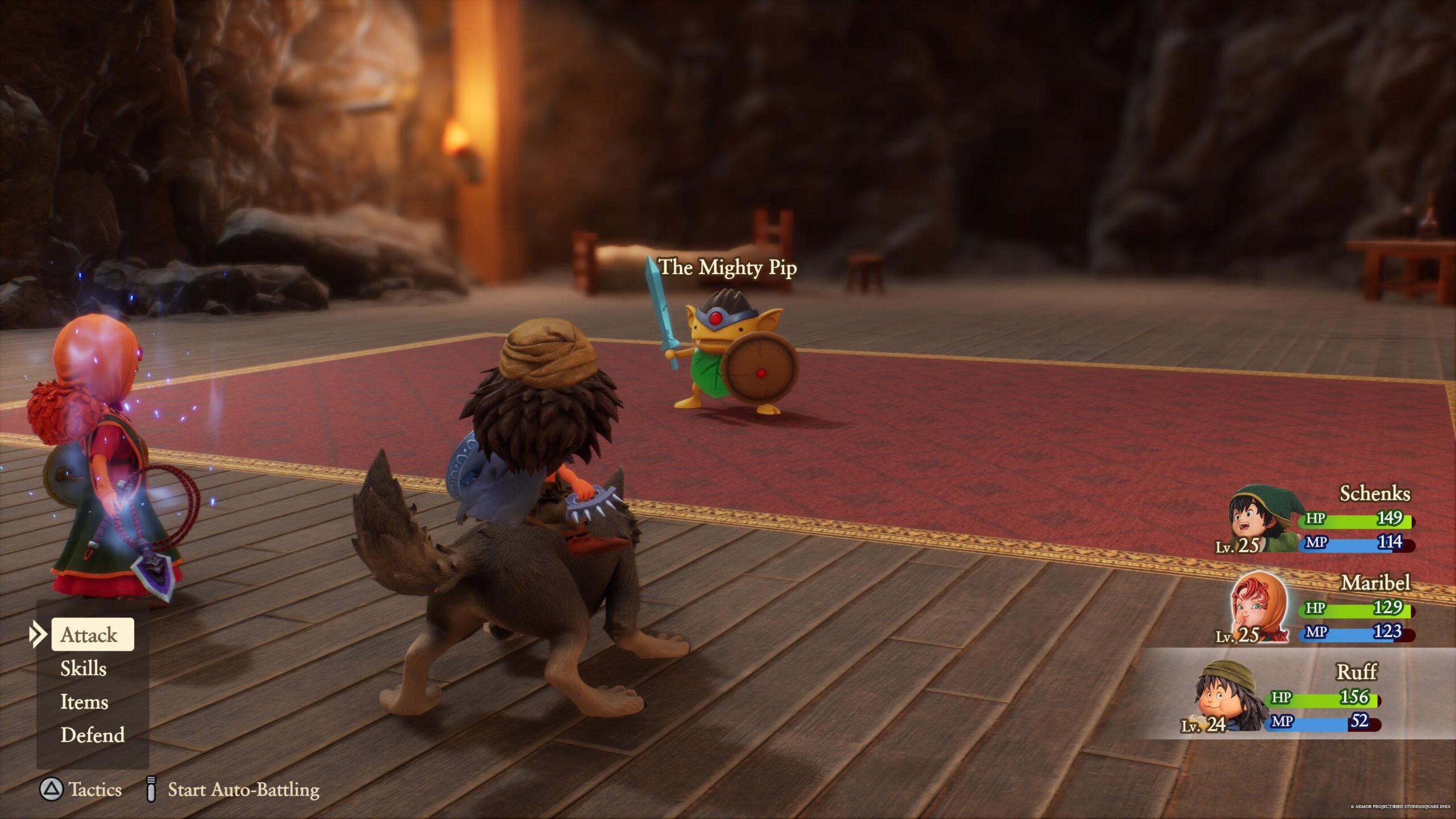
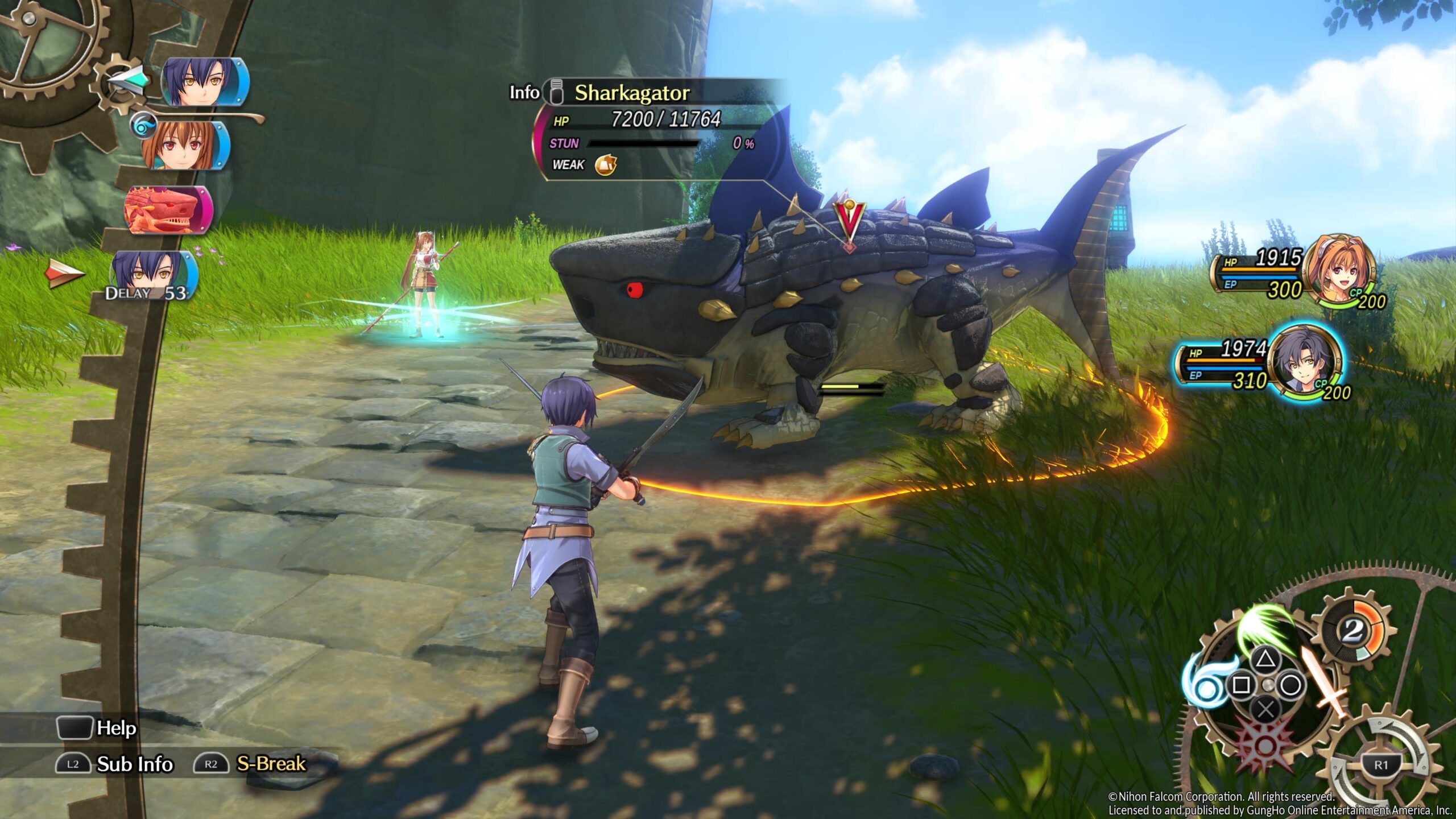
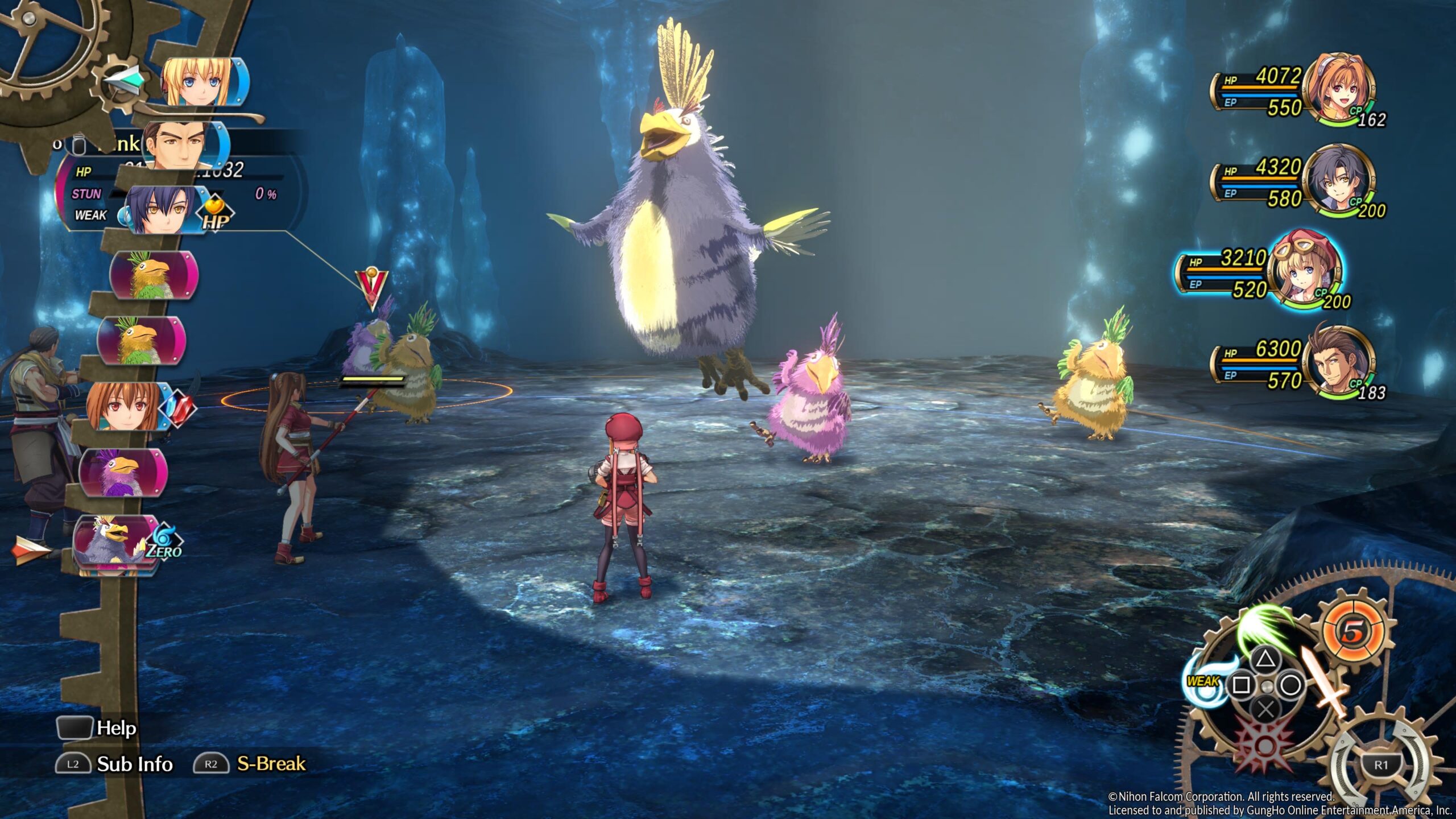
Once in combat, there’s then a highly enjoyable system in place. It’s the same type of combat on PSP where the player has a mix of skills and magic. However, it leans into two things that I don’t think are seen as much as I would prefer – positioning and turn order.

The player has a wide variety of shapes of attacks from AOE circles to lines to cones, as well as bonuses for some attacks from the side or back. All of this allows the player to enforce positioning as a benefit. There were many times where I would knowingly drag some of my own units into different areas in an attempt to pull mobs into the line of fire and increase total damage output. The flip side of this is that defensively it’s also important to pay attention to where magic attacks from enemies will be so that you don’t leave your own party in range of attacks.

The reason this is important is that turn order is not static and magic attacks are not always immediate. Under normal circumstances magic attacks require a turn to start and a turn to execute. While that is happening, it’s obvious where the attack will go due to targeters on the ground. This gets into turn order manipulation. Some attacks can delay turns or reduce player “speed” that leads to determining turn order. Attacks can be cancelled by executing some moves that impede the target. Stuns can cancel a target’s turn if timed correctly. Basically, combat becomes a balance of getting damage out while also attempting to delay or cancel the enemy’s turn as much as possible, allowing the player to get through any battle with as little damage taken as possible.

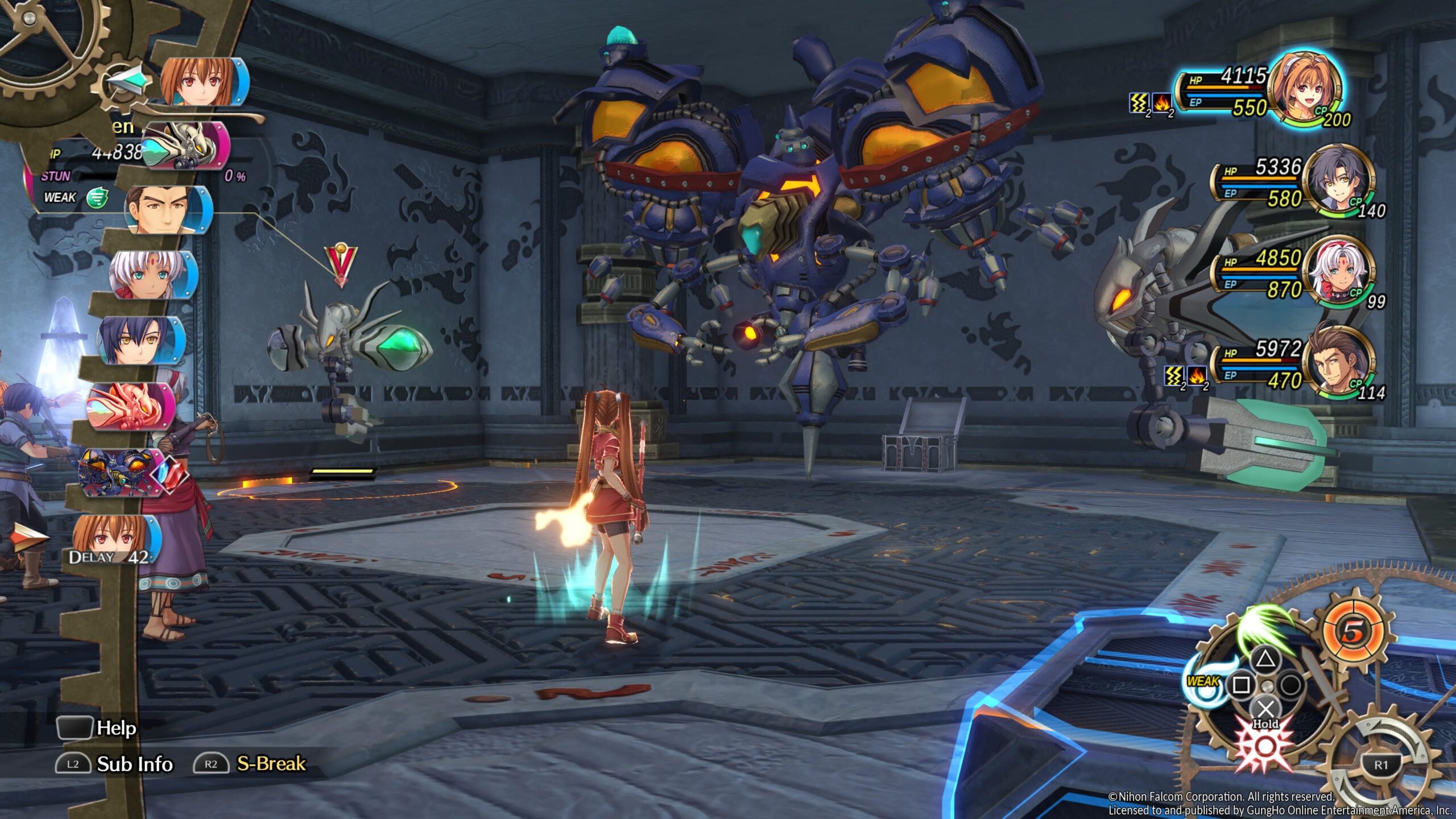
Generally speaking, this all works great – right up until it doesn’t. That gets into my one big problem with the game. The boss fights in the game are just not tuned well, and it all comes down to the rage mechanic. Pretty much every boss in the game has some rage trigger where they gain a ton of basically every stat in the game. They gain speed to attack more often, typically several turns in a row. They gain attack and defense to be tankier and hit harder. They gain healing buffs to get their HP back up. It’s a good idea to make boss fights more dynamic. The issue comes in with the fact that the rage mechanics are universally able to send the player’s party from 100% to dead without the player even getting a turn to mitigate the situation.

It’s incredibly frustrating to be 5+ minutes into the fight, feeling like you’re in control, then having a rage turn kick in and send the party to its death. If it was generally avoidable that would be one thing, but a lot of them simply happen because of health drop. What ended up being my go-to was to just save all of my big attacks up until I had nearly stunned the boss, then dump them all at once. In a typical boss fight, I could get the boss to around 50% health, let it have a turn, then just absolutely nuke it with every attack I had – full 200 combat point attacks, party combo attack, etc – and get it to 0. That would generally avoid the rage mechanic, whether it was health based or due to killing off one of the enemy’s party members. However it was slow to grind out to the point where I felt comfortable doing that attack dump and when it didn’t work and I would be sent from 100 to 0 with no ability to do anything to prevent it, it was infuriating.

The nice thing is that unlike the original release, I could immediately retry the fight with lowered enemy strength. Boy did I take advantage of that option to just get through fights without the time spent on it again.

So I suppose at the end of the day this is a really good and generally fun JRPG that feels tuned to inherently screw over the player specifically during boss fights. I don’t remember that of the original, but I suspect that’s just a consequence of time since I played it. It’s so close to being a great game if a little more care was put into the tuning of boss fights. They can be difficult normally and still allow the player to actively avoid being nuked. It’s a thing I hope they look at before 2nd chapter comes out because it felt like the one thing heavily holding this game back.

Game Ramblings #204 – Clair Obscur: Expedition 33

More Info from Sandfall Interactive

  • Genre: Turn-Based RPG
  • Platform: PS5
  • Also Available On: Xbox Series, Windows

All this game really needs to be an all timer for me is more granular gameplay settings.

….ok lemme back up a bit, but this is truly going to be full on rambling today.

This game is simply exhausting. That isn’t necessarily as negative as it sounds. Really what it comes down to is a need to be focused at all times, and that ultimately leads into both the things that really burned me out on the combat in this game, as well as where I think they are a couple tweaks away from being simply a very good game into something that is truly timeless.

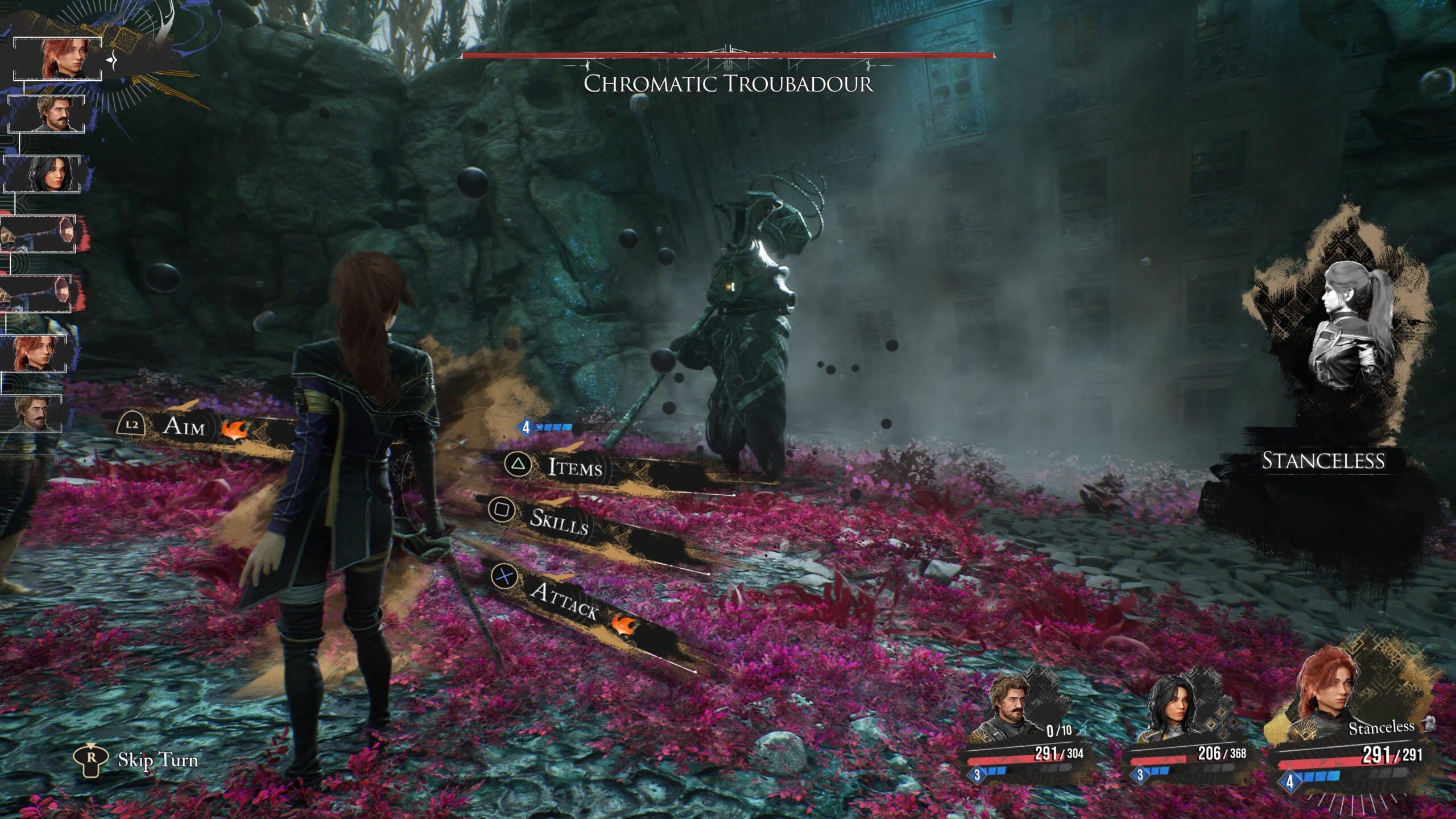
This game’s combat is really focused around actively avoiding damage. That’s something that’s been done before in JRPG-style combat, but it’s incredibly present here. Being hit in boss battles is often 20+% in one hit, and bosses often have entire attack chains, and later bosses in particular have multiple turns of entire attack chains, so you are always in a condition where screwing up your dodge/parry timing at the start of a chain is potentially immediately deadly. The problem for me is in how precise this all needs to be, and that’s totally a me problem.

Being extremely precise in this combat is a factor of a few things:

  • Learning the attack tells is part of it.
  • Leaning the specific timing is then part of it.
  • Quickly processing what type of defense you need to do is then part of it – is it a dodge, jump, or parry? You’ve got 4 buttons to choose from very quickly.
  • Consistently achieving that so you aren’t wasting your turns on healing is then part of it.

To some extent I just generally don’t think their combat tells are that well telegraphed. A lot of the animations do this thing where they run incredibly slow to start, then speed up without notice to do the attack. When you combine inherent input latency, frame latency to the screen, and inherent fatigue this can really quickly get to a point where I was just always a couple frames late on attacks. This is something that I think they got a better handle on later in development because later bosses particularly start making much better use of sound as part of the tells instead of pure animation, but it felt somewhat like too little too late. However, that really was not my core problem.

The issue that I consistently ran into was that whether or not I actually enjoyed combat or whether or not I wanted to spike my controller was generally based on how much sleep my 1 and 3 year olds let me get the night before. The very precise timing here both required very good focus, but also good memorization and reflexes. Those go away quickly with weird sleep patterns. That focus then causes me to mentally get exhausted quickly especially when I am already tired, leading to further degradation of my experience. Normally my instinct is to then reduce difficulty a bit, but this game simply has one setting – story mode difficulty. This does a few things, one of which is aggressively increase the dodge/parry timing window. The other is that it basically cuts damage by what felt like 90%. This is not what I want.

I see an opportunity here for the game to very quickly allow the player to tune combat to what their comfort level is:

  • They clearly have the tech to change incoming damage, so rather than being a core nuke on story mode why not allow the player to tune this a bit more? Frankly this isn’t something I wanted to change at all, but being able to tune this separate from timing would allow for more granular tweaks to my gameplay. This also then inherently opens up an opportunity for players that want a harder base level experience to take more damage without necessarily having to go to expert mode.
  • They also clearly have the tech to change the timing window on dodges and parries. I don’t want to tune the timing window all the way to where story mode landed. Really what I wanted was just a couple frames more to account for what felt to me like local latency that I was constantly fighting against.

Ultimately I suppose I think that timing-based gameplay that the user can’t tweak is bad design. It completely ignores the reality that there is a huge disparity in people’s setups that can add a lot of latency. TV screens are wildly different from each other. Adding amps can add latency. Even just the difference between the development environment on low latency PC screens can wildly throw off balance when moving over to a console. It’s pretty frustrating to not be able to modify this a little more specifically when this is not an entirely new thing. Hell, this is entirely why Guitar Hero has their timing configuration screen!

This is something that I really fight for in games I develop. I really hate on/off settings. If I’m putting tech in to modify settings then sure – have a set of easy values that players can just poke at for preconfigured settings. However, the tech is there to give more granularity so use it. It’s such an easy accessibility win that really lets players find the game that they want to play. My vision of where difficulty should land for me? Same damage as normal difficulty, 3 or 4 frames extra window for dodge/parry. Other players may want low damage but precise timing. Other players may just want to really ramp it beyond where even expert difficulty is. The tech is there, so use it.

The entire reason these ramblings came together like this for me was that as the game went on the fights clearly got longer and the rewards relative to time spent in combat clearly got worse. It turned into a grind where the game in its early stages was not. This even extended into boss fights where I was spending 3 or 4 turns effectively waiting while the bosses just got chains of attacks off that I had to be perfect on or wipe before I could have a chance at healing. It was just too much focus required for me outside of very short periods of time, which under normal circumstances is not a great way to even play a game where skill via repetition and remembering is important.

The reason why this is all so frustrating is because this is a game that is absolutely worth playing for the setting alone. This is such a good game from the story to the characters to the world. When the combat works for me it is simply world class in terms of JRPG-style combat. All of that makes it just incredibly frustrating when the difficulty choice for me is so easy I’m bored or maybe I got enough sleep today? The thing that gives me some hope is that they are clearly already tweaking difficulty. A recent patch made story mode even more forgiving on timing, so they are at least poking at it still. I just hope that they take it a step further and really allow players to refine their experience with tech that is already underlying the existing difficulties.

Shelved It #135.1 – Fantasian: Neo Dimension

More Info from Square-Enix
Original Ramblings

  • Genre: JRPG
  • Platform: PS5
  • Also Available On: iOS, Xbox Series, Windows, Switch

My previous ramblings about part 1 are still 100% my feelings for the way the first half of this game went. Combat is generally incredibly fun, bosses are solid but can sometimes be a bit one-note, and the visuals work well. I never did get around to part 2 on iOS for whatever reason, but I’d seen some ramblings about it not being as good. I’d seen some ramblings about it having balance issues. I’d seen some ramblings about the open world changes not really working out well. And boy are those still the case.

The point at which you transition into part 2 of this game is incredibly obvious because you are just bombarded with new mechanics. The unfortunate thing for the game is that even though this is the effective director’s cut of the game, they couldn’t really fix these mechanics to be present in the whole game because they are so story related.

The first major one of these is the change from a linear game to an open world game. The end of part 1 has you having seen at least most of the major locations in the game, so structurally this makes sense. You’re revisiting old locations for new reasons – finding new items, searching out new people, etc. A lot of the progression through this section feels pretty arbitrary in terms of discovery, but that would be fine in isolation. It just doesn’t work out for the gameplay. Besides going to locations that you’ve already seen and ransacked, you get into awkward mixes of enemies that are at lower levels and enemies that now feel out of place from being high level. It ends up exacerbating what is already some weird balance to really slow down the pace of leveling in a negative fashion.

You are also granted access to the growth map system. This is essentially a skill tree tied to a story-important item for each character. The problem is sort of three-fold here. It feels like it was put in place to address power curve problems past level 30, rather than simply adjusting the power curve of core leveling to be better. It also comes in per-character, so you end up in places where some characters just feel underpowered relative to the rest of the party, relegating them to very specific uses. Finally, the system just doesn’t really give you any points to start with so it’s all based on growth from level 35 on, basically leaving you at an introduction point with no gains. Another mechanic that comes in around this time is gear upgrading. Again, it’s a system that feels like it was added to assist in the power curve above level 30 but because the items tied to the system only come in with the later game enemies and treasures you kind of can’t take advantage of it without grinding. This again continues to exacerbate balance issues.

So the thing that keeps coming up here is balance, and that’s tied to one simple change. Once your characters are past level 35, they gain less XP against “weaker” enemies. Again, in isolation this is not a huge deal and a ton of games do things along these lines. The problem as it were is that the levels of enemies in this section of the game just do not correspond to their power. At the point I shelved this, I was around level 40 going up against bosses that were around level 38 and they were doing AoE attacks that were doing 90+% of my health pool to the entire party in one attack. This just ends in a train of healing that is incredibly boring at best and generally just a slow slog to demise at worst. Assuming you then beat the boss, it’s “low level” so you get almost no XP from it. It’s all effort, no reward, and because of this very same system the walk to the boss also earns almost no XP because the trash are similarly low level, so even the fun Dimengeon mass fights don’t feel worth the effort. It ends up making the gameplay incredibly awkward in that you go to higher level areas to grind, then warp back to low level areas to progress the story even though you are “too strong”. It just does not work out.

Ultimately I suppose that is my problem. I wouldn’t mind a bit of grinding if I felt like I was being rewarded with progress, but part two gets you to a place where you’re just beating your head against the wall for small rewards to get past things that by level are “weak” compared to you, despite them obliterating the party. I just don’t have the time or patience for that anymore. There’s a gem of a game here if a few small changes are made – don’t reduce XP for weak enemies, increase the levels of bosses to make them “correct”, make gear upgrade items more common, grant a bunch of SP when gaining access to the growth map – but this just could not stick the landing. Given the potential shown in the original release of part 1 it’s really just kind of a bummer.