How’d It Age #5 – Blinx: The Time Sweeper

  • Genre: Platformer
  • Platform: Xbox

When I play older games, I like to think of them with respect to their contemporaries. Sure, part of it is just in seeing how they age generally, but also to see how they were compared to what came out at the time. The problem for Blinx is that it’s entirely outclassed by its contemporaries. While the game tried to do some interesting things, it really shows its age compared to other things that came out at the same time that I still continue to occasionally play today.
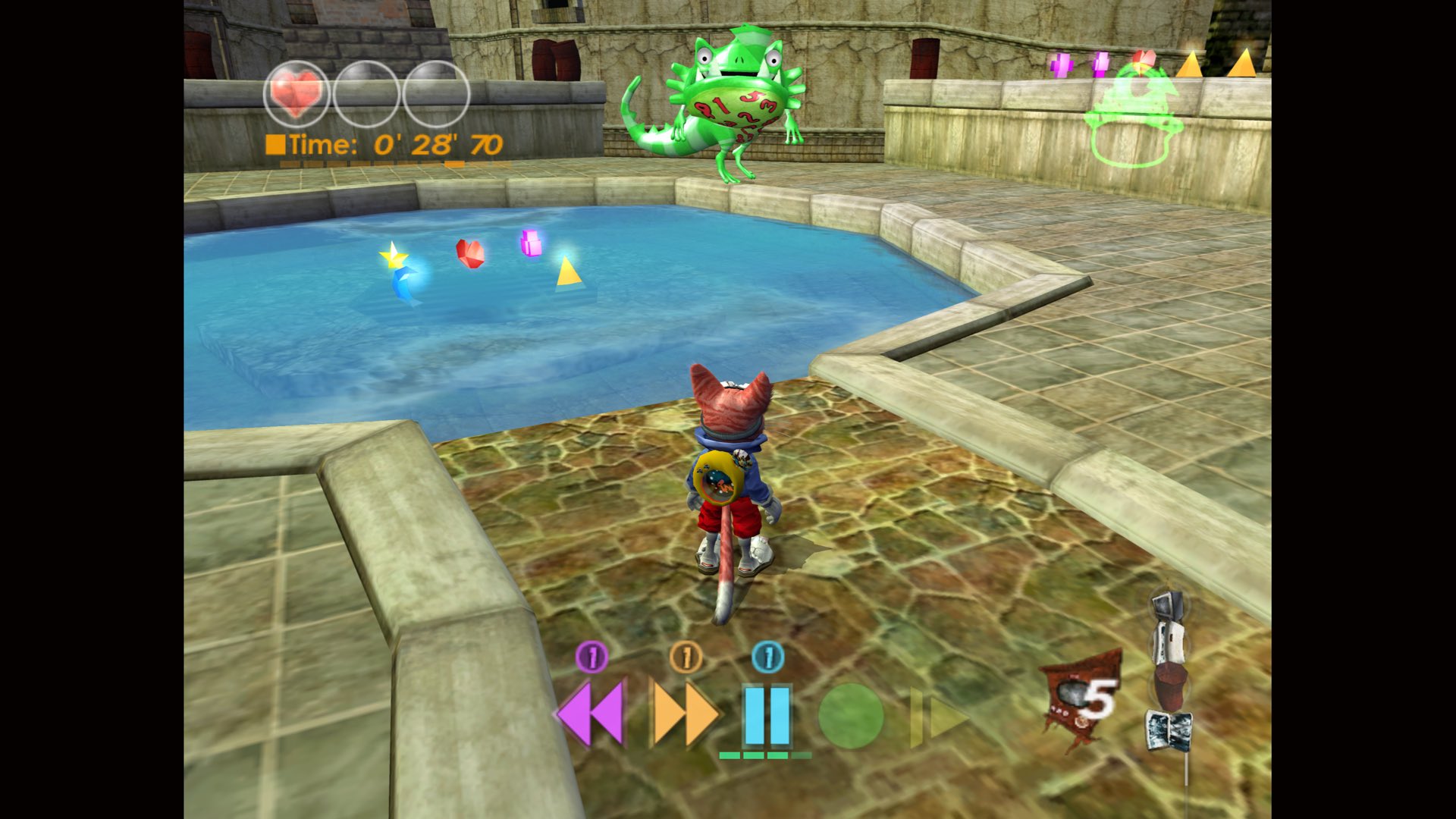
Blinx came out in October 2002, presumably to be both a mascot for Microsoft’s new console and a way to enter the Japanese market with something more familiar than Halo. The problem is that it was a very busy year for platformers. Looking at the list of big entries we’ve got:

  • Rayman Revolution in January 2001
  • Jak and Daxter in December 2001
  • Ape Escape 2 in July 2002 for Japan
  • Super Mario Sunshine in August 2002
  • Sly Cooper and the Thievius Raccoonus in September 2002
  • Ratchet and Clank in November 2002

Each of those games has something I can point at that simply did things better than Blinx, and that’s ultimately the problem with playing this game now. It’s obvious that even at the time it wasn’t doing anything well so much as doing things simply adequately.
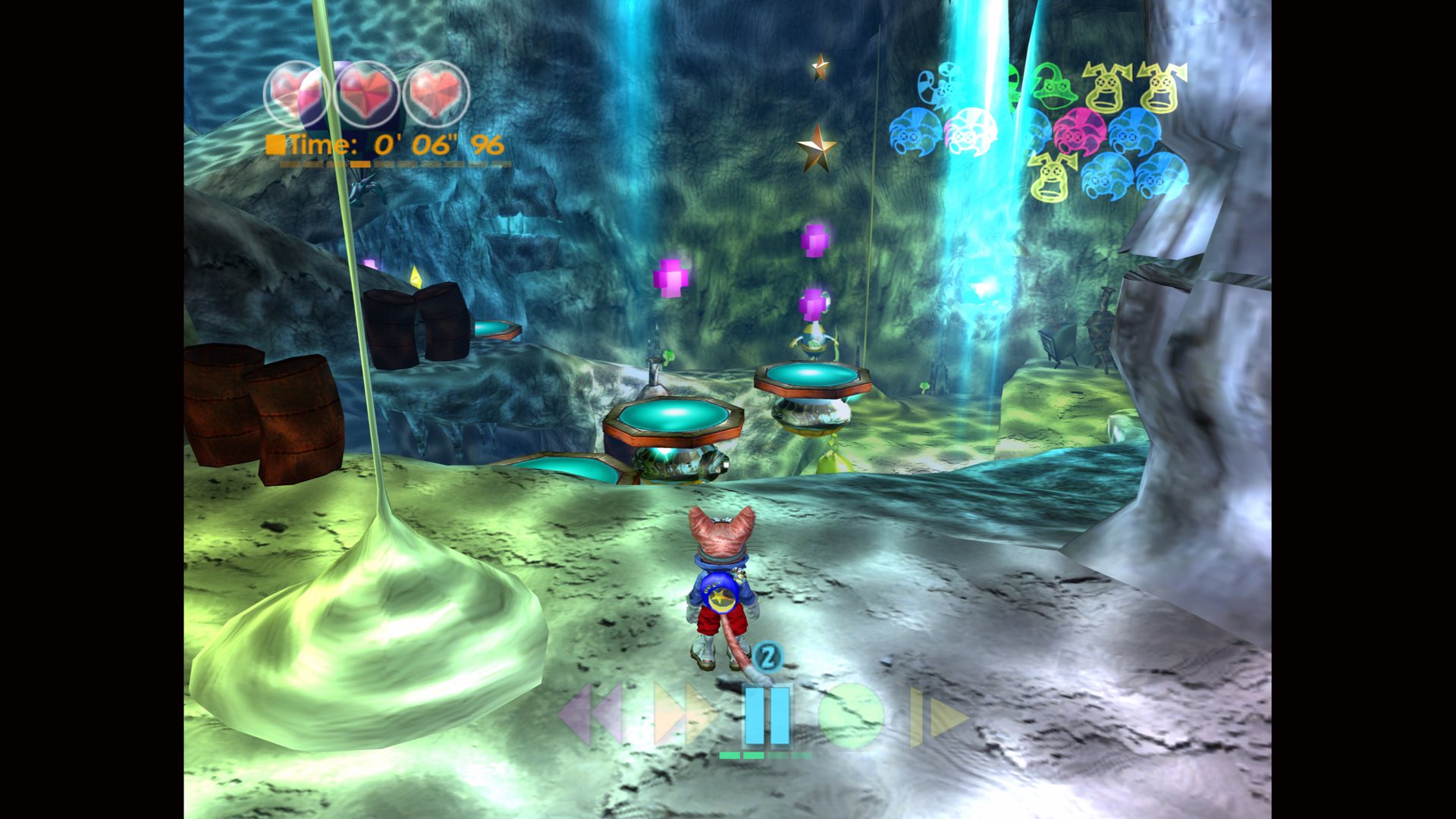
For pure platforming, you could easily pick Jak and Daxter or Sly Cooper as the obviously better targets. In both cases, it simply comes down to speed. Movement in Blinx is excruciatingly slow in a way that really surprises me. It often feels like I’m moving at about half the speed I want to. It basically results in jumps being only for vertical purposes. They often play into that with the time control powers (ex: a bridge falls, you can’t double jump the gap – you have to rewind to rebuild the bridge), but that gets into another core problem with the game.

The collection aspect of time powers is a weird thing where you have to build combos of symbols from items dropped in the world. If you match 3 or 4, then you gain some time powers. However, if you don’t match that many before you’ve collected 4 total items, you lose them all. It’s a needlessly complicated system that simply serves to do two things – makes me go slower to avoid picking things up by accident, and makes me backtrack when I figure out the core conceit of the level and what specific time power I require. It serves to loop back to my point that the platforming feels slow, because the mechanics are simply reinforcing that.
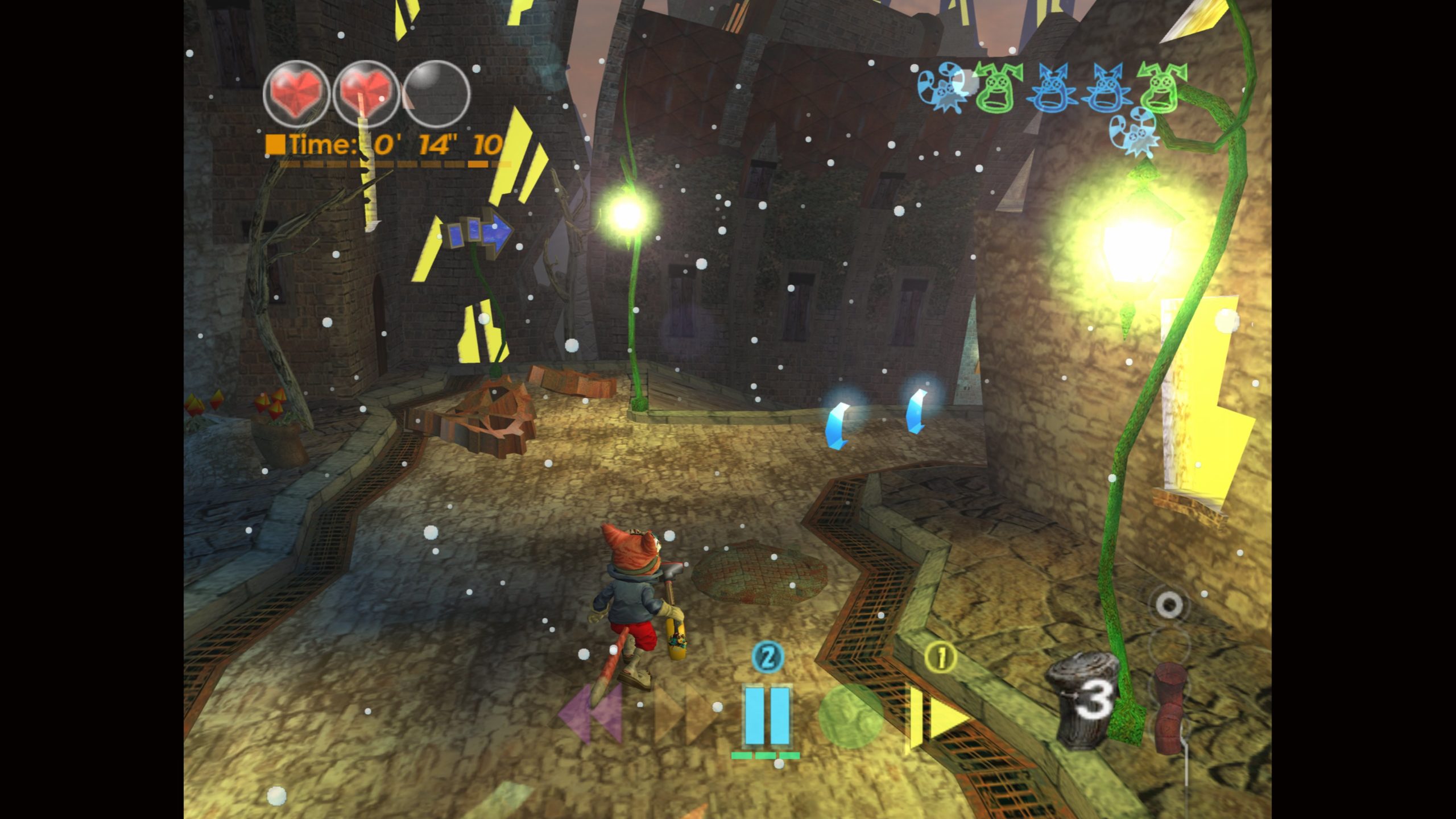
The other core mechanic in place is a vacuum to suck up and eject trash at enemies. This is where Ratchet and perhaps Luigi’s Mansion come into play a bit. Sucking up trash is another thing that is excruciatingly slow. It requires you to stand still, suck up a thing for a while then move on. However, you can also suck up the time power items from above, which again reinforces going super slow to be careful to not screw up your combo. This would have been so much better served being a move that lets you passively pull things in that are weaponry and ignore the time powers, as well as not requiring you to stop moving to do so.

Ratchet and Clank is definitely the comparison for the shooting end of things, though perhaps it’s more the second or third game in that series that are better comparisons. In this game, it’s extremely easy to just miss your shots entirely. This game would have been better served with aim assist that later Ratchet titles had to make shots more reliable, but even against the first entry this just doesn’t feel like it spent enough time letting the shooting mechanics cook. It feels hard to aim and doesn’t really feel powerful. Enemies have pretty weird immunity frames – particularly for long periods after they’re hit – that just break the pace of whatever combat was being attempted. Overall this is just a case where it feels like the weaponry aspect is just unnecessary against a more traditional stompy platformer setup.
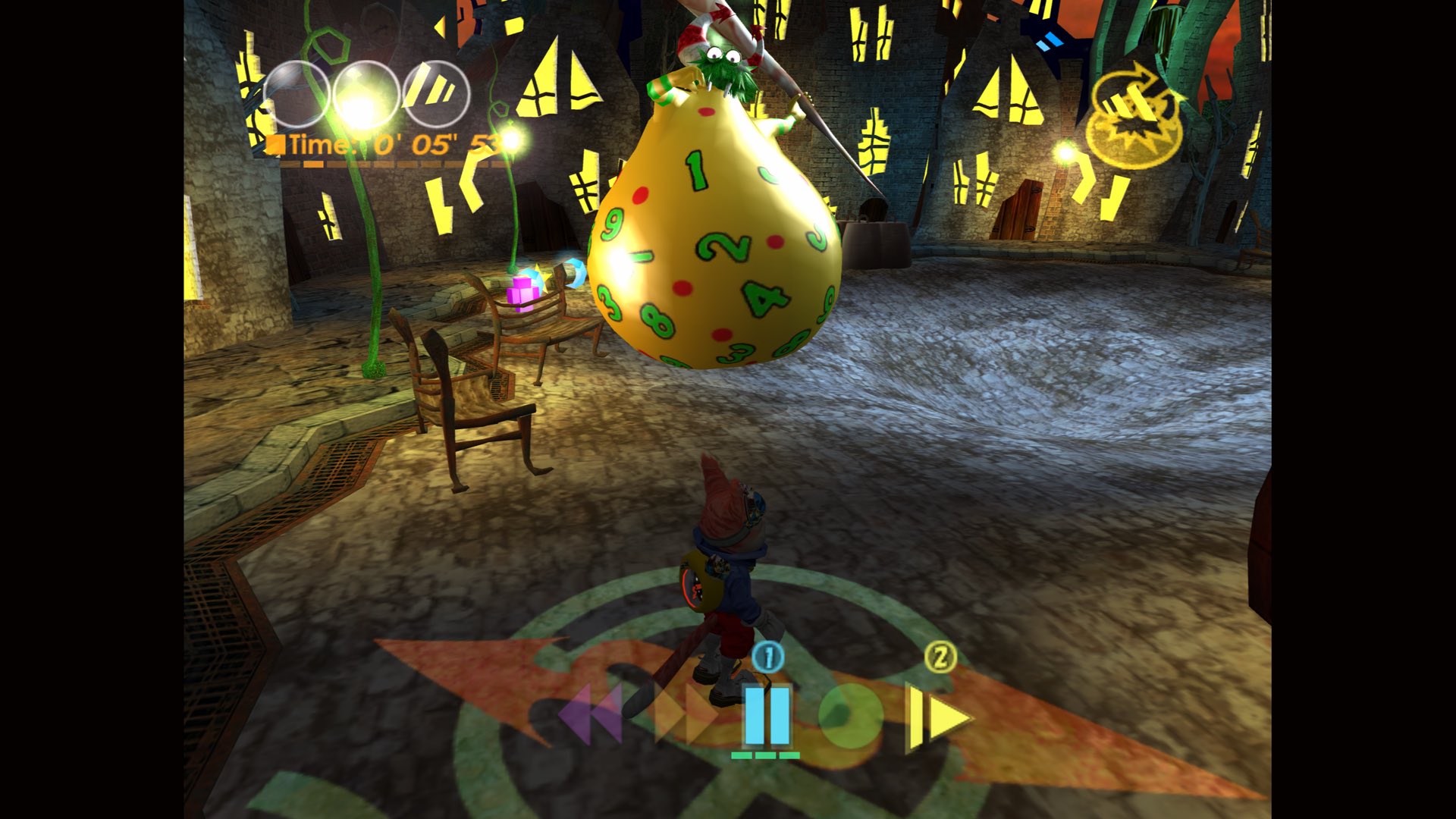
The final game in that list then is Super Mario Sunshine, and in this case I think the comparison is in the friction of taking damage. Blinx suffers from two problems in this case. The first is that taking damage simply breaks the flow of action in a negative manner. When you take damage, the action pauses, you rewind 5 or so seconds into the past, and lose ALL progress that had happened during that time, even if it was killing some other enemies. In large combat scenarios, it’s pretty frustrating to lose that progress to a hit. You also have a pretty limited set of hits that you can take (start at 3, expandable with in-game currency purchases) that can only be recharged via the time power matching system above or via a shop between levels. It’s slow to regain the retries and frustrating to run out of them.

Compare this against Mario Sunshine’s damage mechanics, where you can take a bunch of hits before losing a life, can easily recharge that with coins scattered all over the place, and time doesn’t stop if you take damage. This results in another case where the mechanics reinforce the game feeling slow, since it felt like I was being pushed to fundamentally avoid damage, rather than just minimize it.
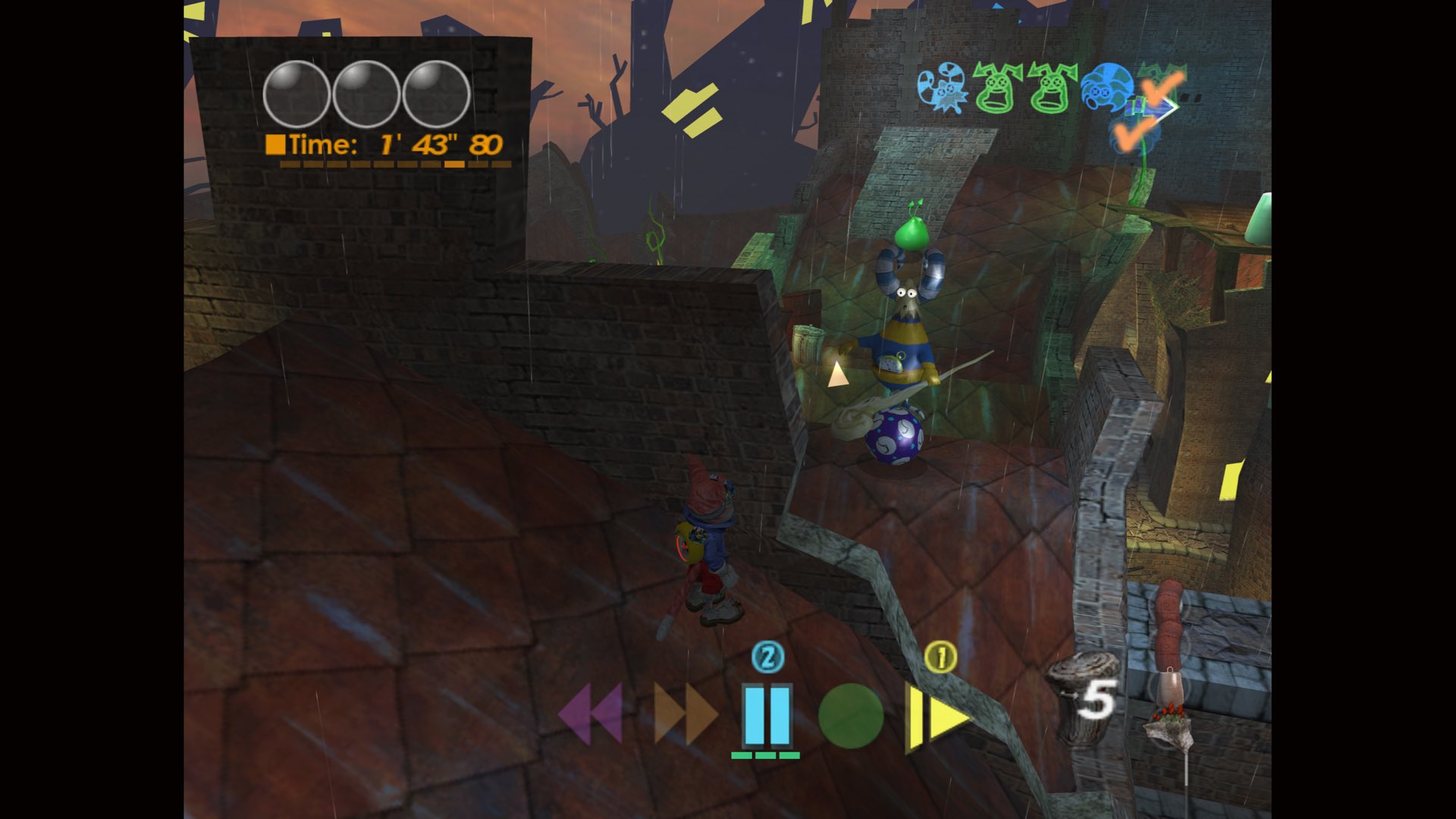
It’s one thing to be frustrated by a game that simply feels old. Billy Hatcher from a couple posts back is a good example of that. However, this game is frustrating because it landed in the middle of a 3D platformer golden age and simply couldn’t keep up. Other games for other platforms were simply doing its core set of mechanics better. All that said, it’s available on Game Pass and you could do worse than free.

Game Ramblings #166 – Sonic Frontiers

More Info from Sega

  • Genre: Platformer
  • Platform: PS5
  • Also Available On: PS4, Xbox One, Xbox Series X|S, Switch, Steam

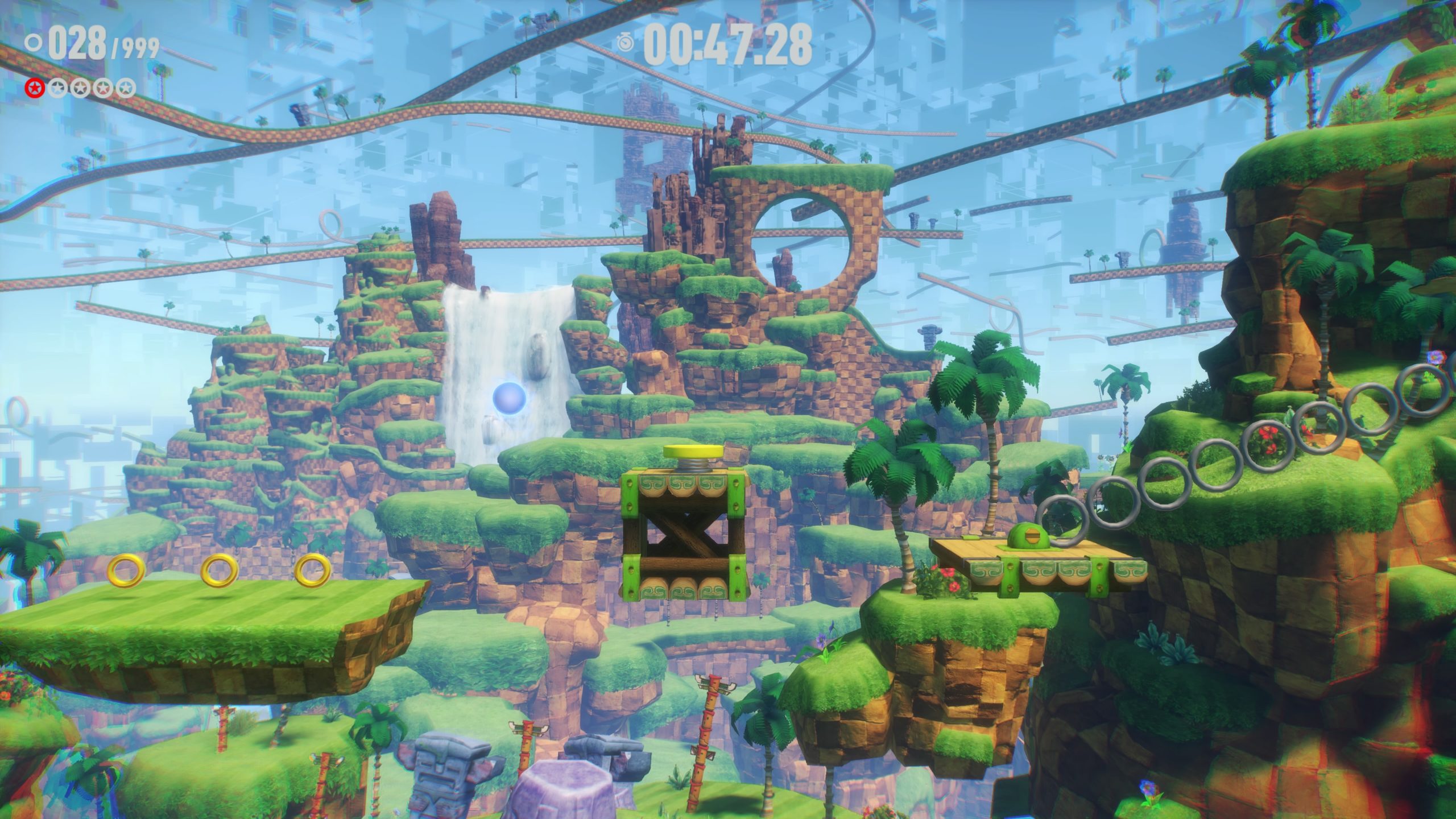
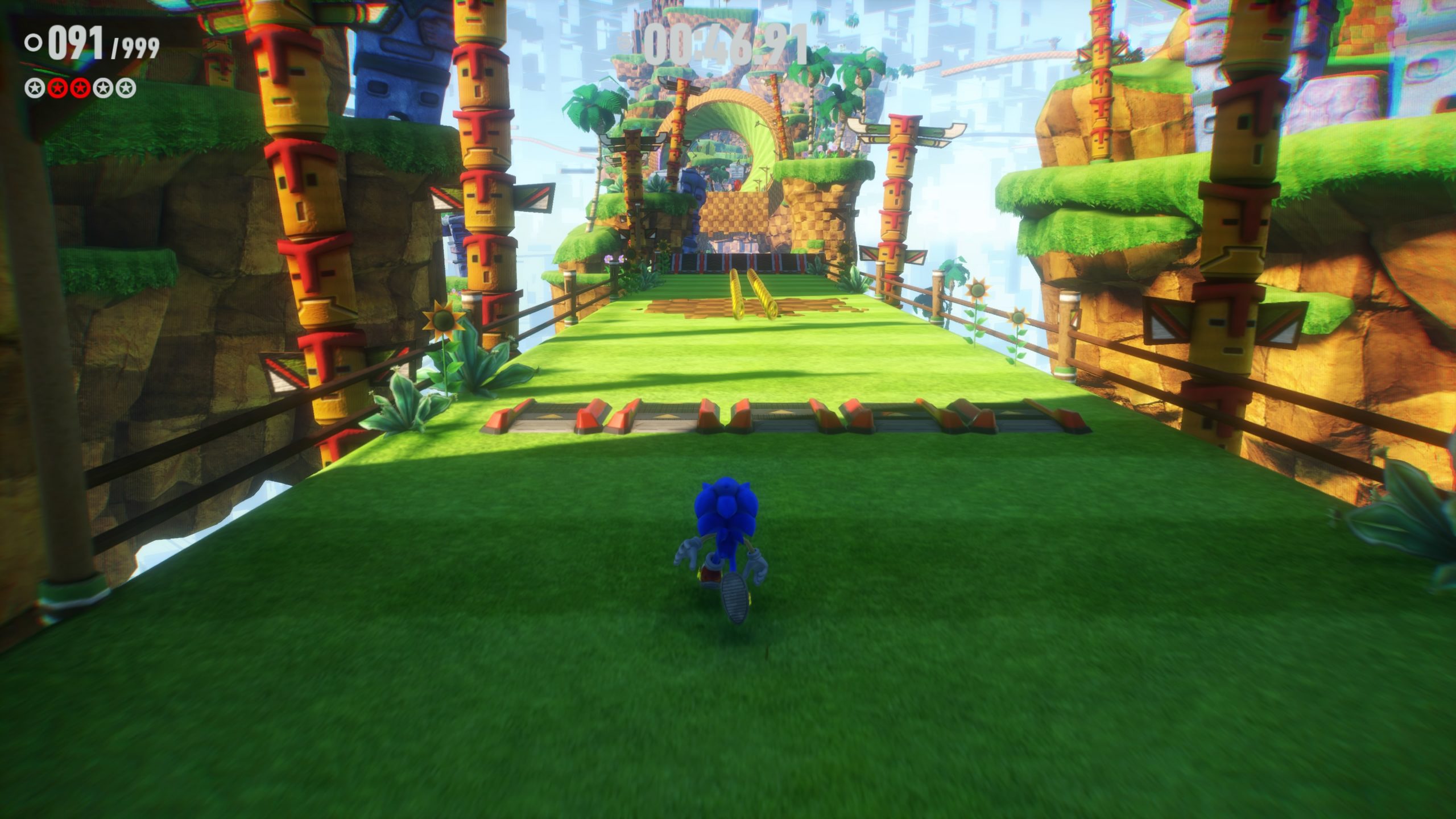
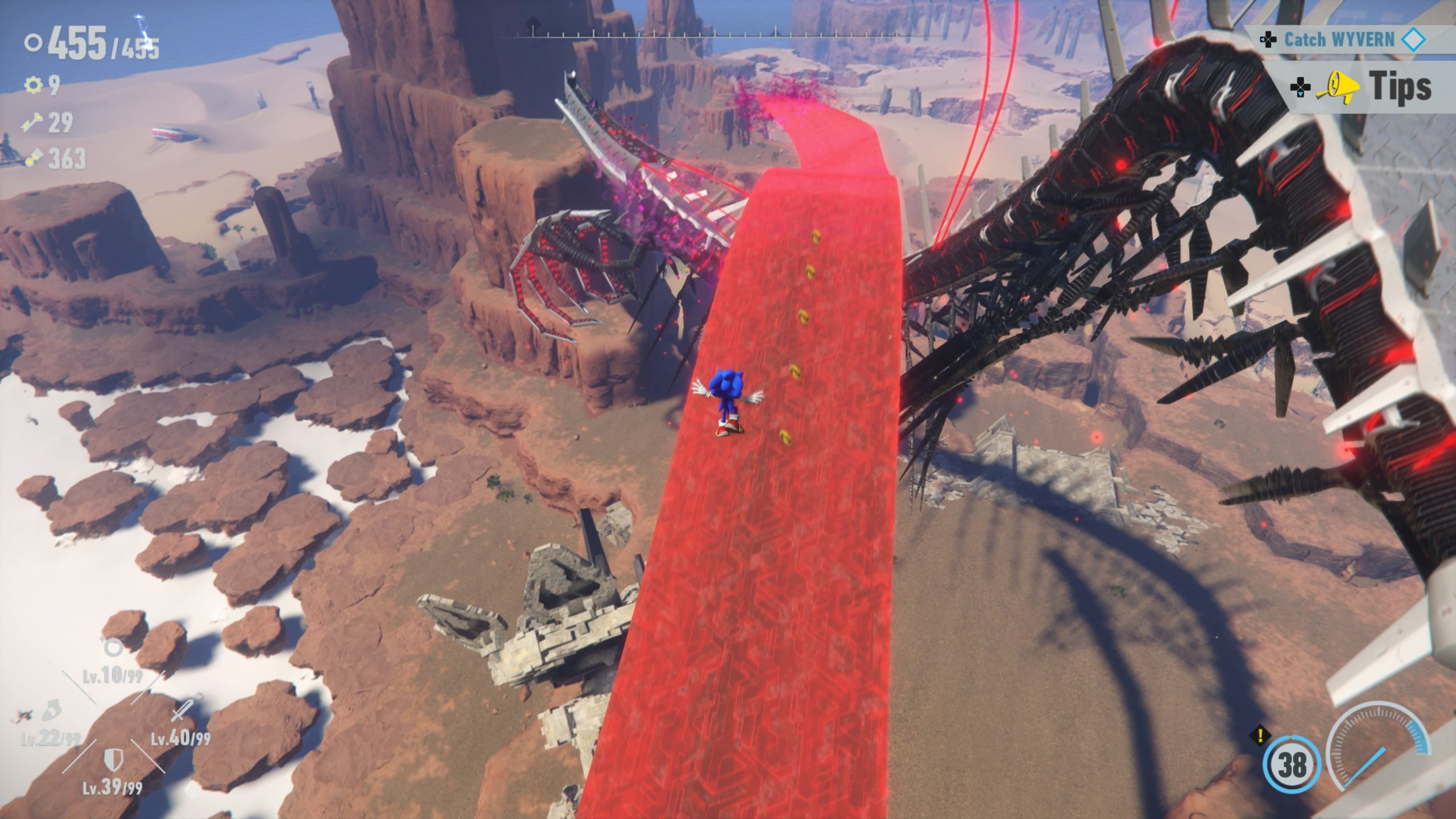
This is such a strange game. It’s undeniably Sonic, but at the same time it’s not. It’s got little pieces of things like Sonic Adventure or Generations, but those are just hints. They trigger a bit of nostalgia but don’t lean into it. It’s got the speed of the series, but uses it in new ways. It’s still maybe not the best example of a 3D platformer, but it does a lot interesting, and importantly it stays fun.

A lot of the early discourse I saw on this one was that it was a Sonic game through the lens of Breath of the Wild. I don’t necessarily think that’s true. Ya it’s open world, and ya it has the overworld red moon reset mechanic, but I don’t really get the Breath vibe from it. What I do get is entirely Mario Odyssey. It has the same feeling that there’s something to do around every corner, and you’ll always be rewarded. It also has the same pace. Where Breath tolled out rewards infrequently through the shrines, Odyssey set moons down everywhere, to the point where you were getting moons sometimes at the pace of a few per minute. That is the feeling that I hit here.

The individual little actions are never that complex. It’s always some jump pad that gets you onto a rail, but they’re always fun. It’s almost always some little 15 second quick hit platforming segment, but it hits the manic Sonic pace and ends with some reward. Usually it’s something to collect to eventually push the story forward, but you end up hitting so many of these little things that you’re hardly ever prevented from moving the story forward if you want to. What generally ends up happening instead is that you start going towards the next story beat, find about 40 things to accidentally do along the way, forget where you were trying to go, and end up completely in the wrong direction while having fun the entire time. That’s the Odyssey feel to me, and it’s what made both games work so well for me.

How it all ends up tied together also works inexplicably well. The overworld has a bunch of little combat segments against minibosses that end up working well to show some combat variety. Some of them end up being dash target-focused, and feel more like traditional action bosses fights. Some of them are more focused on taking advantage of the more typical fixed Sonic camera and feel like more traditional gameplay for the series. There’s also a whole bunch of Generations-style Sonic levels that offer more of what the series was used to offer. I suppose in hindsight, these are a pretty good analogue for the Breath shrines, but they serve a different purpose. Rather than being puzzle segments, these feel like pace breakers. The rest of the game is short segments of fairly specific platforming elements. These end up being longer sections that are typically speed and spectacle with a reward at the end, allowing the player to have a high excitement break in the middle of smaller actions.

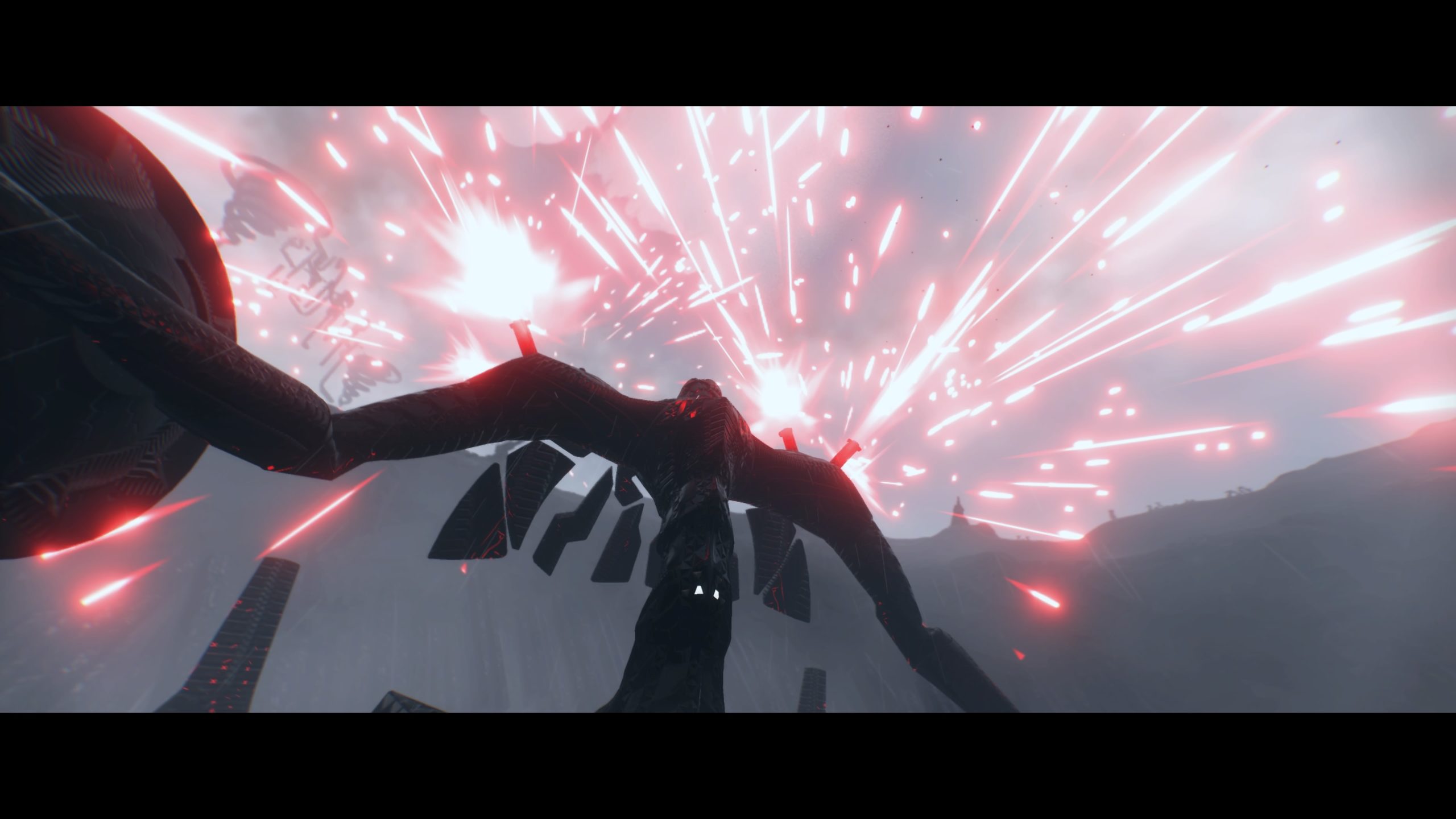
All of this is bookended by some extreme boss fights. These are all spectacle and basically involve you turning into a super saiyan and beating the hell out of a kaiju. Does it make sense? No. Is it challenging? No. Is it hilariously fun? Absolutely. There is nothing to these fights that actually ends up expanding the mechanics of the game. You’ve got a bunch of auto targeted weakpoints to hit while you have effectively close to infinite health, so long as you beat a soft timer in place. It’s all button spam and visual chaos and it’s incredible.

That said, the entire game is of a B-movie jank level that makes it simultaneously hilarious. The pinball minigame? Absolutely unplayable. The physics in less restricted movement sections? Shooting off in the wrong direction on a jump is not unusual. The story and voice acting and overall presentation? It’s there, but only to serve some minimum needed for the game to ship. Targeting reliability during large combat segments? As reliable as my internet was when I still used Comcast. The game often succeeds despite itself, which is something pretty normal for the series over the past couple of decades.

It’s frustrating that they continue to be unable to tie together a full package, but when the game ends up being so fun anyway I guess I’m not really too annoyed to care. The Sonic series has had so many ups and downs that when I get an entry that ends up being fun, I just roll with it. This is up there with Mania or Generations for me as games that prove the series still has some life in it. I also fully expect that for the next entry everything learned here will be thrown out and ignored, but I sure hope I’m wrong and we see more iteration on this idea. It’s got a lot of potential that has only started to show.

Game Ramblings #164 – Psychonauts 2

More Info from Double Fine Productions

  • Genre: 3D Platformer
  • Platform: Xbox Series X
  • Also Available On: Xbox One, PS4, Windows, macOS, Linux

It’s not necessarily that this is a new benchmark for 3D platformers, but this is a pretty special game. It’s in the way that the game gets into the minds (literally) of its characters that makes it work so well. It’s great storytelling and great set pieces and great handling of character motivations that all combine into something that takes what the series did well in the past and elevates it in a fantastic way. It’s the type of game that was worth the wait, which isn’t something that happens often.

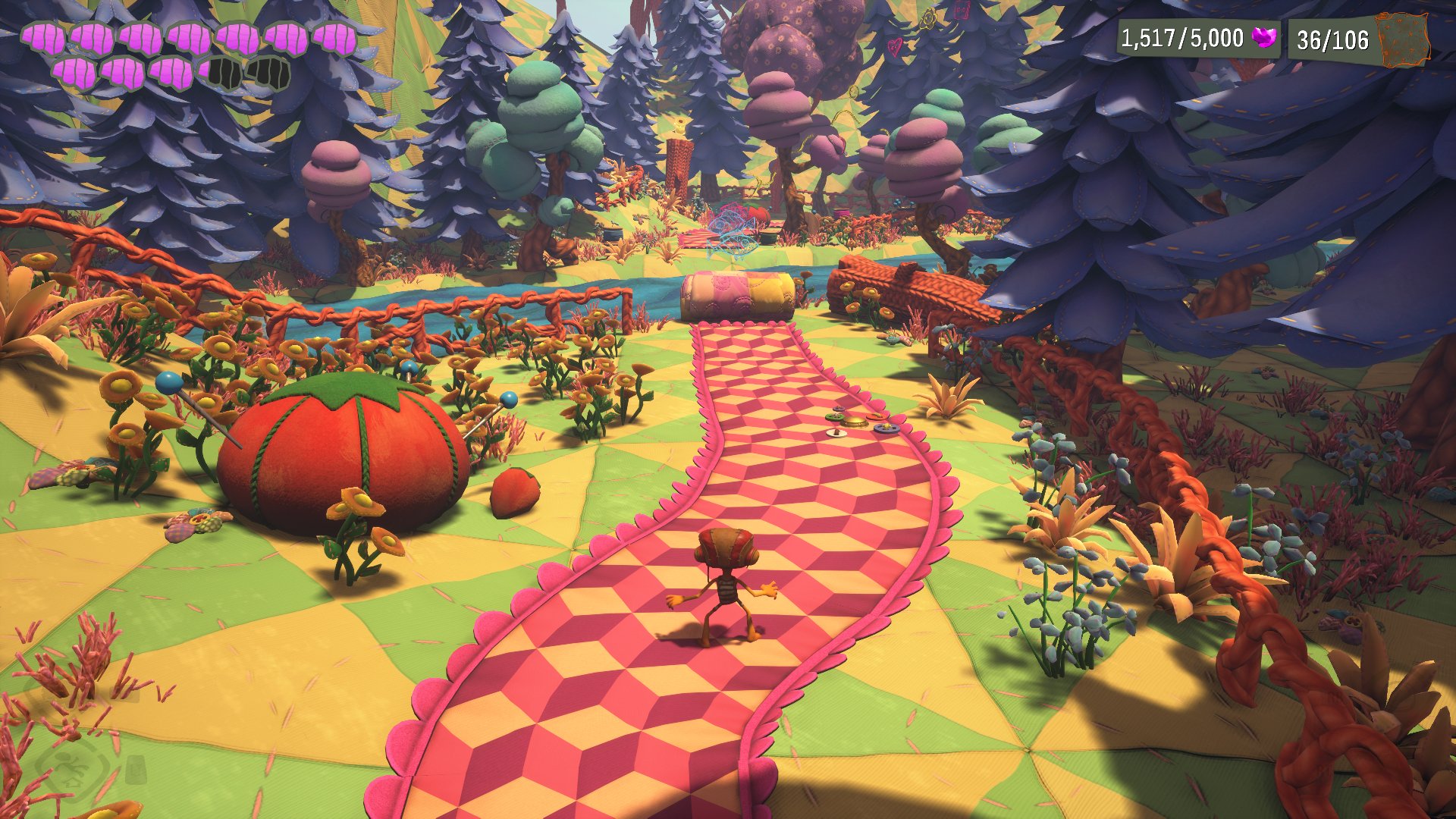
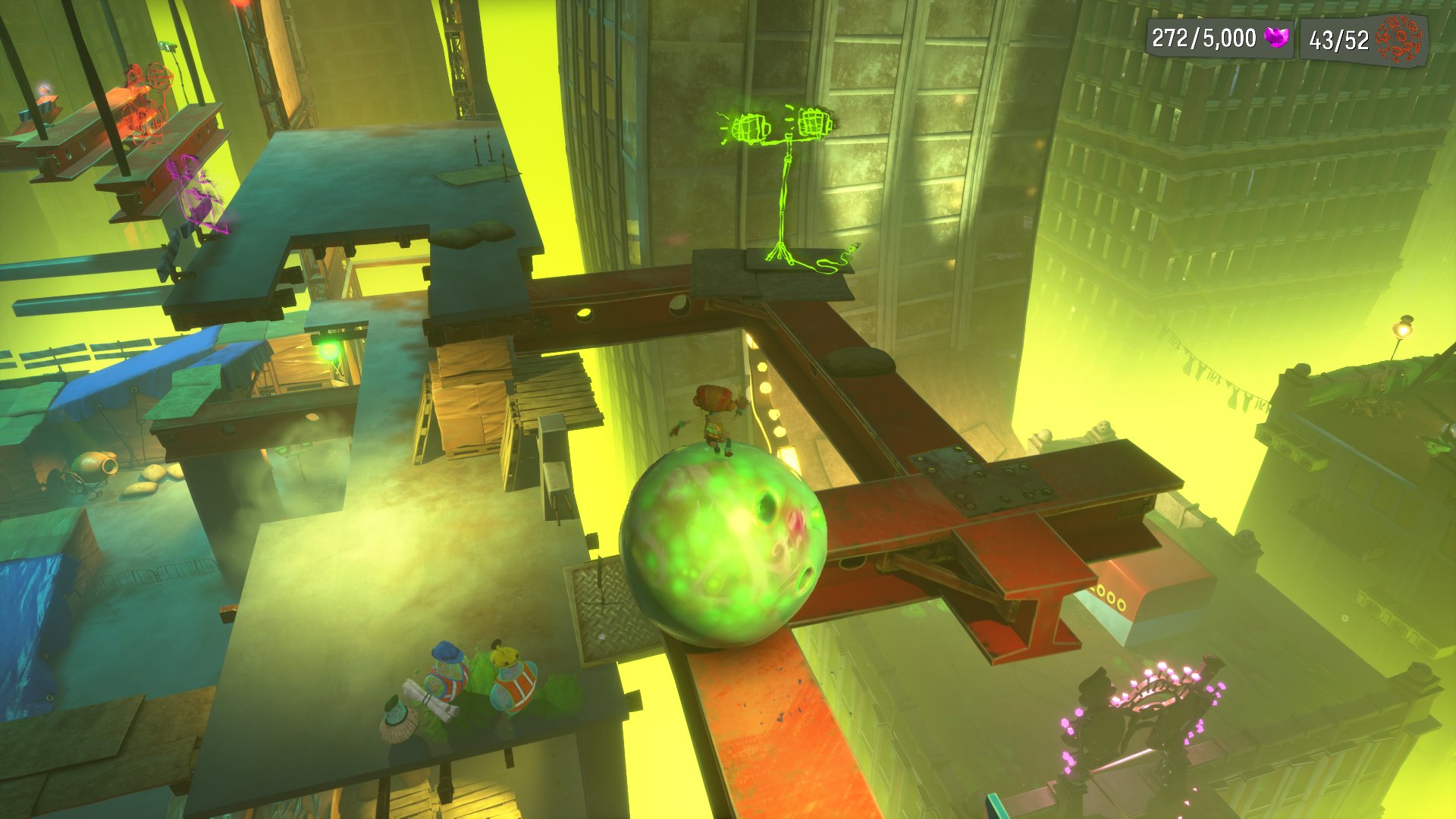
The gameplay itself is pretty standard platformer fare. You’re basically doing variants of running and jumping, with a little bit of combat. Ya, they mix in psychic power flavor in that glides are levitation or throwing things is telekinesis or your gun replacement is a PSI blast. However, it’s mostly set dressing around standard mechanics. It all works well and it’s easy to fall into because it’s all sort of expected, and that’s a nice thing. It’s a much more positive thing that I probably made it sound, but don’t expect this to be treading new ground from a mechanics standpoint. Where this game is actually special is where it handles the personality and history of each of the people’s minds that you’re diving into.

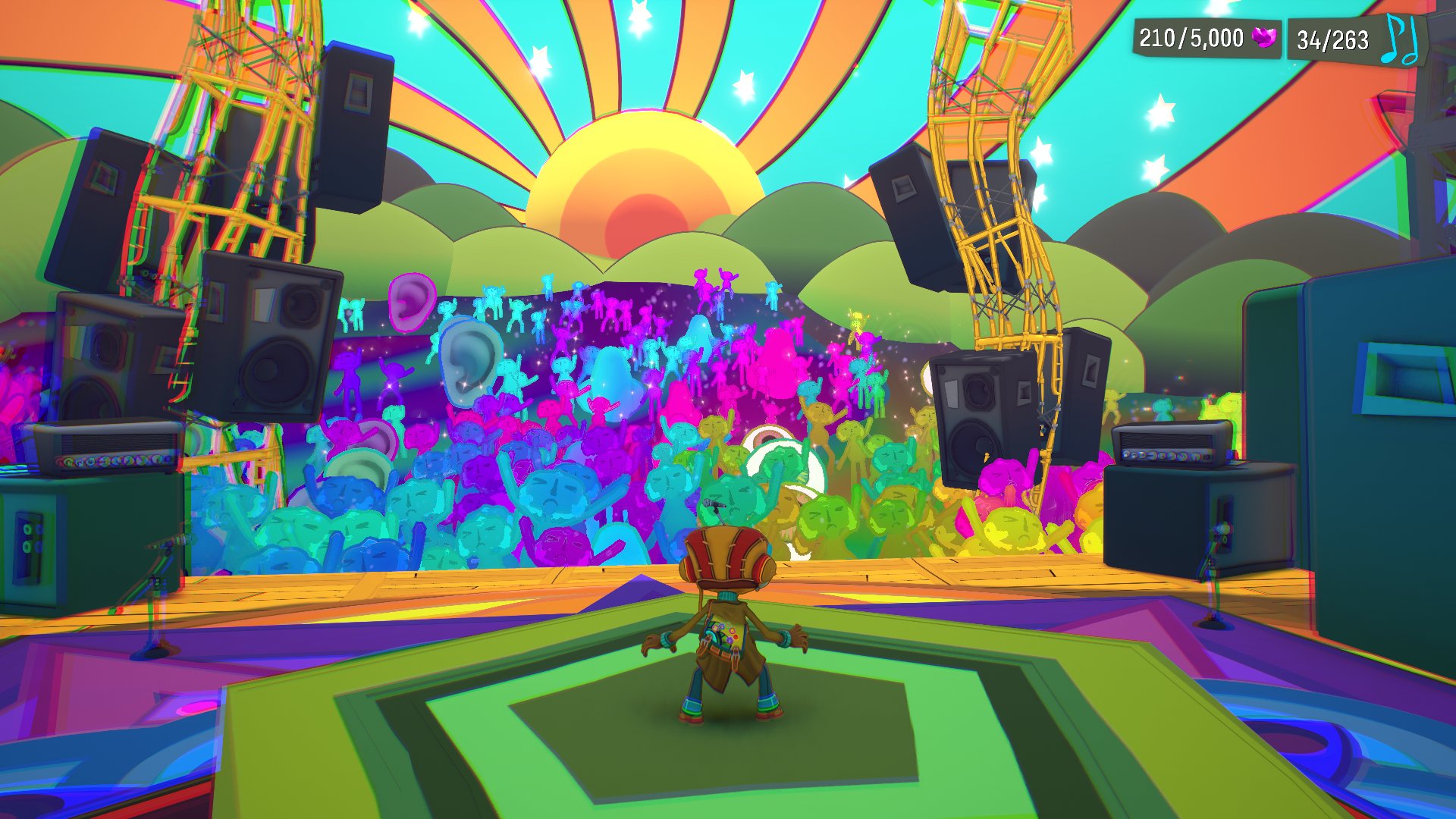
To skip a bunch of back story, the bulk of the game takes place within the brains of a set of Psychonauts that within the in-game universe are historic and famous. In the picture above, you’re inside the mind of one of those members who to some extent was seen as the glue of the group and is now hurt by the fact that they’ve largely gone their separate ways. The way this manifests within the game is the person envisioning the group as a band, and your path through their story is to find the rest of the members and reunite the group.

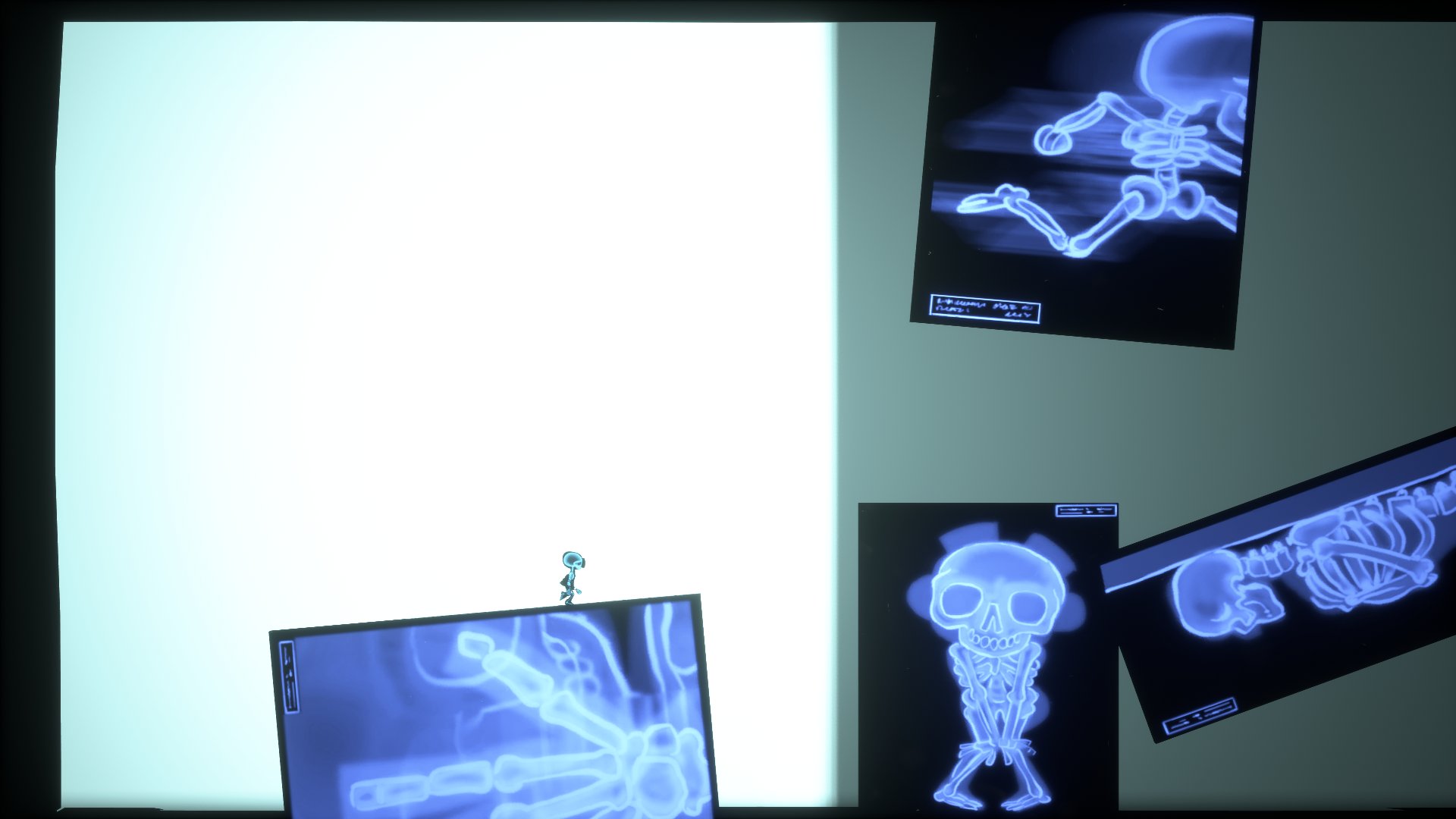
Another member comes from the opposite end of this story, and sees themselves as having been abandoned. As you work through their story you end up seeing that it isn’t just the case of the group splitting up causing this sense of abandonment, but other situations in the past that lead to this. In working your way through the story, you’re helping them see that the personal traumas that came from it may be somewhat validated, but that they are only seeing things from one side and that with more information things may not be as they see for themselves.

Dealing with personal traumas is always a subject that is interesting for me to see within games. Games that do it poorly can often feel over the top where the traumas inflicted on characters are so extreme that it feels malicious, where it leads to me just reacting negatively to the story. Games that do it well instead lead to me feeling sympathetic to the characters while also leading me to want to help them through their trauma. Psychonauts 2 luckily falls into the latter.

The characters all have back stories that at least feel relatable. Even if it’s not something that has happened directly to me, the things that have happened all feel grounded in reality. Given the psychic powers twist to this universe, they’re all things that feel like they could happen to a group that is trying to harness powers beyond the imagination of normal people. These are all people that were dealt great power and didn’t necessarily deal with it in a positive manner and are now to some extent left broken by the experience, but they all feel redeemable in that they never felt like they were maliciously trying to harm others, main villain aside. Even in that case it feels like you’re seeing someone who was pushed beyond their limits and lost to their own inner demons, rather than being someone who is just inherently evil.

I think that is all why this game works so well to me as a sequel. The first game and the VR experience proved out the core idea that you could make a platformer that exists within the minds of various people, but those two games didn’t feel as fleshed out to me from the perspective of seeing sympathetic characters and wanting to help them. This game just goes the extra mile to really provide that story backing. The mechanics in place are good enough to not get in the way of the rest of the experience, and it lets the story shine and be what is pulling you through the game in a way that I never wanted to put it down.

Although I am a bit miffed that they wouldn’t let me be immature…