Game Ramblings #219 – Yooka-Replaylee

More Info from Playtonic Games

  • Genre: Platformer
  • Platform: PS5
  • Also Available On: Windows, Xbox Series, Switch 2

There’s a quote often misattributed to Shigeru Miyamoto that goes something along the lines of a delayed game is eventually good, a rushed game is bad forever. This game is an example of why that quote exists in the first place. I didn’t particularly like the original Yooka-Laylee release, but this one was easy for me to sit down and just play. It was a huge transformation.
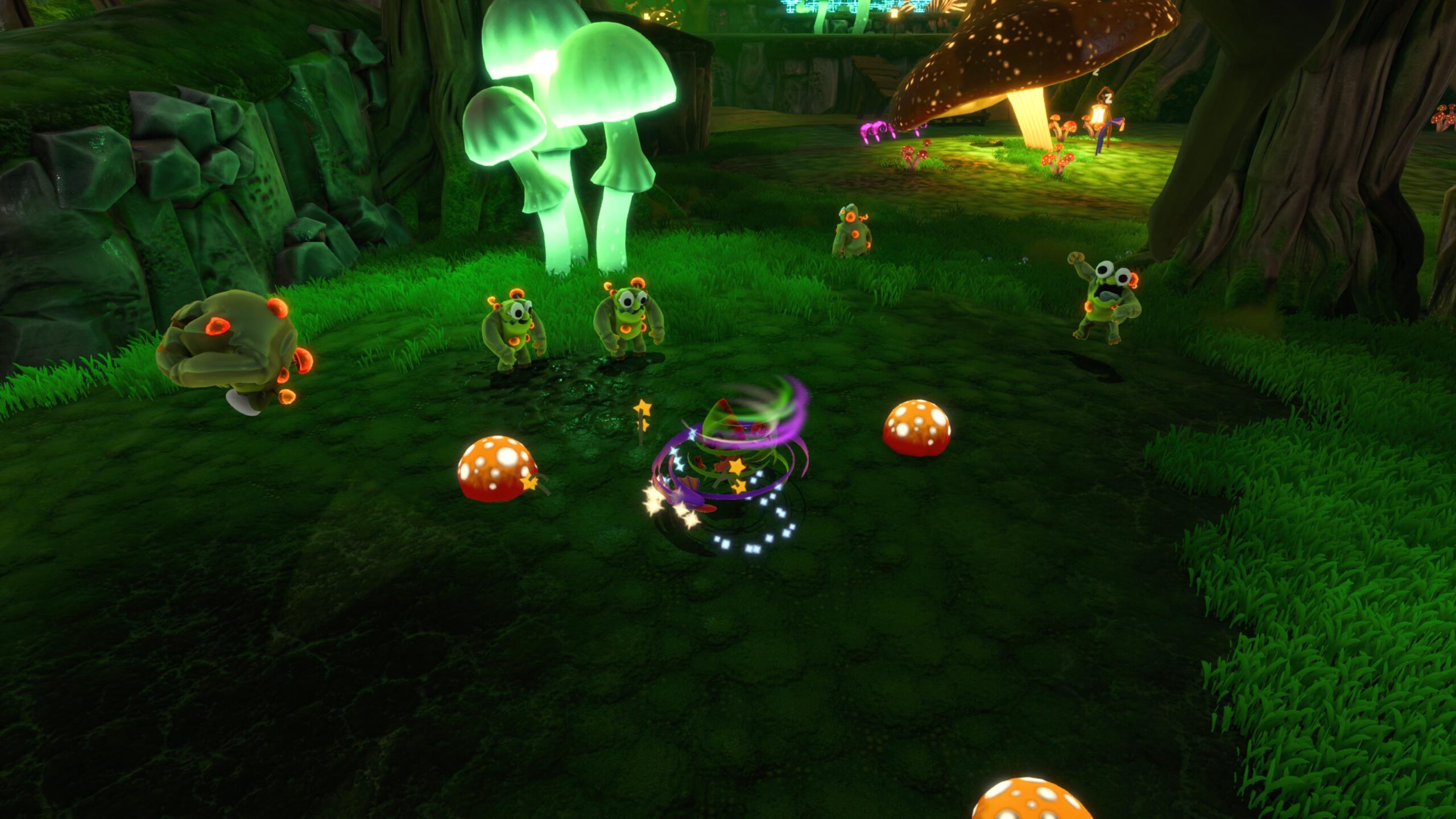
If I’m being perfectly honest, I couldn’t really point at many specific things that were improved. If I’m looking at the things in my other ramblings, I can definitely get a sense of where iteration occurred. I didn’t noticeably have problems with the camera this go around – it largely just worked and didn’t get in the way. I didn’t have problems with the writing, and frankly it felt minimally present compared to my recollection of the original. I didn’t have problems with odd mechanics in boss fights – they generally felt obvious and appropriately challenging, but without some of the oddities I saw in the original game.

I didn’t really have problems with how many pages were supposed to be collected or it feeling overboard. The pages that were there generally felt attached to some objective or getting to the end of a specific puzzle/platforming segment instead of simply being there. This one alone was surprising because there are double the page count from before, making this more in tune with how Mario Odyssey was handled. If I were to guess at what actually changed here for me is that the total sum of improvements elsewhere just made the experience of existing in the world more fun, so collecting more stuff happened naturally while I was having fun.

I suppose what I’m getting at here is that all of these things are signs of iteration done right. Every part of the original game has clearly seen some amount of work done to it to improve it from the original launch. Going back to the original quote, these were all things that felt bad and rushed that now are simply good, and when things are simply good they are out of the way of my interaction with them. What I was left with then is a game that was simply easy to play.
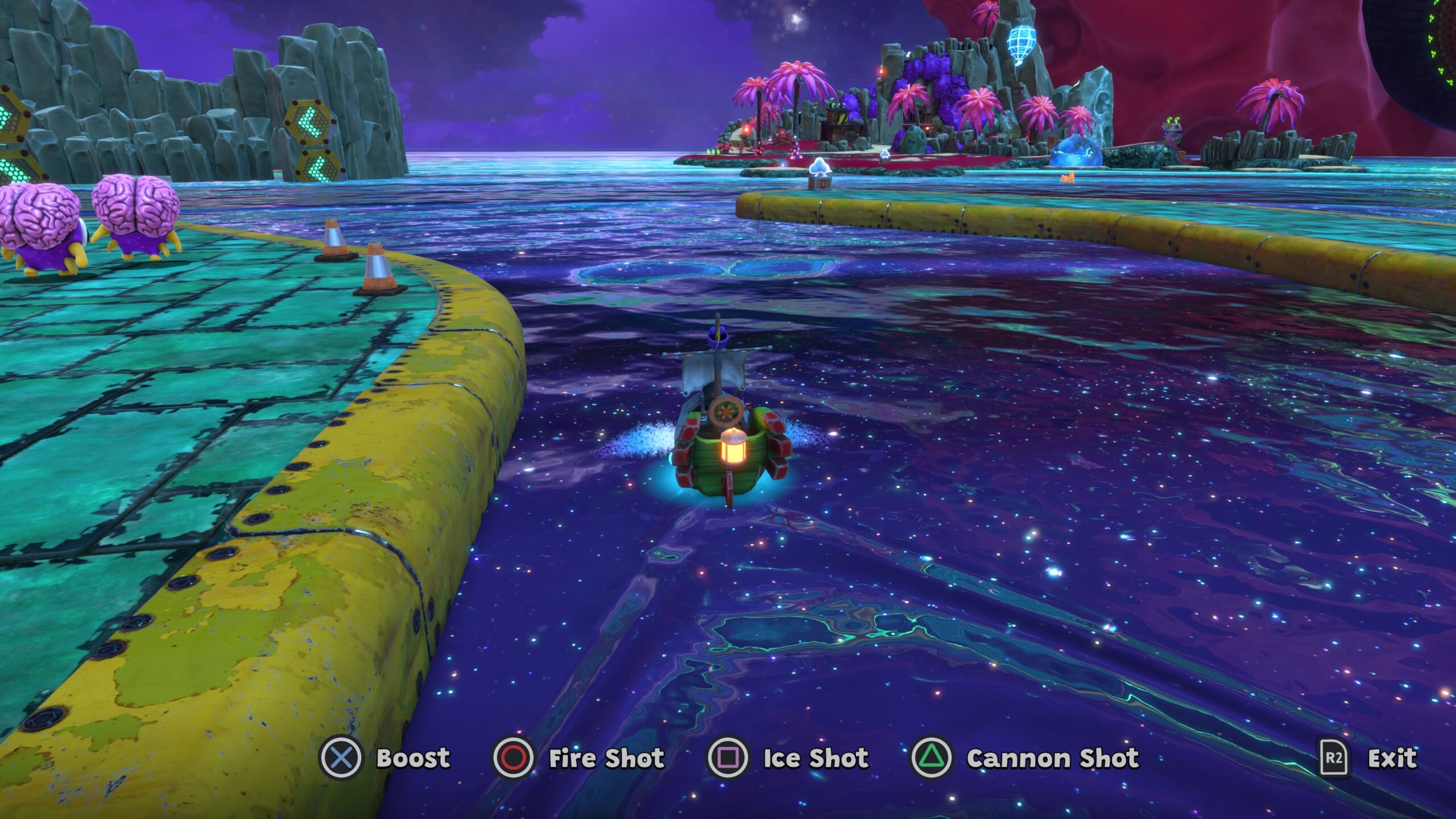
That said, there are two very specific things that I can point at that I know improved things. World expansion is gone and all platforming moves are unlocked from the start. These changes allow for open exploration from the start, removing what was a hugely frustrating progression blocker in the original. The original game was very obviously not meant to be a Metroidvania, so running into progression blockers was never a fun thing. Seeing a grapple point in the original without having the grapple power was a signal that I was going to have to come back later. Having to choose whether to expand the current world you are in or unlock another world was a sign that I was just going to have to do both anyway.

A lot of what ended up happening with these two changes is that the game just got rid of friction. I could certainly see arguments about games needing some friction to push players forward, and I largely agree. However, I also absolutely hate manufactured friction. In a 3D exploration platformer, both of those felt like manufactured friction. They both restricted the player from exploring in a way that felt negative in the genre. Not having explosives to take out specific doors feels appropriate in a Metroidvania where you’re starting from nothing and slowly building up your arsenal. Not having a grapple in a game where you play as a lizard with a very clearly extendable tongue that will be used for grapple felt out of place. Retraversing an area with new abilities to find more stuff feels appropriate in a Metroidvania. Unlocking an entire section of the world via magic pagies to find more stuff felt out of place.
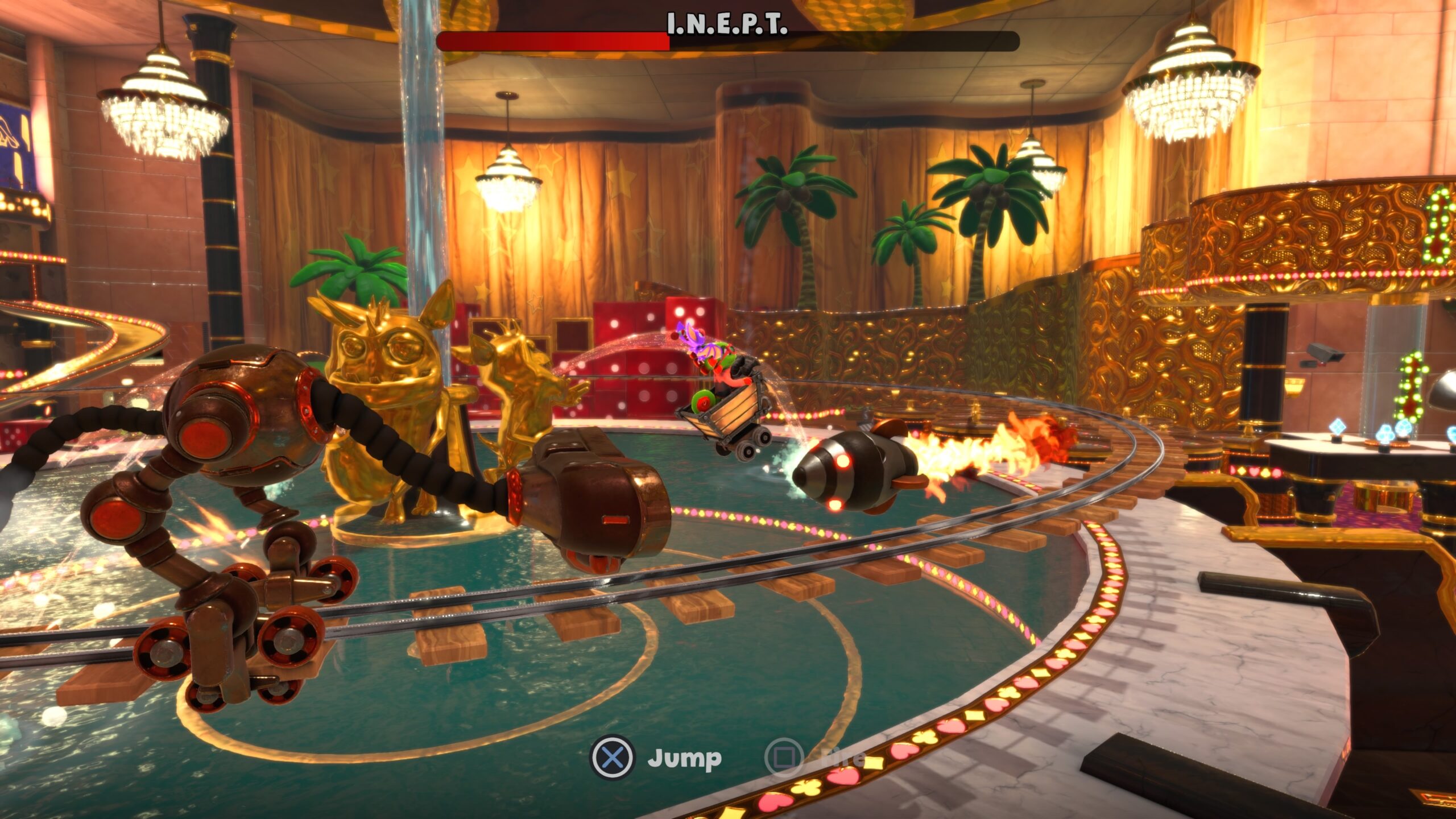
This is probably as close to the game they intended to make as possible. Sure, it’s very clearly the culmination of a lot of effort on their part. However, it’s also the culmination of a lot of feedback. The changes made here are obviously targeted at things that reviewers and players of the original did not enjoy. They are changes clearly targeted at making the game better to play, easier to get through, and reduce negative friction for the player. This is now a game that should be celebrated for what it is, rather than a game that is negatively compared against the past. This is an example of the delayed game will eventually be good, even if there’s a slightly asterisk of it having been released once before.

Game Ramblings #209 – Shantae Advance: Risky Revolution

More Info from WayForward

  • Genre: Platformer
  • Platform: GBA
  • Also Available On: Switch, PS4, PS5, Steam

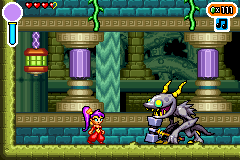
It’s interesting playing a new GBA game that clearly benefits from lessons learned over 20 years of making games. While this is an “old” game revisited and completed it’s clearly been given a modern touch. This is simply a great game on GBA rather than a great GBA game and that modern feeling is surprising, even knowing how good this series has been.

Looking at this purely from a Shantae perspective, this leans a lot more toward the level focused gameplay of older titles than that of Seven Sirens but that makes a lot of sense. This was supposed to fall in between the original and Risky’s Revenge. It certainly has some Metroidvania elements like hidden treasures, upgrades, and small segments of paths that require revisiting areas. However, the focus is on core platforming gameplay and it is smooth.

The thing that I often find difficult about going back to a lot of older games is that they dealt with a lot of platform restrictions via brute force, and that often meant that there is jank or slowness built into the experience. You’ll sometimes see if with weird air control or slow movement in platforming gameplay. You’ll see it in slow usability of menus. You’ll see it in extreme levels of not explaining what the player should at least be trying to do. None of that is present here.

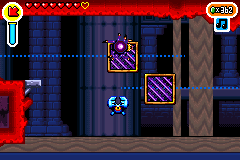
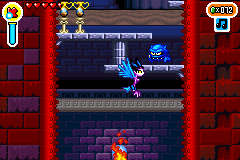
It’s a series of really small things, but movement here feels modern. In regular platforming movement is really fast. Normally I would expect that the limited screen space of the GBA would be a hazard here, but this is paired with what is really one of the best visual styles of any game I’ve played on the platform. Importantly, the thing that makes it work is that distinguishing enemies from the background at a glance is immediate so you don’t have to slow down to avoid danger. You run quickly, dispatch enemies quickly, and move on. This is paired with the movement being similarly smooth in transformations – climbing on spider webs is super agile, flying as a harpy is fast, wrecklessly dashing as an elephant removes a lot of danger – so that no matter what movement you’re in you just kind of intuitively go at it.

This bunch of little things also goes straight into overall UX. Transformations are linked to B+<something> combos and are super snappy, so you can switch to the right transformation quickly. Switching between magic types is fast and quick to use despite the overall lack of button options. There’s a whole upgrade path that you can steer your play time through, but they’re all obvious in terms of their use – some are power curve upgrades while some are simply ease of use, such as a purchaseable money multiplier. Talking to characters in the world is the primary way of getting clues about what to do, so it’s both not hand holding but also not vague. If you want to simply explore you can, but you can also be given instructions if you choose to dig for it. The primary meta game mechanic involves changing the background and foreground layers and moving between them, and that again is super fast but flashy enough to be impressive every time. Basically, it all feels like something that would be incredibly in-place in a modern retro-styled title, but as something played on GBA hardware is even more impressive.

That’s not to say that this is an all timer or anything though. While the original Shantae was unbelievably good for its time and this released 20 years ago would have been up there, we’ve seen a lot of progress since then. Where this falls is somewhere along the lines of really good game that is elevated by nostalgia and the reality of the platform it’s on, but on modern platforms it’s probably more of a curiosity for fans of the series. It doesn’t really do anything new or interesting now so separate from the story of its development delays and original cancellation it doesn’t necessarily stand out from the crowd.

But boy could I think of games that are far worse.

How’d It Age #11 – Epic Mickey: Rebrushed

More Info from THQ Nordic

  • Genre: Platformer
  • Platform: PS5
  • Also Available On: PS4, Xbox One, Xbox Series, Switch, PC
  • Originally Available On: Wii

I bounced off this game HARD when it originally came out. It’s not that the core game wasn’t good, but the forced integration of the Wii Remote really hampered the core painting mechanic. It made the camera miserable to control. It added unnecessary movement to painting. It was just a chore. Moving to standard controls frankly fixed the game.

Now I’m not necessarily saying that this is a modern masterpiece or anything but what a difference standard controls make. Platforming when you don’t have a good camera or good control of a camera just ruins the experience. You can’t hit your jumps quite right from lack of depth perception. You fall into danger because you couldn’t really see where you were landing. You get hit with things that weren’t necessarily in your camera view. It’s miserable.

Right on its own, having a camera stick fixes so much. You can run easily in different directions from your intended camera. You can look down when you jump to see the drop shadow for your landing spot. You can pan around during combat to make sure you have eyes on all the enemies. It just makes the game smooth. The worst part is that it’s not like this wasn’t solveable in the original title. Sure, the Wii Remote+Nunchuk combo was necessary as the default, but the Classic Controller add-on existed and offered dual-analog controls that could have been another useful control scheme to be used.

The other thing that really stood out to me was that this went beyond just moving to standard controls – it embraced modern touches with dual analog inputs. Since you no longer have pointer controls for the painting mechanic, it would have been easy for that to be incredibly imprecise. However, the game does two things that really improve the situation to do what I would argue matches the original game’s precision.

The first is simply that there is solid aim correction going on. The actual targetable area of things being painted is a decent amount larger than the actual target, and that sort of slushy space really makes quick targeting a lot more manageable. Obviously, this is something that most modern gamepad action games do, but it’s nice to see it here. The second is perhaps more important. The game just inherently supports motion controls during painting but not during normal movement. This is a really smart integration of that mechanic. Rather than the camera always darting around because of controller movement, the player is left to doing most camera movements on the stick. However, when the painting is activated, the camera stick movement is reduced and motion controls are enabled, allowing for really precise fine-tuned movement. This is a really smart touch as it makes combat precise in ways that even the original didn’t match and elevates it over a lot of “standard” action game control implementations.

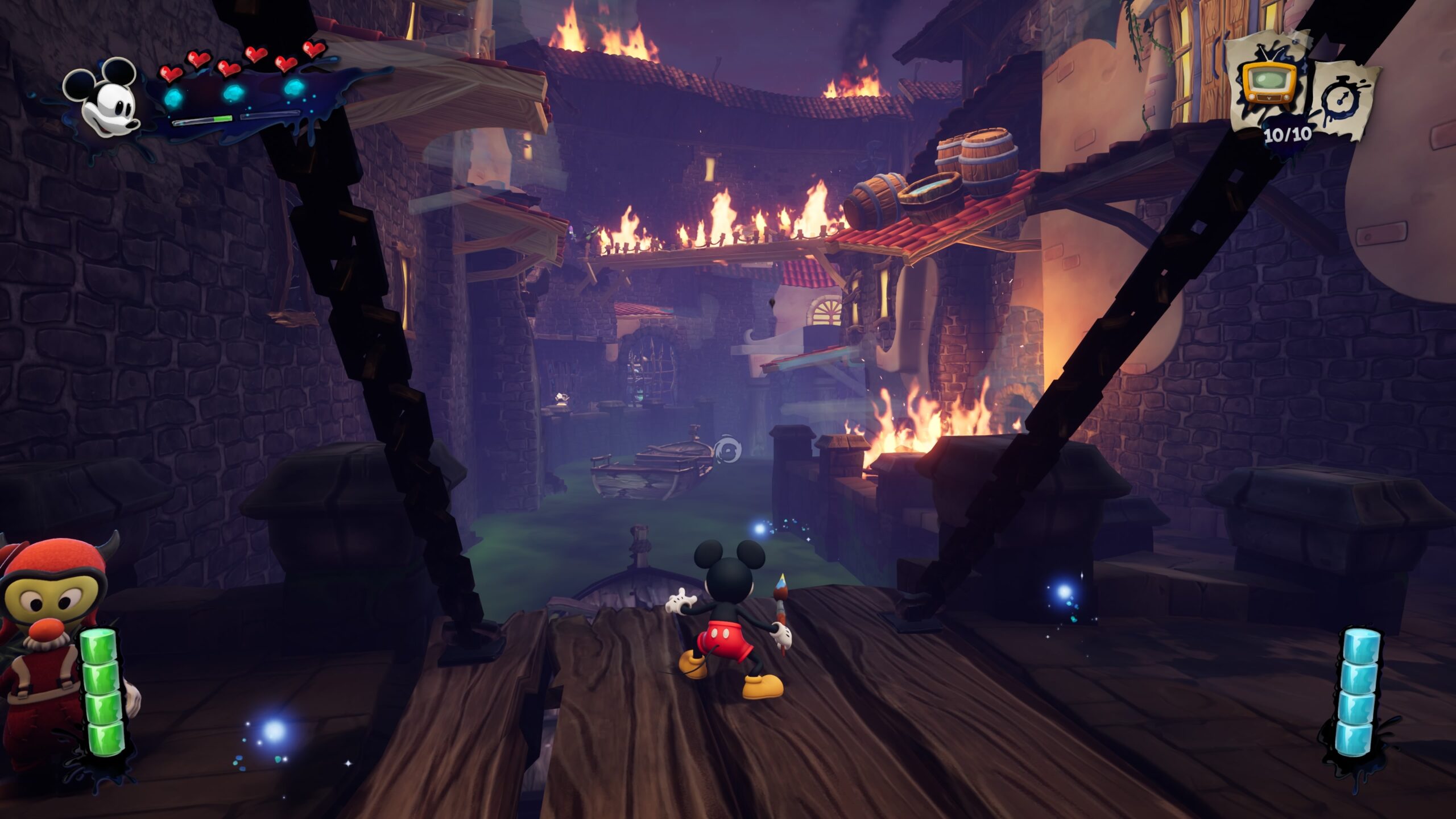
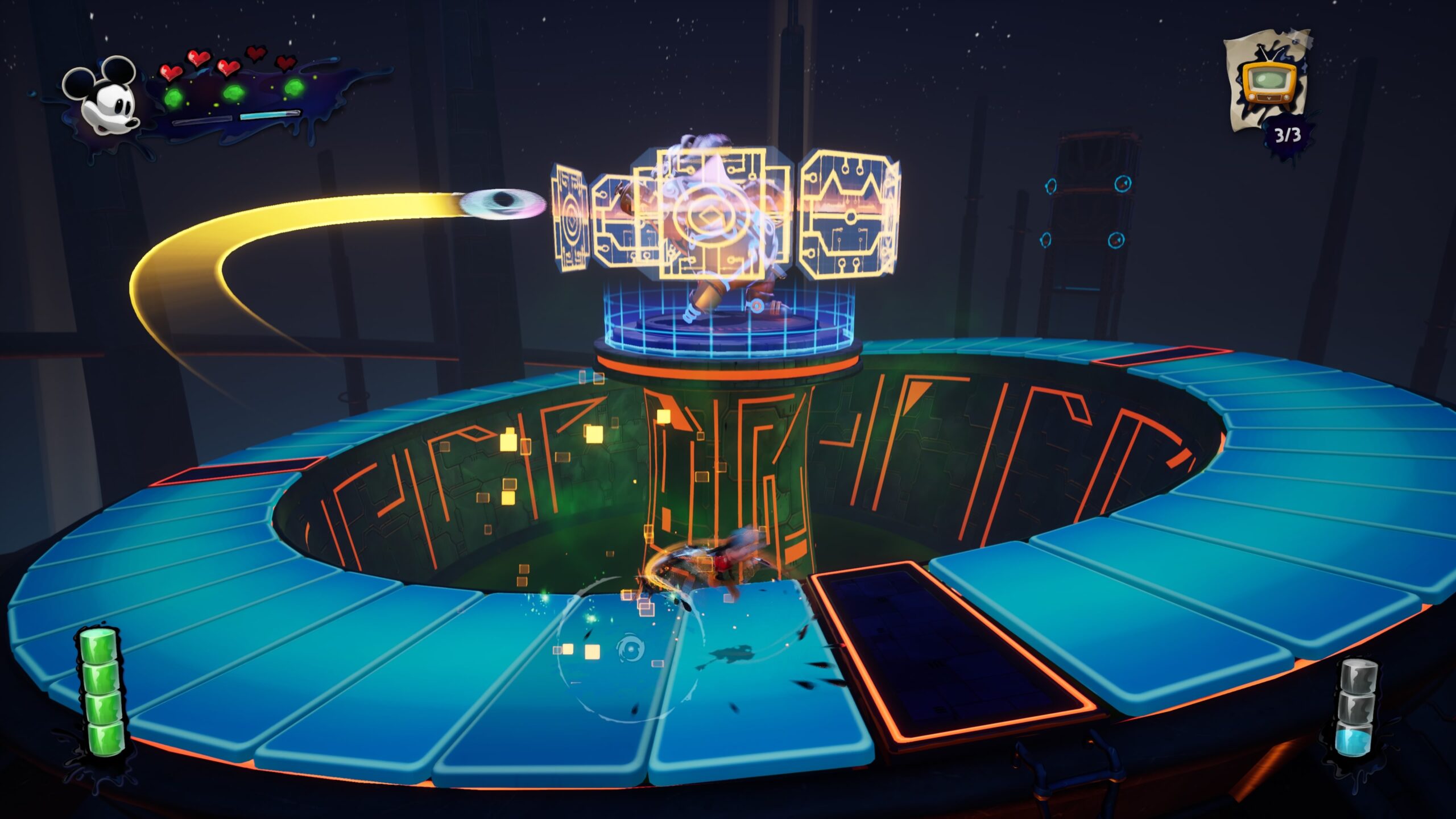
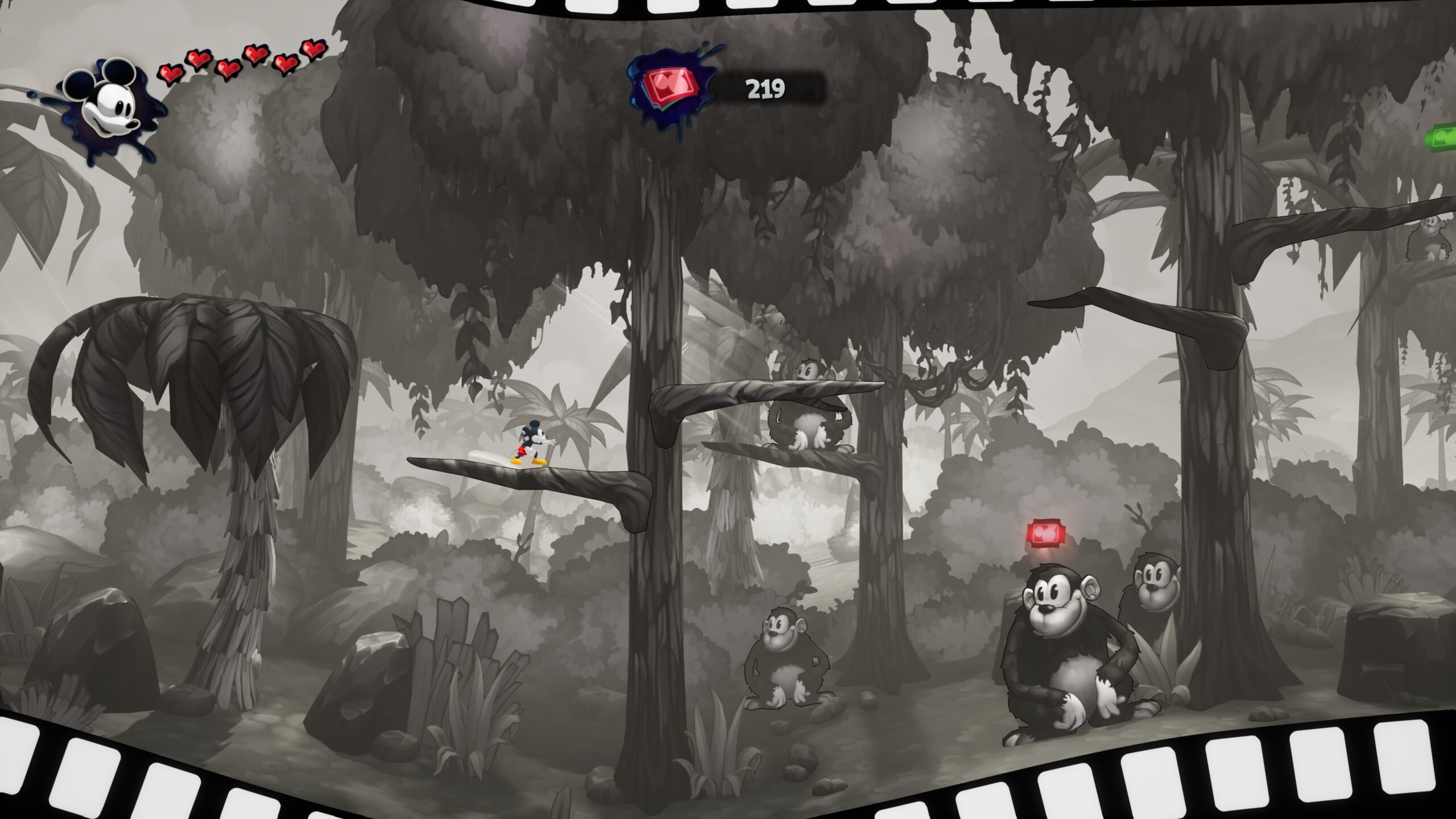
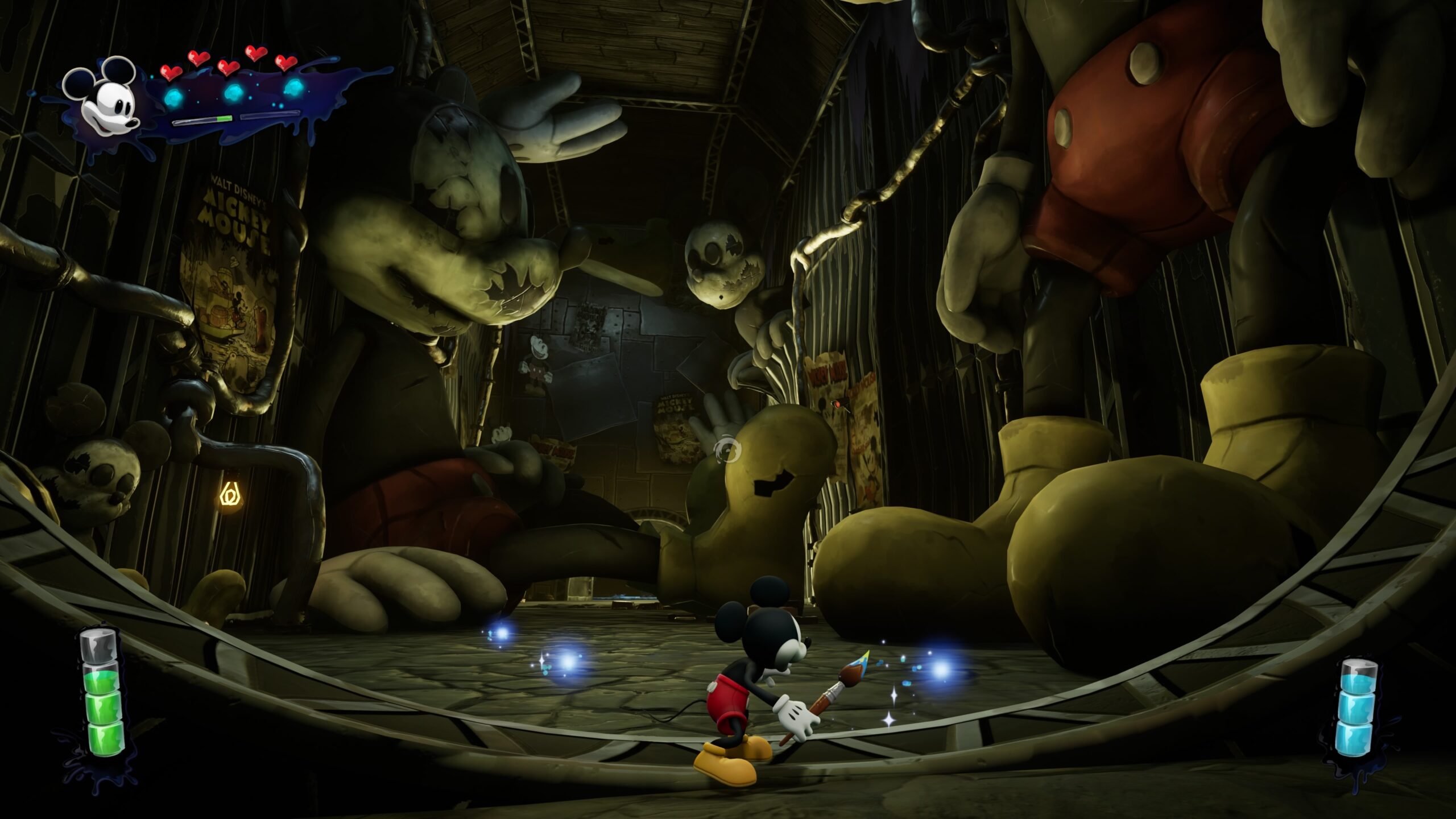
What is on the surface a few small changes to core input really did end up fixing the game for me. It’s not like the original was all bad news anyway. The story and setting are wonderful, and that is still in place. The surprisingly dark story of Mickey effectively starting a cartoon genocide is still all here. It’s elevated by a pretty solid visual overhaul where everything is nice and high detail enough to now be a cartoon styled game in a modern engine. The platforming and combat are still good enough by modern standards and massively helped by the camera, so rather than being a downside it now serves to get out of the way of the really positive elements of the game.

The Wii was an interesting experiment to be sure, but now nearly 20 years later it’s pretty obvious that it didn’t really serve a lot of genres all that well. Wii Sports? Absolutely a banger for the console. First-person shooters? Metroid Prime on the Wii is probably the most precise way to play the game. However, more traditional genres like platformers really suffered from the lack of dual analog, and this is another example of that. Simply by moving to more standard controls, it took a game that had serious issues and made it pretty damn solid. It’s definitely no Mario Odyssey, but this is now a fun game on its own that can be played in a modern way without the frustration of poor input schemes.