Game Ramblings #90 – Super Neptunia RPG

More Info from Idea Factory

  • Genre: JRPG
  • Platform: PS4
  • Also Available On: Switch, Steam

I’ve played a bunch of the Neptunia games, and they’re always a nice breather from my typical run of titles. They tend to take a known genre, craft a story around it that makes fun of the genre, and still manage to make a game that more often than not is shallow, but fun. Unsurprisingly, Super Neptunia RPG is more of that style. In this case, they take the 2D overworld movement of something like Muramasa, give it a battle system like any normal 2D JRPG, and manage to spit out a game that works, even with some grinding flaws. In this case, the Neptunia gang get transported to a place in which 3D games are banned, and the entire world is now 2D – and that’s about as serious as this series is ever going to be.

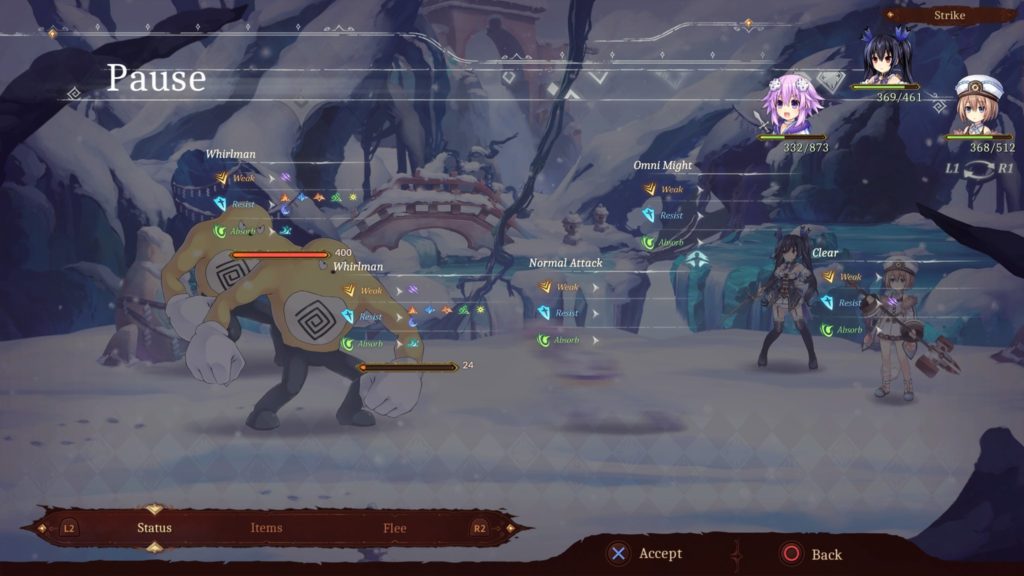
This screen will become your friend throughout the entire game. It gives you everything you need to quickly clear enemies.

Combat is the real focus here, and the entire flow of the game is built around the combat system. The closest description I can come up with is basically this: take the ATB system from SNES Final Fantasies, apply that to your entire party so they share the pool, and have the weakness exploiting of Shin Megami Tensei recharge your ATB pool if you land a weak hit. That combination of mechanics basically has the game working in vastly different ways depending on whether you’re in a trash or boss fight.

For trash fights, the name of the game is completing the battle as quickly as possible by exploiting as many weaknesses as possible. Hit the weakness, keep your ATB, and immediately spam the next attack. By doing this, you can generally complete any weakness-focused battle in seconds. However, this does have a significant problem in the late game.

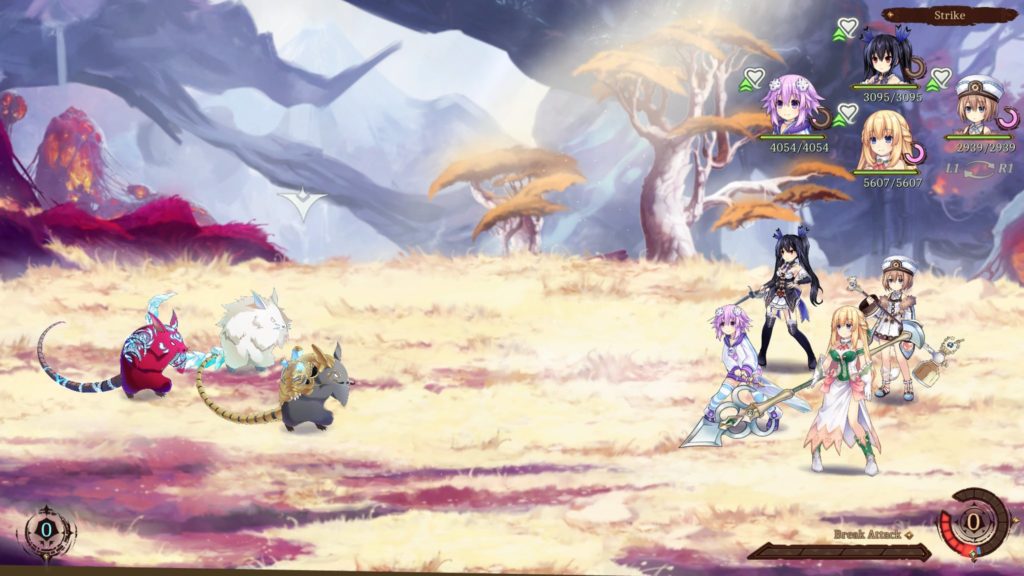
Ratasteam? Ratasnow? Rataspell? Definitely not Rattata.

Near the end of the game, a lot of the enemies simply stopped having weak points. Any trash fight without weak points plain and simply sucked. Your attack numbers were never really high enough to do large chunking damage on their own, and the ATB meter charging isn’t super fast. Because the meter is shared amongst the entire party, you’re never in a situation in these kinds of fights where you can attack with multiple people. The enemies themselves were generally never dangerous enough to make a risk/reward interesting in whether or not to save ATB charges, so the fights simply dragged out. My tendency ended up being to run from fights without weaknesses, avoid entire regions of battle, and then go to areas with known weaknesses to grind if needed. It just dragged the pace of the last 3-4 hours so much that I wish they’d have balanced the weakness system better to have it be used always at a cost of not being as powerful.

On the other hand, bosses generally had no weaknesses, but were often dangerous, so the risk/reward of saving ATB charges really came into play here. More often than not, I was saving nearly a full meter within a boss fight, then activating either a full attack combo, or some mix of buffs, heals, and spot attacks. This slowed the pace of the fights way down, but also brought them into a place where the strategy more typical of a JRPG was really combing into focus. I wouldn’t say the bosses were ever all that hard, but they were definitely the more interesting of the fights even without exploiting the weakness setup.

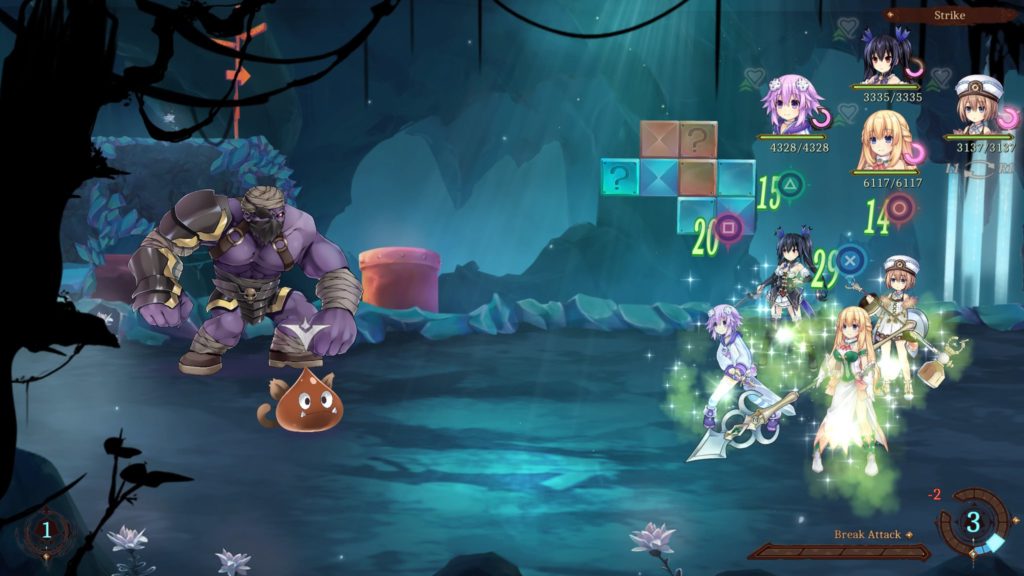
Mix Dragon Quest Slimes with Goombas and avoid getting sued? Sure why not.

Luckily, non-battle gameplay was also fairly entertaining. The traversal mechanics and level setup are basically a straight rip of the Vanillaware-style 2D game. Visually, the game has the same sort of hand-drawn-ish, but still very smooth Flash animated characters. The backgrounds are all super colorful with a bunch of parallax layers to fill out the scene. Movement is fast, and with the right amount of exploration you’ll find hidden items or entire hidden areas. As you play through the game, you end up earning more traversal abilities, so going back and revisiting areas has added benefits. If the combat had been in real-time, this would easily have fit in against Odin Sphere or Muramasa, even if it wouldn’t be anywhere on the level of seriousness of those games.

There’s also a bunch of added depth simply in gearing your squad. This game takes the modern Tales of approach of adding acquireable skills to gear, and once earned the skills can be permanently equipped. Their weapons are unique equips, but accessory gear is often shared between party members. In this way I was always playing a balance between finding skills that fit the character’s strengths, while also trying to rush skills that I knew would be beneficial to the entire party. As an example, by end game I’d earned a permanent HP refresh (1% heal per ATB bar generated) across my entire party, so rather than having to have a dedicated full time healer, I was able to craft my party into a mixed physical/magical damage rush party with only weak heals to fill out during burst damage times.

All that being said, there’s really not a whole lot of depth to the rest of the experience. The gameplay is all solid, but the game is less than 20 hours long. There’s definitely a lot of side quests, but they’re all of the gather x thing / kill y enemy variety. You could probably entirely ignore them and get by just fine. Even in combat, you could squeak by without paying any attention at all to the weakness system, although it would probably take a significantly longer amount of time to finish. However, as a breather between serious games this one really hit a good mark. It’s enough of a game to still be fun to play, strong enough mechanically to be interesting enough, and have a stupid enough story to let me just enjoy the comedy for what it is. Is this going to win any game of the years? Unlikely. However, it does exactly what it needed to do – be fun.

Game Ramblings #62.1 – Xenoblade Chronicles 2: Torna ~ The Golden Country

More Info from Nintendo

Xenoblade Chronicles 2 was a fairly enjoyable game overall. It had a great universe, enjoyable story, fun characters, and a ton of depth. However, it wasn’t without its issues. The game, like its predecessors was somewhat grindy. The UI was often in the way of streamlined leveling. Overall, despite its depth, the game often felt like it was pushing for more for the sake of more.

Torna however feels like they really embraced the idea of less is more, and the experience is much better as a result. This is an entirely standalone experience, billed as an expansion. It’s a much shorter experience with a significantly streamlined story, rips outs a whole bunch of extraneous systems to focus the leveling aspect, and narrows you onto two main titans. Some clever changes to the battle system really finish up the tweaks, and the total package ends up being much better than the base game, despite the reduction in bullet point features.

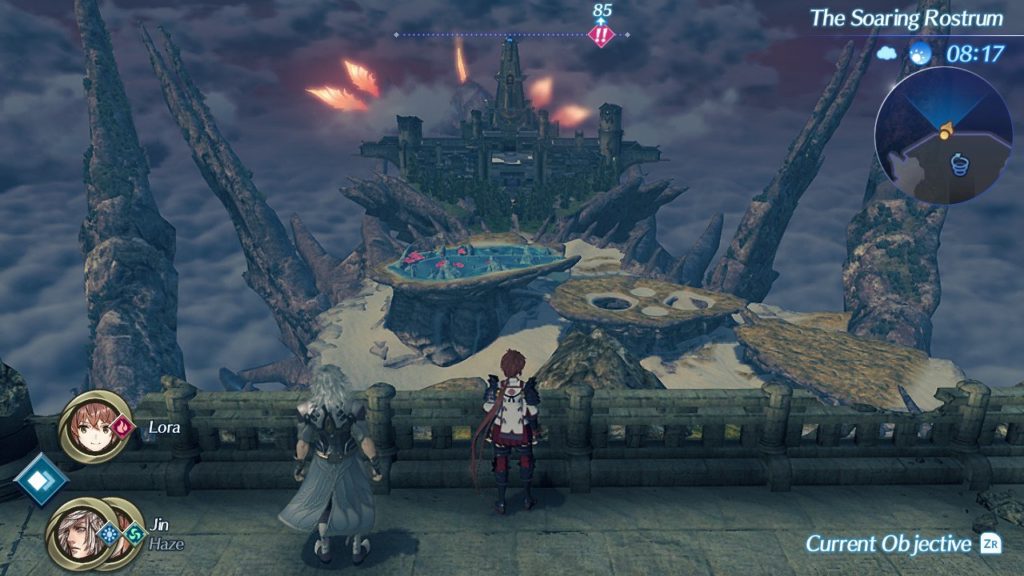
Welcome to Torna. After hearing so much about this land in the original game, it’s nice to finally be able to run around on it.

The most obvious immediate change is that almost all of the blade collecting, and therefore a lot of the metagame leveling is gone. You only get blades that are important to the story, and each party member ends up having two blades of different types. By the end of the expansion, you’ve basically got exactly what you need to finish the game with the full suite of ability types. There’s also no longer any special blades, no multi form blades, any robot blade replacements, and no mercenary guild to level up. This all sounds like a lot of removal, but that also meant that a lot of the tedious grind simply went away. It’s entirely addition by subtraction.

The rest of the leveling setup is maintained. You get XP from kills and quests, weapon points from kills, skill points from kills, and various things can be activated in each blade’s affinity chart. As a core set this ends up playing a nice balance between having a nice range of systems without having too many, and also gives you some specific subgoals to focus on, particularly with respect to the blade affinities.

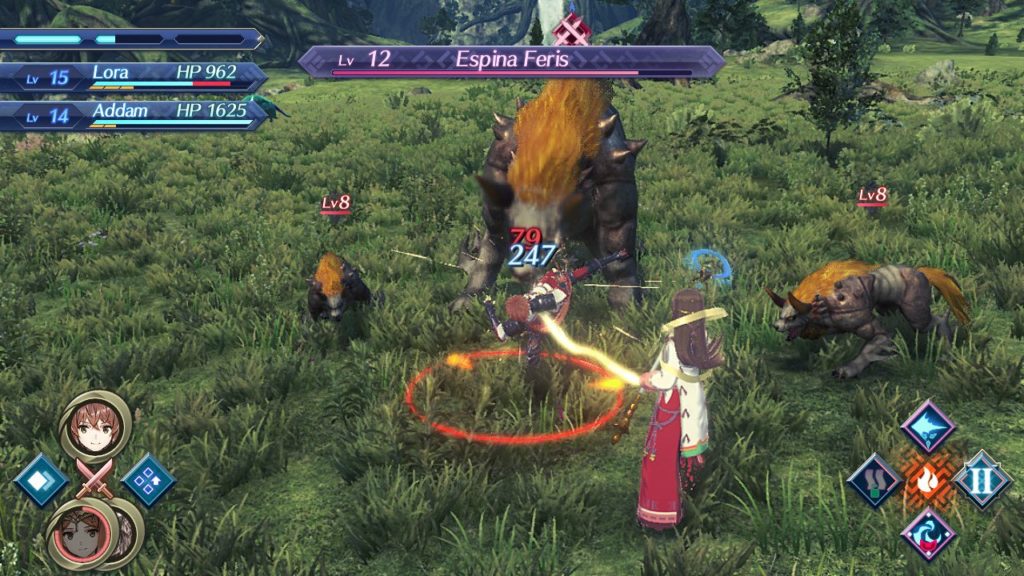
Combat should feel extremely familiar to XC2 fans, though it has some tweaks.

The battle system has also been tweaked to generally feel more streamlined, as well as a fair bit quicker paced. For the most part, people familiar with XC2 will drop in quickly and feel right at home, and I suspect they will like the changes in place.

The first big change is that blade swapping is used as a way to switch the active passive attacker, and swapping between the blades and the driver activate an attack on swap. This is used to inflict a number of status effects, particularly things like topple or smash, as well as providing a full recharge of the blade artes. In practice, it basically means that you can do a combo as follows:

  • Activate Break on one character while using all of their artes.
  • Swap to another character to inflict Topple and quickly use the full suite of artes.
  • While this is happening, the AI will typically inflict Launch
  • Swap to the third character to inflict Smash, finishing a full chain combo.

This pattern is done way faster than any similar combo would have been done in the original release. In also having the blades be the primary attacker, there’s a much more direct feel to the swap, instead of it simply being the blade out of frame swapping out.

The elemental orb / chain attack setup has also been tweaked a bit to reduce clutter. There are still orbs applied on successful blade artes, elemental orbs can be broken in a final combo attack, etc. However, the elemental chaining no longer is used to seal attacks, so a big UI element that I generally ignored is no longer there, and honestly I didn’t miss it at all.

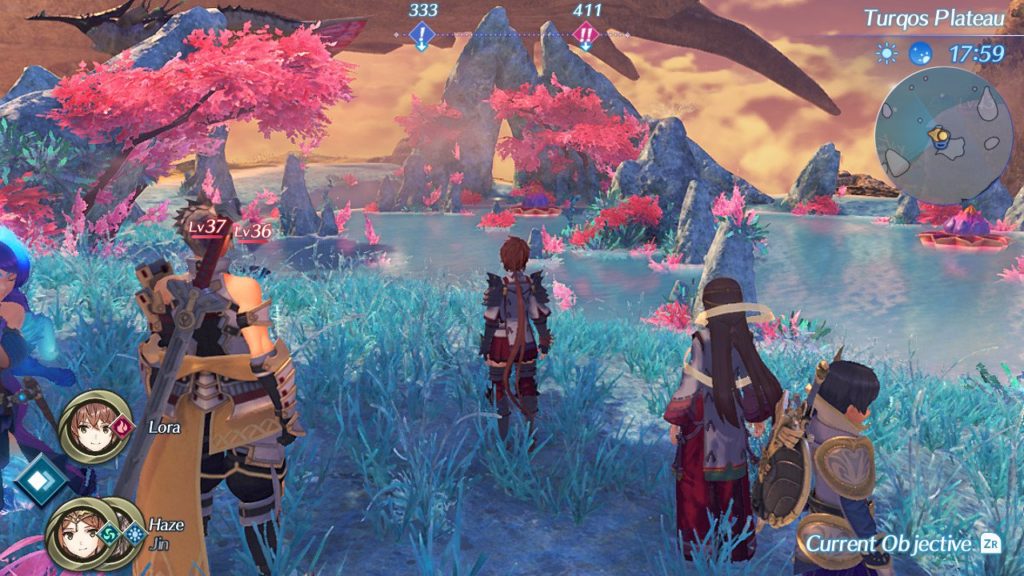
This is still a spectacularly gorgeous game, especially for an open-world Switch experience.

So in the end, this is both a great expansion on the XC2 universe, as well as a way to generally improve on the overall gameplay at the same time. As a prequel, this covers a bunch of story that was hinted at throughout the original game in a way that only improves the universe. On its own that’s enough for me to recommend it to fans of the original. However, the gameplay improvements definitely clinch it for me. This is a much better experience than XC2, and it’s clear that the dev team is learning some lessons from their past releases. Here’s to hoping whatever comes next continues that improvement.

Game Ramblings #82 – Tales of Vesperia: Definitive Edition

More Info from Bandai Namco

  • Genre: JRPG
  • Platform: PS4
  • Also Available On: Xbox One, Switch, Windows
  • Originally Released On: Xbox 360, PS3 (Japan only)

TL;DR

  • Roughly decade old Tales of title remastered for current generation, first time seeing expanded PS3 content in North America
  • Game that has aged well despite some of the improvements to the overall Tales of gameplay since its release

I had the weirdest lack of memory about the second half of this game as I was playing it, as if I hadn’t ever gotten that far in the original release. This is despite me basically finishing all Tales of titles since Symphonia. From playing it this time, I knew it wasn’t because I didn’t enjoy the game – the combat in this entry is probably what I’d consider the best representation of the more classic side-scrolling Tales of combat. I also know it wasn’t because of a difficulty spike as I never really had a point where I felt like the difficulty curve was anything but correct. At the end of the day I never did figure that out and I never hooked up my 360 to figure out how far I had originally gotten, but in my 50 or so hours with this game, I came away knowing that this still holds up as a fantastic RPG worth playing.

Combat is still the main focus here to no surprise.

Combat in Vesperia is about as close as I could point to this series’ classic combat style still playable on a modern platform. Games after this added new elements that really played with the system – Graces removed TP and added a bunch of side stepping, Xillia played around a lot more with a 3D battle space, Berseria played around with swapping characters in real time while pushing further into 3D. Basically, Vesperia pretty closely represents the end result of years of them iterating on a 2D system, and it is still a thrill to play.

The main focus here is still some really fun and fast paced combos consisting of basic attacks and special attacks. Where this game really pushed things is in the use of gear skills. Some armor, and nearly all weapons have skills that can be earned over time. Once earned, the character permanently unlocks the skill as a toggleable item. These can range from passive stat boosts to attack replacements. The real fun ones for combat end up being the combo modifiers.

These can extend your combo, make parts of your combos different elements, make parts of your combo scale better and more. It basically becomes an involved metagame in trying to build out your attack combo in a way that best suits your style in order to maximize both damage, and in many ways maximize the amount of time you can stun lock your opponents. After all, more stuns equals less damage taken equals better chance at winning. The balance here is incredibly rewarding when you find the skill setup that best meets your style, and gives a lot of flexibility to the player in fighting specifically how they want.

Get used to these guys, you’ll be spending all your time with them.

That’s not to say that all parts of the combat system have aged incredibly well, but they’re in ways that are sadly familiar to Tales of players. The AI in general can basically be depended on to do the worst thing possible, even if you tweak their AI setup. In the end my best course of action was usually keeping one person on full time healing, and not allow them to attack, thereby keeping them out of danger and having to focus on healing only themselves. The other AI generally had their best result in using ONLY basic attacks, or they’d sometimes stand around just waiting to use skills. I’d much rather them be doing basic attacks to stun the enemies, and allow me to run around doing larger damage under my own control. The stun locks also work both ways, with some of the later bosses being basically stun lock management and a setup where I spent more time free running avoiding attacks, then doing poke damage when possible instead of actively being in combat. In a lot of points bosses can basically stun lock you 100->0 if you get hit with the wrong thing and your AI partners don’t interrupt the chain.

Visually the game has held up well, with a few more modern enhancements keeping this one up to speed despite its age.

The rest of the experience is unsurprising. Visually, the anime style that the Tales of series has always used has aged really well. The resolution bump on the new consoles has helped out a bit, and some light use of depth of field and similar screen effects has given this a bit more modern flair. The story is a bit take it or leave it, with the usual amount of incoming apocalypse melodrama typical of the series. However, the characters are generally likable and the banter between them is a lot of fun. This one also has pretty solid voice acting, and the entire set of skits has also gained the voice acting done for the PS3 Japan release. Overall, this one really didn’t need to do much to still hold up, but the little pieces done to remaster the title keep it up to modern expectations for the series.

I guess my end recommendation here is basically to play this, especially if you’ve liked any of the Tales of games on modern consoles. The battle system would be a bit different than those, but still has great flow despite its often 2D nature. The gear skills in particular are a customization wrinkle that I wish more games in general would take advantage of. The rest of the experience is typical of Tales of games, and that should frame whether or not you think you’d like it. However, even having played it before, I still put the 50 hours in to finish it again so that should give the best kind of idea of how much I think this is worth playing.