Game Ramblings #215 – Pokemon Legends: Z-A

More Info from The Pokemon Company

  • Genre: Action RPG
  • Platform: Switch 2
  • Also Available On: Switch

This is such a strange game. At a glance it feels like it should be terrible – a Pokemon game contained to a single city with limited zones in which to catch Pokemon. However, they made a crucial decision to focus on combat and boy did that benefit the game as a whole.

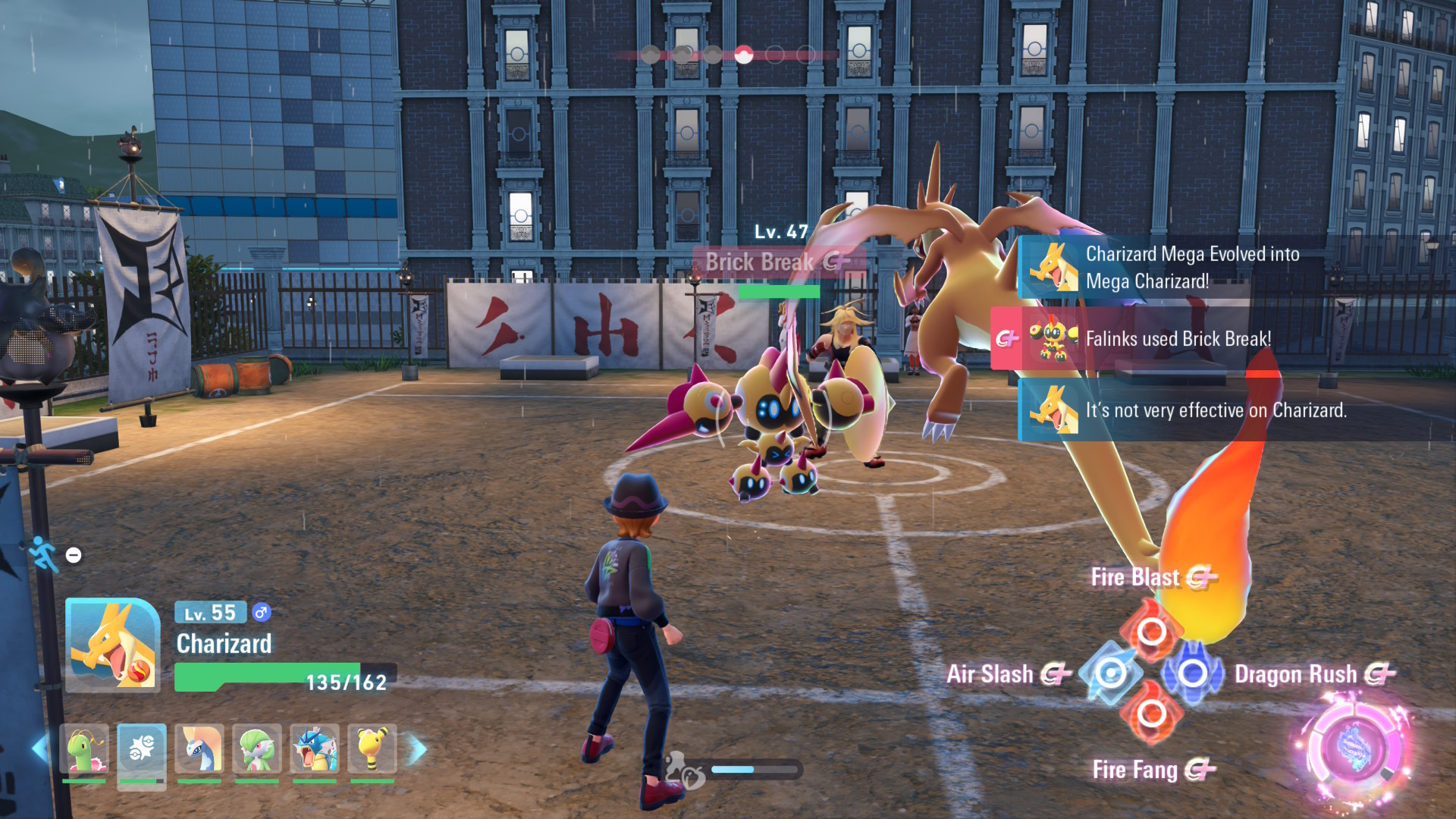
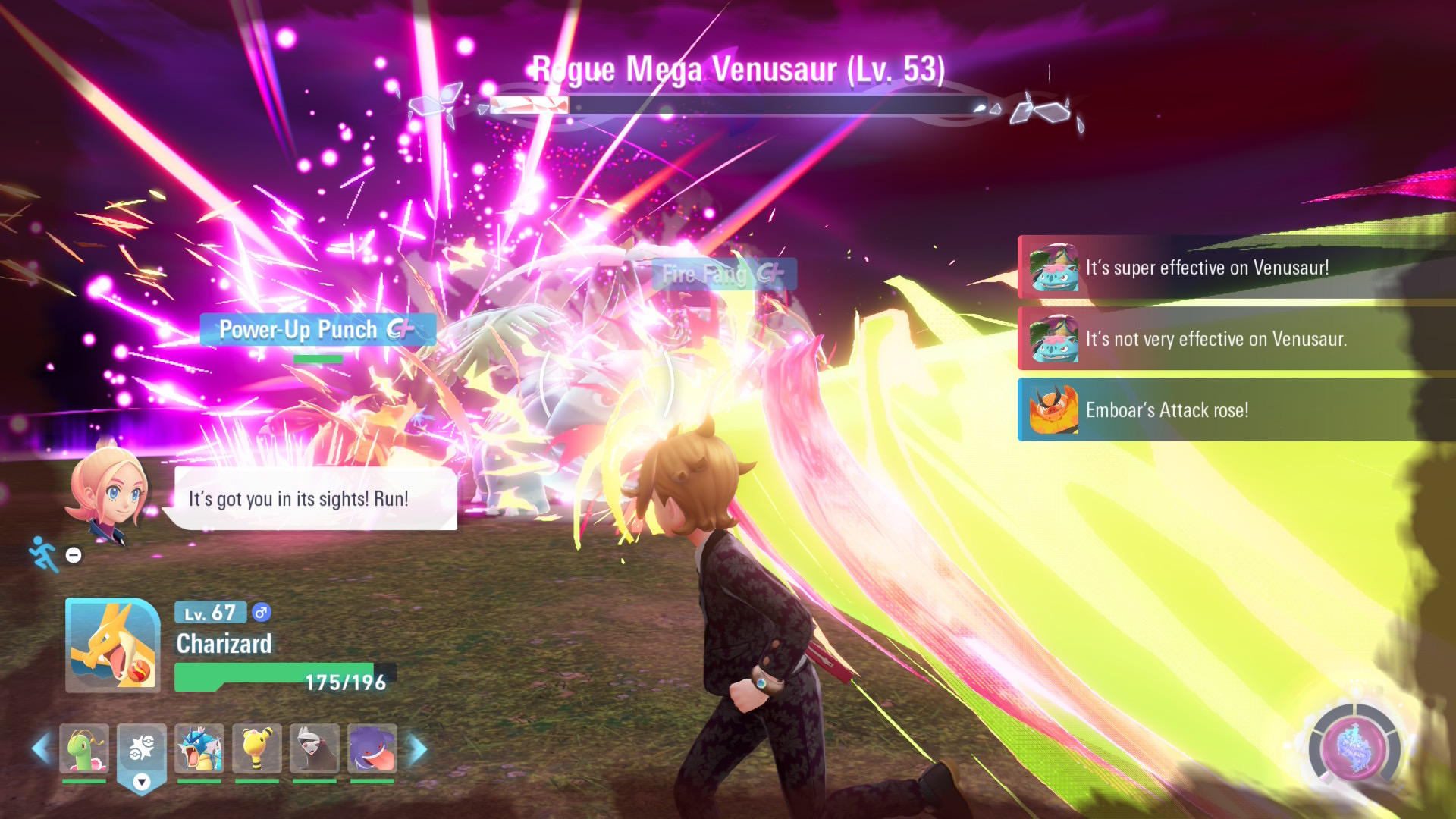
If you’ve played the previous Pokemon Legends: Arceus, there’s really nothing to talk about except for combat. Simply put, combat is now done in real time in all situations. There’s no difference between fighting a wild Pokemon and fighting a trainer battle and they really lean into that. You as the trainer run around and avoid being hit by stray attacks while simultaneously hitting buttons for relevant attacks. Pokemon are quickly hot swapped so trainer fights don’t lose the real time feel as you go through your lineup of Pokemon swapping out to gain type advantages. It plays a really tight line of familiar but new for the series, even compared against the same feeling of Arceus. However, I do think it has some rough spots in their first attempt at real time.

The first obvious problem is that I think the player’s active Pokemon has too little agency of its own to actively fight. All ranged attacks are relative to the player and the Pokemon tries to follow the player around if they aren’t being actively commanded, and that’s frustrating as hell. As a player, I have to reposition frequently to avoid being hit by attacks, which then causes the Pokemon to get into spots where it has to wildly reposition just to throw a ranged attack which is always at a fixed spot relative to the player’s position, wasting a bunch of time while it repositions. The Pokemon then often gets into spots where its ranged attacks hit things that it should simply be obviously avoiding. It might be an edge of a fence or a tree or the top of a stair that will clip the attack, blocking it from hitting. It’s just consistently dumb as shit that this occurs, because a Pokemon should clearly be instinctively smart enough to reposition itself a bit to avoid this.

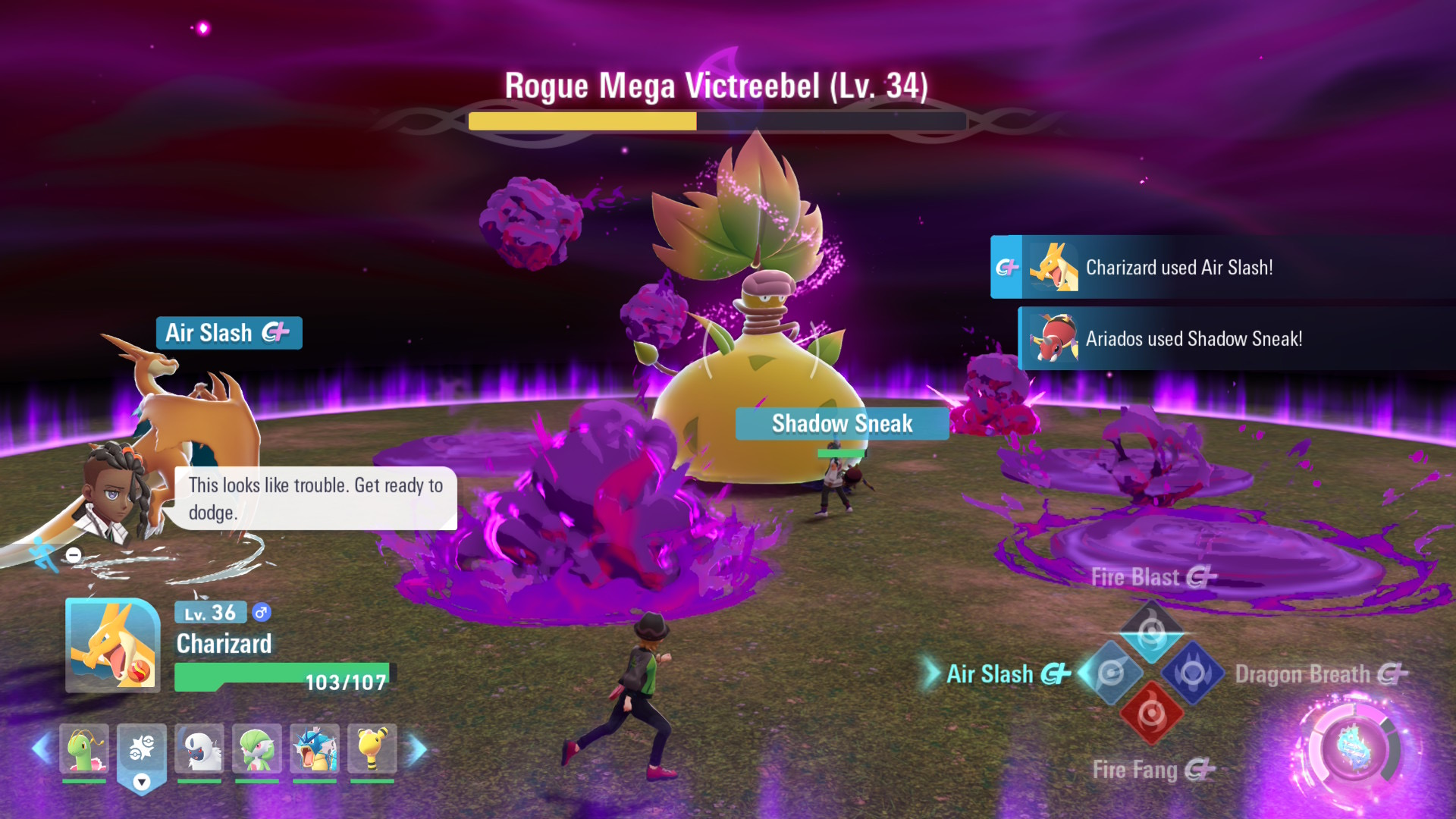
Where this gets particularly frustrating is that they very clearly designed the big PvE boss fights to avoid this. Those fights are all just against a Pokemon on a flat surface, and they’re spectacularly fun. These fights become some of the more chaotic avoidance situations in the game, ranging from anything like pool avoidance to bullet hell situations. Some of the early ones are certainly more straightforward damage checks, but later ones start to test the player’s ability to not just faceroll the attack buttons and actually stay moving more often. And they WORK because they DO NOT REQUIRE THE POKEMON TO THINK.

This is then compounded by the large amount of trainer battles that the game pushes you into. If Arceus was about collecting and not having trainer battles as much as possible, this is about as far opposite as you can get. There are entire segments of the game loop dedicated to trainer battles, where sections of the city are cordoned off each night just for trainers to battle in. This is where you get a lot of mileage out of having a traditionally setup party to counter as many Pokemon types as possible, but it’s also where I have my second real problem with the combat system.

Trainer battles in traditional Pokemon games largely involve you guessing your way through the first Pokemon then distinctly having the advantage to switch Pokemon simultaneous to your opponent, leaving you with a type advantage as long as you can generally know or guess the upcoming Pokemon’s weaknesses. That isn’t present here, but it’s also combined with an annoying delay when switching Pokemon where the Pokemon has to play a spawn animation before it can even begin to move for both the player and NPC characters. Generally it leaves the Pokemon open to being hit at least a couple of times before it can even begin to move. This leaves the defending Pokemon with an always present inherent disadvantage to having been put into battle, which feels generally off in the spirit of Pokemon fights. It’s not necessarily that I want to have the guaranteed type advantage of the turn-based games, but I want to at least be able to quickly get a Pokemon into battle and fighting, rather than watching it slowly spawn and be hit.

However, the bulk of the trainer battles in this are inherently more interesting because of the open world and real time nature. You can sneak up on people and knock out their opener Pokemon before they even know you are there. It’s such a dick move if this was to be happening in real life, but as a videogame power fantasy it’s spectacularly fun and effective.

The thing is, despite me having what feels like real core problems with combat I still found this to be so tremendously fun that it again represents what I think is a better path forward for the series. If Arceus represented a quicker paced capture dynamic with an open world, this represents the feeling of Pokemon in a way that more closely matches the TV series. This feels much closer to what I think Pokemon is, with more trainer fights and less capturing but done in a much quicker paced setup inherently due to it being real time. This keeps important things about the core metagame for me – forming a party tuned to type advantages, swapping them out based on what my opponents bring in, making sure that I’m tuning my move set to take advantage of things that aren’t inherent to the types of my Pokemon – and reducing overall user friction by making everything easy to get to.

If I then take combat at face value and assume that some iteration could be done to smooth it out a bit, this represents a future that I think should be core Pokemon and not side game experiment. This combat applied to the Scarlet/Violet world design would work just as well, and in particular would allow them to eliminate their time saving measure of auto result-battles in the open world that always felt like a grinding crutch to me. This combat applied to gym battles in Scarlet/Violet would make those feel like even larger spectacles. This combat applied to Terastallized Pokemon fights would make those feel like skilled battles instead of dice rolls around picking the right overpowered Pokemon. There is just a lot to be gained from Game Freak paying attention to what they are creating with these experiments, and the hope is that they do pay attention instead of throwing it away again.

Game Ramblings #210 – Donkey Kong Bananza

More Info from Nintendo

  • Genre: Platformer
  • Platform: Switch 2

What a treat.

I know I’m a bit late on this one, but I finally got a Switch 2 so I had to hop on this immediately. As more information was revealed it became clear that this wasn’t just a Donkey Kong title, but instead a prequel to and continuation of the ideas originating in Super Mario Odyssey. In practice, it absolutely feels like that, but given some iteration to really solidify the core meta loop that solved a lot of what I felt was unnecessary grinding in the original.

I enjoyed the hell out of Super Mario Odyssey but I didn’t really enjoy that everything was so heavily gated to collecting large amounts of inconsequential moons all over the place. I simply don’t play games to that level of care for completion anymore. Going into this I dreaded having to find 40 shines hidden in spots for the hell of it to get to the next area. Lucky for me, that is all gone. There is now such an obvious distinction between main path collecting needs and collecting for the sake of it. The main path has goal locations and you happen to collect things between those locations, and maybe the main location has a goal to collect a specific banana or a piece of a record during it, but they are goals and you beeline straight to them and you move on with your life, and if you happen to collect things on the way then that’s generally fun and cool. What I’m not doing is what felt like grinding out a counter to move on.

And I’m very serious about beelining. The fundamental mechanic that the game is built around is the ability to just dig through the environment and make your own path. That is generally what solved my collection dislikes about Odyssey. In this case, most things that you can collect have a clever solution and a chaotic solution. There’s tons of clues all over the place about places to explore – changes in the ground texture showing possible caves, people standing around talking about the possible location of bananas, suspiciously placed objects that seem like they can only hide something. If you’re paying attention you will simply find a lot of things, and that isn’t different from how it worked in Odyssey.

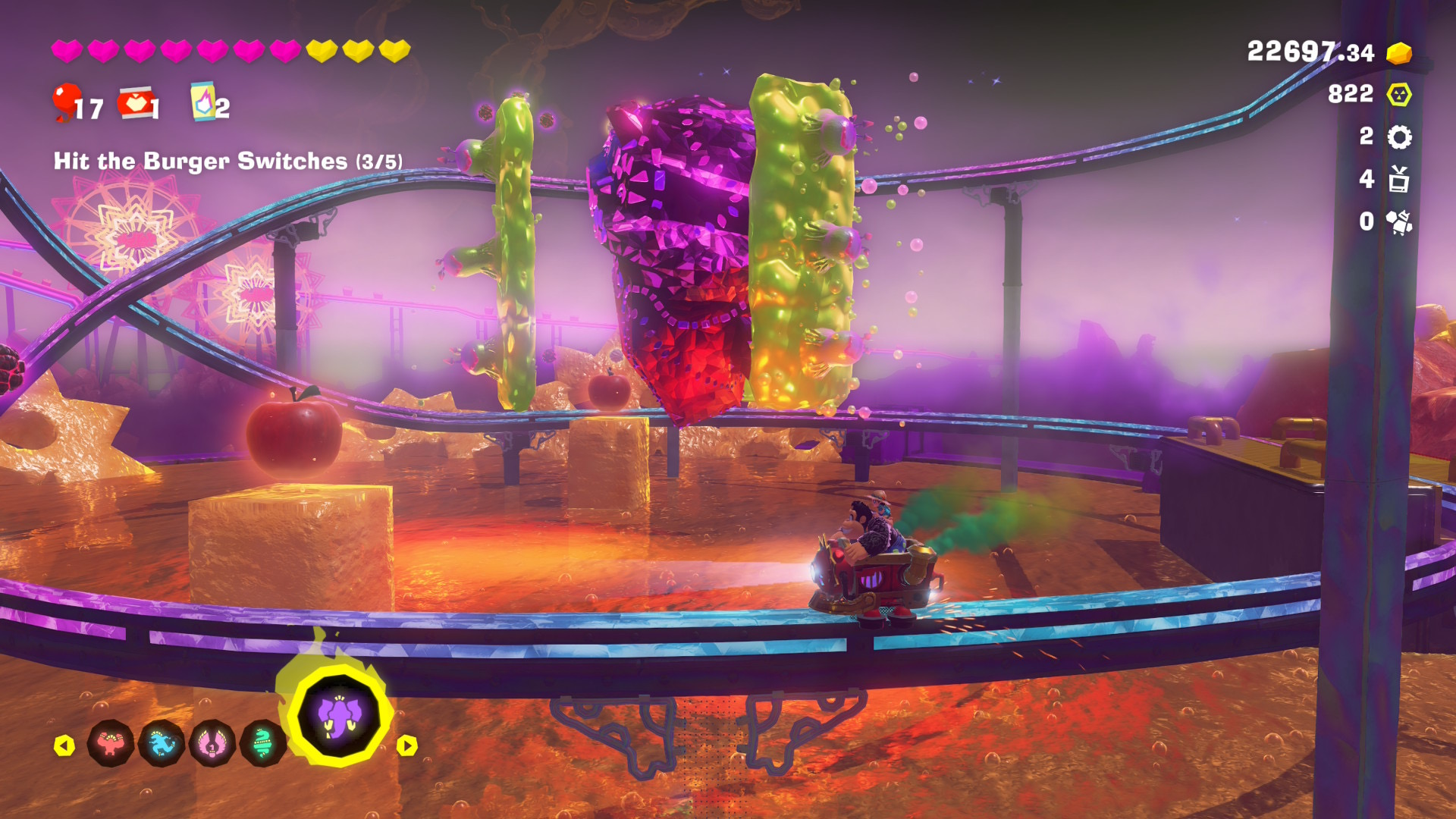
However, there is now also the dumb ape solution. Your goal is 300m in a direction and there’s a town, cliff wall, and a bunch of people in your way? Punch in a straight line! I cannot tell you how many times I would be bashing my way through a cliff only to find that I ended up in a cave that done “correctly” would have required me to search out something like an explosive to blast through a metal wall blocking entrance to the cave. In those cases, being a dumb ape going “lol punch everything” got me a faster reward than playing correctly, and I loved the fact that game is literally built to allow this style of gameplay.

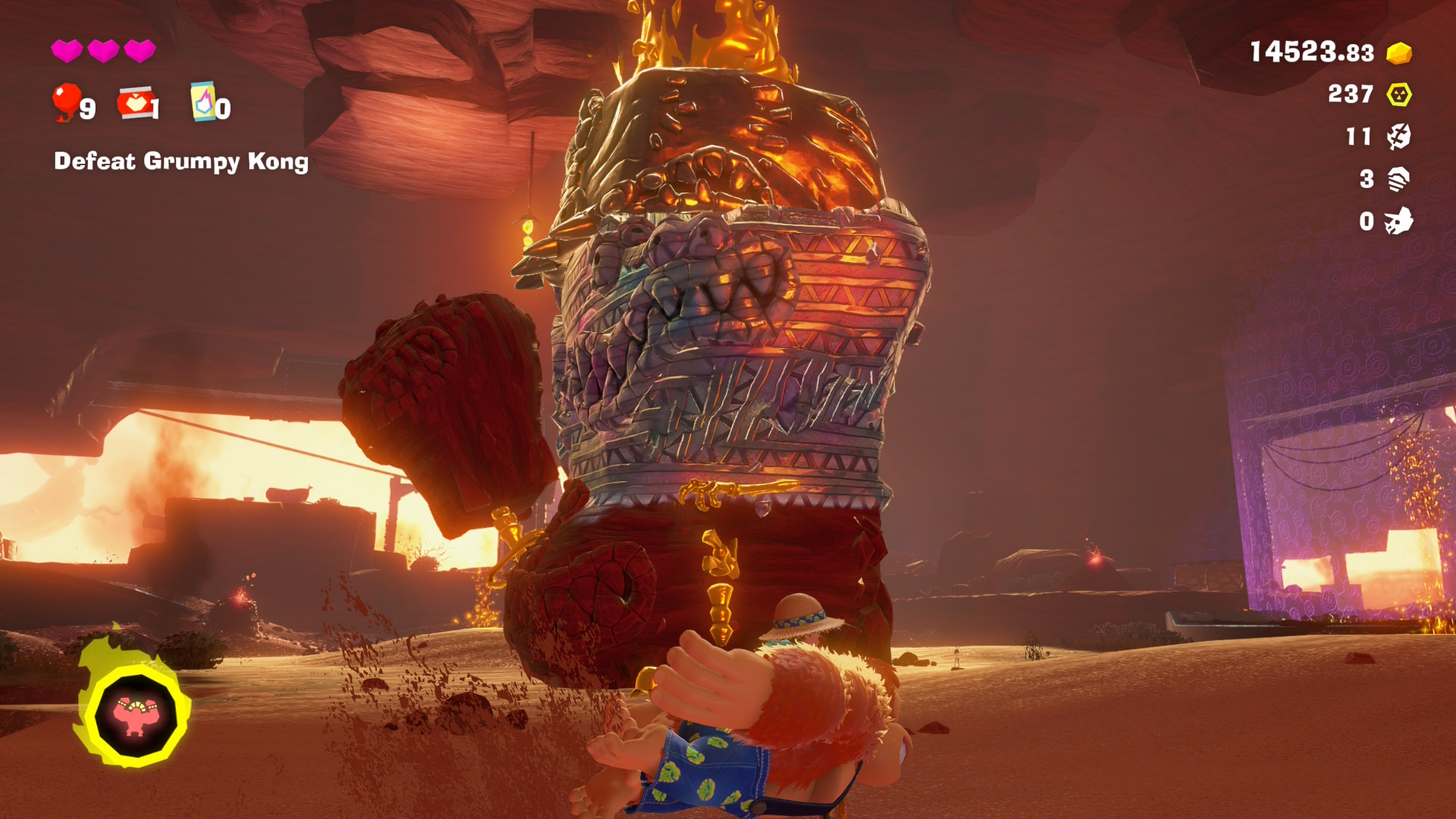
That’s not to say that some things didn’t require me to actually pay attention, because there are certainly core story segments that do require some care. Bosses generally required me to pay attention to specific mechanics and execute them well. Story-specific bananas generally required me to execute mechanics well. Optional challenge rooms (of which there are a lot) generally required me to carefully get through them. However, the balance of gameplay felt a lot more tuned to where I am in life now. There are a lot of moments where I can just shut off my brain, be a dumb ape punching things, and have fun. I can then save those moments of paying attention for specific times where the situation required it. If I compare this to my memory of Mario Odyssey, I feel like I had more relaxed downtime and better specific periods of excitement in a way that struck a better balance for post-work post-kids bed time sitting in a chair and playing.

The weird thing to me is that that change in how I was playing the game changed what to me was a negative about Odyssey – the sheer amount of collection – into something that I largely think is a positive here. Where in Odyssey I felt like I had to collect a lot of things, here I simply happened to collect a lot of things. Where in Odyssey I felt like I had to weave around and explore everything to collect what I needed, here I collected enough simply being a dumb ape and barreling through the environment. Ultimately the change is that instead of feeling forced to explore, I simply was exploring for the fun of it.

This is very much a classic Nintendo first party title. It’s relatively easy in the mainline path, has plenty of challenge when you go off of that, and concludes in a place that left me wanting more. They took what was already a solid foundation and passed it through iteration of core mechanics and adaptation to another part of the Mario IP. What came out of that is a game that is surprising in how well it worked and is almost certainly going to be seen as a much higher point than Donkey Kong 64 in terms of pulling this part of the universe into 3D. I don’t know if I could recommend buying an entire new console to play this game, but if you’re going to buy a Switch 2 anyway this is where you should absolutely start.