Game Ramblings #216 – Hyrule Warriors: Age of Imprisonment

More Info from Nintendo

  • Genre: ARPG/Musou
  • Platform: Switch 2

This was a wildly fun experience, but as I played it I was left with a particular thought – this is not a particularly good musou game. In isolation, this is a much better combat experience than your typical Warriors game but so much of it occurs in either 1-on-1 boss fights or small scale combat encounters, which is completely the opposite of what I expect out of the genre. So if it steers away from the core gameplay loop that much, is it still worthwhile?

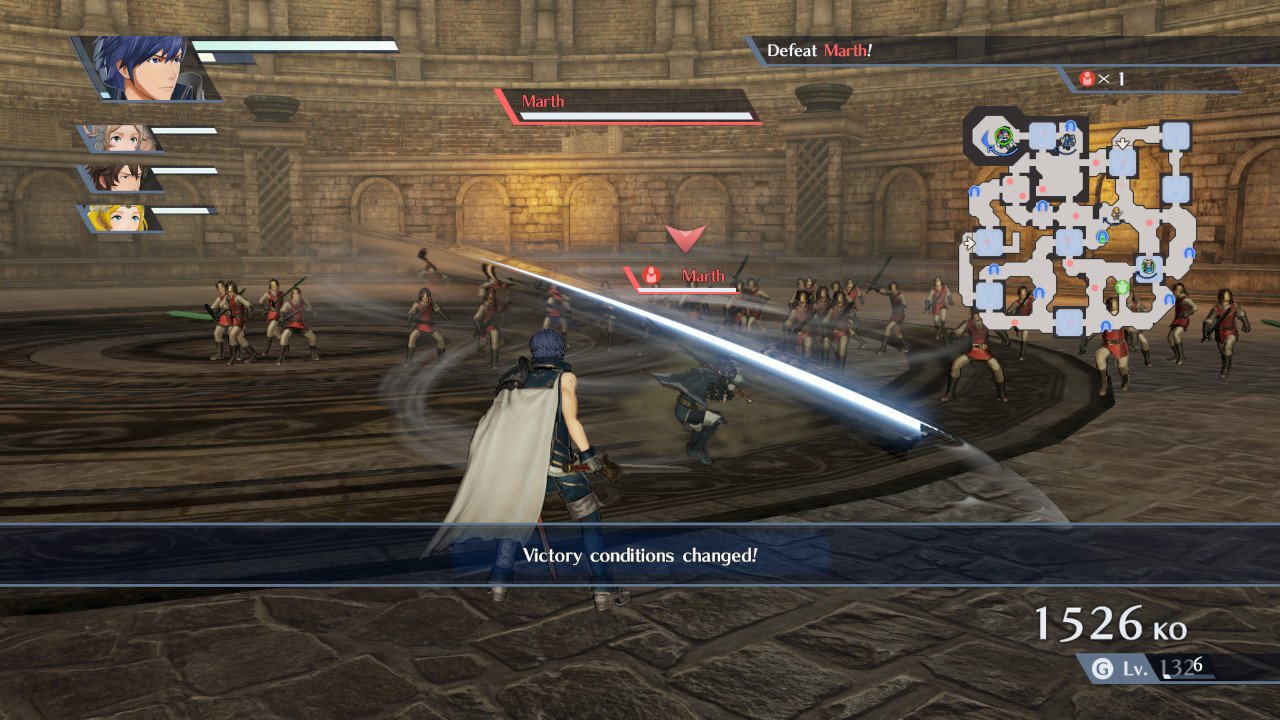
When I think of your typical Warriors title I think about huge multi-person battleground combat maps where I’m trying to capture and keep hold of multiple camps while fighting off enemy commanders, leading to fights where I’m easily eclipsing 1000+ KOs in a single round. The first Hyrule Warriors certainly leaned into that for the most part. However, that screenshot above is more typical of your Imprisonment battle with large ones reserved for a few very particular story missions. Generally speaking, the bulk of content here is a 5 minutes or less game loop where you finish a couple quick objectives on the way to a solitary boss fight. Perhaps it’s because I didn’t play much of Age of Calamity but it caught me off guard.

If the musou experience is what you’re looking for, you just aren’t going to get it here. Even in the large fights it feels mostly lost. Sure, I capture camps but very few of them are ever in future danger of being recaptured by enemies. Sure, some secondary commanders spawn but they generally bee line right for one of my NPC commanders. Sure I have a party of people that I can command, but they are wholly incapable of taking out enemies or capturing points on their own, leading to a lot of swapping who is active as the player. If someone were to hop to this right from Dynasty they would probably be very confused as to why it’s carrying the Warriors name.
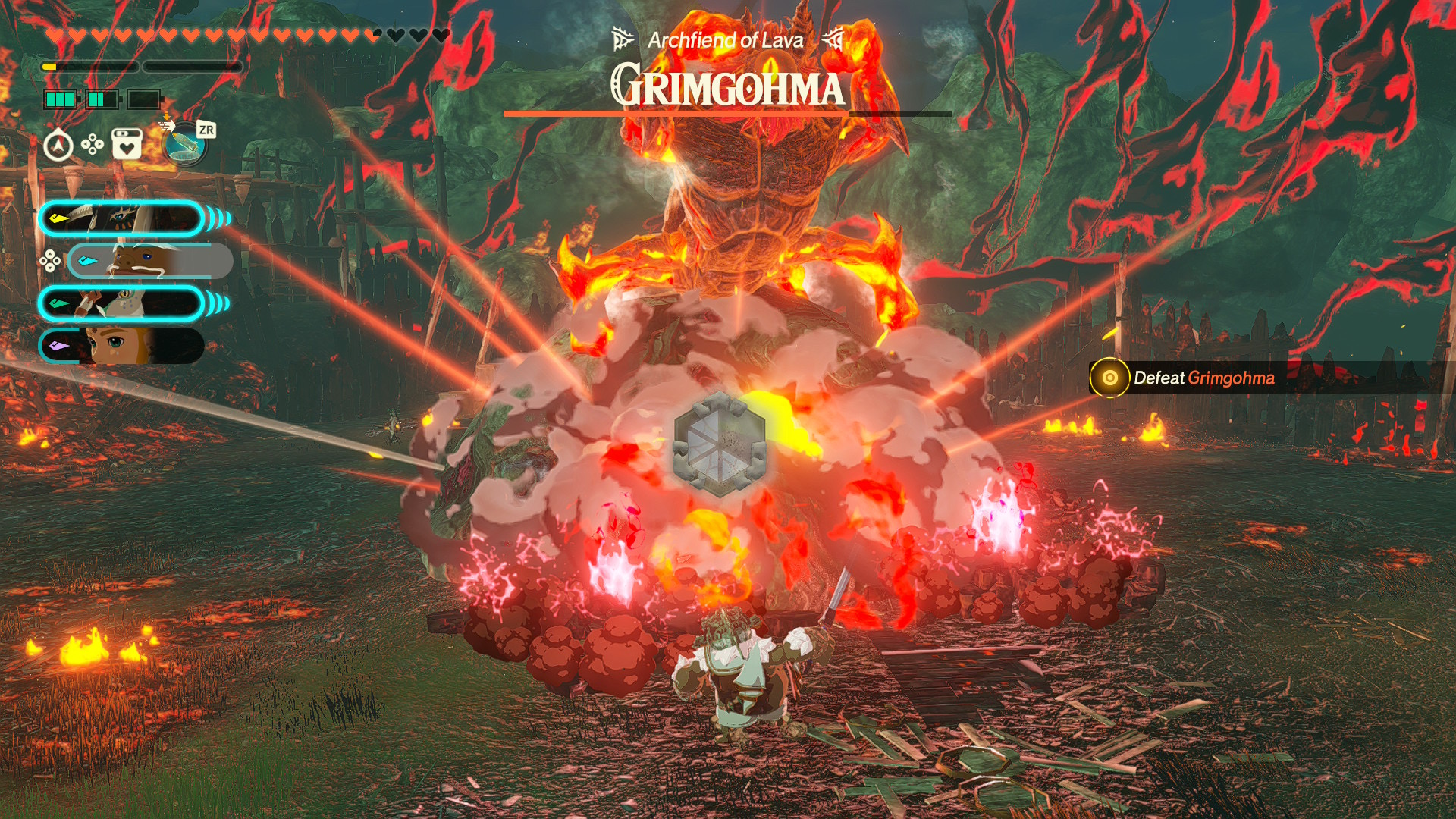
But then you play some more and the combat against bosses in particular starts to grab you. Boss fights are quite simply not just hack and slash encounters.

There are elemental attacks to take into account and chaining that you can do. For example, you can freeze an enemy with a series of ice attacks, then hit it with lightning for explosion. You can combine wind attacks with other elements to create tornadoes capable of hitting large groups. you can burn an enemy then hit it with water or ice to open it up for critical damage. Dodging takes on a ton of importance here relative to other Warriors games as well. Executing a perfectly timed dodge opens up the enemy for a flurry attack where the player can lay in a bunch of large damage, as well as knock down its stun meter. Once that stun meter is knocked down all the way, it also opens up the boss for a large attack generally capable of cutting down a quarter or more of its health at once. This is then combined with the ability for pairs of player characters doing combo attacks together for similarly large damage.

These one-on-one encounters then feel a lot less like a musou experience and more like a traditional action combat game, and that is greatly to its benefit. Where I enjoyed the original Hyrule Warriors for being a musou game, I started to enjoy this game because it was not. What it ends up being for me is a game that feels like a Hyrule experience shrouded in war, rather than the more individual experience that Zelda games typically have. It feels like it’s leaning on the action combat of the series, but not leaving away the fact that in war things are often going to be faster and more chaotic. The game loop then generally being short 5 minute segments ending in a boss makes a ton of sense. You are being encouraged to quickly dispatch with unimportant KOs and focus on the small handful of big bads that are really tuned to be fun to fight within the combat paradigm that they built for the game.

So that gets us back to the question – if it steers away from the core gameplay loop that much, is it still worthwhile? I think the answer that I arrived at is that yes it is still worthwhile, and it took the game continuing to beat me over the head with spectacle to get there. As the game went on I stopped thinking about whether or not I was playing a musou game and thinking more about timing my dodges correctly. It was less important that I was KOing 1000 things and more important that I was KOing the one boss. It was less important that I was doing hack and slash chaos and more important that I was chaining elemental attacks. The combat fundamentals end up being so much fun that the things that I initially felt were missing ended up fading into the background. Yes, this may not be a typical musou game, but in the process they’ve crafted something else that is a lot of fun on its own.

Game Ramblings #65 – Fire Emblem Warriors

More Info from Nintendo

  • Genre: Hack and slash ARPG
  • Platform: Switch
  • Also Available On: New Nintendo 3DS

TL;DR

  • Probably the best Warriors game that will come out this year
  • Same Warriors gameplay that can be expected from Dynasty / Samurai / Hyrule Warriors games
  • Good implementation of standard Fire Emblem mechanics (weapon triangle, class upgrades, etc)
  • History Mode not as varied as Hyrule Warriors‘ Adventure Mode, but still a nice side mode to the main story

Being perfectly honest, there’s no real surprise to playing Fire Emblem Warriors if you’ve played any previous Warriors title.  You’ve got a big ass field with forts, captains, commanders, and outposts that have to be captured and defeated.  You’ve got big story events that cause a constant ebb and flow of control of the field as you and your commanders attempt to win battles.  You’ve got a huge variety of units at your disposal of multiple types.  However, like Hyrule Warriors before it, this game takes the standard mechanics of its parent series and marries them nicely with the standard Warriors gameplay to do just enough to differentiate itself from the mainline games.

It’s not just combat mechanics that are pulled over from Fire Emblem. Unit class mechanics are as well.

The big thing that’s always been noticeable about the spinoff Warriors titles is that they nearly always do a good job bringing together the core hack and slash mechanics with things straight out of the franchise they are pulling from.  For Fire Emblem, this ends up pulling from a few specific areas.

On the gameplay side, the weapon triangle is the big one.  The core FE mechanic of swords beat axes beats lances beats swords is still there and as important as ever.  There’s also the archer advantage over flying units and the inclusion of mage and dragon units and their typical advantages and disadvantages.  Overall this does two great things for this game.  For one, AI units feel a lot more valuable than in my typical past experience with Warriors games.  While the AI battle pace is still slow, I can now order units into advantageous fights and assume they will win, allowing me to take the unit I’m in control of and deal with more pressing issues instead of having to be involved in every single captain or fort fight.  It also means that I was more willing to use a large roster than in past games.  I wouldn’t ever want to be at a complete disadvantage, so I’d spread my types around and hop between units, taking advantage of the weapon triangle to fight with as many units as possible throughout the game.

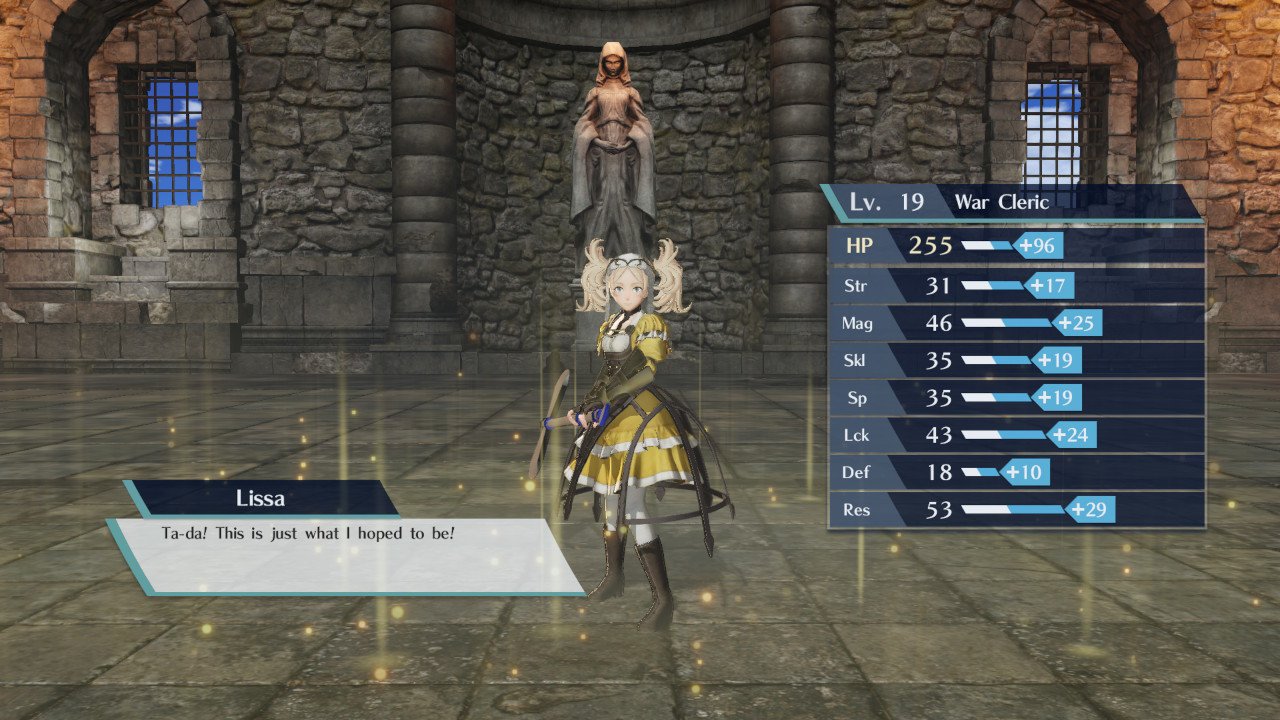
There’s also a few smaller features at play here that are straight out of Fire Emblem.  Like more recent games in the series, pair units are included, and allow for some flexibility in covering a disadvantage of one unit.  For example, pairing an axe unit to a sword unit allows for turning around the disadvantage of fighting lances pretty handily.  Unit bonds are also available, which unlock character-specific items that can be used for some of the higher level upgrades in the game’s version of the skill tree.  Finally, master seals are available, which unlock the higher tier class for a given unit.  In general, like Hyrule Warriors this game once again manages to feel a lot like its source despite the obvious change in style from a tactical RPG to an action RPG.

The rest of the mechanics are all Warriors, including the flashy specials.

Everything else that is there is to be expected.  You’re still going to be facing seemingly endless hordes of enemies while tearing through the battles.  You capture outposts to minimize extra spawns, capture forts to lower enemy morale, defeat captains and commanders to eliminate high powered dangers, throw flashy special attacks to eliminates dozens of units at a time, and more.  It’s as satisfying as the Warriors games ever are, even if it often feels like barely organized chaos at times.

That’s not to say there aren’t some weird little things that are fairly unique to this game.  Despite the unit variety, I pretty much exclusively stayed away from flying units.  While they were fine in the hands of AI, I often found that they would lift into the air during large combos, causing me to stay in the air flailing at nothing.  It was strange and frustrating, and generally just wasted a lot of time.  I also generally had some problems using enemy level as a gauge of relative power, particularly in the History Mode side content.  Even within single battles, I occasionally found myself battling things of the same level and same weapon type with wildly different results.  While some of this came down to simple character archetype stats, it threw me off enough times to consider it a bit unexpectedly weird.

The game likes to play favorites, giving you the generally most popular units from Shadow Dragon, Awakening, and Fates.

All that said, I generally didn’t have that many issues with the game.  Is it a deep game? Not really. You run around, kill shit, rinse and repeat with a bit of variety in mechanics between maps.  Is it an innovative game? Not really.  It takes the same core mechanics from Warriors and Fire Emblem and combines them into something that happens to work.  But is it a fun game?  Absolutely.  Even if it’s kind of stupid fun I can be pretty happy about that.