Game Ramblings #217 – Metroid Prime 4: Beyond

More Info from Nintendo

  • Genre: FPS
  • Platform: Switch 2
  • Also Available On: Switch

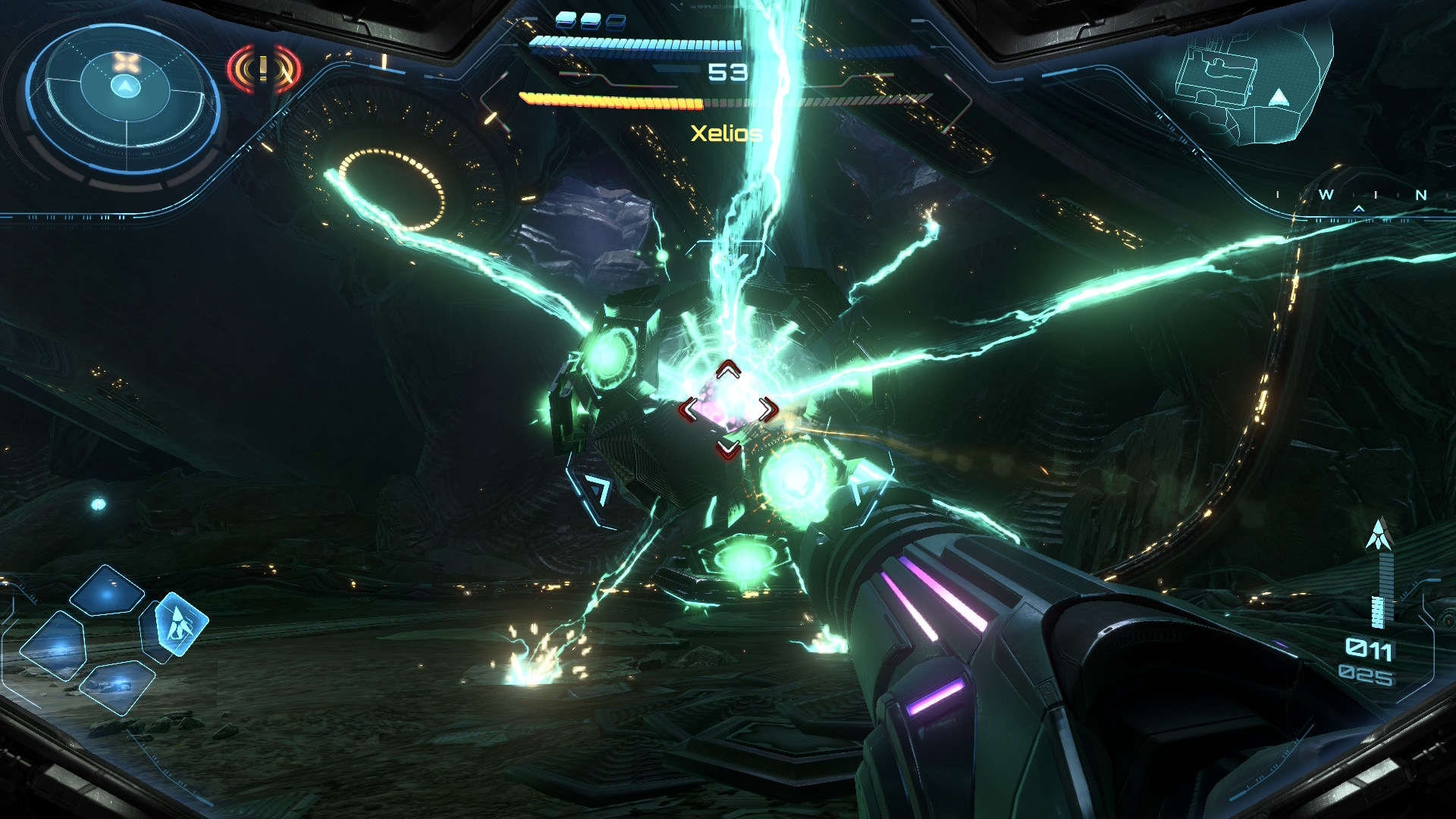
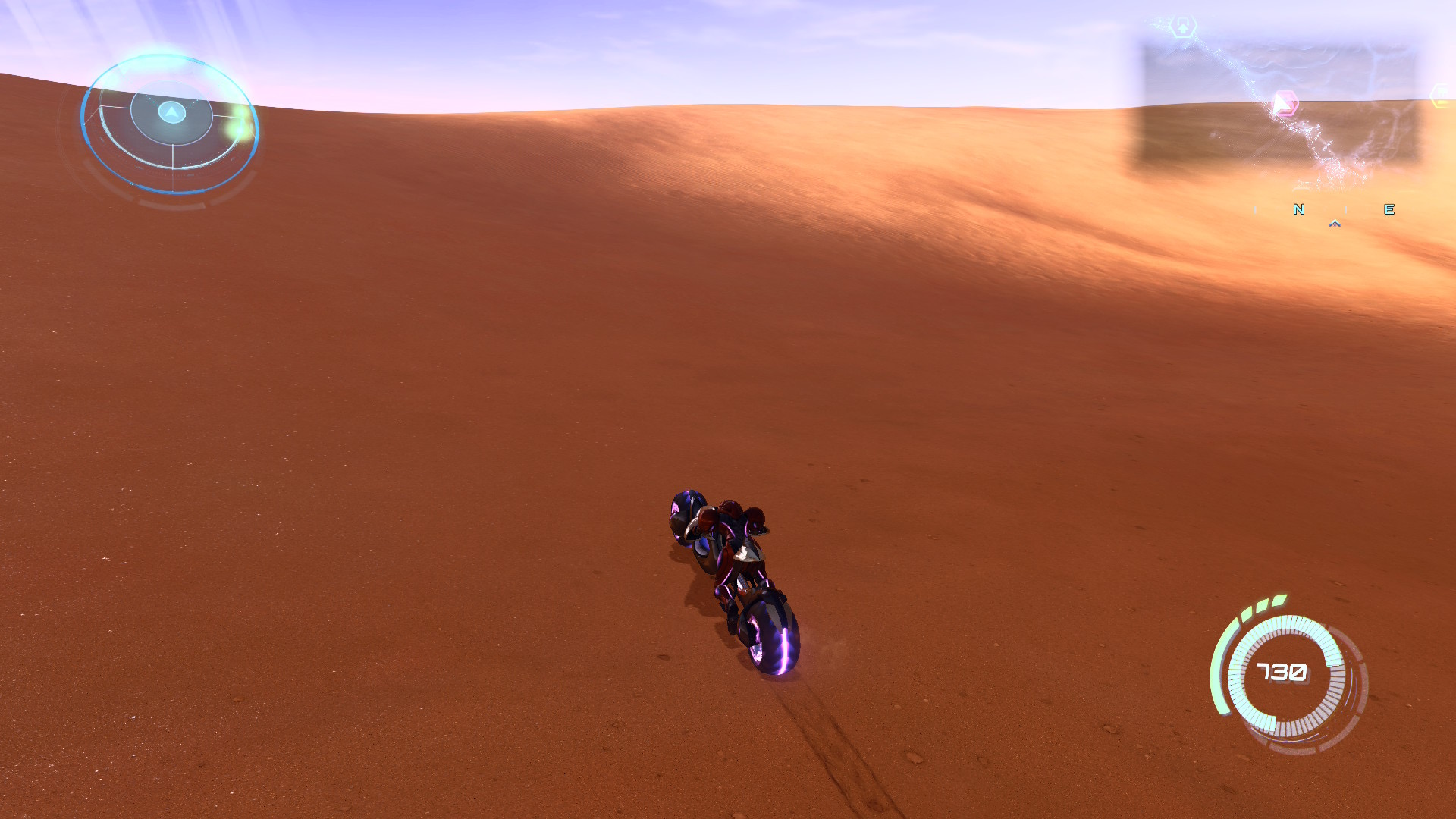
This is a game searching for a core, and that seems to be something that was recognized by the team. It is often a really good first-person shooter with level and boss segments that rival any recent story-focused FPS campaign. It is just as often an excruciatingly boring experience driving across a barren desert. It is also frustratingly in opposition with what a Metroidvania wants to be to the point that I would argue this has no real Metroidvania elements. I wouldn’t go as far as to say this is a bad game, and I admittedly did generally find it to be fun, but it is obviously something that had troubled development.

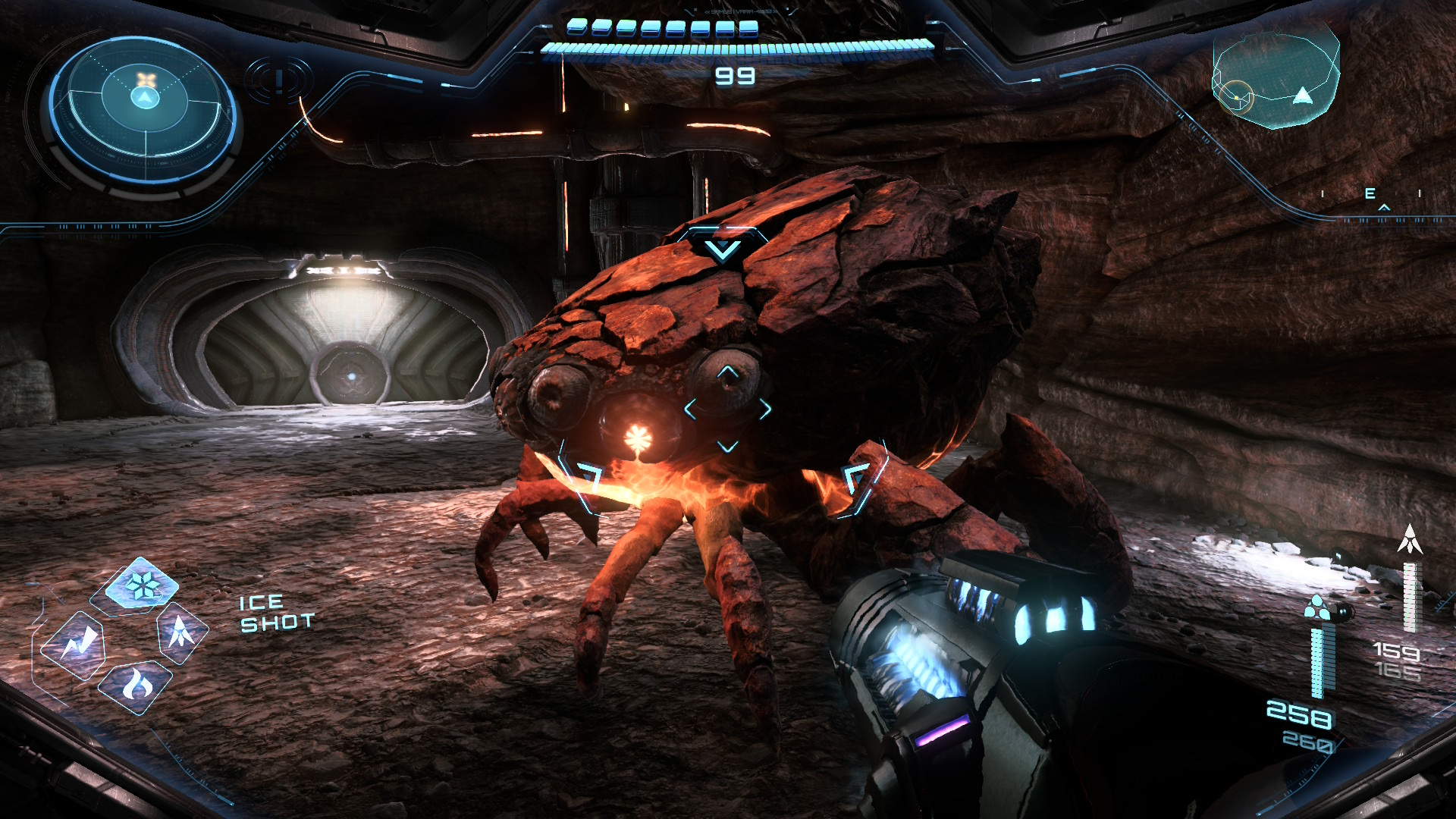
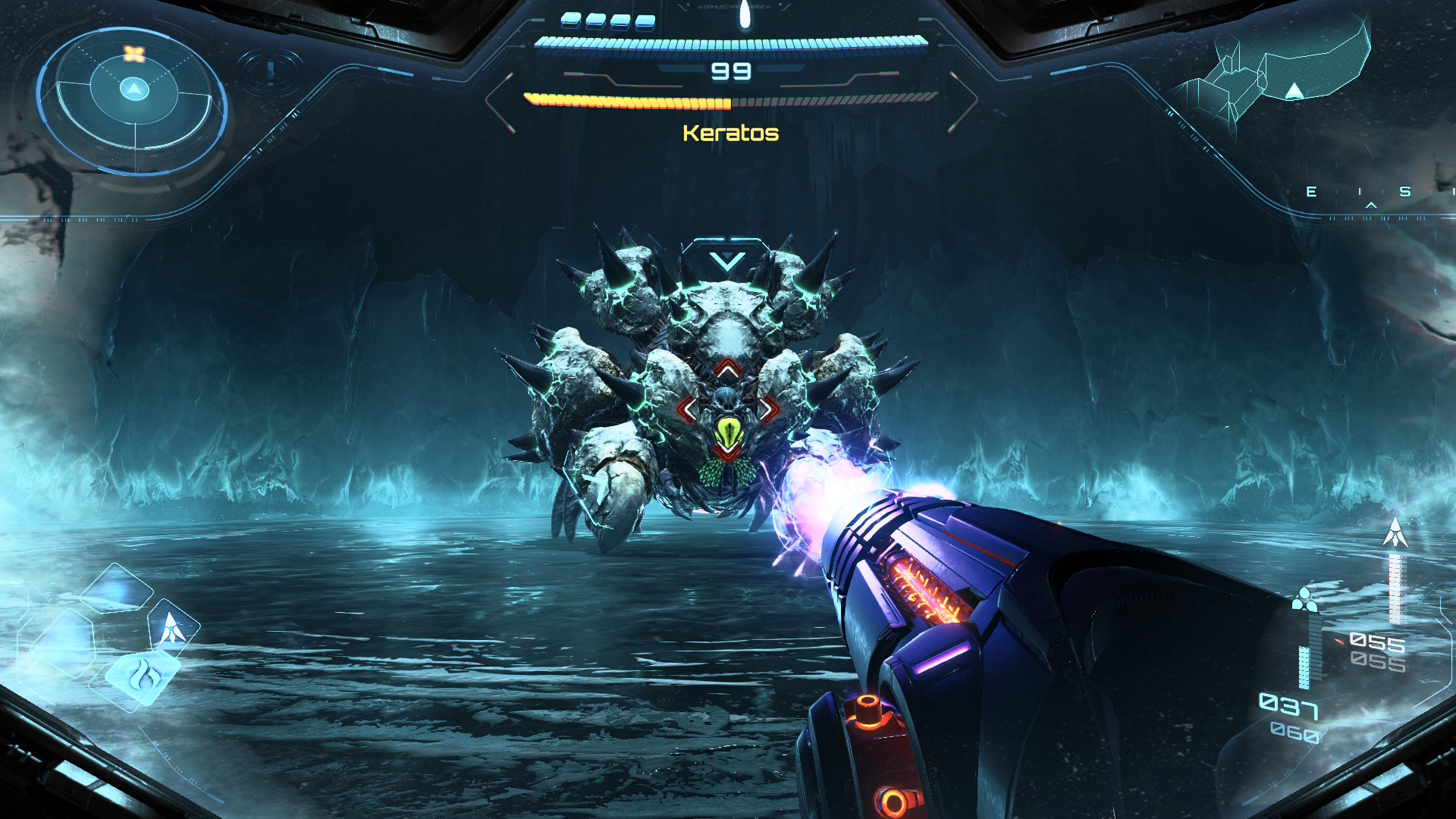
There’s points where this game just works and still feels like Metroid Prime and it’s brilliant. The first pass through each region when you have the right tools is pretty universally fun and is universally capped by a really good boss fight at the end of the segment. It’s in these places where the game really feels like Prime. You’ve got a little puzzling, a little combat, a little platforming, and a fun upgrade somewhere along the way. All of this is backed by it running at 120 FPS on Switch 2 and a modern refresh of controls courtesy of the Prime remaster to really support a better overall game flow than on the Gamecube. The problem is that things beyond the core didn’t really work out well.

Some of these things are small. For example – mouse controls. This is something that should have been dead simple. Implement the mouse like a mouse that exists on PC and FPS fans understand and has 30 years of working examples. Except they didn’t do that. They virtualized the Wii pointer controls – which were good when you had a physical object you were pointing and called it a mouse. You don’t mouse to turn, you mouse to push the cursor to the screen edge to start turning. Within the screen boundaries you’re basically moving a cursor. It is not mouse controls and it does not work well like it does on a Wii Remote. This is something that any PC FPS developer would point at and go “this is not right” and fix immediately.

But then there’s larger problems like the fact that this doesn’t do the Metroidvania thing well. The only times that I bothered to backtrack were the couple of times that I physically could not get into a zone because of an upgrade blocker. Both times it happened were particularly annoying because the game started by saying something along the lines of I can do things “in the order I want” only for that to be immediately obvious bullshit. I would spend 5 minutes trudging across the desert only to hit a blocker where it then becomes obvious that I needed to trudge 5 minutes in a different direction to a zone that had the upgrade I actually needed, at which point I then needed to trudge 5 minutes the other way to base camp to get the upgrade since it was provided as a data card.

Beyond those kinds of “oops” incidents, I really didn’t do any re-traversal or backtracking. I kind of went through each of the 5 core zones once – except for a couple very particular quick trips back to the electric area for short segments. There just isn’t really any pull in the game for me to go back and collect all the upgrades because they just aren’t overly necessary, and there weren’t any core upgrades that really required you to do anything other than the linear first-pass through zones.

And then there’s the largest problem of the open world changes that just did not work out. There’s multiple things that went wrong with this whole segment of the game.

One of them is the collection mess, where the player is required to collect a bunch of green crystals scattered about to get to the final boss fight. You do eventually get a green crystal radar, but the point at which I got it was after I had already gotten to about 80% of crystals collected and finished the rest of the game and was literally trying to just wrap the one specific section. It’s boring, tedious, and too long to be something that blocks progression.

The other thing is that general gameplay in here is just not that compelling. There’s occasional combat, but it’s against the same three or four enemy types so they wear out their welcome rather quick. There’s some upgrades that you can find in little shrines but compared to other open world Nintendo experiences like the latest two Zelda games they don’t come close to the same quality bar. There’s some optional story bits with the NPCs that you see in the game, but you stumble upon them so they are purposefully disconnected from core plot and don’t have a real push behind them.

The final nail in the coffin is then just how big the desert is. The thing that made the original Prime trilogy work is that everything was interconnected and getting between zones was relatively fast, but also that you could find new stuff and new shortcuts with the upgrades you just found. The desert completely breaks that. It’s just open so there’s no real blockers to unblock, and because it’s open it’s not fast to get around. Any need to get across the desert is just slow garbage time. I finished the game in around 10 hours, but it was pretty clear that compressed down without the desert this was a much smaller game than the original trilogy. The fact that there was no fast travel option – at least to get back to the hub – was a pretty egregious omission that would have at least resolved some of the issue of needing to get around and encouraged me to hop quickly back to other zones to check for new things.

I guess at the end of the day this is a game with problems. It’s not an unplayable mess, and the core gameplay within zones really is a lot of fun, but it’s just surrounded by things that prevent the game from reaching the heights of previous Prime titles. The team mentioned that given the extended development they chased gameplay elements that both didn’t work out and had already soured in the wider gaming community, and it’s pretty clear that this was just finished to allow the team to move on to better things. I hope that Retro gets a chance at a Prime 5, because the combination of quality in Prime Remastered and the technology that they have in place for Prime 4 show that the team is probably now ready to stretch its legs on the series again after having to rebuild, but this is definitely an unfortunate stumbling block along the way.

Game Ramblings #216 – Hyrule Warriors: Age of Imprisonment

More Info from Nintendo

  • Genre: ARPG/Musou
  • Platform: Switch 2

This was a wildly fun experience, but as I played it I was left with a particular thought – this is not a particularly good musou game. In isolation, this is a much better combat experience than your typical Warriors game but so much of it occurs in either 1-on-1 boss fights or small scale combat encounters, which is completely the opposite of what I expect out of the genre. So if it steers away from the core gameplay loop that much, is it still worthwhile?

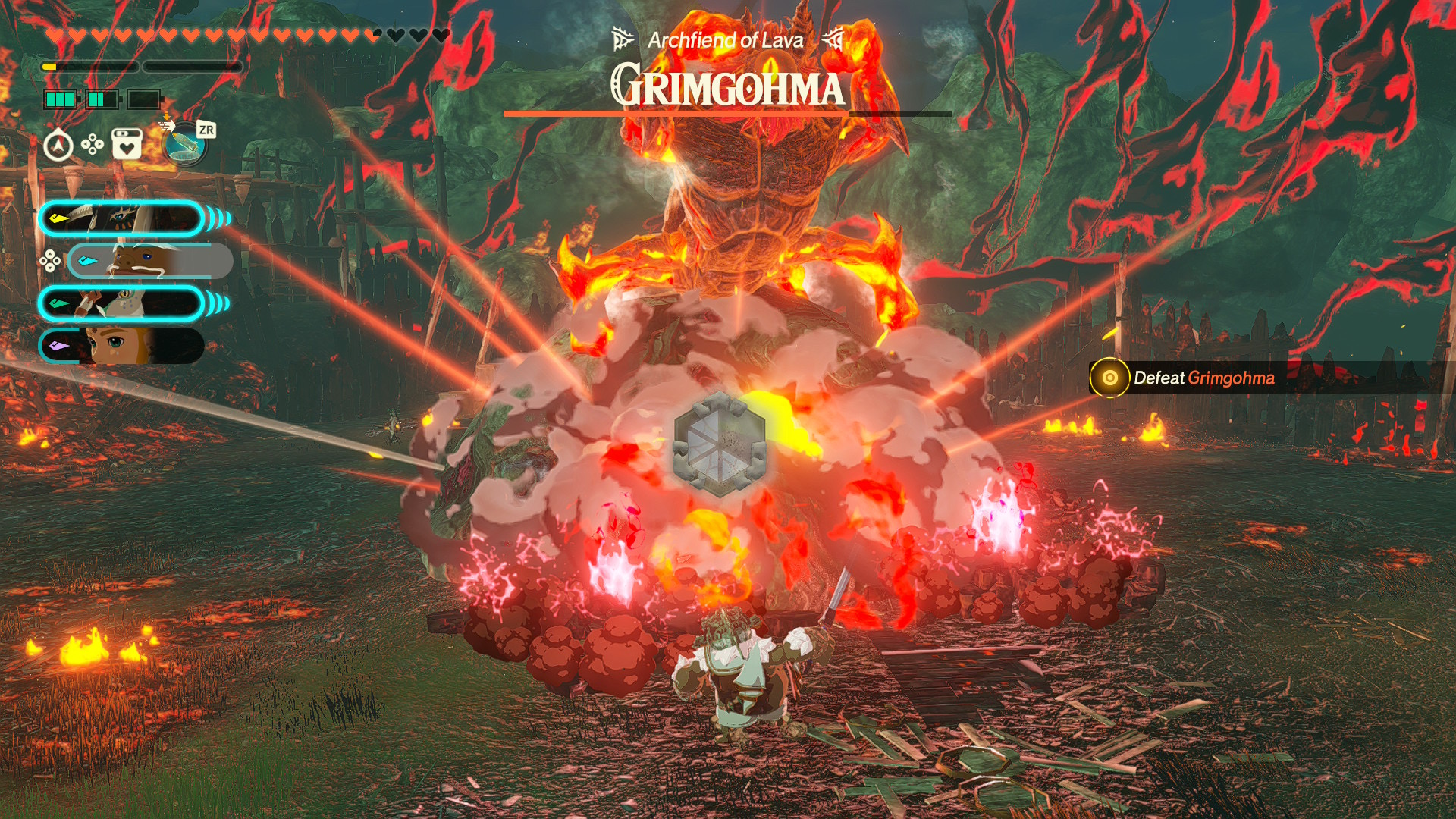
When I think of your typical Warriors title I think about huge multi-person battleground combat maps where I’m trying to capture and keep hold of multiple camps while fighting off enemy commanders, leading to fights where I’m easily eclipsing 1000+ KOs in a single round. The first Hyrule Warriors certainly leaned into that for the most part. However, that screenshot above is more typical of your Imprisonment battle with large ones reserved for a few very particular story missions. Generally speaking, the bulk of content here is a 5 minutes or less game loop where you finish a couple quick objectives on the way to a solitary boss fight. Perhaps it’s because I didn’t play much of Age of Calamity but it caught me off guard.

If the musou experience is what you’re looking for, you just aren’t going to get it here. Even in the large fights it feels mostly lost. Sure, I capture camps but very few of them are ever in future danger of being recaptured by enemies. Sure, some secondary commanders spawn but they generally bee line right for one of my NPC commanders. Sure I have a party of people that I can command, but they are wholly incapable of taking out enemies or capturing points on their own, leading to a lot of swapping who is active as the player. If someone were to hop to this right from Dynasty they would probably be very confused as to why it’s carrying the Warriors name.

But then you play some more and the combat against bosses in particular starts to grab you. Boss fights are quite simply not just hack and slash encounters.

There are elemental attacks to take into account and chaining that you can do. For example, you can freeze an enemy with a series of ice attacks, then hit it with lightning for explosion. You can combine wind attacks with other elements to create tornadoes capable of hitting large groups. you can burn an enemy then hit it with water or ice to open it up for critical damage. Dodging takes on a ton of importance here relative to other Warriors games as well. Executing a perfectly timed dodge opens up the enemy for a flurry attack where the player can lay in a bunch of large damage, as well as knock down its stun meter. Once that stun meter is knocked down all the way, it also opens up the boss for a large attack generally capable of cutting down a quarter or more of its health at once. This is then combined with the ability for pairs of player characters doing combo attacks together for similarly large damage.

These one-on-one encounters then feel a lot less like a musou experience and more like a traditional action combat game, and that is greatly to its benefit. Where I enjoyed the original Hyrule Warriors for being a musou game, I started to enjoy this game because it was not. What it ends up being for me is a game that feels like a Hyrule experience shrouded in war, rather than the more individual experience that Zelda games typically have. It feels like it’s leaning on the action combat of the series, but not leaving away the fact that in war things are often going to be faster and more chaotic. The game loop then generally being short 5 minute segments ending in a boss makes a ton of sense. You are being encouraged to quickly dispatch with unimportant KOs and focus on the small handful of big bads that are really tuned to be fun to fight within the combat paradigm that they built for the game.

So that gets us back to the question – if it steers away from the core gameplay loop that much, is it still worthwhile? I think the answer that I arrived at is that yes it is still worthwhile, and it took the game continuing to beat me over the head with spectacle to get there. As the game went on I stopped thinking about whether or not I was playing a musou game and thinking more about timing my dodges correctly. It was less important that I was KOing 1000 things and more important that I was KOing the one boss. It was less important that I was doing hack and slash chaos and more important that I was chaining elemental attacks. The combat fundamentals end up being so much fun that the things that I initially felt were missing ended up fading into the background. Yes, this may not be a typical musou game, but in the process they’ve crafted something else that is a lot of fun on its own.

Game Ramblings #215 – Pokemon Legends: Z-A

More Info from The Pokemon Company

  • Genre: Action RPG
  • Platform: Switch 2
  • Also Available On: Switch

This is such a strange game. At a glance it feels like it should be terrible – a Pokemon game contained to a single city with limited zones in which to catch Pokemon. However, they made a crucial decision to focus on combat and boy did that benefit the game as a whole.

If you’ve played the previous Pokemon Legends: Arceus, there’s really nothing to talk about except for combat. Simply put, combat is now done in real time in all situations. There’s no difference between fighting a wild Pokemon and fighting a trainer battle and they really lean into that. You as the trainer run around and avoid being hit by stray attacks while simultaneously hitting buttons for relevant attacks. Pokemon are quickly hot swapped so trainer fights don’t lose the real time feel as you go through your lineup of Pokemon swapping out to gain type advantages. It plays a really tight line of familiar but new for the series, even compared against the same feeling of Arceus. However, I do think it has some rough spots in their first attempt at real time.

The first obvious problem is that I think the player’s active Pokemon has too little agency of its own to actively fight. All ranged attacks are relative to the player and the Pokemon tries to follow the player around if they aren’t being actively commanded, and that’s frustrating as hell. As a player, I have to reposition frequently to avoid being hit by attacks, which then causes the Pokemon to get into spots where it has to wildly reposition just to throw a ranged attack which is always at a fixed spot relative to the player’s position, wasting a bunch of time while it repositions. The Pokemon then often gets into spots where its ranged attacks hit things that it should simply be obviously avoiding. It might be an edge of a fence or a tree or the top of a stair that will clip the attack, blocking it from hitting. It’s just consistently dumb as shit that this occurs, because a Pokemon should clearly be instinctively smart enough to reposition itself a bit to avoid this.

Where this gets particularly frustrating is that they very clearly designed the big PvE boss fights to avoid this. Those fights are all just against a Pokemon on a flat surface, and they’re spectacularly fun. These fights become some of the more chaotic avoidance situations in the game, ranging from anything like pool avoidance to bullet hell situations. Some of the early ones are certainly more straightforward damage checks, but later ones start to test the player’s ability to not just faceroll the attack buttons and actually stay moving more often. And they WORK because they DO NOT REQUIRE THE POKEMON TO THINK.

This is then compounded by the large amount of trainer battles that the game pushes you into. If Arceus was about collecting and not having trainer battles as much as possible, this is about as far opposite as you can get. There are entire segments of the game loop dedicated to trainer battles, where sections of the city are cordoned off each night just for trainers to battle in. This is where you get a lot of mileage out of having a traditionally setup party to counter as many Pokemon types as possible, but it’s also where I have my second real problem with the combat system.

Trainer battles in traditional Pokemon games largely involve you guessing your way through the first Pokemon then distinctly having the advantage to switch Pokemon simultaneous to your opponent, leaving you with a type advantage as long as you can generally know or guess the upcoming Pokemon’s weaknesses. That isn’t present here, but it’s also combined with an annoying delay when switching Pokemon where the Pokemon has to play a spawn animation before it can even begin to move for both the player and NPC characters. Generally it leaves the Pokemon open to being hit at least a couple of times before it can even begin to move. This leaves the defending Pokemon with an always present inherent disadvantage to having been put into battle, which feels generally off in the spirit of Pokemon fights. It’s not necessarily that I want to have the guaranteed type advantage of the turn-based games, but I want to at least be able to quickly get a Pokemon into battle and fighting, rather than watching it slowly spawn and be hit.

However, the bulk of the trainer battles in this are inherently more interesting because of the open world and real time nature. You can sneak up on people and knock out their opener Pokemon before they even know you are there. It’s such a dick move if this was to be happening in real life, but as a videogame power fantasy it’s spectacularly fun and effective.

The thing is, despite me having what feels like real core problems with combat I still found this to be so tremendously fun that it again represents what I think is a better path forward for the series. If Arceus represented a quicker paced capture dynamic with an open world, this represents the feeling of Pokemon in a way that more closely matches the TV series. This feels much closer to what I think Pokemon is, with more trainer fights and less capturing but done in a much quicker paced setup inherently due to it being real time. This keeps important things about the core metagame for me – forming a party tuned to type advantages, swapping them out based on what my opponents bring in, making sure that I’m tuning my move set to take advantage of things that aren’t inherent to the types of my Pokemon – and reducing overall user friction by making everything easy to get to.

If I then take combat at face value and assume that some iteration could be done to smooth it out a bit, this represents a future that I think should be core Pokemon and not side game experiment. This combat applied to the Scarlet/Violet world design would work just as well, and in particular would allow them to eliminate their time saving measure of auto result-battles in the open world that always felt like a grinding crutch to me. This combat applied to gym battles in Scarlet/Violet would make those feel like even larger spectacles. This combat applied to Terastallized Pokemon fights would make those feel like skilled battles instead of dice rolls around picking the right overpowered Pokemon. There is just a lot to be gained from Game Freak paying attention to what they are creating with these experiments, and the hope is that they do pay attention instead of throwing it away again.