Game Ramblings #216 – Hyrule Warriors: Age of Imprisonment

More Info from Nintendo

  • Genre: ARPG/Musou
  • Platform: Switch 2

This was a wildly fun experience, but as I played it I was left with a particular thought – this is not a particularly good musou game. In isolation, this is a much better combat experience than your typical Warriors game but so much of it occurs in either 1-on-1 boss fights or small scale combat encounters, which is completely the opposite of what I expect out of the genre. So if it steers away from the core gameplay loop that much, is it still worthwhile?

When I think of your typical Warriors title I think about huge multi-person battleground combat maps where I’m trying to capture and keep hold of multiple camps while fighting off enemy commanders, leading to fights where I’m easily eclipsing 1000+ KOs in a single round. The first Hyrule Warriors certainly leaned into that for the most part. However, that screenshot above is more typical of your Imprisonment battle with large ones reserved for a few very particular story missions. Generally speaking, the bulk of content here is a 5 minutes or less game loop where you finish a couple quick objectives on the way to a solitary boss fight. Perhaps it’s because I didn’t play much of Age of Calamity but it caught me off guard.

If the musou experience is what you’re looking for, you just aren’t going to get it here. Even in the large fights it feels mostly lost. Sure, I capture camps but very few of them are ever in future danger of being recaptured by enemies. Sure, some secondary commanders spawn but they generally bee line right for one of my NPC commanders. Sure I have a party of people that I can command, but they are wholly incapable of taking out enemies or capturing points on their own, leading to a lot of swapping who is active as the player. If someone were to hop to this right from Dynasty they would probably be very confused as to why it’s carrying the Warriors name.
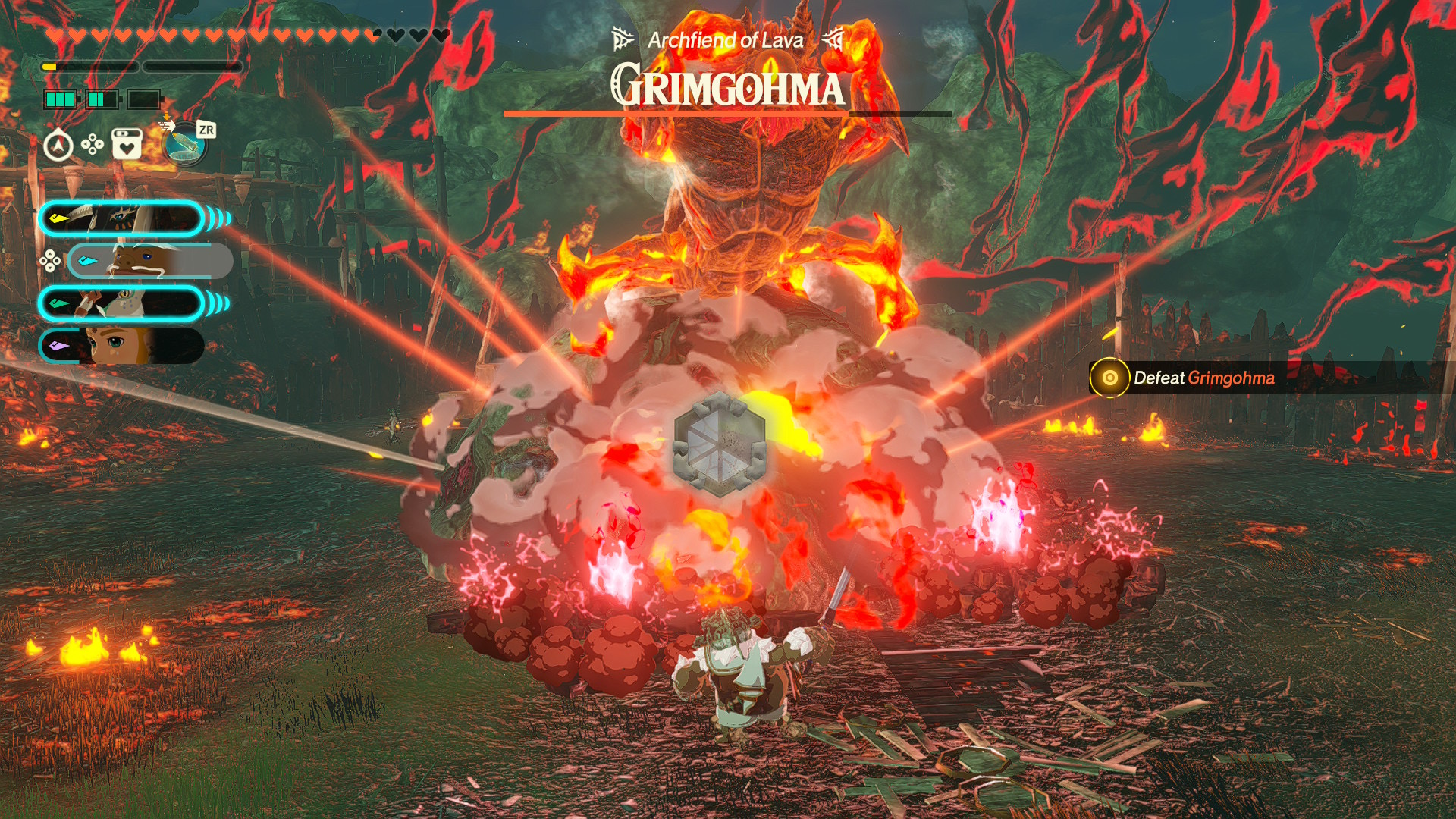
But then you play some more and the combat against bosses in particular starts to grab you. Boss fights are quite simply not just hack and slash encounters.

There are elemental attacks to take into account and chaining that you can do. For example, you can freeze an enemy with a series of ice attacks, then hit it with lightning for explosion. You can combine wind attacks with other elements to create tornadoes capable of hitting large groups. you can burn an enemy then hit it with water or ice to open it up for critical damage. Dodging takes on a ton of importance here relative to other Warriors games as well. Executing a perfectly timed dodge opens up the enemy for a flurry attack where the player can lay in a bunch of large damage, as well as knock down its stun meter. Once that stun meter is knocked down all the way, it also opens up the boss for a large attack generally capable of cutting down a quarter or more of its health at once. This is then combined with the ability for pairs of player characters doing combo attacks together for similarly large damage.

These one-on-one encounters then feel a lot less like a musou experience and more like a traditional action combat game, and that is greatly to its benefit. Where I enjoyed the original Hyrule Warriors for being a musou game, I started to enjoy this game because it was not. What it ends up being for me is a game that feels like a Hyrule experience shrouded in war, rather than the more individual experience that Zelda games typically have. It feels like it’s leaning on the action combat of the series, but not leaving away the fact that in war things are often going to be faster and more chaotic. The game loop then generally being short 5 minute segments ending in a boss makes a ton of sense. You are being encouraged to quickly dispatch with unimportant KOs and focus on the small handful of big bads that are really tuned to be fun to fight within the combat paradigm that they built for the game.

So that gets us back to the question – if it steers away from the core gameplay loop that much, is it still worthwhile? I think the answer that I arrived at is that yes it is still worthwhile, and it took the game continuing to beat me over the head with spectacle to get there. As the game went on I stopped thinking about whether or not I was playing a musou game and thinking more about timing my dodges correctly. It was less important that I was KOing 1000 things and more important that I was KOing the one boss. It was less important that I was doing hack and slash chaos and more important that I was chaining elemental attacks. The combat fundamentals end up being so much fun that the things that I initially felt were missing ended up fading into the background. Yes, this may not be a typical musou game, but in the process they’ve crafted something else that is a lot of fun on its own.

Game Ramblings #132 – Atelier Ryza: Ever Darkness & the Secret Hideout

More Info from Koei Tecmo

  • Genre: JRPG
  • Platform: PS4
  • Also Available On: Switch, Steam

I’ve always been a general fan of the Atelier series, even back to the days of the PS2. There’s always been a fun loop there of going out into the world, finding materials, then coming back and using alchemy to create new items and gear. However, it wasn’t often that I was actually completing the games. They were generally pretty mechanically light, so while they were fun, they wore out their welcome before the end. Ryza is the one that feels like they’ve finally pulled it all together. This is still a distinctly AA JRPG, but improved combat and the return of the fun alchemy loop have really moved the series forward in a good way.

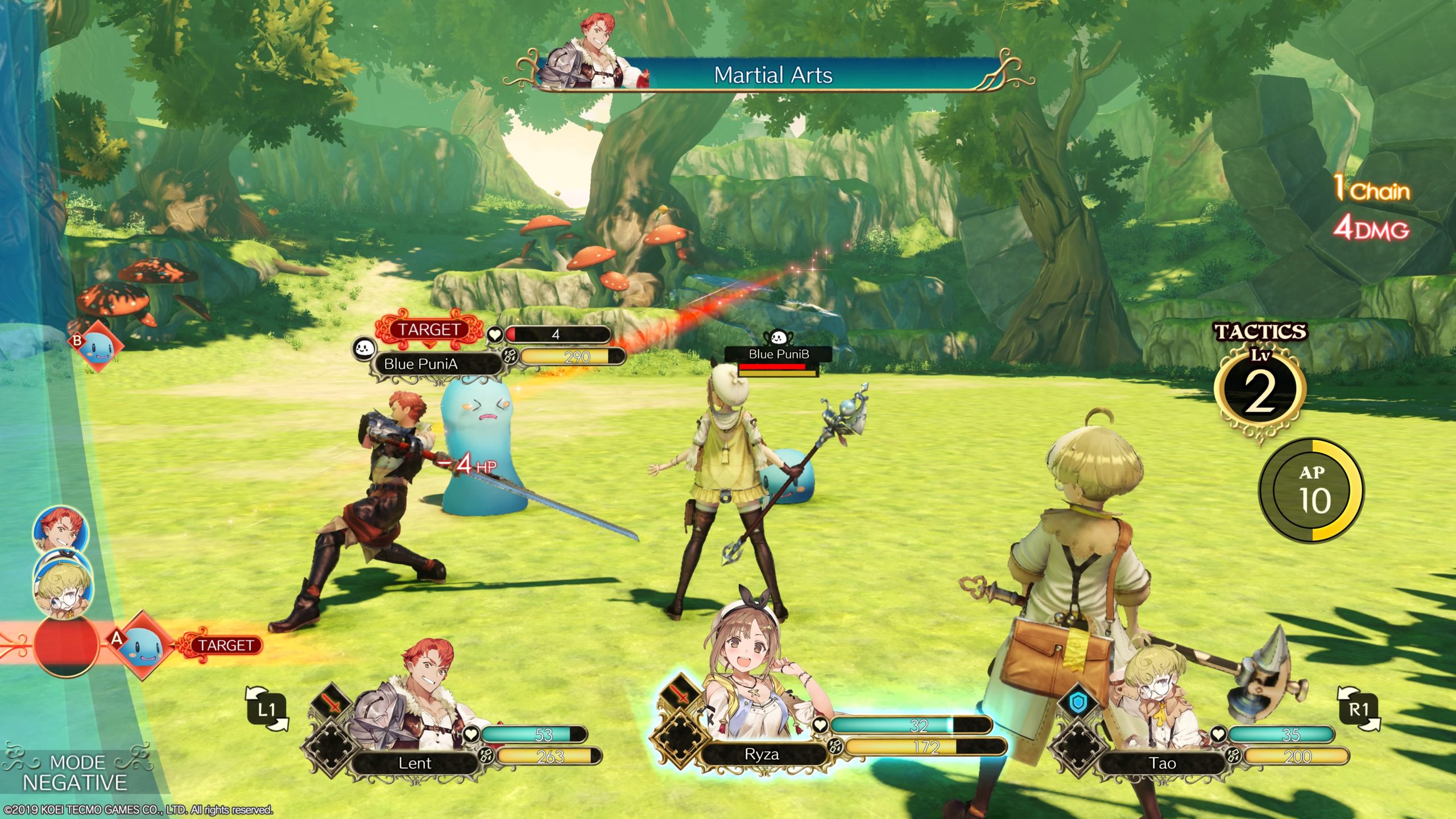
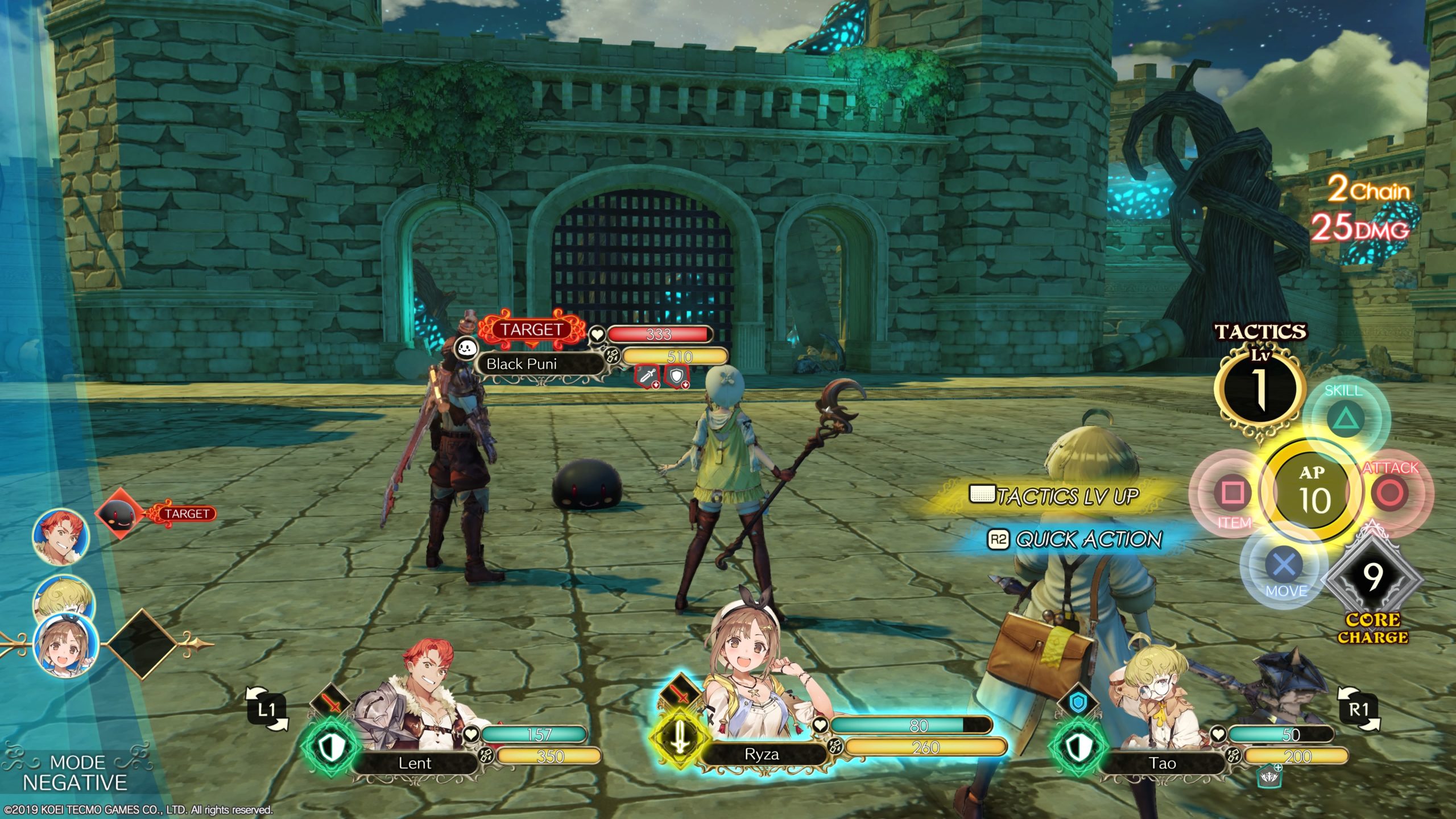
If all a JRPG has is good combat, it’s more than likely going to be a game that I enjoy, and Ryza really went and nailed that. This one has an interesting mix of different mechanics at play. It’s got a real time turn meter, a mix of skills and items for offensive and defensive maneuvering and front/back rows for some light positioning. Those mechanics should feel instantly familiar. It also brings in the stun meter that Final Fantasy 15 and 7 Remake used. What it does that’s unique is the tactics meter, combined with action points.

The action point system feeds into the rhythm of combat, and that’s something that I’ve mentioned here before. When combat is working well it feels like a rhythm, and that comes together here. Action points are built up by basic attacks. You’ve got two choices – you can use them to execute skills or you can save them up and increase the team’s tactics level. Increasing the tactics level makes skills stronger and opens up longer basic attack chains, at the cost of losing all existing action points. For boss fights, this is where the rhythm comes in.

You can play defensively and keep your action points around in case you need to dump them into heels. On the other hand, you can increase your tactics level to build up AP faster and make your skills stronger, at the potential cost of not having any AP ready for healing if the boss hits you hard. This puts the boss fights into a situation where you kind of play in waves – dump a bunch of AP to get a tactics increase, then hold back a bit to refresh the party before going back on the tactics offensive. The boss will then occasionally go into a mode where they have a telegraphed nuke attack, and at that point it’s all hands on deck dumping every item and skill attack into the boss to try to stun it before the nuke.

When executed well, this back and forth is extremely gratifying. You get to a point where you can really plan out rounds ahead what you’ll need to be doing, what your plan will be, and how to get there. When it turns out right, it’s as good as any turn-based JRPG out there. When it turns out wrong? Well, you learned something for the next attempt.

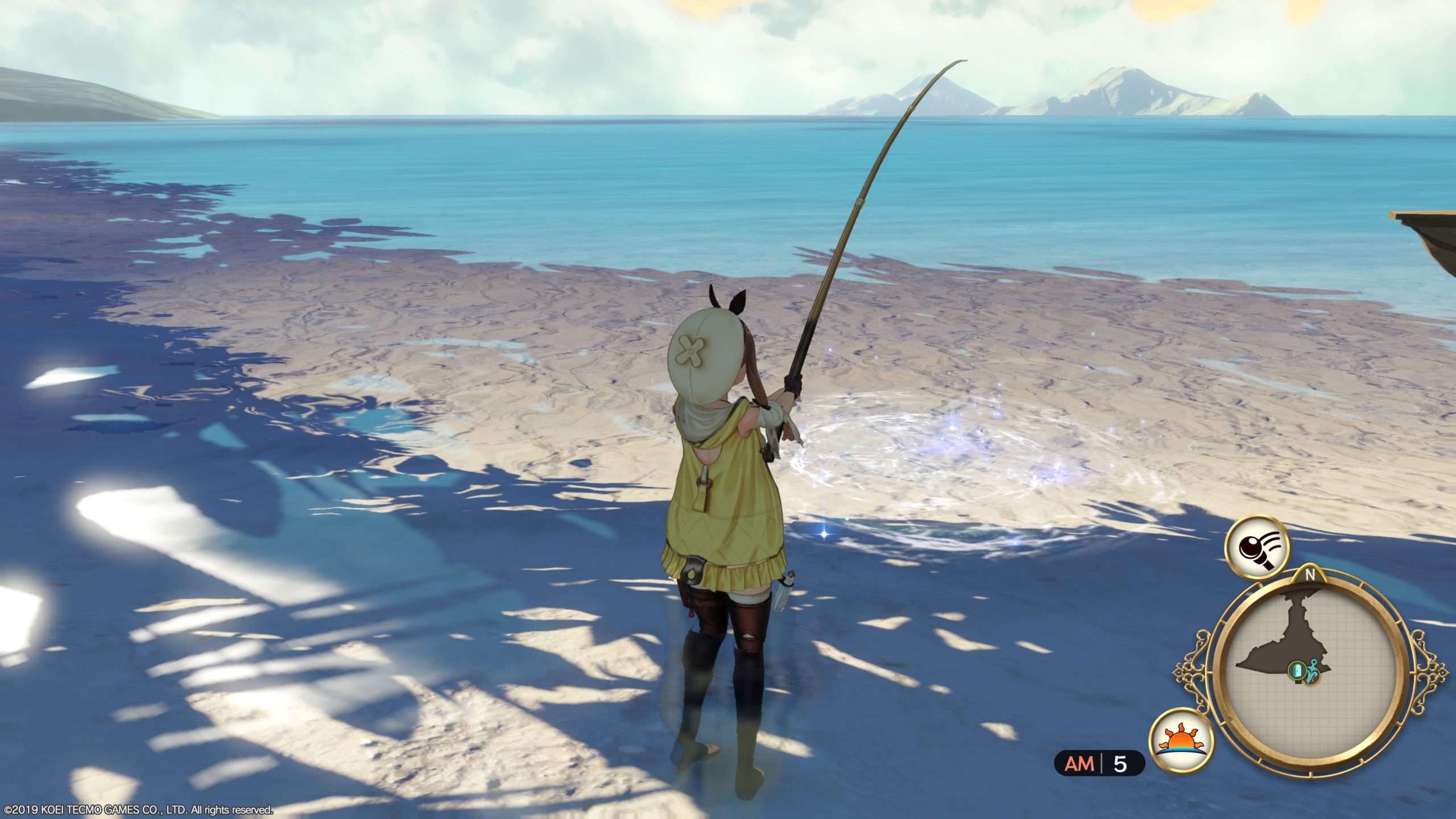
The alchemy side is just as gratifying, even if it’s where some UX improvement needs start to show up. Everything you do in the game ends up being important to alchemy. Killing things gets ingredients, gathering things in the world gets ingredients, side quests and activities get ingredients. You take all of that junk back and spin it into things that are actually useful for you. Crafting the right combination of ingredients to get a new weapon with a ton of extra stats? Fantastic feeling. Use the right material to get some life drain onto your gear? You’ve just actively made combat easier. Want to go into a high attack power glass cannon build? It’s up to you, add +attack instead of +defense to your armor, and play it how you want to. It’s a system that is incredibly good at allowing you to tailor your builds to how you want to play the game, and it really doesn’t do anything to prevent you from trying extremely stupid shit. It’s the best thing that can happen when a game lets you go nuts and in response the game rewards your freedom and exploration.

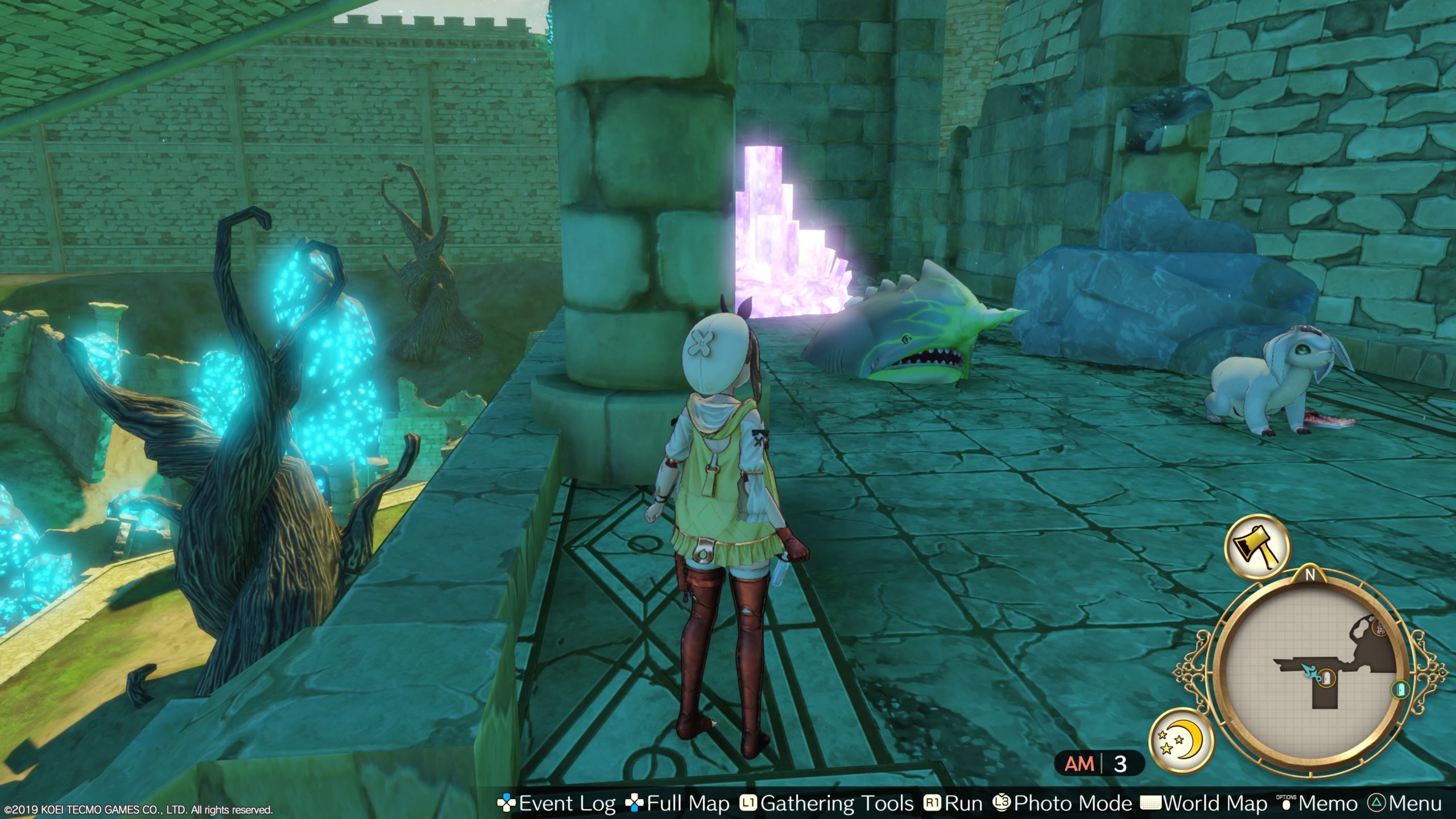
My main problem is that the user experience around this could use some cleanup. Need a specific crafting item? Well, you can dig through the journal to find out what zone it’s in. What it doesn’t tell you is where to get that item (is it in a rock? a plant? a tree?) or what action is needed (do I hit the rock with a hammer? an axe? my staff? These each grant different items). At the same time, if the item requires a crafted item you can’t just click on that item to start crafting it. You’ve got to dig around in your alchemy list and find it manually. When you start getting into having 100+ recipes to choose from and hundreds of potential materials, it’s a huge hassle to start figuring out where to get or make all of these things.

Luckily for me, once I’m down to complaining about small user experience cleanup, it’s really a sign that a series has reached a great point. I’m no longer worried about combat being a hassle or poor story getting in the way. I’m simply wanting things that work well to work even better, and Ryza has gotten the Atelier series to that point. This is the best that combat has been in the series by a long shot, and it’s combined with what has always been a fun alchemy loop to really push this series to a new high.

This also now means I can get around to starting Ryza 2….