Game Ramblings #223 – Dragon Quest VII: Reimagined

More Info from Square Enix

  • Genre: JRPG
  • Platform: PS5
  • Also Available On: Switch, Switch 2, Xbox Series, Windows

This is an easy ramblings for me to write. In a lot of ways it boils down to one question – do you like traditional JRPGs? If the answer is yes, then frankly you’ve probably already played this game. However, for as good as the original and 3DS releases of this game were, the game is just unnecessarily long. That’s something that is incredibly common for Dragon Quest games in general, though it’s been getting better in recent years. That is really what my mind was focused on coming out of this.
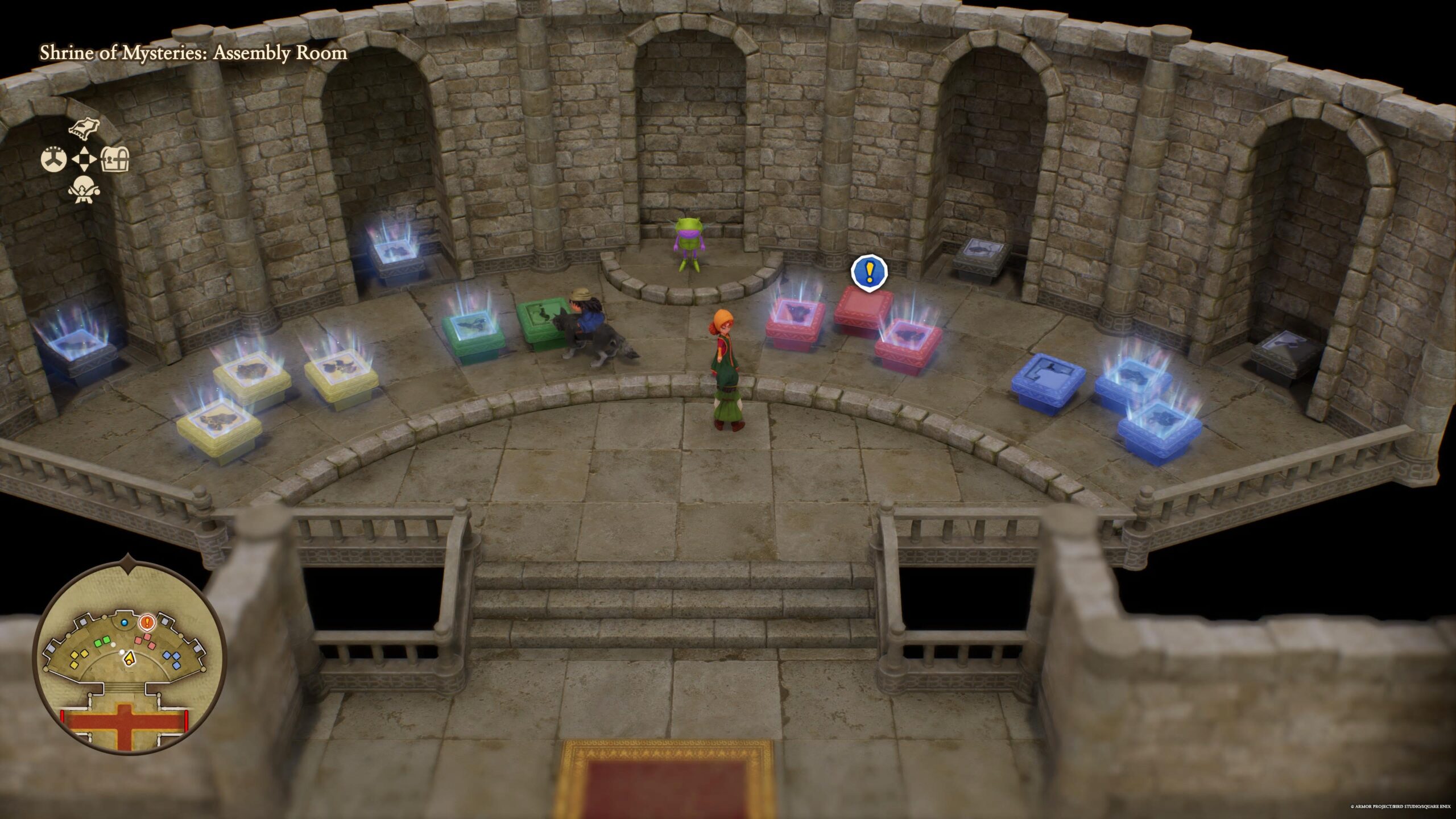
I had put off starting this one for a while because I didn’t really want to tackle an 80 hour JRPG. I just don’t really have that kind of time to play games anymore. I’d heard some people recommend it and noting that it was shorter. I then noticed that its How Long to Beat page was seeing 40-50 hours as a more common time to complete. That kind of time investment is a bit more doable. That drop in length by about half comes about in a few ways. However, it’s not unfair to say that it’s simply because the game just loads quicker. Getting into fights is quicker. Getting into zones is quicker. Getting through the time portals is quicker. It just compresses the experience through lack of loading.

However, the more beneficial part was how much quicker leveling can be, and that’s entirely up to the player. One of the things that recent Dragon Quest titles have been doing is giving players more control over difficulty. It started with things like an “easy” difficulty that ramped up player damage, ramped down damage taken, and ramped up XP gained. It then added a lot more over world automatic battles when you as the player have gotten strong enough. DQ7R is the most granular control that they’ve given, and it’s much to the game’s benefit.
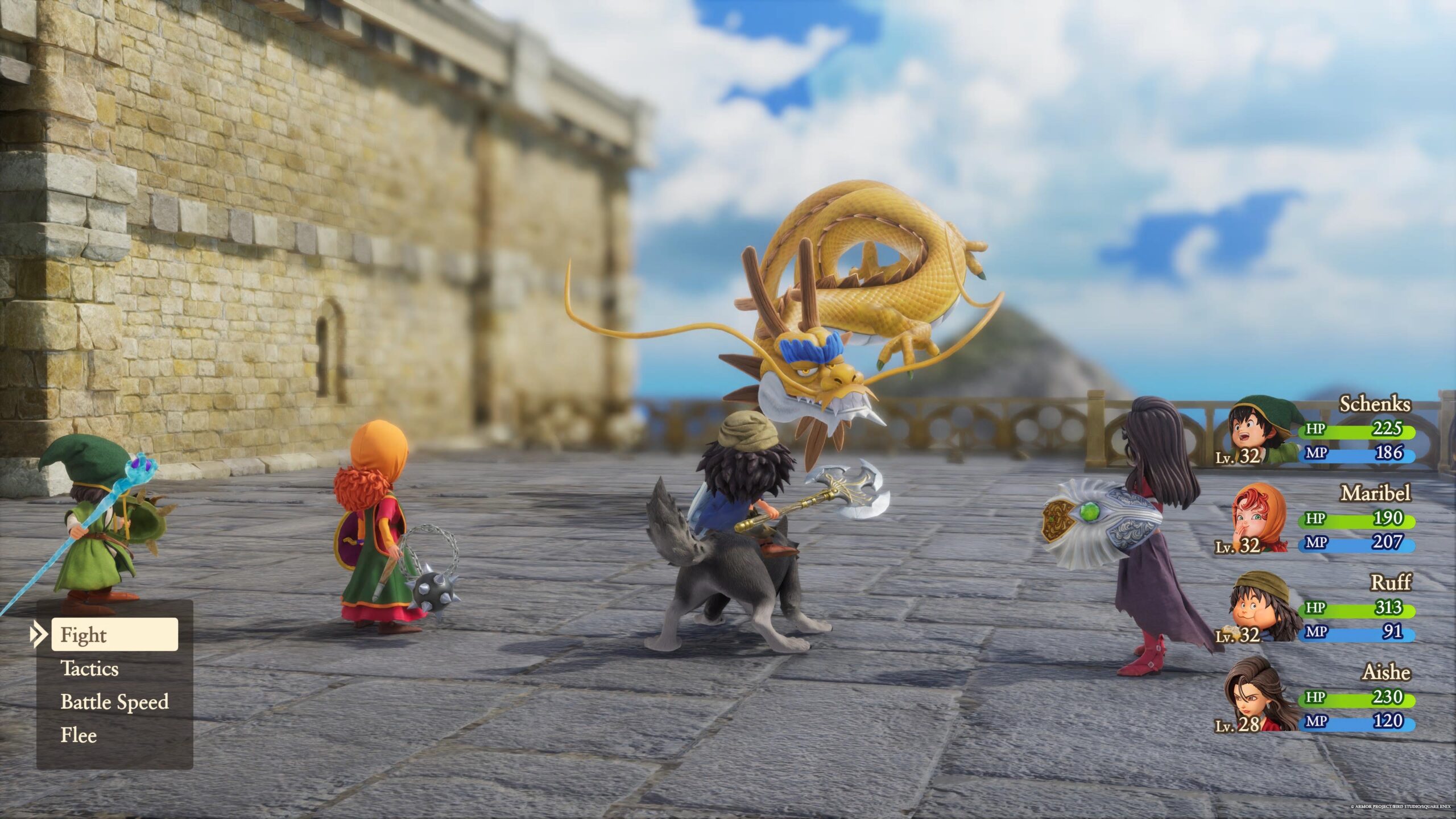
The way that I chose to play this title was with the following settings:

  • Damage: Normal for given and received
  • XP Gained: Increased
  • Gold Gained: Increased
  • Job Points: Increased

What this essentially is is a settings group that is the game at intended difficulty, but with significantly less grinding. I was essentially choosing to just have less combat for the sake of making the experience faster while preserving difficulty. This gets combined with the fact that battles are no longer random in recent titles, so you can choose to simply skip combat entirely if you’re at an appropriate power level.

This simply makes the game faster and it’s much better as a result. The pattern I like in JRPGs is to figure out the enemy setups, fight them a few times, then move on. I don’t need to fight things dozens of times to get my value. At that point it’s just boring. In a case like this where XP gained is high, I can simply fight things to get my entertainment, then move on.
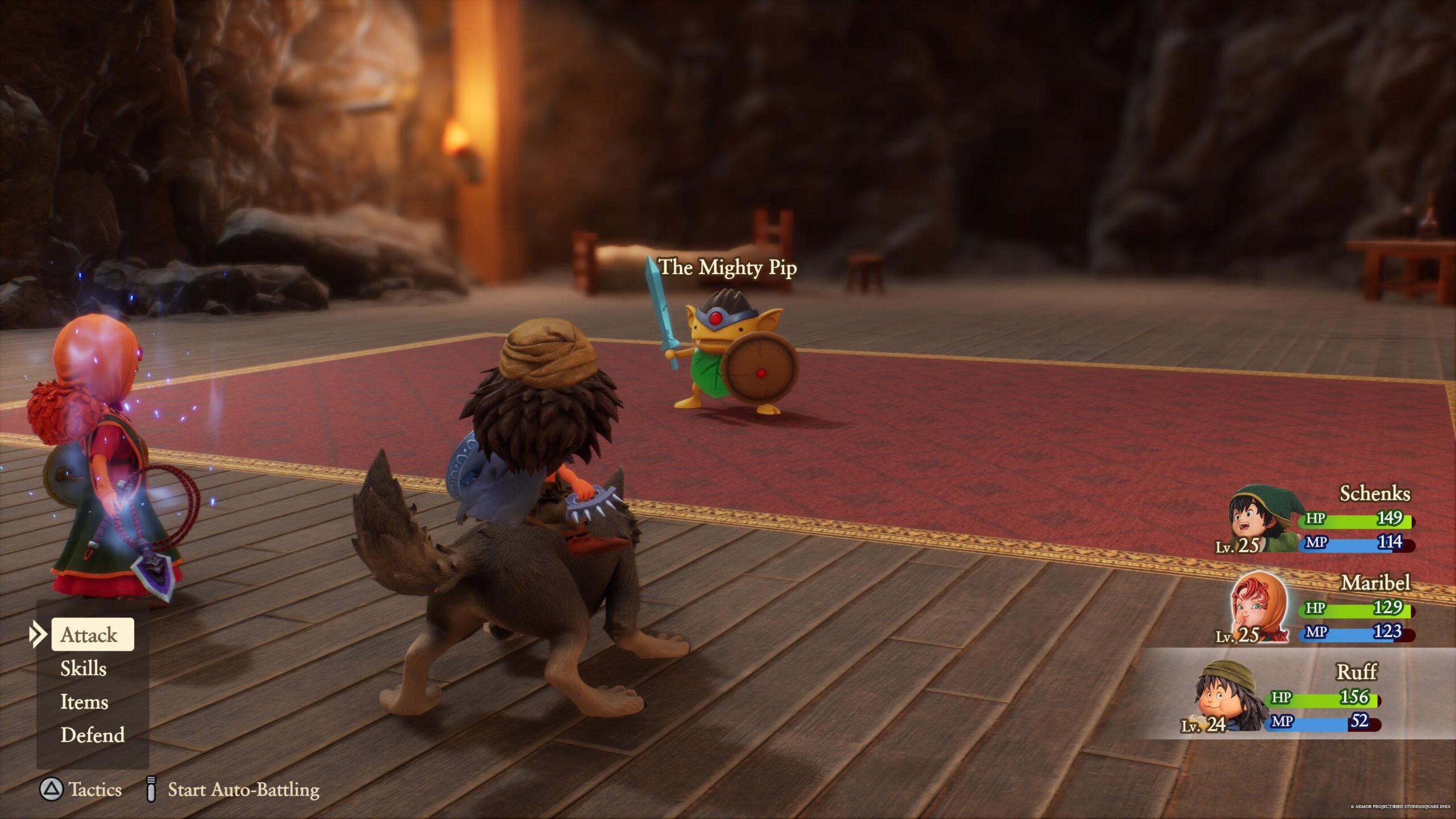
There’s additional little gameplay things that are added like save/heal points that appear frequently right before bosses to act as safety and time savers for the player. There’s a weird side effect that comes out of this – I use MP-based skills far more often. Because I don’t need to fight as much, I can dump my resources for the sake of fun. Because I know I’ll heal before a boss I’m not preserving my resources for the boss. If I’ve used everything and don’t want to spend items, I can simply avoid fighting. The combination of these things further enhances the speed of playing the game because I can simply be aggressive on offense, which is something that a lot of older JRPGs didn’t really allow.
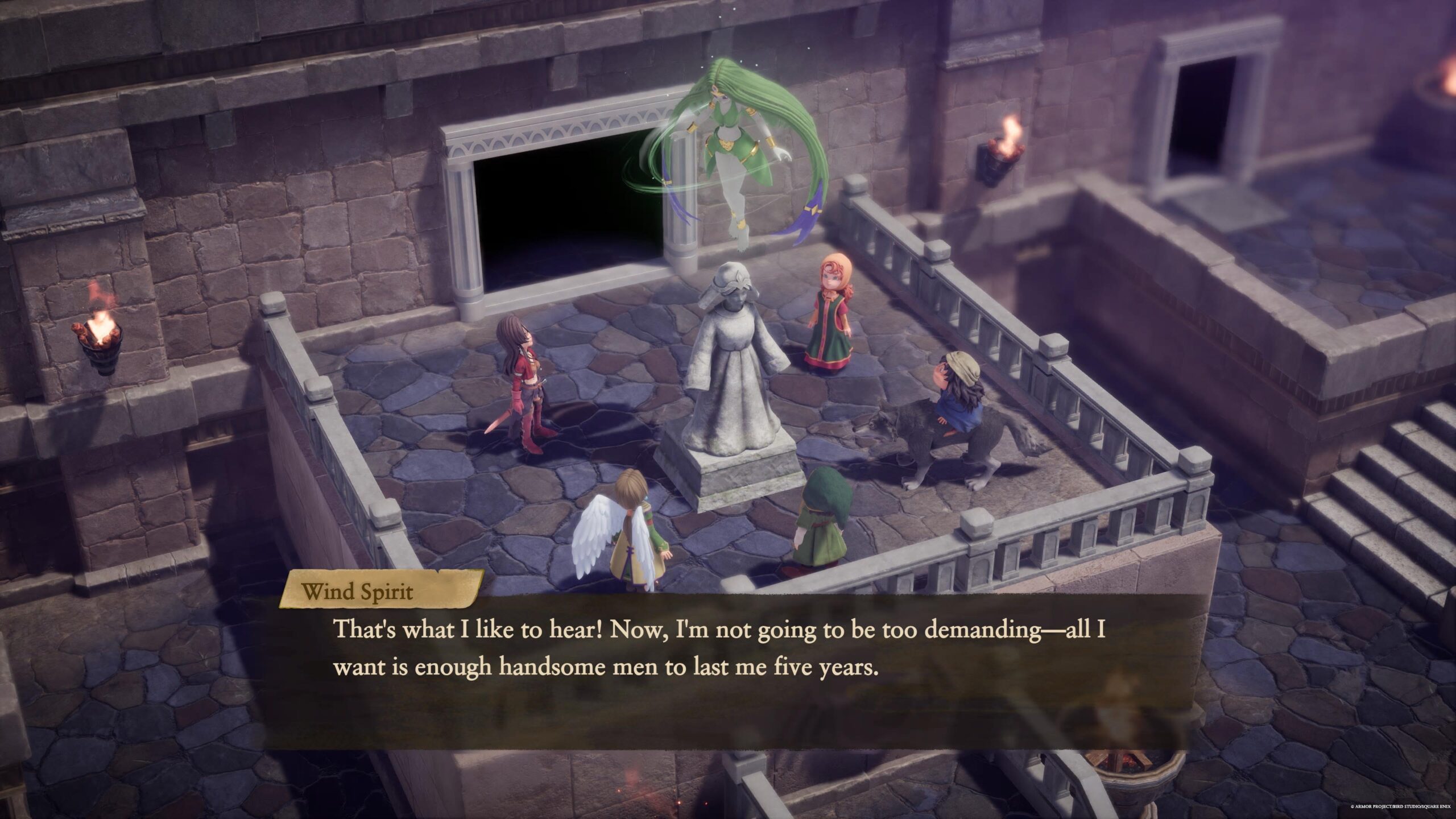
I’ve said similar things about recent JRPGs that have pushed into streamlining the experience for the player. A recent example includes Trails in the Sky 1st Chapter. I just don’t buy arguments about JRPGs needing length to be of value. To me empty grinding is just fluff and I’d rather have a shorter experience. The DQ1-3 HD2D remakes and now this DQ7 remake show that Square is taking the idea of a cleaner experience seriously for the players. This is everything about the story and metagame that made the original great, now combined with modern sensibilities around not wasting the player’s time. It’s a far better game for it.

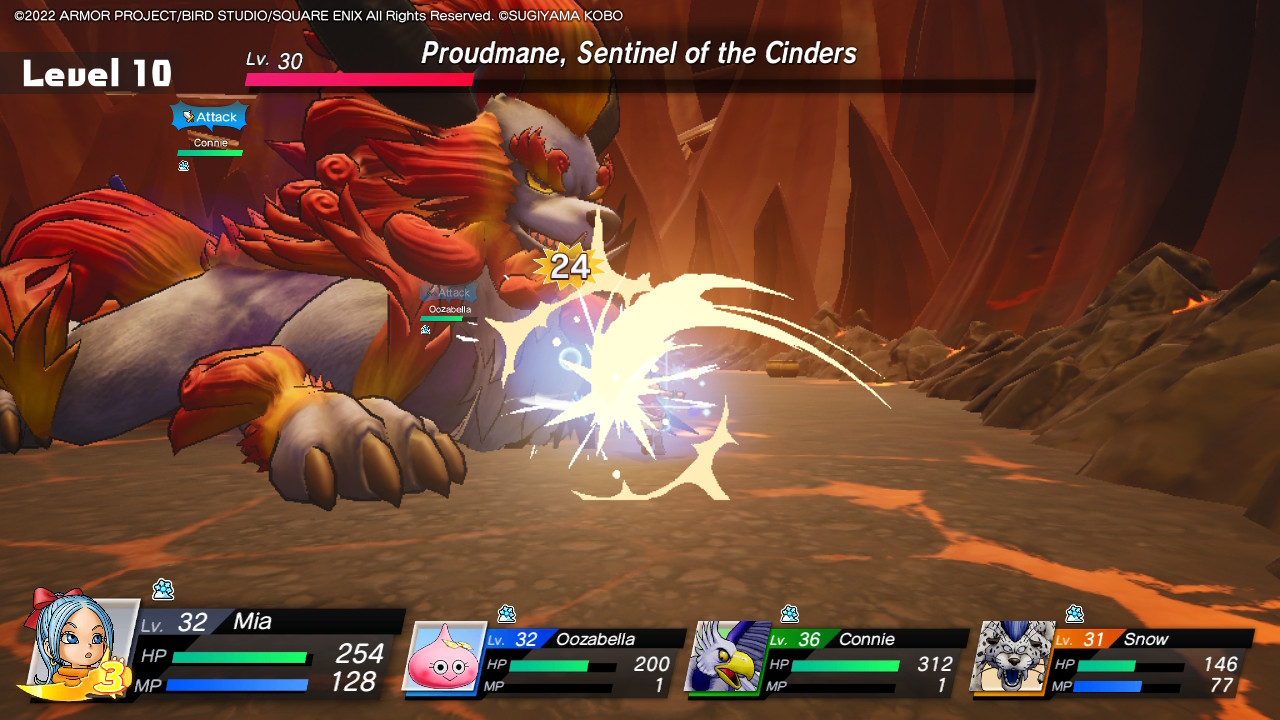
Game Ramblings #167 – Dragon Quest Treasures

More Info from Square-Enix

  • Genre: Action RPG / Adventure
  • Platform: Switch

When I’m travelling, I look for certain types of games to play. They don’t necessarily have to be the best game ever, and I’d honestly rather they not be since my play sessions are inconsistent. They should have a relatively short metagame loop so I can play in both 15 minutes and multiple hours as I can manage it. They absolutely need to be portable since I’m not lugging consoles or a desktop with me. Treasures ticked all those boxes. It’s definitely not going to win game of the year, but it’s a game that became so easy to fall into that I was surprised how fast I managed to complete it.

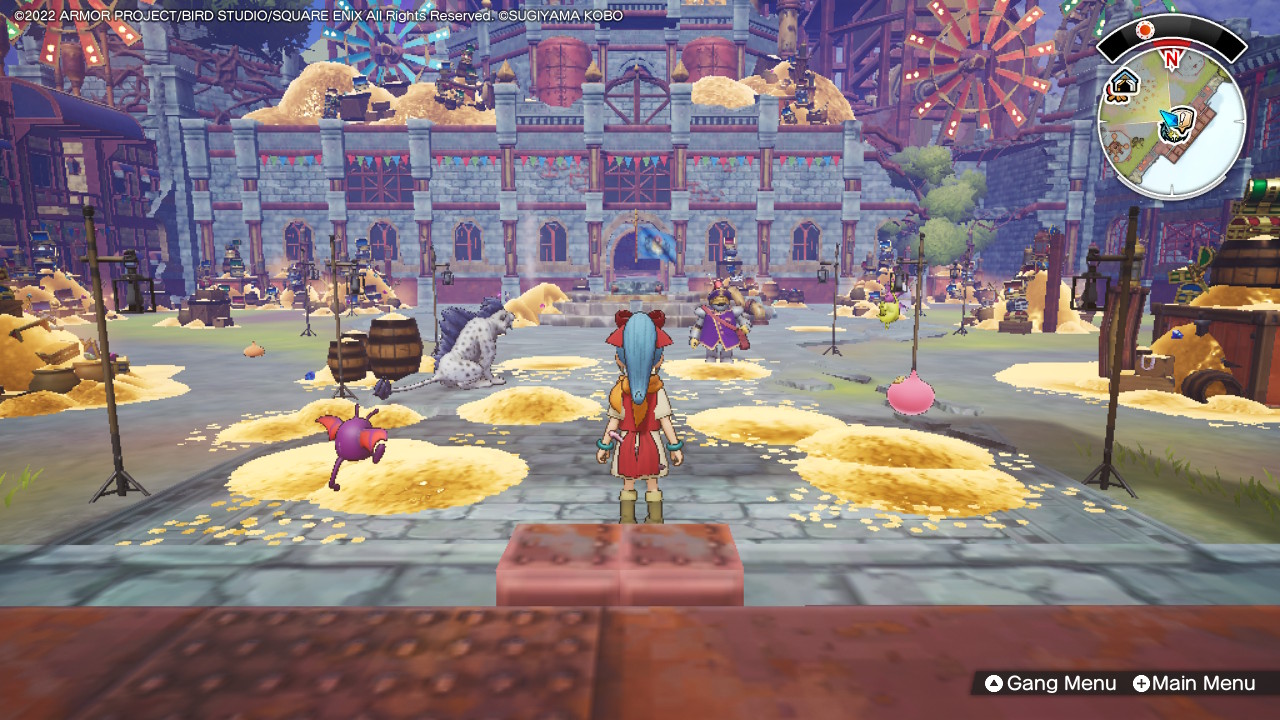
This game is the strangest mix of Pokemon and a treasure hunting game, and it somehow manages to work out alright. Your goal is ultimately to find treasure, but the other half the game can’t be ignored in the pursuit of riches. You use your party of typical Dragon Quest monsters to both fight things around, as well as to use their abilities to assist you in getting to and searching for more treasure. How that loop works out is really why this worked well for me as a vacation game.

The overall metagame is a series of treasure hunts where you go out, fill your inventory, and go back to your base. Each trip is capped by how much treasure your party can carry, and in some practical sense by the fact that the farther you get into each level the stronger the enemies are. During each hunt, you’ll eventually start getting attacked by rival hunters trying to steal your treasure. This ends up encouraging you to be fast in gathering treasures, and fast in getting back to base. As a loop this takes place in roughly 10 minute intervals and it’s incredible how infinitely repeatable this can be. If all you’ve got time for is one loop, it’s just a fun distraction but you still make forward progress. If you’ve got time for more, you can instead settle into achieving specific goals – grabbing specific treasures, finishing specific side quests, finding specific party members, etc – that you can focus on over longer periods of time.

In a lot of ways, the Pokemon aspects of it feel intentionally placed because this is one of the reasons that I really enjoyed Pokemon Arceus a lot. It never felt like my time in that game was being wasted and it also never felt like I had to really set aside time to make meaningful progress. Everything I did was valuable to my overall progress, and it allowed me to enjoy the game at any time in any situation. That is what makes a perfect travel game and this really nailed it, whether or not that was intentional on the developer’s part.

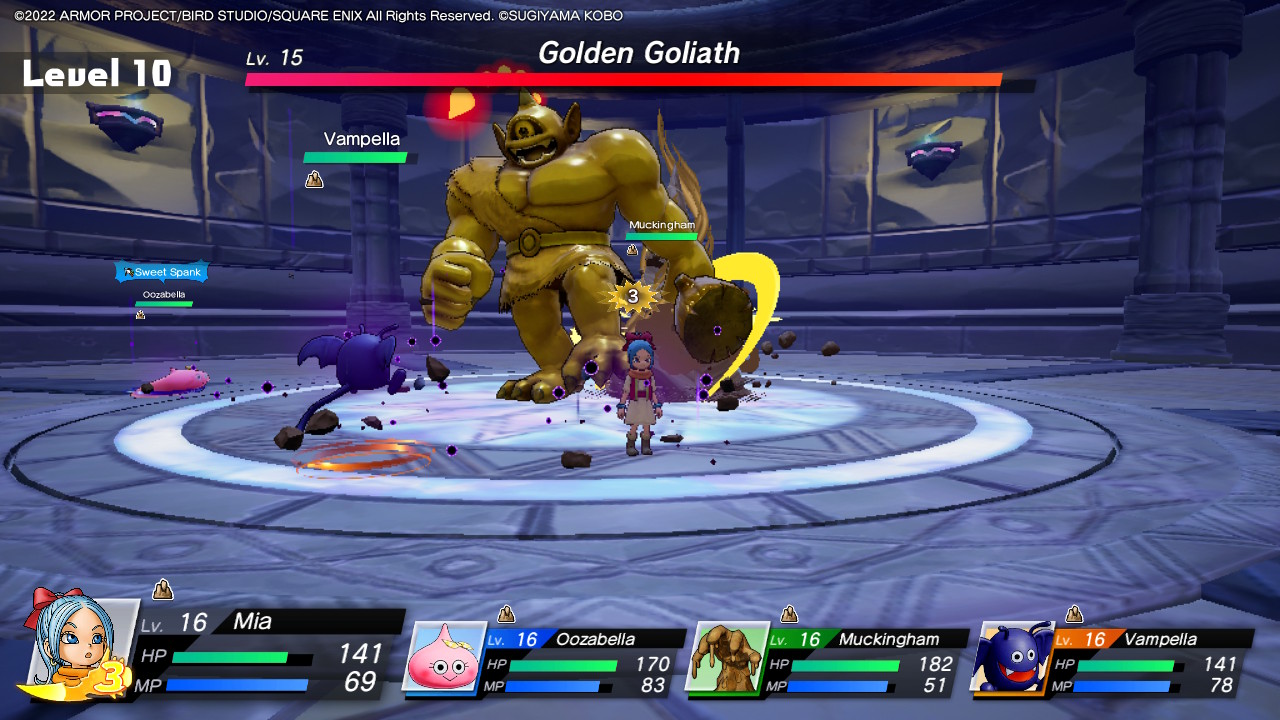
Because the core loop worked so well, the rest of the game just kind of had to not get in my way. Combat is simple, but effective. You basically attack and dodge, and that’s really all you need to worry about. There’s a neat slingshot secondary weapon that can be used for offense, but its more interesting use is to buff and heal your party on the fly. Your party have all of their own unique abilities tied to the monster design, but it’s all more or less irrelevant to the combat structure. The only one I really focused on was making sure I had a healer so I could focus my efforts on damage as much as possible. Monster collecting is more RNG-focused than I’d prefer, but you generally get monsters at a decent rate. Their ability to join your party is tied to a bit of a frustrating item trading system, but you end up getting so many items in a normal treasure hunt that it isn’t overly time consuming.

If there is one thing that I could point at as being incredibly frustrating though, it’s that your base can be attacked. It’s not that this was difficult, but the last thing I generally wanted to do after dumping my treasure back was to have to immediately be in combat. It was probably more frustrating that because it generally wasn’t challenging it just slowed down my pace and prevented me from getting back out into the field. There’s a similar annoyance while in the field where you can be attacked by random rival hunters, and it’s another case of not really being challenging and mostly just being something that slowed my pace. However, I didn’t really have major issues outside of those things.

This one I guess ends up being an easy recommendation in a lot of ways because it just kind of works pretty well. It’s got a fun core meta loop, a decent enough monster collection aspect, decent enough combat, and really tries its best to not get in your way. It’s no game of the year, but because of that I also wasn’t worried about trying to book large gaming sessions to dig deep into it. I just kind of hopped in and out as I could, and because I was having fun it became more hopping in than I really expected. Because it was a travel game, it also really just fit really well into some of the smaller gaming sessions that I had that were typical of my time availability. Given the holidays are over, there may not be an opportunity to play a kind of “travel ready” game for a while, but this is a good one to keep in mind the next time you’re doing so.

Game Ramblings #138 – Dragon Quest Heroes: Rocket Slime 3

  • Genre: Action RPG
  • Platform: 3DS

We’ve only been fortunate enough to get one of the entries in this Dragon Quest sub-series in the US. Luckily, an English patch has been created by a group called Fan Translators International, and it’s a quality one. I’ve been going through the process of backing up a lot of my older disc and cartridge games, and DS/3DS was up so I figured I’d take the opportunity to play through this one in English, and that was definitely the right choice.

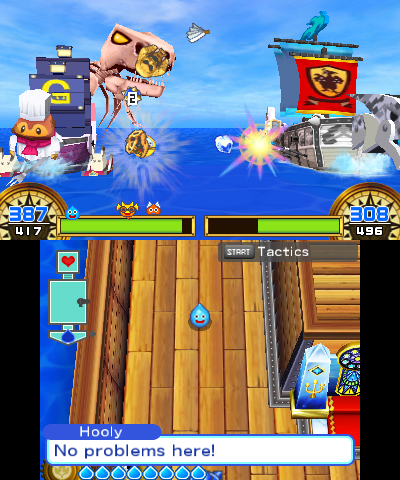
The Rocket Slime games are kind of hard to describe, but the short version is that it switches between two main types of gameplay – an overworldish section where you collect items and monsters to build ammunition and crew and a battle-based segment where you engage in ship vs ship combat. The second one is definitely the thing that’s worth playing.

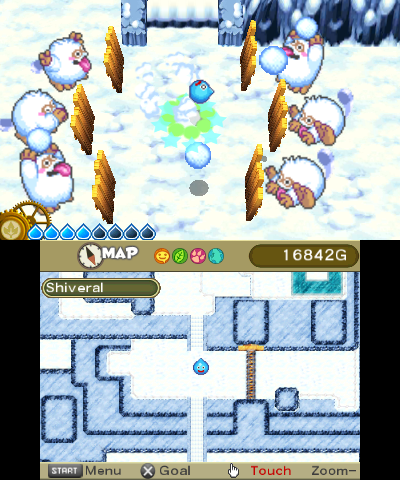
The overworld stuff is all well and good, but it basically exists to serve the purpose of grinding out ammunition for your ship. You use the same movement as ship battles in terms of flinging the player around and grabbing things, but there’s no real challenge here, even in the handful of boss battles. You go around, mop up everything, and send it off to your ship. Parts of it become pretty grindy as you get a bunch of parts to craft higher level stuff, but you get through it to make your ship stronger. If there’s anything to really point at as a major experience killer, it is that grind. Getting your ship together for the end game fight was really a hassle that I wasn’t expecting.

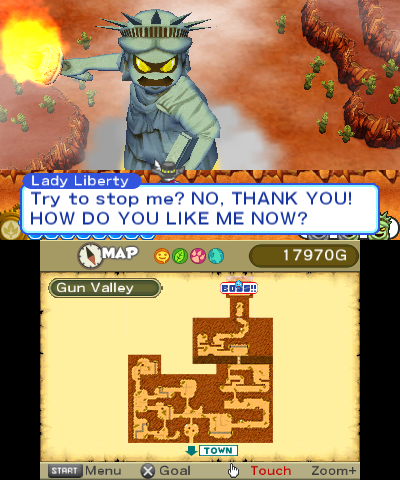
The ship battles just work so well. It’s a pretty basic loop, but has a really nice rhythm. You’re basically being given periodic dumps of ammo that you’ve collected throughout the world, picking it up, and chucking it into upper and lower shooting cannons. You’re doing this both offensively and defensively – hitting the enemies shots will knock them down, getting through to the enemy ship damages it. You can also fire yourself and your crew, allowing you to wreak havoc on the enemy ship, taking out their ammo feeds and really minimizing their ability to fight back. Once the enemy reaches 0 HP, you invade their ship and destroy their engine. That’s really all that there is mechanically.

That said, it works so damn well. On the ammo front, you get a feel for roughly how often you’ll get ammo and where on your ship it will show up, so you start picking out ship hulls that allow you to maximize your routing efficiency in picking up and chucking ammo. You start finding crew combos that work best with your play style. In particular, I had a combo where two crew split cannon duty and a third one chucked itself at the enemy ship to cause damage while I defended from enemies coming on board. It’s the kind of experience where even though a lot of the fights are generally the same, it doesn’t stop being fun.

The game we got as Rocket Slime on the DS was a really fun experience, featuring similar gameplay with tanks instead of pirate ships. Knowing that this game had been released in Japan and wasn’t being seen here – despite the popularity of the Dragon Quest main series – was a major bummer. I’d imported this one a while back, but kind of sat on it knowing that I was probably going to want to wait for a fan patch. Luckily some enterprising fan translators got that done, so I was able to play through it.

It’s tough for me to generally recommend importing JPN-only games, and in this case that still kind of stands. Playing this involved a number of things; importing the game in the first place, converting one of my 3DSs to custom firmware, going through the process of setting it up for custom game patches, getting this patch on there. It was a lot of stuff to play one game, but for me it was absolutely worth it. This is a hell of a fun game with a unique ship combat system that we could use more of, and I’m glad I stopped being lazy about getting this stood up to play.