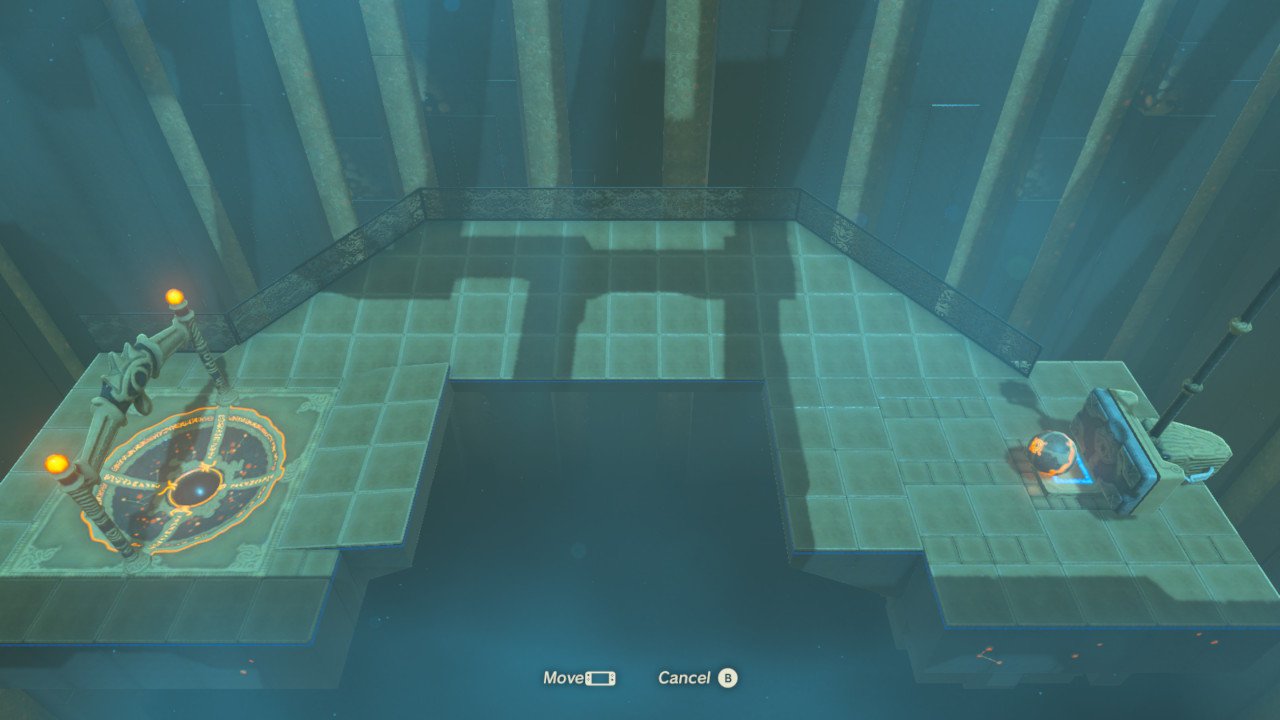
Game Ramblings #89 – Cadence of Hyrule: CRYPT OF THE NECRODANCER FEAT. THE LEGEND OF ZELDA

More Info from Brace Yourself Games

  • Genre: Rhythm RPG
  • Platform: Switch

This is definitely one of those games that I assumed would work when it was announced, but you can never really be sure. Outside of the obvious rhythm gameplay of Crypt of the Necrodancer, it’s not that far off of Zelda. It’s still basically an action RPG with a bunch of inventory. It still encourages you to romp through effectively dungeons to progress. It’s god a damn good soundtrack. But still, this is Zelda. Somehow this has come out and feels great, feeling like each of their series at the same time without losing anything in the process.
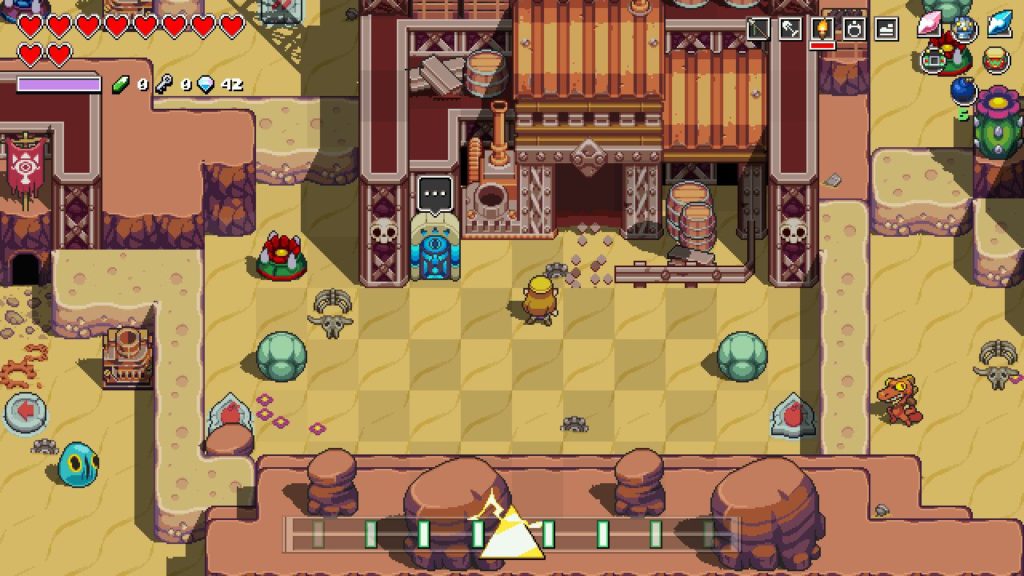
Under normal circumstances, this would be a screenshot of a standard Zelda 2D title, but that little bar at the bottom is where it starts to separate itself.

The screenshot above does a good job of visually laying out how much things are the same, but totally different. On the surface, this looks like a 2D Zelda-series RPG. There’s some familiar looking enemies, a normal item wheel, hearts, rupees, keys, a slightly angled camera viewpoint. However, that little bar at the bottom and the specifics of the grid are where you start getting the Necrodancer gameplay.

Like Necrodancer, any movement or attack is most effective when done on the beat of the music. At the same time, enemies also move and attack on the beat, so you’ve got a play around keeping on eye on what you’re doing and an eye on the enemies to make sure you aren’t getting trapped. While it’s technically a turn-based game as a result, the practical pace is really close to an action RPG and it ends up straddling the line between familiar and new really well.

Combat is also a bit different than expected for a Zelda game, mostly due to a large unexpected variety in ways to attack. Each character that you control has its own specialty, and you can swap between Link, Zelda, or Necrodancer’s Cadence at any time once you reach them. You’ve still got your Link-style broadsword attacks that hit a wide line in front of the player. However, you can also use spears for extended range straight attacks, flails for L-shaped AoE style attacks, or daggers for real close-range combat. Even on defense you have more variety than just Hylian shields, with characters like Zelda able to activate a projectile-reflecting magic shield if timed correctly. You can even add modifiers to your weapons like health drain or poison to add some additional flexibility to your loadout.

The positive outcome of all of this is that I really spent time modifying my gear loadout and character selection based on what I knew would be most beneficial to me at the time. Early on I went more spear-focused in order to keep enemies at a larger range from me. As I gained some hearts and defensive items, I started moving into broadswords in order to take out more than one enemy at a time, even if it allowed them to get closer at range and occasionally hit me. As a whole it ends up in a battle system that has tremendously good flow due to the rhythm focus, but still has a ton of ways to play to your strengths at any time in a way very reminiscent of high end ARPGs.
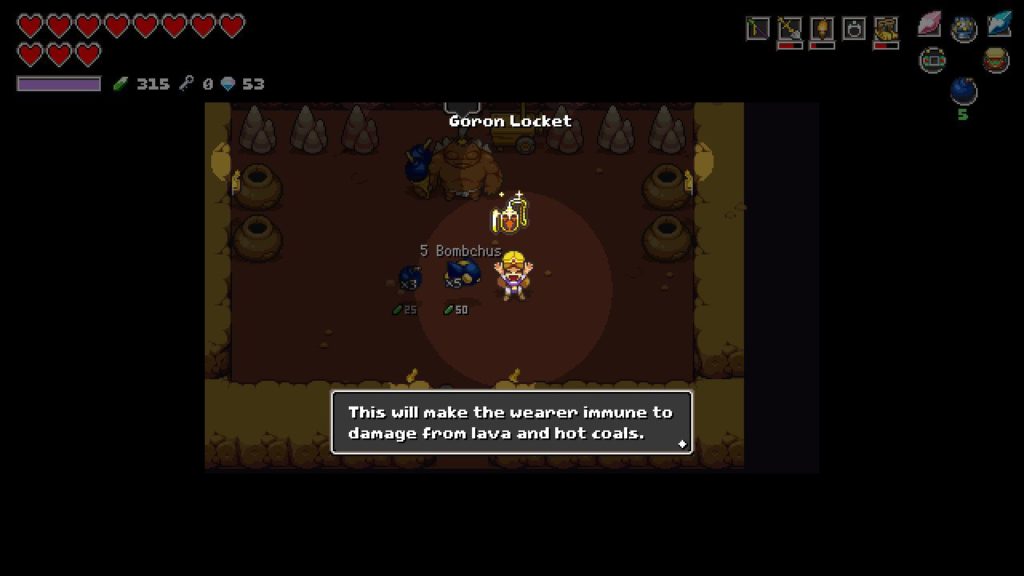
It definitely helps that there’s a lot of familiar things in the gameplay though despite all the changes. You’ve still got to save up your rupees to buy things in shops. You’ve still got to visit Kakariko Village to move forward. Hell, you’ve still got to get lost in Lost Woods as part of your quest. However, through it all the focus on rhythm gameplay really feels like a fun fresh take on the Zelda formula.

And oh boy that soundtrack. The Zelda soundtracks on their own are really special, and really familiar to a lot of gamers. Living up to that alone is something that shouldn’t be taken lightly. However, the need to really hit a music pace that allows for a good gameplay pace added a level of technical need that the team really nailed. The familiar Zelda themes are morphed into new genres – whether it’s jazzier takes on the main theme or Song of Storms, or more dance-based overworld themes, or even rock-focused takes on the Gerudo Valley theme – that really push a fast gameplay pace while still being fantastic takes on familiar themes. This is the rare game where the soundtrack alone is worth the price of purchase, but you still get a great game on top of it.
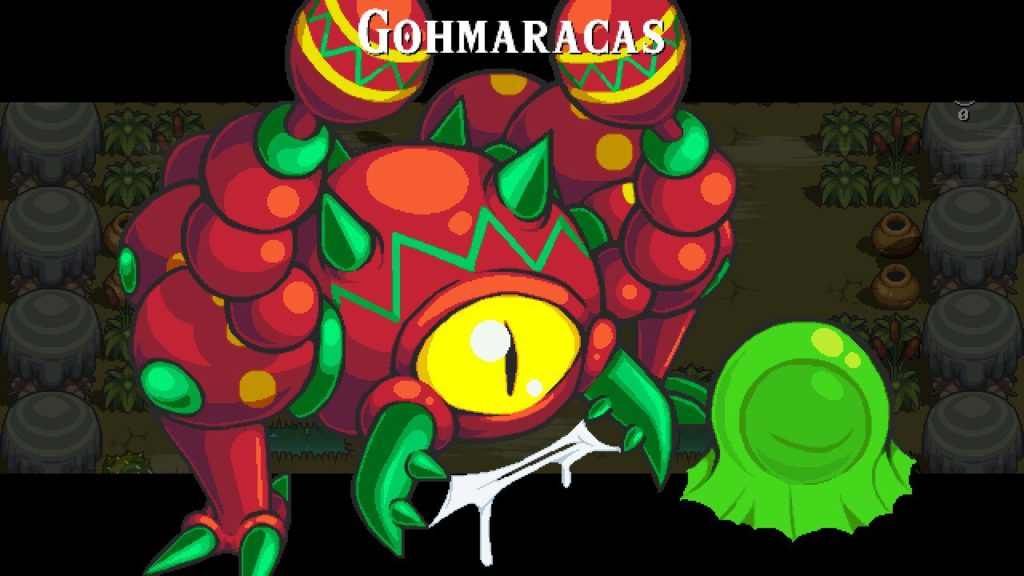
It also helps that the bosses are punny as hell.

This is definitely a game out of left field. While Necrodancer on its own is a fantastic game, the fact that Nintendo allowed for the Zelda license to run wild in the Necrodancer universe. What ends up coming out of it is something that just works fantastically well – as long as you’re comfortable in the rhythm style. Is this going to be a replacement for the upcoming Link’s Awakening remake? No not really. Is this better than I could have hoped for as a way to get more Necrodancer content? You better believe it.


Game Ramblings #35 – The Legend of Zelda: Breath of the Wild

More Information from Nintendo

  • Genre: Action/Adventure
  • Platform: Switch
  • Also Available On: Wii U

I kind of expected this one to not live up to the hype, especially given the reviews it was getting up to release.  However, for me it definitely nailed it.  Even given the quality of past Zelda games, this is a tremendously special game.

As far as open world games go, there’s a certain set of expectations involved with what you’re going to see as a player.  Most of them have some form of collecathon of things all around the world, a relatively loose structure in how you get between different quests, and more recently, some way to reveal portions of the map to the player as they explore.  Breath of the Wild certainly sticks to some of these conventions, but in doing so they’ve also shaped the conventions in a way that make the game still feel distinctly Zelda.

Nintendo went all the way with the story being entirely open world.  Once you finish the tutorial you’re given a couple quests as is typical of the genre.  What isn’t typical is that one of them is literally to go kill Ganon.  From this point forward, you can either explore and do things that will expand your repertoire, or you can literally go finish the game.  More than any other open world game I’ve played, this very quickly establishes the expectation here.  You can do whatever you want, whenever you want, and finish the game whenever you feel like it’s time to do so.  Everything else that is typical of Zelda games falls into this setup.  What also isn’t typical is that the tutorial gives you all of the items and skills you will earn within the game, upgrades not withstanding.

Despite some of the lead in news, dungeons are there, but you have to earn your way to them, and they can be done in any order.  The dungeons themselves focus more on puzzles than combat, and tend to be somewhat shorter than past games.  However, what they lack in length, they make up for in quality.  The core theme here is puzzles tied to environment manipulation.  Upon completion of the core puzzle, there is of course a boss fight, this time acting as proof of mastery of the skills earned at the start of the game.  While not being a necessity anymore, the quality of the dungeons absolutely made them worth completing, if for no other reason than the story elements they provide showing the past of the world.

It’s also worth nothing that despite the reduction in dungeon count and size, the world itself provides more than enough to cover this missing element.  Within the world you can find over 100 individual shrines to complete, as well as towers that provide the map viewing coverage typical of open world games.  While these things do provide the way to fast travel, these are also the main puzzle element present in Breath of the Wild.  Each tower tended to focus one on specific skill in manipulating the environment to get to the point where you could climb and complete the tower.  On the other hand, each shrine effectively acts as a fantastic mini dungeon, with a huge variety in what is available.  These ran the gamut of what was available in the game.  Some of the shrines were just simple combat rooms.  Some shrines had a focus on individual skills like manipulation of air for gliding, or the use of fire-based weapons to burn a path to the end.  Still some of them were there purely for amusement, like one physics-based minigolf shrine.  While completing the shrines did ultimately give rewards that resulted in heart and stamina upgrades, they also provided a nice way to break up the game as I traveled around the world of Hyrule.

Despite all the changes from the usual Zelda formula, the one that was most striking to me is how they changed the use of music in the game.  Outside of towns, there is hardly any music, apart from some sporadic piano melodies.  Even within towns, the music was typically fairly subdued, and the bulk of what could be called the soundtrack was composed of ambient noise from the abundant wildlife throughout the environment.  When the music does kick in though, they definitely aren’t shy about bringing in some hints of the past whether it’s night or day.  Overall while it’s not as in your face as is typical, this soundtrack is another memorable one in the books for this series.

What became quickly apparent playing this game was just how polished it was, and it’s always in the little details.  There’s a ton of wildlife around, and it’s not just there for show.  It can be hunted, and the supplies you earn from doing so can be cooked into food to heal Link in battle.  Because you CAN climb anywhere, you end up climbing just for the sake of it.  Because shrines are then typically glowing orange against the background, climbing anywhere typically gives you new goals on the horizon to go for, further providing you with new things to do.  Large scale bow aiming with the analog stick is there, but subtle motion controls provide an extremely fast and precise way to accurately aim in small amounts for things far in the distance.  Camps of enemies can be cleared in straightforward combat, but it’s also just as practical to roll a rock down a hill onto the group, send fire arrows into explosive barrels, or lead enemies into traps by chucking bombs into their midst.  Those are all little separate things, but I hope it’s making my point here.  The amount of polish in place is of a level that only a few other companies ever attempt to approach. This is on a level typical of companies like Naughty Dog or Rockstar, and I’d dare to say it surpasses them.

All that said, weapons that can break are still a terrible idea.  It’s not that weapons are hard to find in BotW, but when you’re trying to fight a boss and you run out of weapons from lack of preparation, it can be extremely frustrating.  This did push me to collecting Korok seeds to upgrade my inventory, and by the end of the game was a non-issue, but boy were early large scale fights super obnoxious when weapons started running out.

I’m the type of person that will pretty much buy hardware on launch without fail.  Regardless of how many games are coming out, there’s going to be something in there I want to play.  What is rare is that I recommend other people to buy hardware just for one game.  Breath of the Wild is one of those.  If you have neither a Wii U or a Switch, you should get one just for this game.  Go grab a system for yourself or go grab one from a friend.  Just find a way to go play this.

Game Ramblings #33 – The Legend of Zelda: Oracle of Ages

More Info from Wikipedia

  • Platform: Game Boy Color
  • Genre: Action/Adventure
  • Also Available On: 3DS Virtual Console

I figured it was about time to start getting into the Zelda spirit again.  I’ve always been a big fan of the portable Legend of Zelda titles, going back to getting Link’s Awakening as a pack-in with my original Game Boy.  Back when the two Oracle titles came out, I made the effectively random call to buy Seasons, and never really made it back around to playing Ages.  With the upcoming release of the Switch and Breath of the Wild, I figured it was a good time to get back to it.

As classic as it is, the base gameplay of the top down Zelda games has always been pretty much the same, and Ages is certainly no different in that regard.  You’ve still got a pretty decent sized overworld, with movement restrictions slowly opening up as you gain more items.  Combat is still simple, with four-direction sword attacks and a series of combat items that can also be used for damage.  However, Ages does have some of the more interesting takes on items in the series.  Rather than a hook shot to pull you to places, you have a switch hook that switches the locations of Link and the object he hits, giving an effective reposition mechanic against both enemies and environmental obstacles.  Rather than a bow and arrow, you gain a seed shooter, which can shoot a variety of seeds with different effects, and importantly can shoot in eight directions.  And then there’s the Cane of Somaria which….makes boxes (yes, it’s actually useful).

Like Link to the Past’s Dark World, there’s a second form of the world, this time centered around a past/present time travelling mechanic.  Initially the two versions of the world simply act as a way to enter individual dungeons in specific time areas.  However, as Link gains more ability to freely travel through time, puzzles start spanning across both time zones as plants grow, islands move, and later generations of people flourish.  There’s also a number of spots where actions in the past influence changes in the world of the present, giving some of the better logic puzzles that any of the games, both 2D and 3D, have had in the series.

Given its age, this game has really aged quite well.  For as good as the 2D Zelda games have typically been, I would be pretty confident putting the Oracle games at least close in quality to A Link to the Past, and certainly better in quality than the rest of the 2D entires.  Even now the game is absolutely worth playing, with both high quality gameplay, and a well put together world.  Visually it’s pretty obviously an old Game Boy game, but the emphasis the development team put on smart color use and clean sprite designs has meant that everything still looks pretty damn good to this day.

Do yourself a favor and pick this up on the 3DS Virtual Console, as well as both Oracle of Seasons and Link’s Awakening DX.  If you’re looking to scratch that 2D adventure itch, you aren’t going to find better than these.