Game Ramblings #149 – Metroid Dread

More Info from Nintendo

  • Genre: Action/Platformer, Metroidvania
  • Platform: Switch

This is very much an iteration on the work that was started with Metroid: Samus Returns, and that’s a great thing. Quite frankly, you could read my notes on that one and it would be a 1:1 retread of what worked for Metroid Dread. However, this feels like a clear iteration on the formula and even more importantly a clear end point to the series’ story – whether or not that’s ultimately what will happen. This is just a fantastically good game that took far too long for someone to convince Nintendo to spend money on, and I’m glad it finally happened.
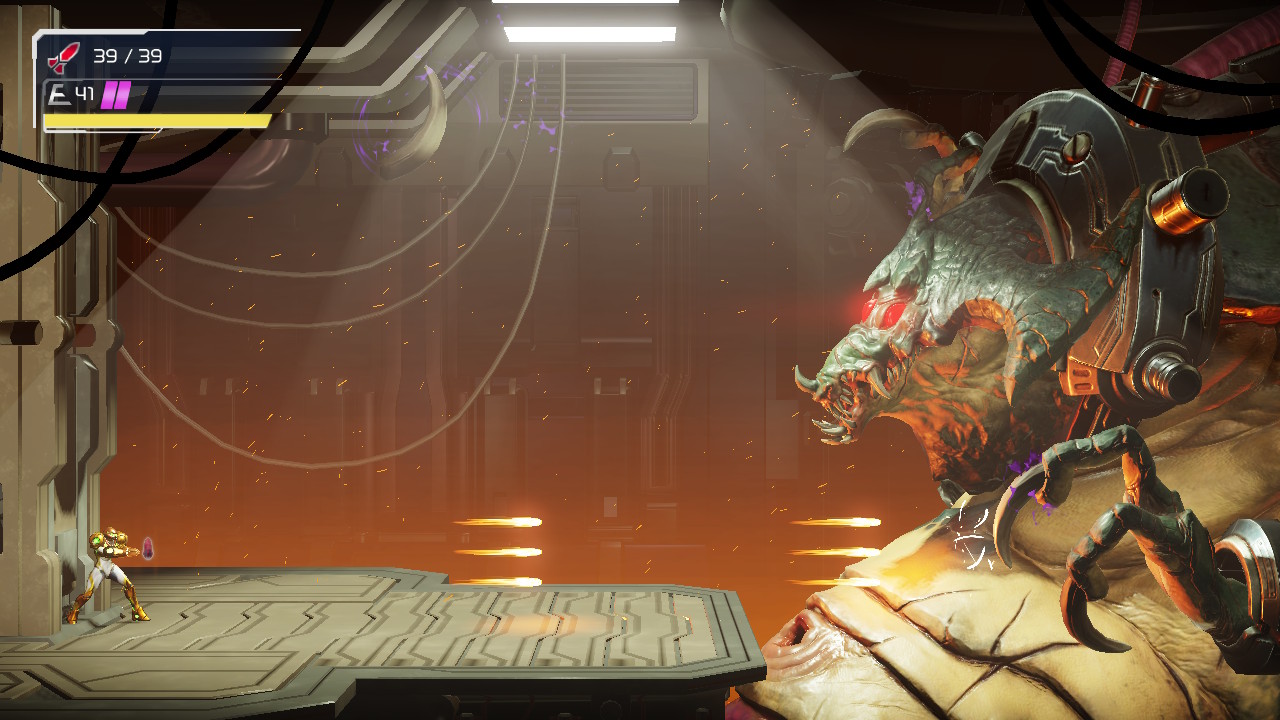
The thing that really stood out to me in this one was its difficulty, and that seems to be a common theme across the feedback I’ve seen about the game. A lot of people are calling it simply hard, but I think it’s more nuanced than that. What it really feels like to me is that it’s precise, and that’s really the difference to me in why I had the patience to enter death loops. I’ve shelved a lot of games in the last decade or so within the sort of rise of the indie games. A lot of games feel like they do hard for the sake of hard. Something precise and mechanically tight will come out like Celeste and be incredibly difficult but fair, then a bunch of games will follow that are simply…..difficult. It’s not fun. Dread very much feels like it falls within the difficult but fair.

Bosses in this game are no joke. A missed mechanic will take a full health tank or more. If you aren’t being precise with your movement, you will die. However, once you learn the mechanics and once you get your movement down, you’re just as likely to take no damage in these fights. In that respect it’s incredibly fair. You take damage, you learn mechanics, you avoid damage, you win. Sure you may die a couple times, but you aren’t getting screwed by RNG and you aren’t getting screwed by the fight.

You’re given a lot of tools to avoid damage that aren’t typical of the Metroid series – things like a slide that can transition into the morph ball or an instant dodge that gives some amount of i-frames – that really lean into damage avoidance as a key mechanic. You’re also given some really good new offensive tools to make damage a little more passive and a little less precise in those big moments – things like the return of the melee counter from Samus Returns or a lock-on multi-hit charge missile – that allow you to build up damage without having to be right up in the enemy’s face or having to pause and engage in the slower free aim. The end result of all of this is that while the game is still distinctly Metroid in style and mechanical knowledge, it feels substantially like a modern game where you have full control of damage mitigation and aren’t just being slammed with unavoidable nonsense.
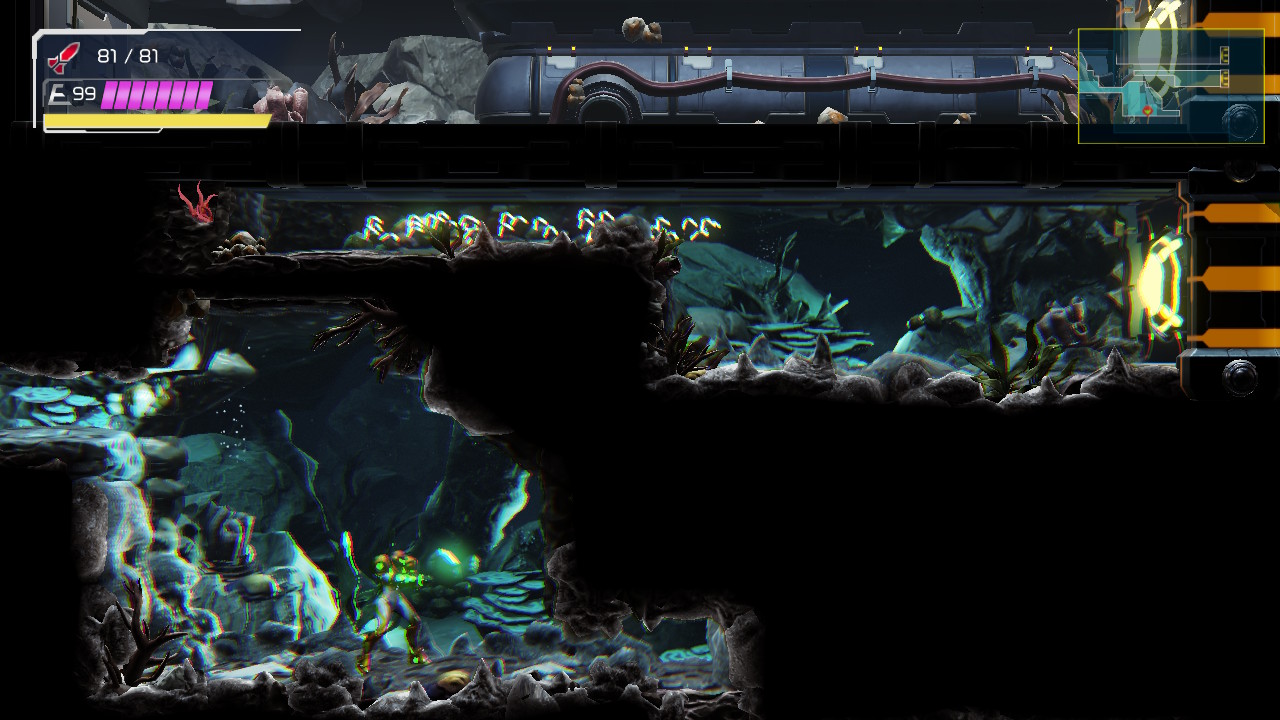
There’s also just a ton of little things that the game does very right that make it feel both Metroid and modern. You’ve still got pickups that drop when you kill things, but they get sucked in at any range. Combined with melee counters dropping more items, this both increases the general pace of the game AND allows the game to have higher difficulty, since you’re always pulling in resources. One of the early upgrades is the return of the pulse radar that reveals hidden breakable blocks. This is again probably controversial, but this feeds into increased exploration and increased pace since you aren’t just playing a game of shoot every block to find the hidden trinket. Free aim is back to give much more freedom of hitting things from any angle, making a lot of the trash encounters much quicker to deal with. The new slide move both replaces a lot of the slower morph ball stuff, but also acts as a fast transition into morph ball tunnels when unlocked AND a way to actively dodge attacks in a lot of the boss fights.

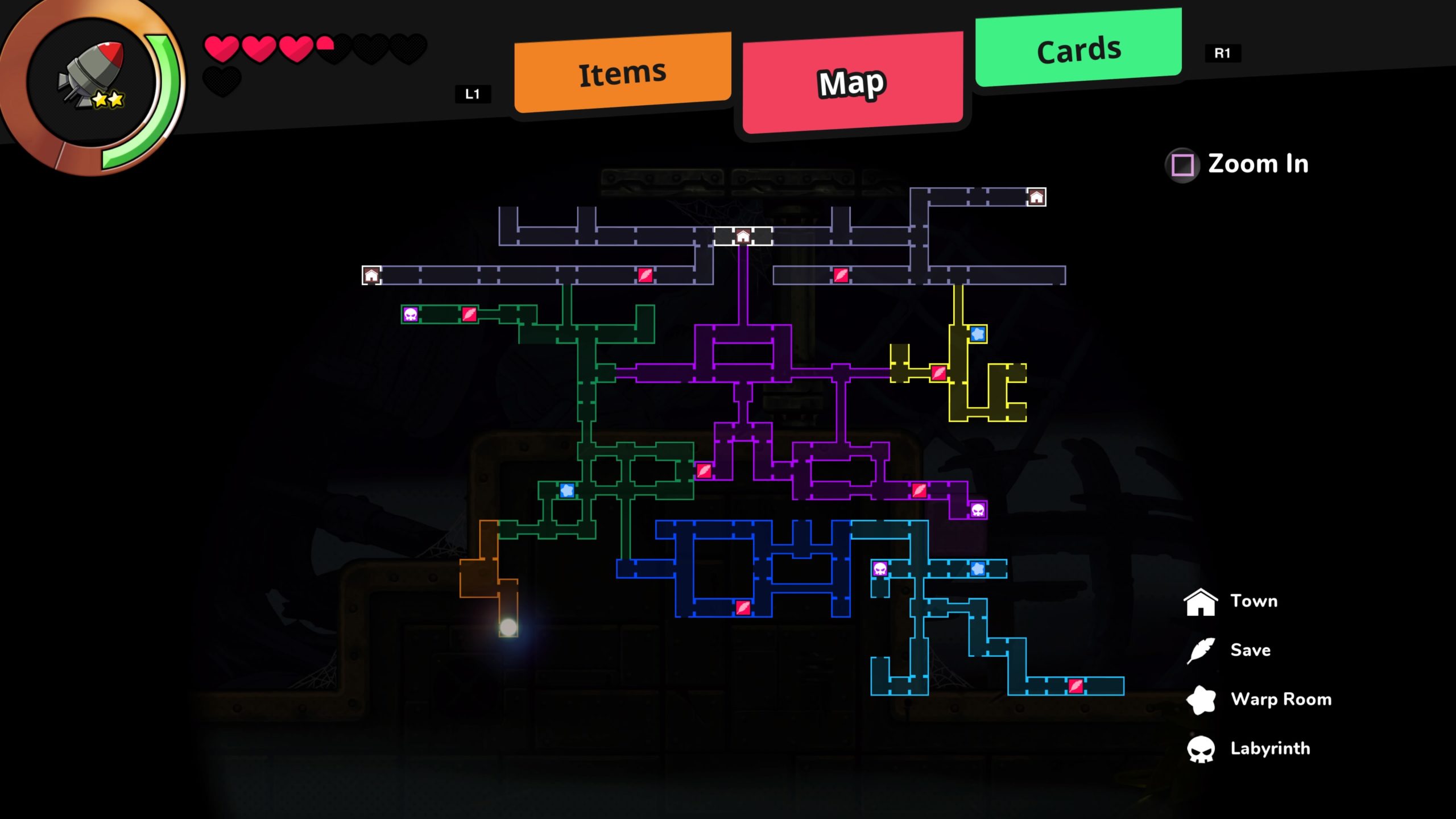
However, the real important change compared to Fusion or the Prime games is that the game really doesn’t give you any direction. You’re chucked into the world and told to get to the surface. You’re given some lore as things go, but more often than not it’s up to you to find your way. This is very much an old Metroid thing that started to go away over the years, so it’s interesting to see it return to very little direction. For me, this is precisely what I’m looking for in a Metroidvania. I love to scan the map to find doors that I haven’t entered or mysterious holes in the map that I haven’t explored, then going back to find new things. Where things really work for the better is that the map itself is far more readable than past 2D entries, although that is entirely down to just having more modern hardware and higher resolution to display the map. It’s just far easier to find things when you can pump more obvious information on the screen and it really benefits the loose structure of the classic Metroid formula. It’s even better with a bunch of fast travel teleportation spots that open up as you find more upgrades, allowing you to quickly scoot around the world at will.
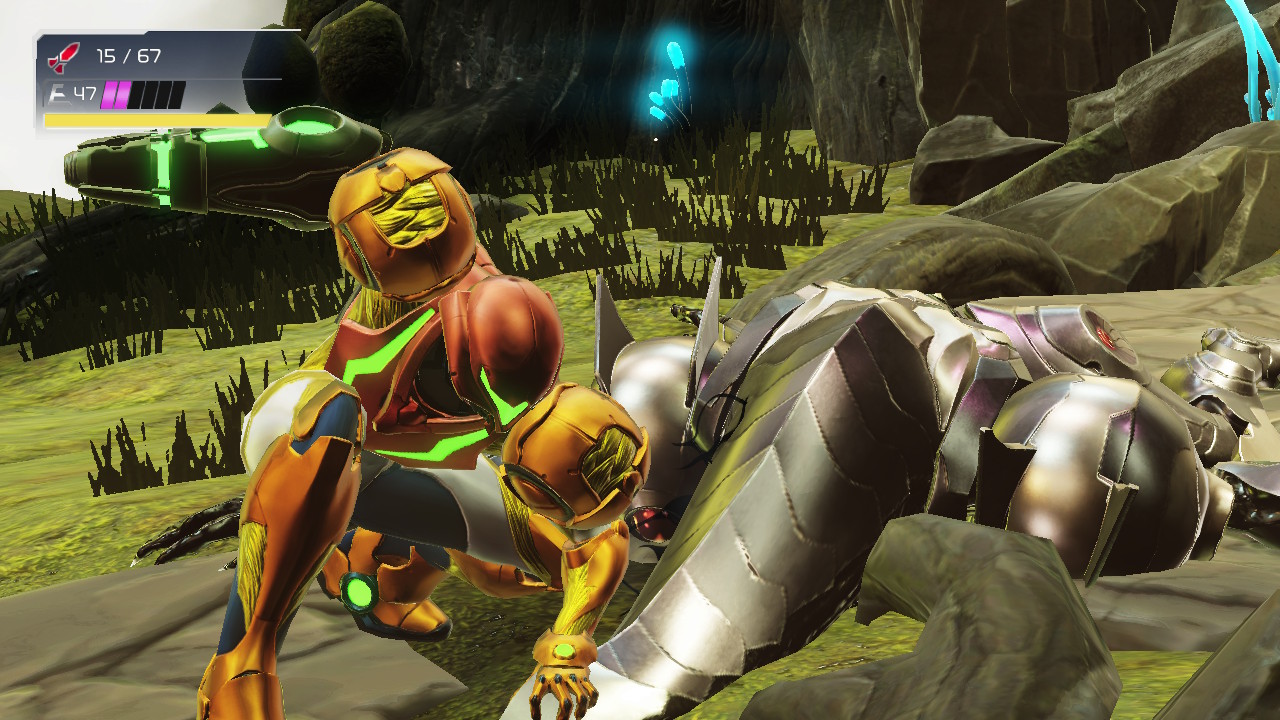
This just ended up being such a good game. It’s been so long since a 2D entry came out in this series that there was probably some amount of valid concern about whether or not this could be done and still be fun. Samus Returns proved that the formula still worked and Dread proved that the series can move forward. This hits just the right mix of classic Metroid and modern gaming, and in a couple key ways goes backwards compared to Fusion and Prime, but it comes out as such a great mix. The difficulty of the game will probably turn some people away, but for me it again hits the perfect mix – it’s perhaps unforgiving, but it’s precise and fair and not based in RNG. You’ll learn where things go wrong, then make it right. It may take a few tries, but you’ll learn and get through it.

It’s also funny looking back at my notes about Samus Returns. That one ended with a new little cutscene showing the rise of the X parasites on SR388. I mentioned in passing that maybe they were hinting at something else. Boy was it ever. I don’t know if they were still hoping to do a Fusion remake or Dread at that point, but seeing the end of the post-Prime Metroid and X saga finally arrive is both great to see and something that I never really expected to happen.

Seriously, go play this.

Game Ramblings #134 – Yoku’s Island Express

More Info from Team 17

  • Genre: Pinball/Metroidvania
  • Platform: PS4
  • Also Available On: Steam, Xbox One, Switch

Talk about a pleasant surprise. That genre listing up there isn’t wrong. This is a pinball game that’s also a Metroidvania. It’s a completely batshit blend of genres…..and it works. It’s a bit of a baffling game to start, but once you fall into how the game functions it feels far more natural than it should.

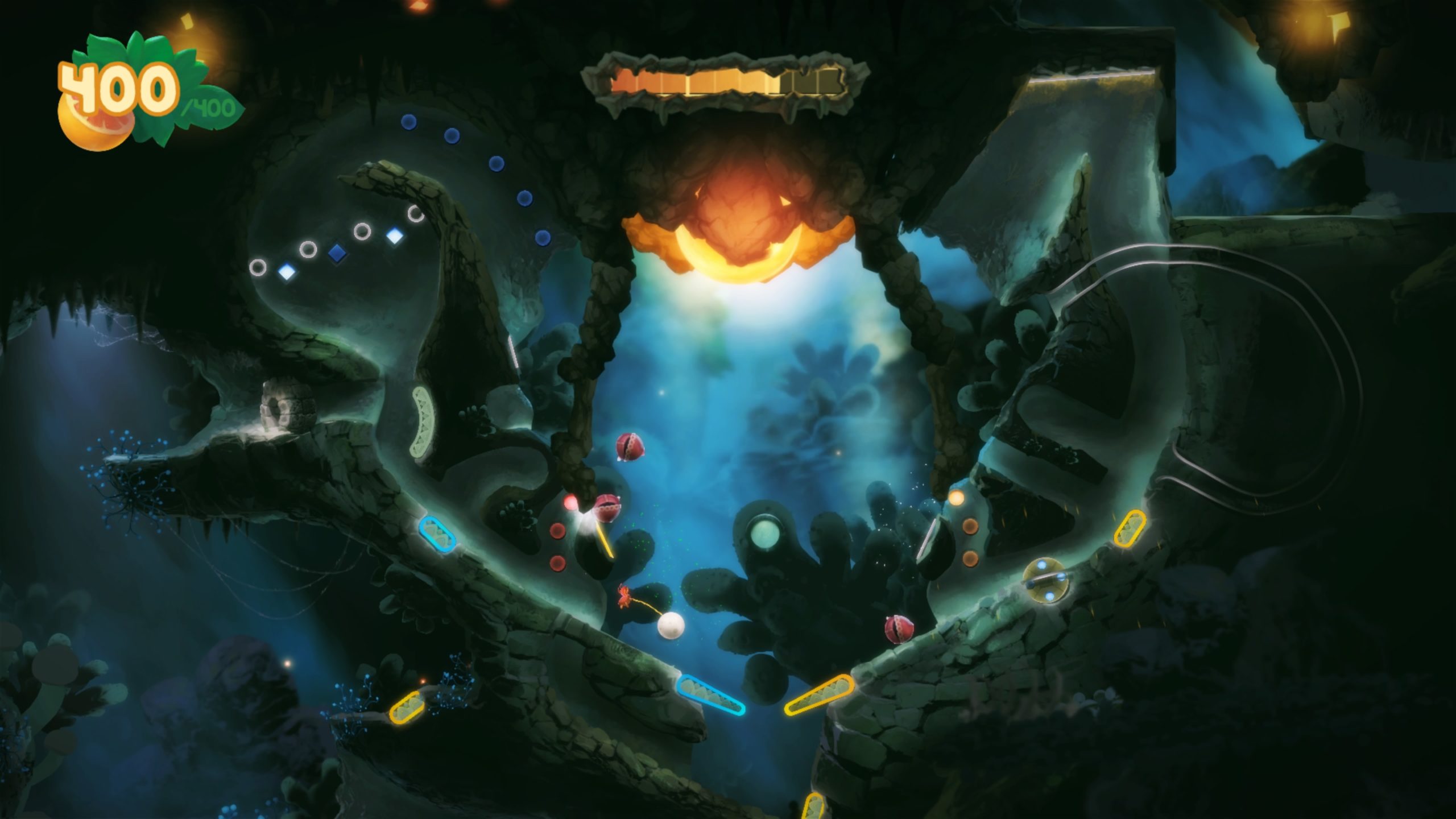
It’s a bit strange to play a Metroidvania that only has three main controls – joystick to move when you’re on the ground and two buttons for flippers. That’s it. This game gets away with it by really compartmentalizing the experience into rooms that fit the pinball side of the game. Each pinball table is less about being a pinball score running marathon, and more about solving a pinball oriented puzzle. How can you get an explosive over to the rock that keeps getting in your way? Can you light up a row of lights by repeatedly hitting a bumper element to unlock a door? Can you reliably keep hitting a spinner to push you forward? Can you really hit a tough angle to run up a chute and on your way? It’s all obvious stuff in a pinball game, but it works well as a puzzle experience within a larger game.

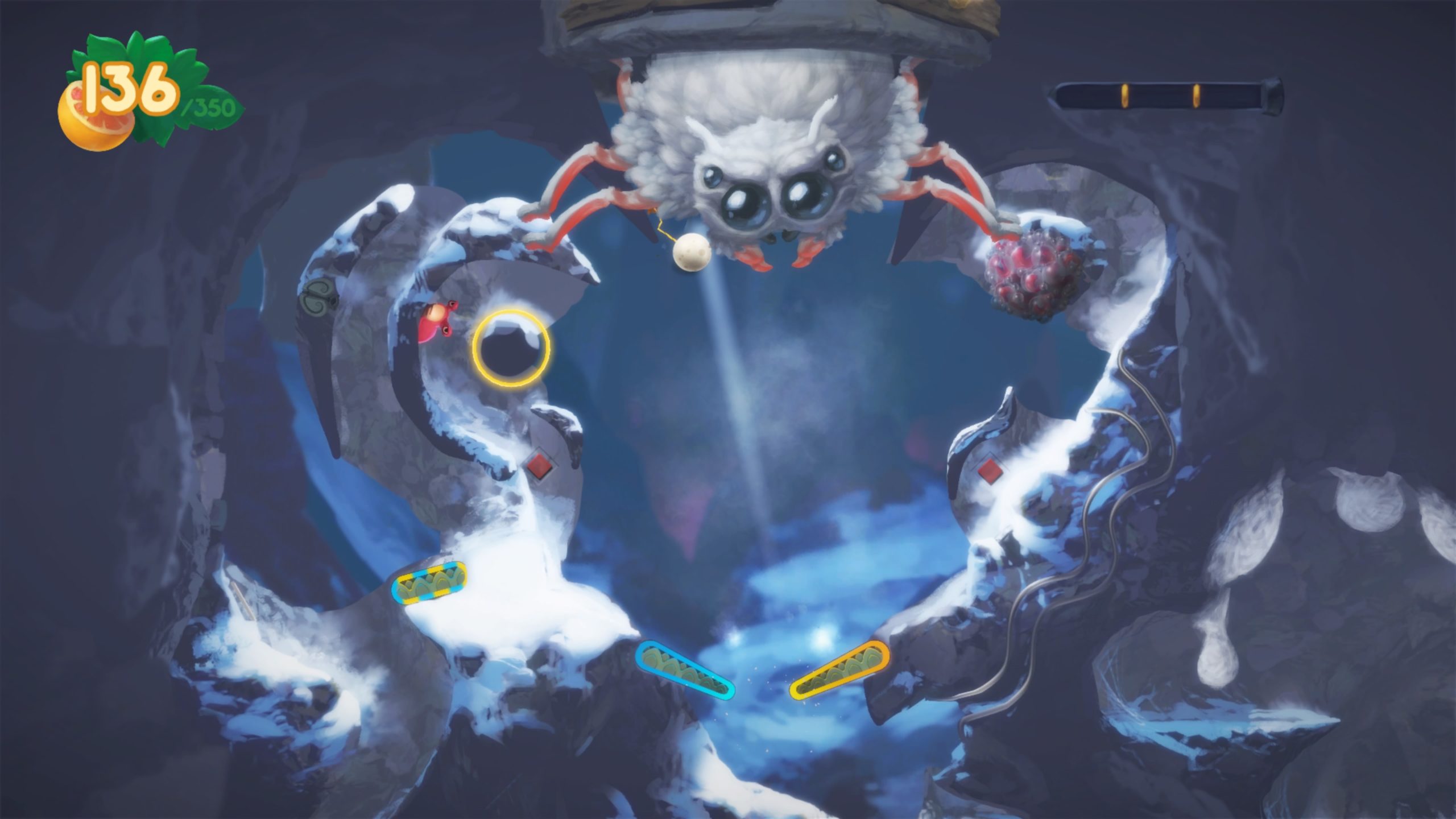
This all comes together in the handful of surprising boss fights. Consistency is the key here where hitting targets randomly doesn’t do you any good. You’ve got to hit specific targets quickly and repeatedly in order to push the bosses through their phases. That’s not to say you do that for any danger purpose, but just to get through the fight as efficiently as possible.

The surprising mechanic in all of this is that there’s no damage and no death in the game. Sure, you can fall out of the bottom of the pinball tables, but you get shot right back up and at most you might lose a couple pieces of the fruit-based currency. You won’t lose progress, you won’t hit game overs, and you just kind of move on with your life. The challenge therefore is entirely in execution of the mechanics in an efficient way, and never about playing it safe in order to preserve your lives. It feels appropriate for the game to be this way, and it lets the game really focus on being challenging on its own one room at a time, rather than artificially through progression loss. It’s honestly a way to handle games that I’d prefer to see more often.

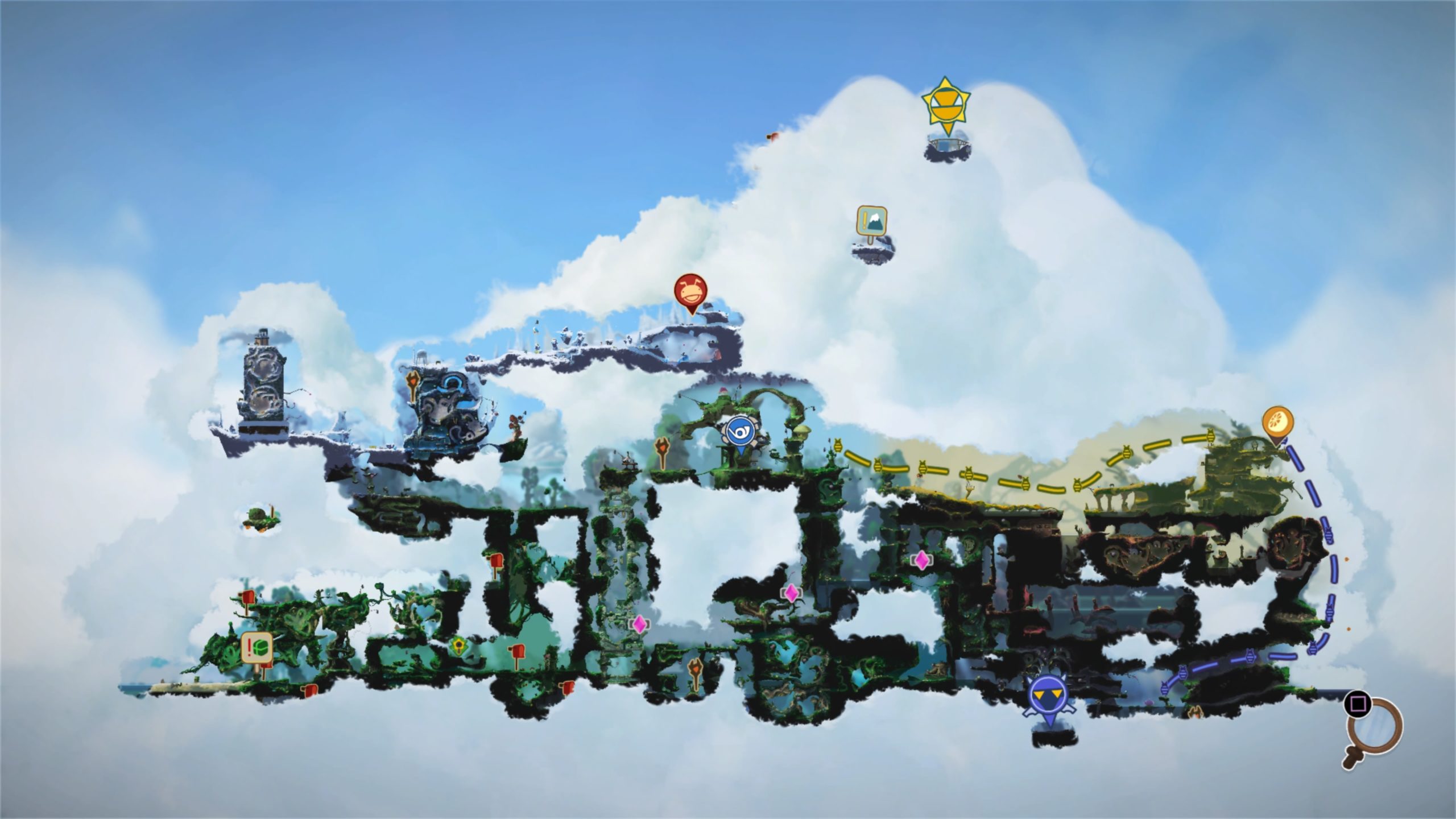
So then you might ask, how does the Metroidvania part of all this fit in? Beyond just travelling for the sake of travelling, there’s some good use of genre expectations to allow you to re-traverse areas. Finishing pinball rooms leave them in a completed state, allowing for faster general movement the second time through. Pushing through the story unlocks some options that open up new ways to get through previous areas, such as the ability to dive into water or grab onto grapple points for climbing purposes. It’s generally obvious targets, but in a game that revolves around rolling a ball through the world, I was constantly surprised by how smooth the whole re-traversal aspect integrated itself into how I was playing.

This is a pretty unique one. It’s a strange mix of genres that works out well as a combined experience. It’s relatively short (I platinumed it in about 10 hours), but hits that nice place where it doesn’t wear out its welcome and you’re still having fun at the end. I’ll readily admit that I picked it up on a whim when I saw it was under $10 for a disc and had a good Metacritic rating, but given how much I love Metroidvanias, I’ll consider it a happy accident and go on recommending that people check this one out.

Game Ramblings #129 – Shantae and the Seven Sirens

More Info from WayForward

  • Genre: Metroidvania
  • Platform: PS4
  • Also Available On: Switch, Steam, Xbox One, Apple Arcade

I fucking love Metroidvanias. I fucking love the Shantae series. Guess what? I fucking loved this game.

Alright, that was probably too simple of an opening. A lot of what I’d say about this game matches with exactly what I said in the ramblings for Pirate’s Curse or Half-Genie Hero, and that’s a good thing. This is another iterative release in the series, and it takes what made the past games really work and moves it forward in important ways.

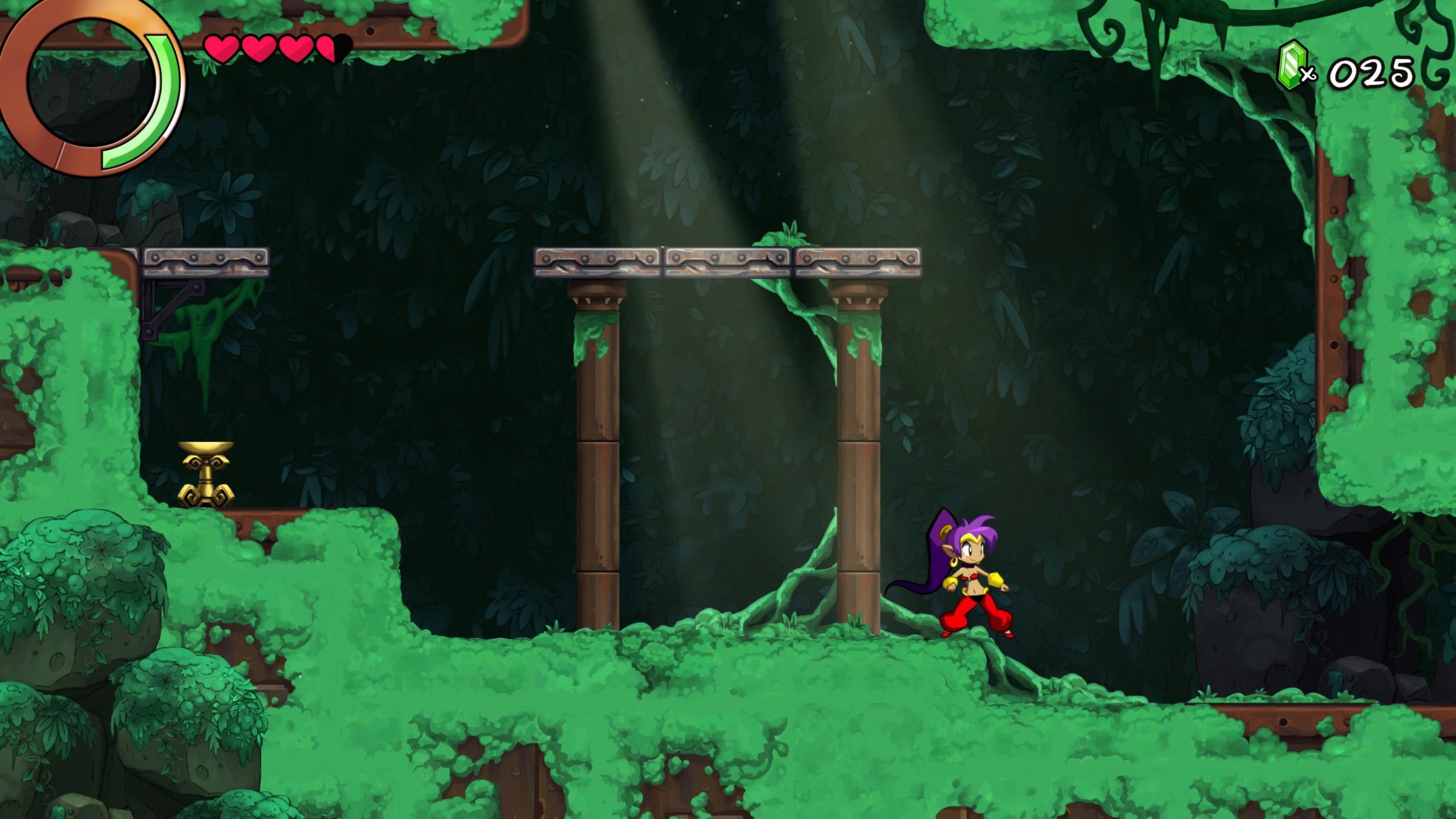
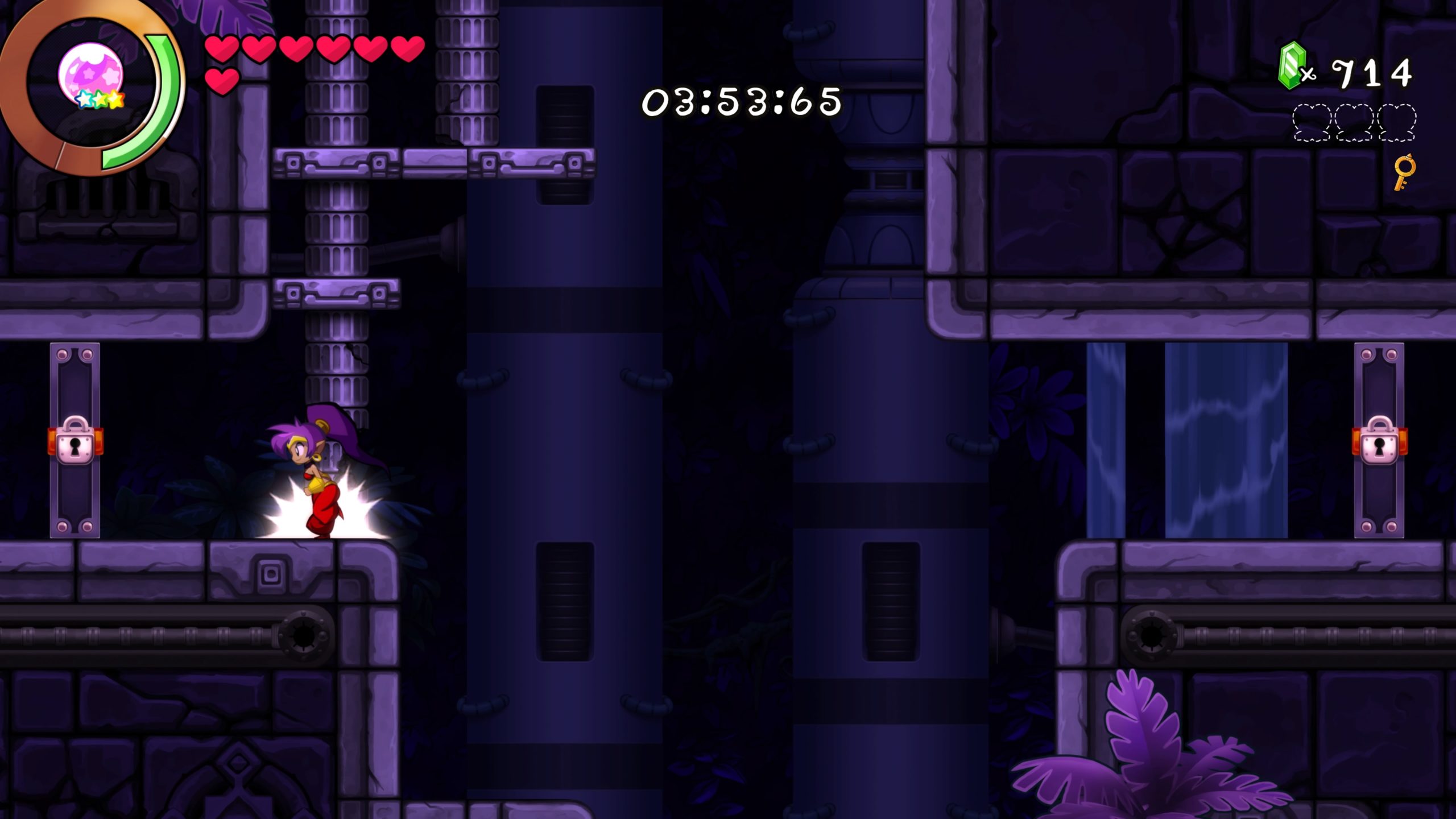
The first big one is that instead of being level-based, this is 100% a true Metroidvania. The entire game takes place on a single unified map and new areas open up purely based on upgrades you receive. While I definitely liked the way previous entries encouraged re-traversing levels once you gained new abilities, there’s just something to having a pure open environment. You see and make note of those open ends of hallways that you can’t quite get to or those things in the environment that are obviously something that you can interact with, and make mental notes to return to later.

Where they end up making use of their history of level-based gameplay is in the handful of labyrinths that come up. These act as pillars to the overall story and upgrade path, but also serve as mini-tutorials to learn new powers, as well as the core spot for the big boss fights in the game. It gives a nice on and off pace to exploration where you kinda futz around finding new areas and exploring for hidden stuff, then go into a labyrinth and really focus on combat for a while in a controlled linear environment.

The second thing that really stood out to me was how well integrated the transformations were into gameplay. In a lot of ways, this felt very much like Pirate’s Curse. That game required upgrades to be fast and easy to use due to story reasons causing the loss of transformations. In this one, the transformations are automatic. There’s things like the newt form which gives you a dash and wall climbing. There’s things like the frog form which the frog which gives you the ability to swim. Thematically they make a lot of sense, and the fact that they’re automated makes the game flow pretty much a non-stop affair, which is a huge benefit to the game pace.

That’s not to say there aren’t dances, but in the case of this game they’re all there as one-off attacks that don’t have permanent transformations. These are definitely useful in their own right – for example an electric attack does AoE damage to all things on screen, as well as powering up mechanical devices – but they definitely have a much more straightforward use that isn’t tied to moving through the world.

This is just a really fun game. There’s not been that many Metroidvanias that really have high pace gameplay and almost purely melee combat, and the Shantae series continues to be at the forefront of that style. Movement is fun, combat is fun, the bosses are fun. It’s just all fun and I can’t think of many better series to recommend in this genre right now.

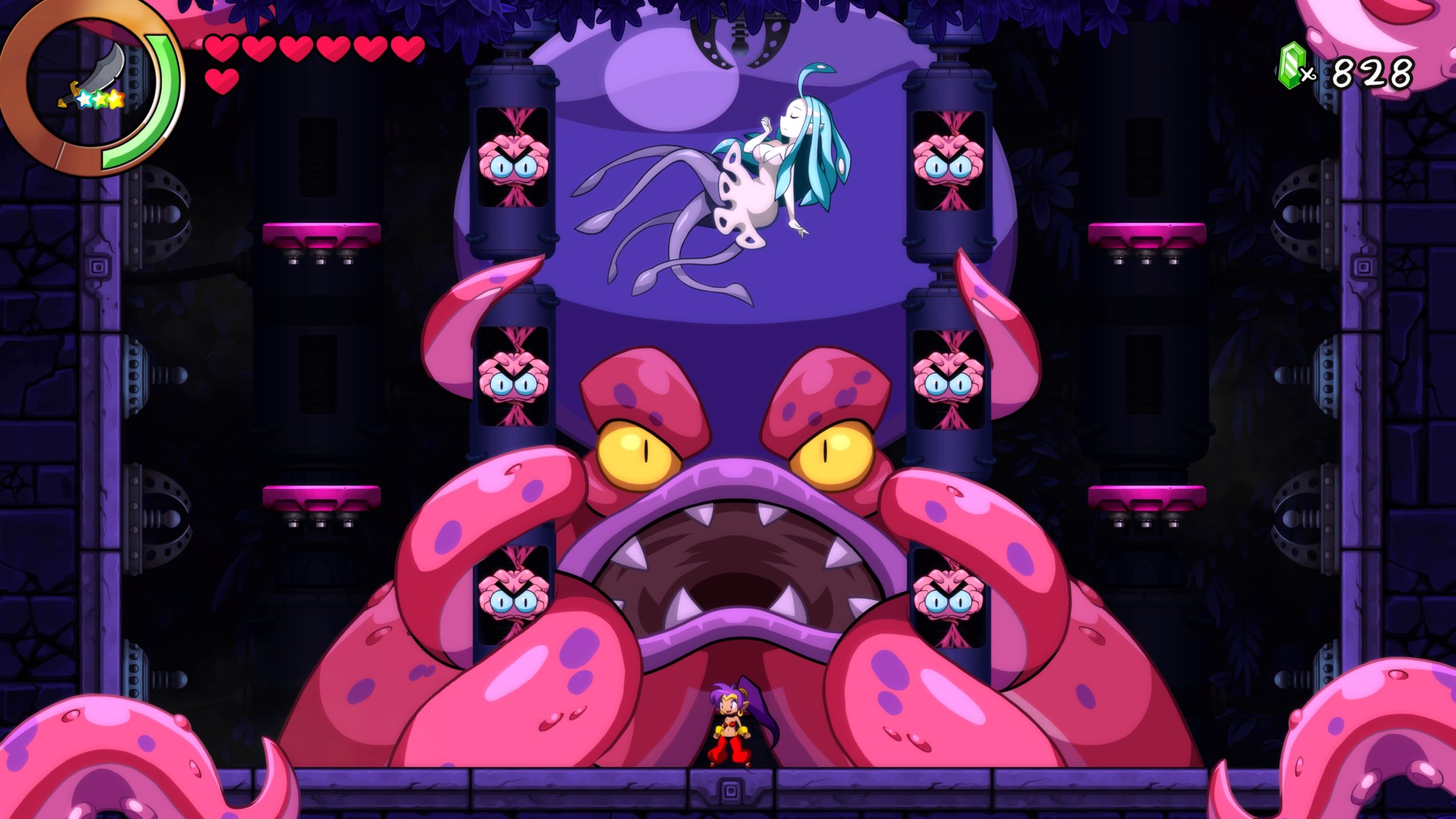
….and don’t worry. Everyone’s favorite Squid Baron makes his return.