Game Ramblings #78 – Spider-man

More Info from Sony

  • Genre: Open World Action
  • Platform: PS4

TL;DR

  • Best example of web slinging that we’ve seen, backed by a gorgeous version of New York City
  • Good use of stealth segments with other characters to break up the pace of the story sections
  • Combat that ranged from frustrating to fantastic, depending on where I was in the skill progression

 The obvious indicator that I really liked the game is that I got a platinum trophy.  Granted, this was an easy platinum to get in the grand scheme of things.  However, the fact that I wanted to literally do everything to unlock it is a clear sign that the game was pretty damn good.  That’s not to say I didn’t have my issues with it here and there, but being able to web sling around Manhattan was often more than enough to just keep me playing.

I start with a video of swinging because quite frankly that is the draw of the game.  Even going back to Spider-man on the PS1 you just wanted to swing around, and this game is as good as it’s ever been.  The base swing is extremely fluid and easy to pull off, but it’s the additional maneuvers that really flesh out the experience.  There’s little web pulls that give you speed boosts and a bit of extra distance while gliding.  There’s diving to build up speed when dropping down off buildings.  There’s points you can latch onto then leap off of to quickly gain height and scale over the top of buildings.  The entire thing is basically all on the shoulder triggers as well, so it’s incredibly easy to pull off the entire time.

If this was the entire game on its own I would still have played it.  The joy of swinging through Manhattan never diminishes as you play the game.  Using it in combat is also a lot of fun, and can be used offensively and defensively in fun ways, particularly in boss fights where rapid movement and quick succession of strike and run maneuvers becomes key.
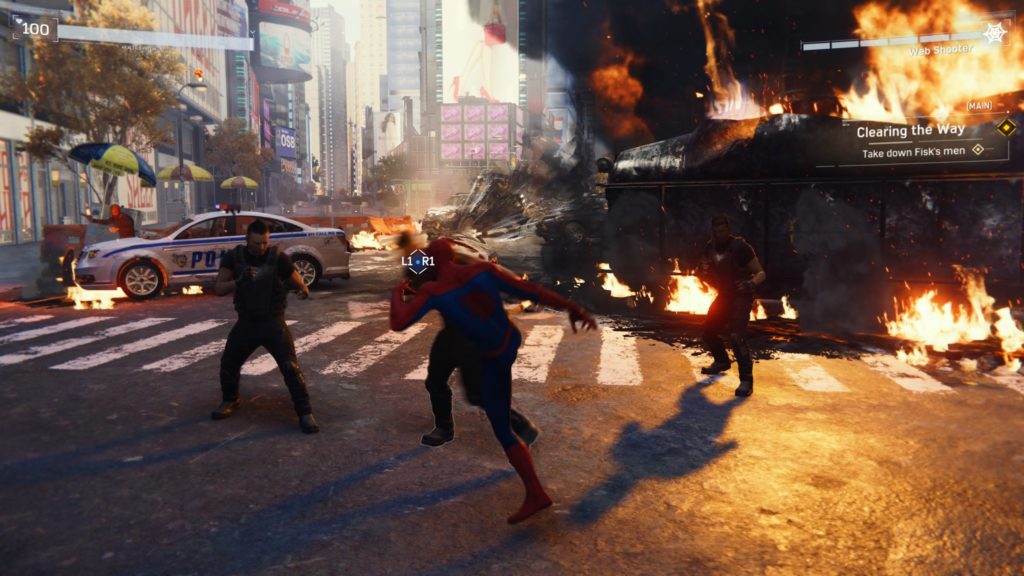
Combat is also a big draw, even if it is more inconsistent than swinging.

However, the rest of combat was at times more inconsistent, but in ways I wasn’t really expecting.  I went through periods in this game where I hated combat, then loved combat, then went back to hating it, and ultimately really enjoyed it at the end.  The entire wave here came down entirely to the growth of the skills available to me as I went through the game.

Through about the first quarter of the game, I found combat largely annoying due to its early dependence on dodging.  The control scheme has dodge in what I felt was a weird spot on the circle button, placing it furthest away from camera movement.  The quick timing necessary for a lot of dodging meant that I generally either missed dodges or couldn’t really see where I was attacking.  However, as I gained some more offensive abilities, such as improved enemy juggling or electric webs, I found myself not really caring about looking around, and more focusing on controlling the larger enemy group and taking out enemies one or two at a time.  At this point combat felt really fluid and it clicked in a way that made sense given how much emphasis there was on web slinging capabilities.  This continued fine for a while until the introduction of flying enemies and enemies with whips that could pull Spider-Man out of the sky.  For a bit, combat was kind of annoying again until I gained some more improved capabilities, such as chained finisher attacks or trip mines that automatically grab and web enemies.

Ultimately though combat was a lot of fun, even if I would have preferred a bit of a different power curve given to me.  Where it really ended up clicking was in the arenas used for boss fights.  Whereas most group combat took place outdoors, boss arenas were generally in enclosed or at least obviously specific arena-style areas.  The bosses also generally couldn’t be directly hit with melee attacks without first doing other things.  These really emphasized constant movement with webs and the quick use of thrown projectiles to really lock down a boss, enabling you to then web sling directly to the boss for melee chains.  This is where combat really came alive for me, and generally speaking ended up being the best show case for the way the fights really felt the best.
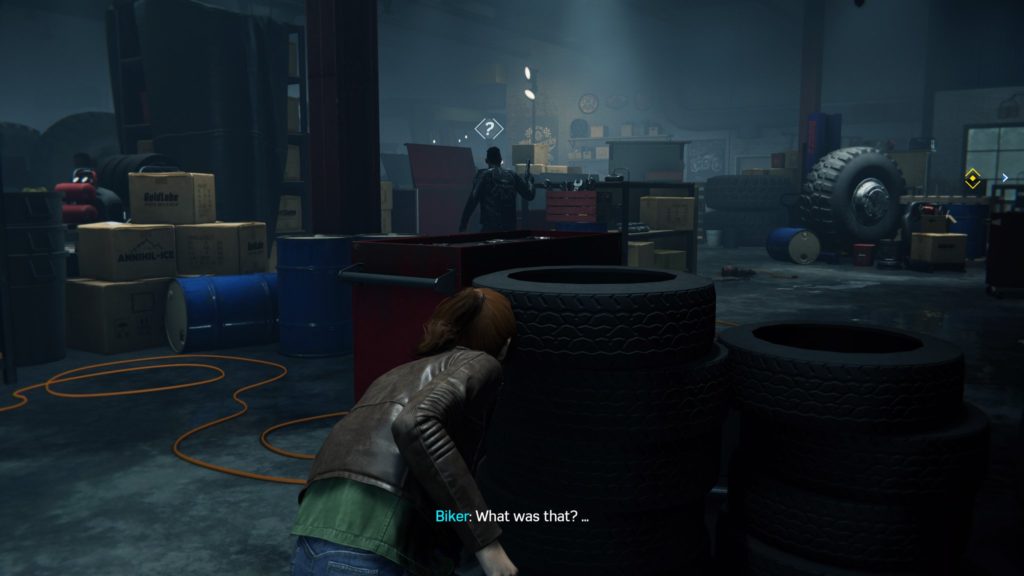
The game isn’t all Spider-Man all the time.  There’s a bunch of stealth segments with other well known characters as well.

The game was also paced really well to not always be high action.  There’s a number of segments that rely purely on stealth mechanics.  These bring in some well known in-universe characters like MJ or Miles Morales to sneak around.  While that may sound a bit fan-servicey, it ends up being a big help in giving these segments a nice change, both to keep the player from always being in high-action stress, as well as to provide a bit of a different voice to the story.

There’s also some minigames that pop up here and there to challenge the mind.

In addition, there’s also a few different style minigames to complete throughout the game.  These range from the sort of hacking-style electricity pathing game above to a game that focuses on color spectrum analysis to a game that focuses on intercepting and manipulating radio waves.  These all serve an important purpose of giving the player a bit of a breather between combat to keep the game from being all high action all the time.

This game was definitely a pretty special experience though.  Zipping around a city as Spider-Man is one of those comic book dreams that people have growing up, and this game is by a long shot the best representation of that.  You are 100% Spider-Man in this game, and despite a few hiccups that I think could be improved in combat, this is the way to go to fulfill that dream.

Game Ramblings #77 – Assassin’s Creed: Odyssey

More Info from Ubisoft

  • Genre: Action RPG
  • Platform: PS4
  • Also Available On: Windows, Xbox One

TL;DR

  • Another great entry in the series that iterates on the new AC style established in Origins
  • Stealth was still the most fun way to play, but both melee and bow combat were not detriments
  • Ancient Greek environment is a lot of fun to run through, especially for history nerds

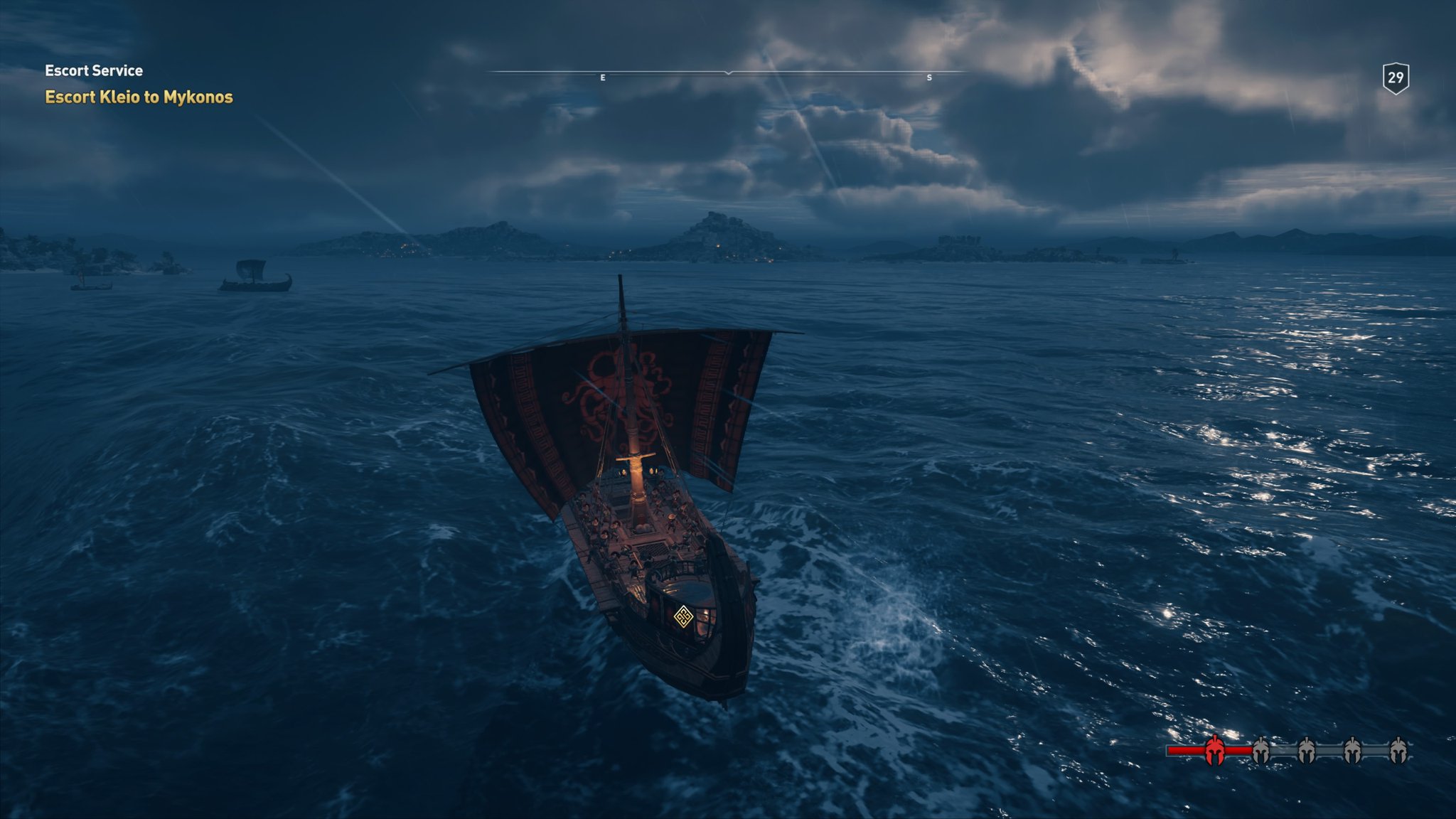
Sailing is back, and it’s gorgeous.

While it would be easy to look at this game and assume it’s simply a mashup of Origins and the sailing from Black Flag, there’s a lot more going on under the hood here.  Where last year’s Origins explored the starting point of the assassins, this year’s Odyssey explores where some of the series artifacts come from.  In doing so, the game leans way into the supernatural/alien elements that have been hinted at for so long in the series’ back story, and really give us a game that fans of Greek mythology can dig into.

The place to start really is to just point at my ramblings about Origins last year as it covers a lot of what I normally would have said about combat.  That’s not to say that Odyssey is a straight copy, but really this is a solid iteration on the ideas from last year.  What this does differently is brings back the large scale sailing of Black Flag and really leans into the RPG side of things through skill trees, even more emphasis on gearing, and a lot less hand holding if you decide to go with the developer’s recommended options.

The game generally gives you an idea of where to go, but it’s up to you to find the goal.

It’s going to sound weird that such a simple change drastically changes the game, but the default style of this game doesn’t really give you goal locations.  Because of story reasons, you’ll often have a rough idea of where to, but if something isn’t in the dialog options presented to you, it’s often up to you to find the location.  What this ends up doing is really encouraging the thing that Origins started; the push to simply explore.  On your way towards a general area, you’ll run into any number of areas that can be cleared out of enemies and treasure, and it’s generally worth going through them.  One of the systems that was added to this game to also encourage exploration is a series of hunts against the Cult of Kosmos, which is basically a precursor to the series’ templars.

These cult leaders are the driving force behind the game’s story, and a number of them simply show up as targets during the story.  However, the rest have to be found.  They might simply be leaders of the various cities.  They may be out living on their own, taking care of a fort or a farm.  They may also be mercenaries sent to try and kill you.  However, behind all of it are clues that you can find by completing the small invasion areas; clues that lead you to the cultists location so you can take them out.

War is active, and it’s up to you to fight in it.

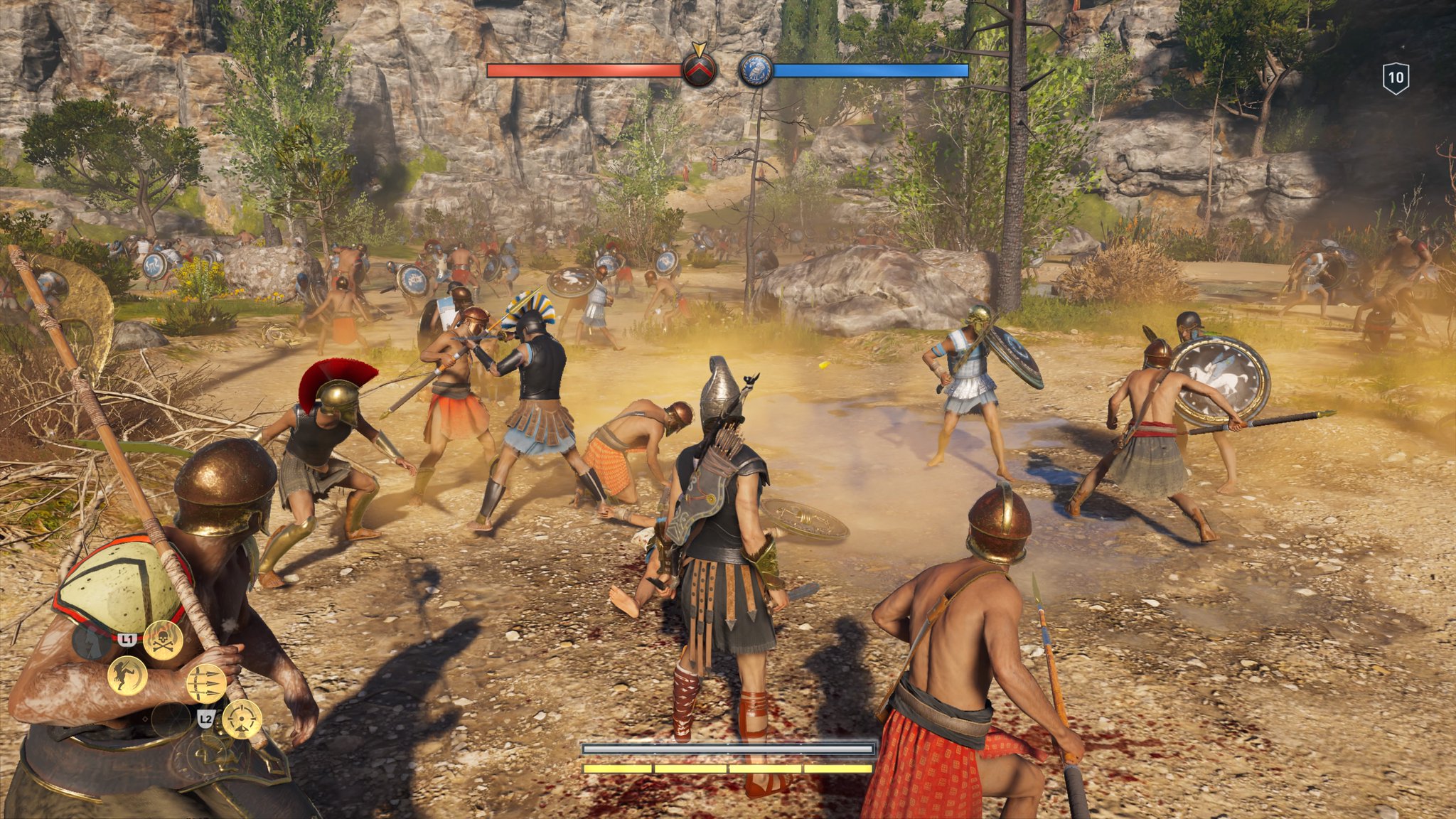
There’s also a large emphasis on war in this game, and you can generally get yourself directly involved in the battles.  This game takes place a few decades after the events of the movie 300, and Athens and Sparta are nipping at each other’s heels.  One of the consequences of you taking soldiers out is that the regions you’re in become weaker, exposing their leaders to be killed, and eventually the region for invasion.  In doing so, you can open up battles like the above screenshot for extra rewards, as well as to potentially turn over the region to the opposite side.  It’s a neat system that exists effectively as a distraction, but offers up something to do as a result of all the sneaking around you’re doing.

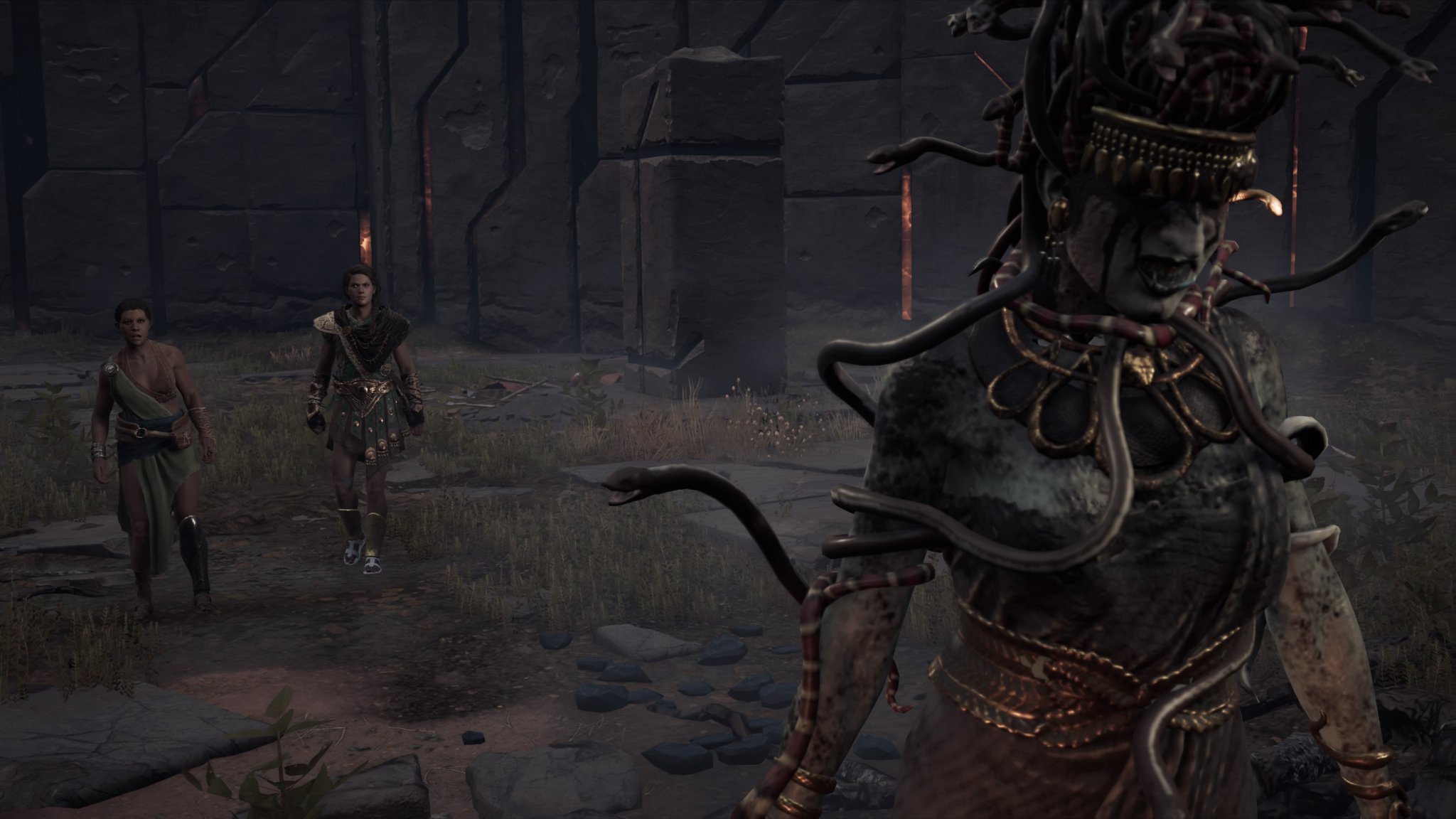
Mythology comes to life here, including a really fun fight against Medusa.

However, the lore behind the world is also a huge driving factor in exploring.  There’s fights against creatures like Medusa or Theseus’ minotaur.  There’s an entire segment of lore around the city of Atlantis and how it ties into the greater Assassin’s story.  There’s also the historic locations to see like the Parthenon in Athens or the famous people you meet like Sokrates or Hippokrates.  Basically, the entire game is a historian buff’s dream, and you’ll consistently be seeing things that you’d only ever seen in books.

All said, this is another great entry in the series.  It takes everything that worked about Origins and iterates in great ways.  The game has really leaned further into RPG territory than ever before, but it’s working out well for the series.  The fact that I can sit here having played it for 80 hours and still want to do more is a testament to them having really perfected their formula.  I guess I’m basically recommending this, especially if you liked Origins or Black Flag.

Also for what it’s worth, sync points are still great.

Game Ramblings #36.1 – Horizon: Zero Dawn – The Frozen Wilds

More Info from Guerrilla Games

Original Ramblings

  • Genre: Open World Action/Adventure
  • Platform: PS4

Horizon: Zero Dawn – The Frozen Wilds does do a lot to generally continue what was great about the first one.  The setting is still fanastic and drop dead gorgeous.  The moment to moment combat is still a lot of fun with a lot of variety in ranged weapons.  Exploration is still always worth it, with things to find all over the place.  Basically, they didn’t screw up what was good.  Luckily, they also fixed my two biggest gripes with the base game, and that’s what I’ll talk about here.

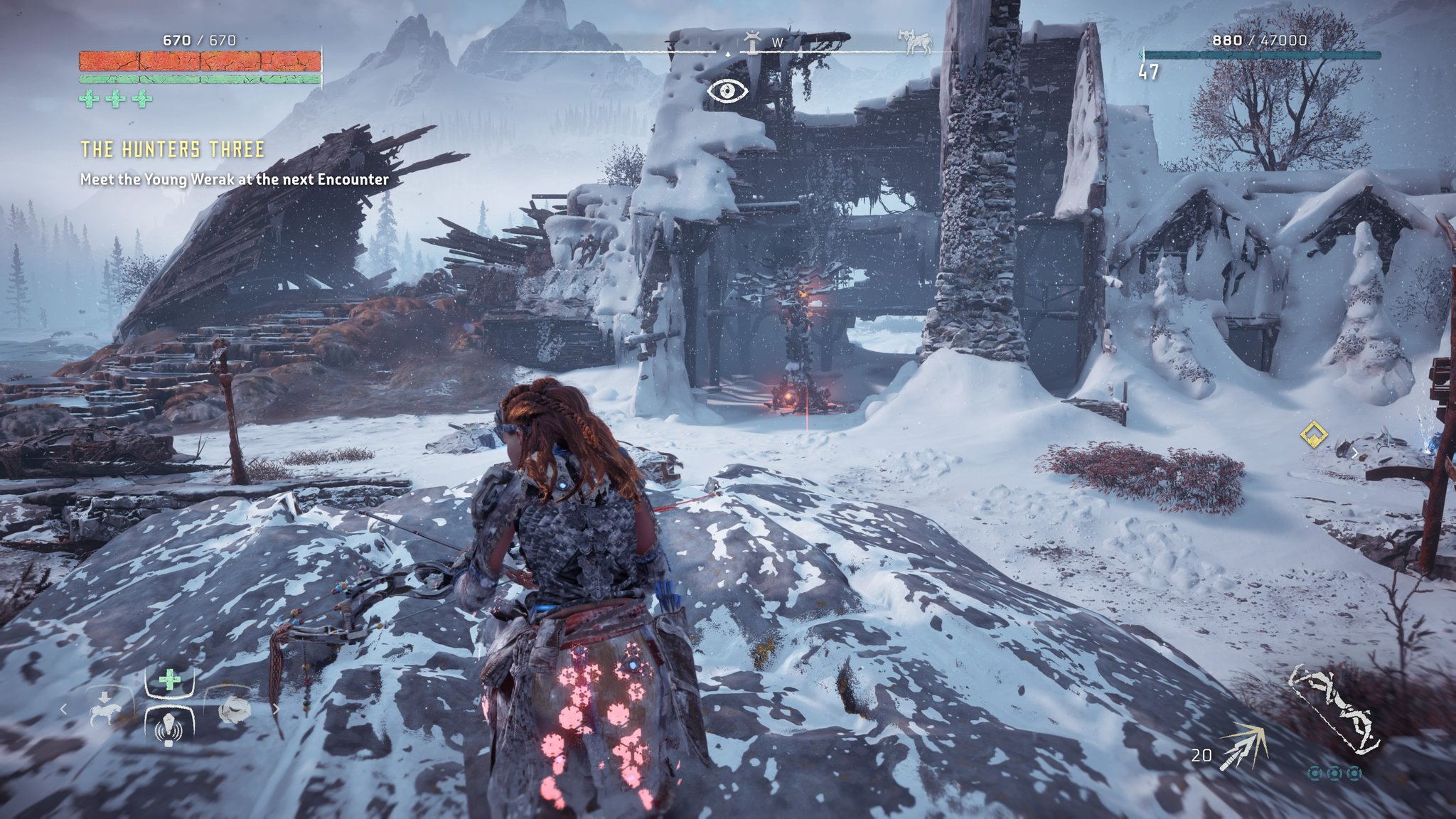
This time around you’re running around Yellowstone and the surrounding areas. It’s definitely seen better days.

The end of HZD really annoyed the hell out of me, and it was because of two reasons.  The first was the lack of progression with the main melee weapon leaving the end hours of the game focused on much stronger ranged attacks, and the second was the design of many of the boss fights being an effective circular arena fight where you could generally stay safely at range the entire time.  While neither of these problems really ended up being a killer in the game’s overall result, they were definitely annoying problems that left me scratching my head a bit.

The melee weapon itself is definitely helped this time around by having an end game upgrade path.  One of the first side quests you come upon when entering the new area of the game ends with you upgrading your spear to support the modification system that the ranged weapons all had.  While I could definitely gripe about this being hidden behind a side quest, and I could gripe about the spear still not having inherent stat upgrades, this change alone is huge in changing how late game melee combat worked for me against higher level enemies.  Now I could build the staff to my play style, whether that’s a pure damage build, one focused on debuffs, or one focused on getting some ticking damage out on enemies.  While this was simply using a system that already existed for the ranged weaponry, gaining this system for melee was a huge change for the better.

While boss fights are still in relatively obvious arenas, they are much more varied landscapes, and the bosses themselves are significantly more aggressive against the player.

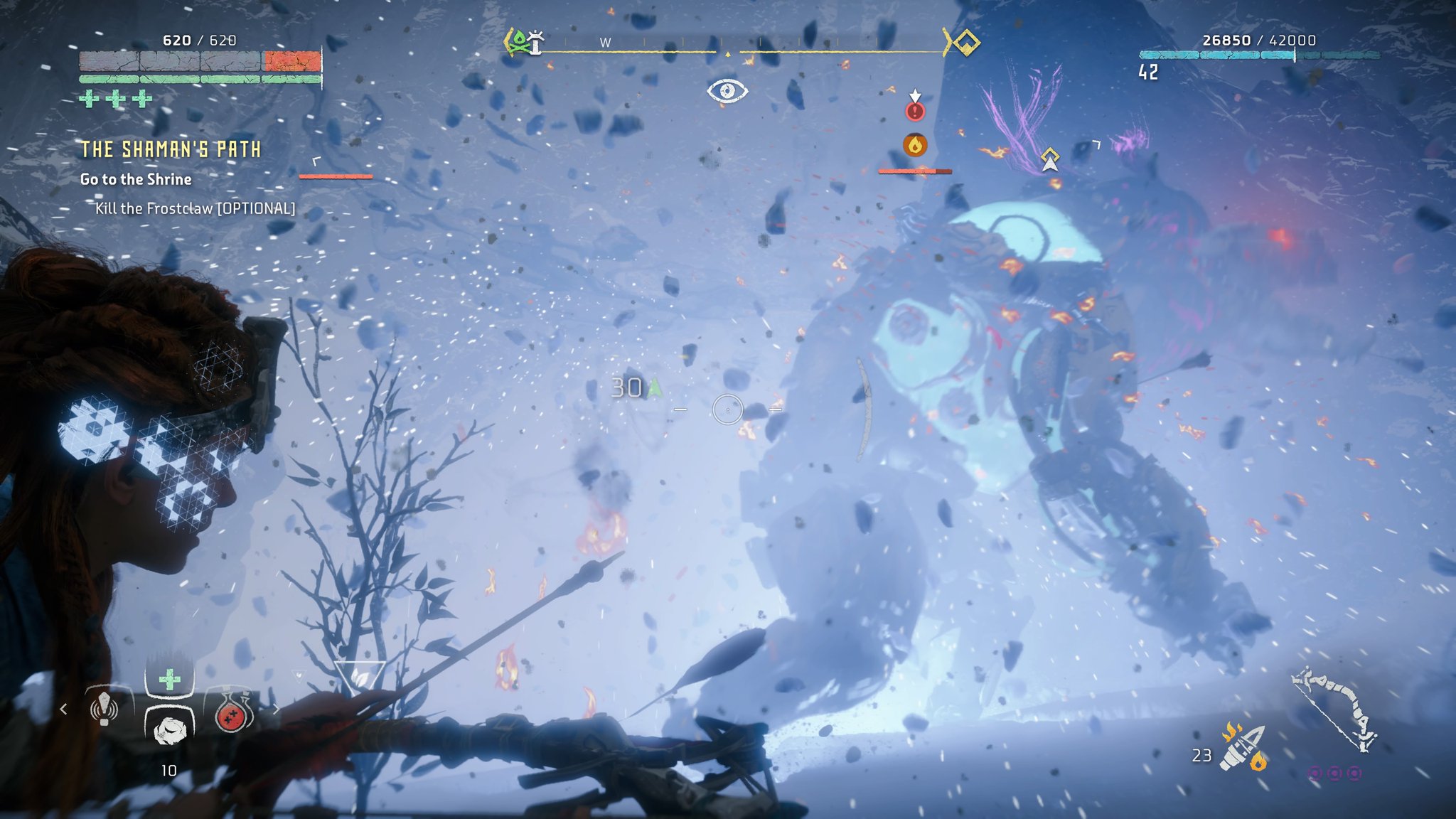
The handful of bosses in the expansion are also much improved over the base game.  While they still take place in relatively obvious arenas, there’s a much better variety in how the arenas are laid out.  In the example above, the player is sort of ducking in and around little outcroppings, giving a lot of line of sight breaking when fighting the boss.  In general, that is pretty common, allowing the player to fight in a much more stealth-based way.  This is really important based on a change in overall design of the boss AI.

The original game suffered from bosses that could generally be kept at range, letting the player just kind of tick away at them with the bow with very little danger.  The bosses here feel a lot more like large versions of the world machines instead.  They move around a lot to keep the player from being grounded.  They do a lot more melee and charge attacks, keeping the player’s dodging finger ready.  Even when the bosses are doing ranged projectile attacks, the danger of being hit and knocked down is a lot higher due to the ability of the bosses to close the gap and melee the player while they are down.  Overall the fights just feel a lot more dynamic, rather than the circle strafe grinds that the original game suffered from.

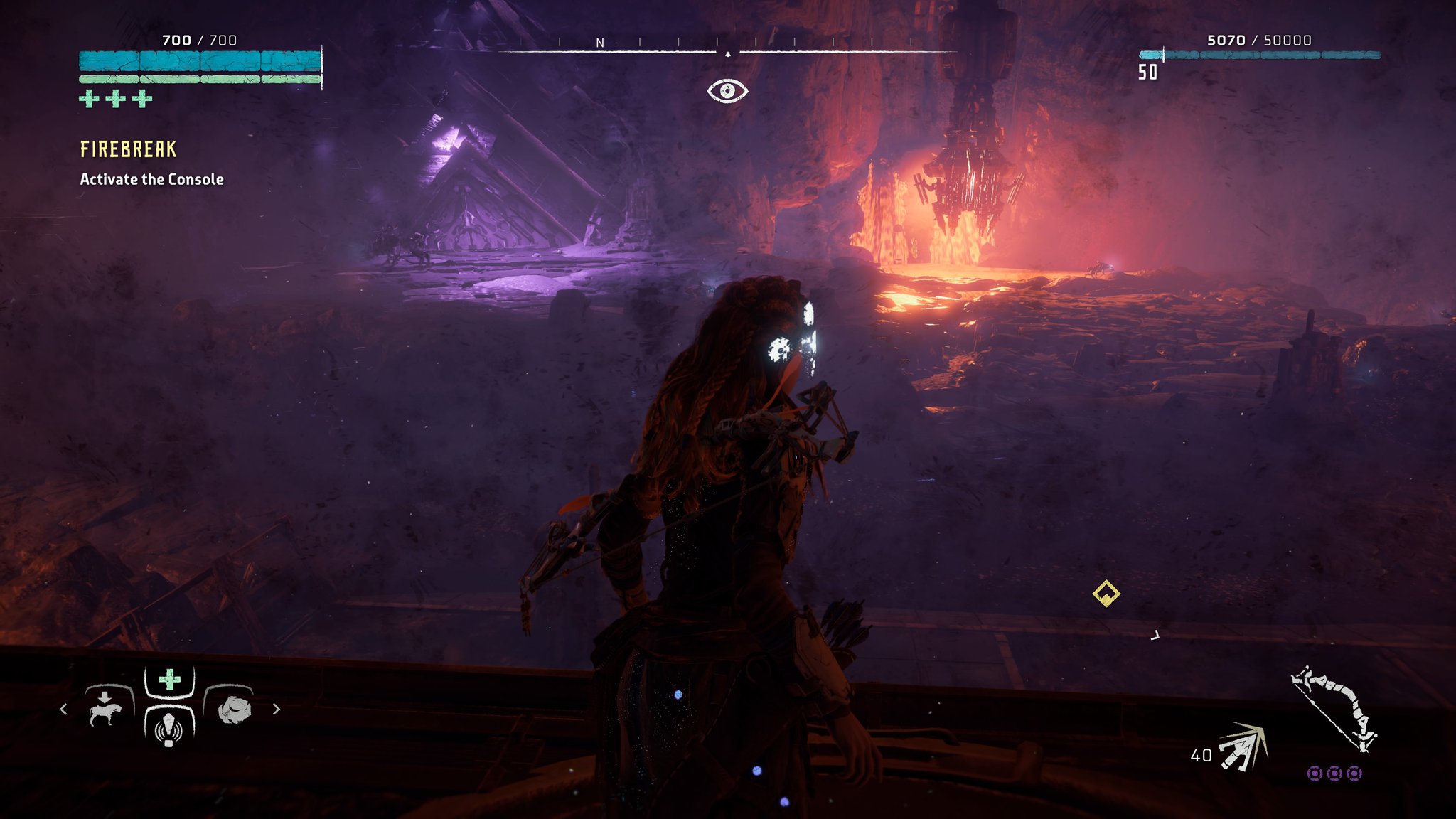
Since this is Yellowstone, lava is the name of the game. It looks even better in motion than it does in screenshots.

Overall this was really just a solid expansion.  It took what was great about the original and gave you more, and fixed a few of the larger problems while it was at it.  The new content was a lot of fun, the new weapons felt impactful and slid naturally into my arsenal (super bonus mention to the energy projectile cannon you get about half way through the expansion), and the handful of new enemies fit into the existing roster really well while giving some new mechanics to watch out for.  In general, this one leaves me wanting more of the series than the original game even did, and that leaves me excited for the future of the series going forward.