Game Ramblings #129 – Shantae and the Seven Sirens

More Info from WayForward

  • Genre: Metroidvania
  • Platform: PS4
  • Also Available On: Switch, Steam, Xbox One, Apple Arcade

I fucking love Metroidvanias. I fucking love the Shantae series. Guess what? I fucking loved this game.
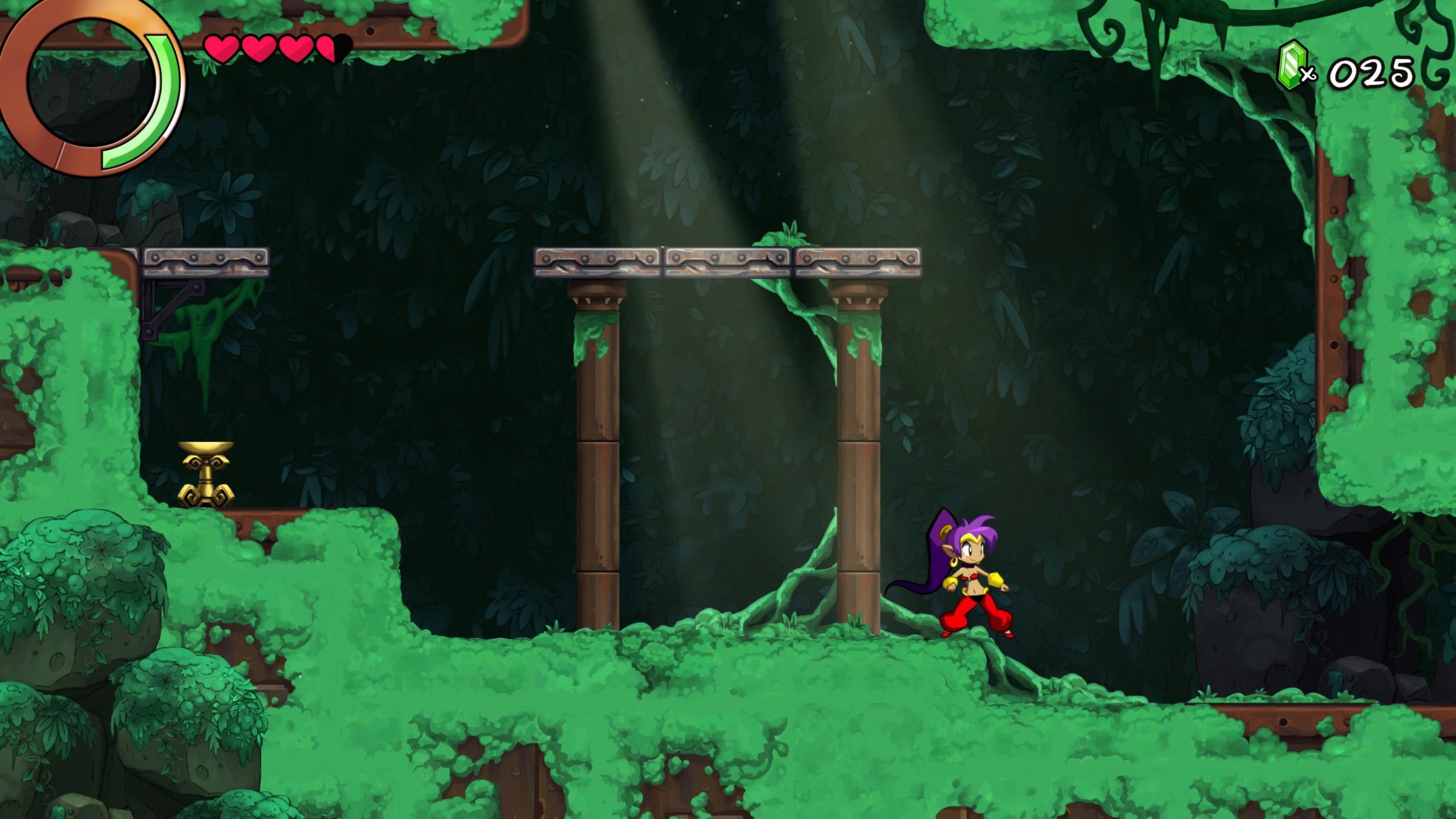
Alright, that was probably too simple of an opening. A lot of what I’d say about this game matches with exactly what I said in the ramblings for Pirate’s Curse or Half-Genie Hero, and that’s a good thing. This is another iterative release in the series, and it takes what made the past games really work and moves it forward in important ways.
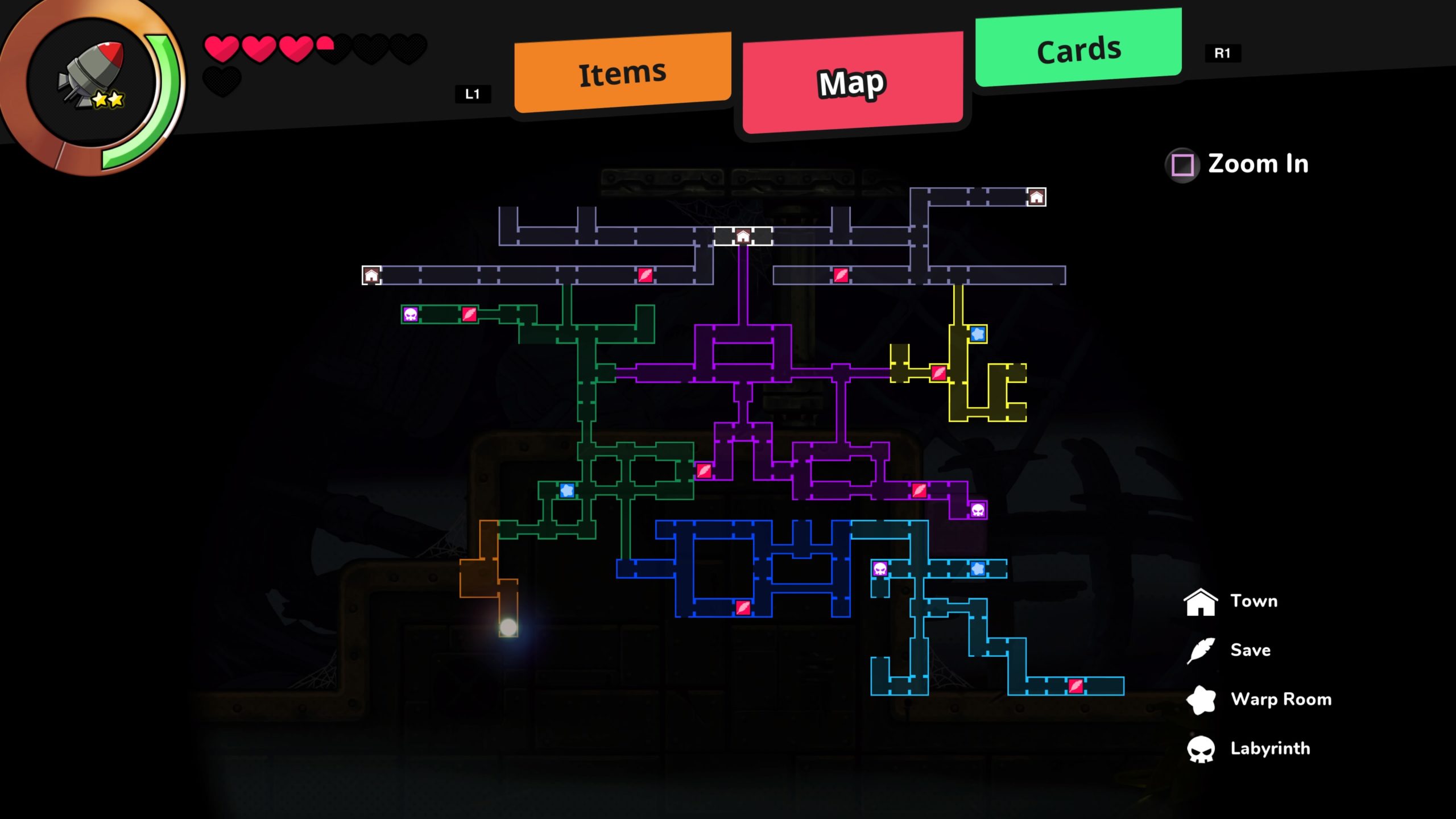
The first big one is that instead of being level-based, this is 100% a true Metroidvania. The entire game takes place on a single unified map and new areas open up purely based on upgrades you receive. While I definitely liked the way previous entries encouraged re-traversing levels once you gained new abilities, there’s just something to having a pure open environment. You see and make note of those open ends of hallways that you can’t quite get to or those things in the environment that are obviously something that you can interact with, and make mental notes to return to later.

Where they end up making use of their history of level-based gameplay is in the handful of labyrinths that come up. These act as pillars to the overall story and upgrade path, but also serve as mini-tutorials to learn new powers, as well as the core spot for the big boss fights in the game. It gives a nice on and off pace to exploration where you kinda futz around finding new areas and exploring for hidden stuff, then go into a labyrinth and really focus on combat for a while in a controlled linear environment.
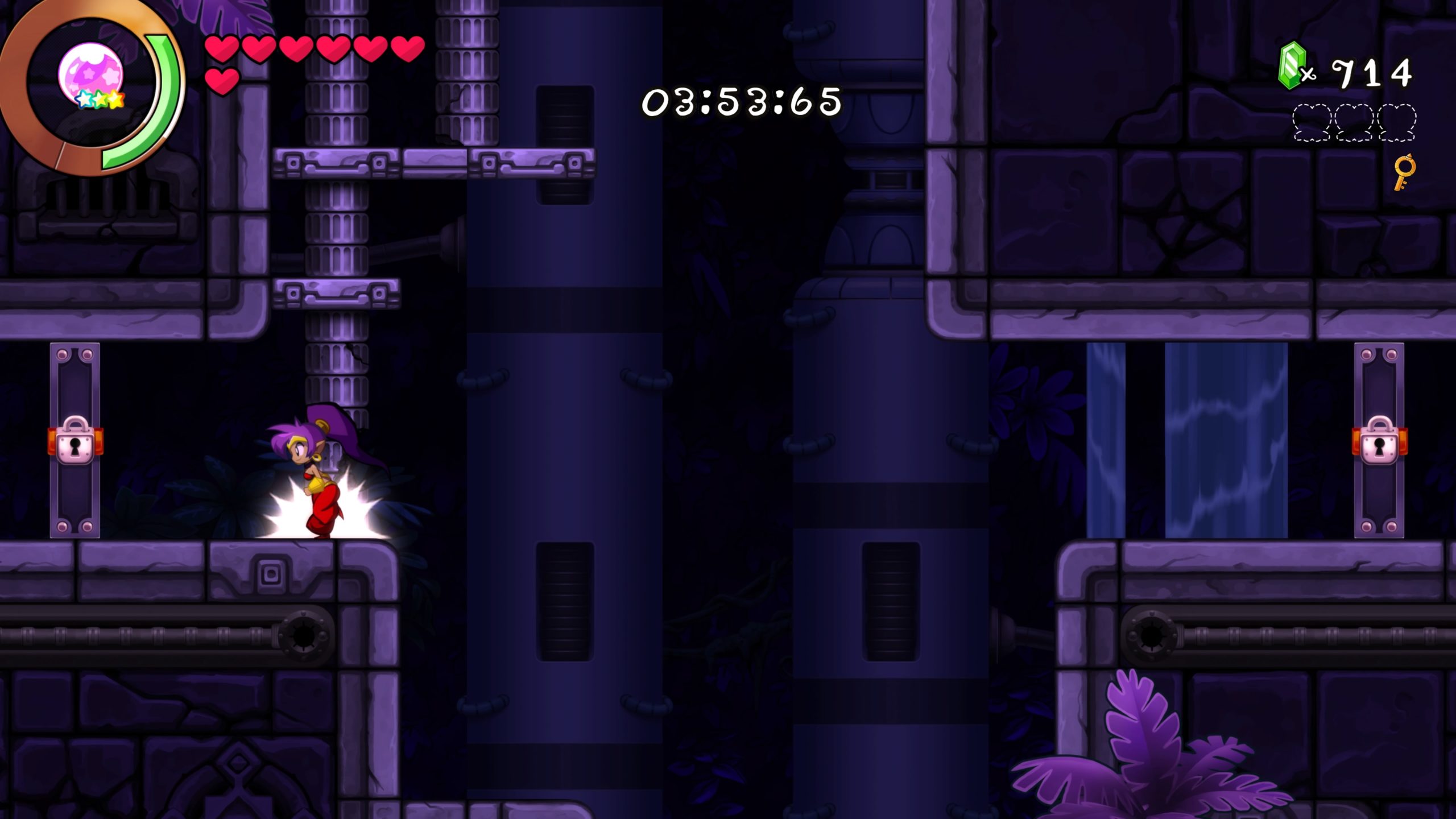
The second thing that really stood out to me was how well integrated the transformations were into gameplay. In a lot of ways, this felt very much like Pirate’s Curse. That game required upgrades to be fast and easy to use due to story reasons causing the loss of transformations. In this one, the transformations are automatic. There’s things like the newt form which gives you a dash and wall climbing. There’s things like the frog form which the frog which gives you the ability to swim. Thematically they make a lot of sense, and the fact that they’re automated makes the game flow pretty much a non-stop affair, which is a huge benefit to the game pace.

That’s not to say there aren’t dances, but in the case of this game they’re all there as one-off attacks that don’t have permanent transformations. These are definitely useful in their own right – for example an electric attack does AoE damage to all things on screen, as well as powering up mechanical devices – but they definitely have a much more straightforward use that isn’t tied to moving through the world.
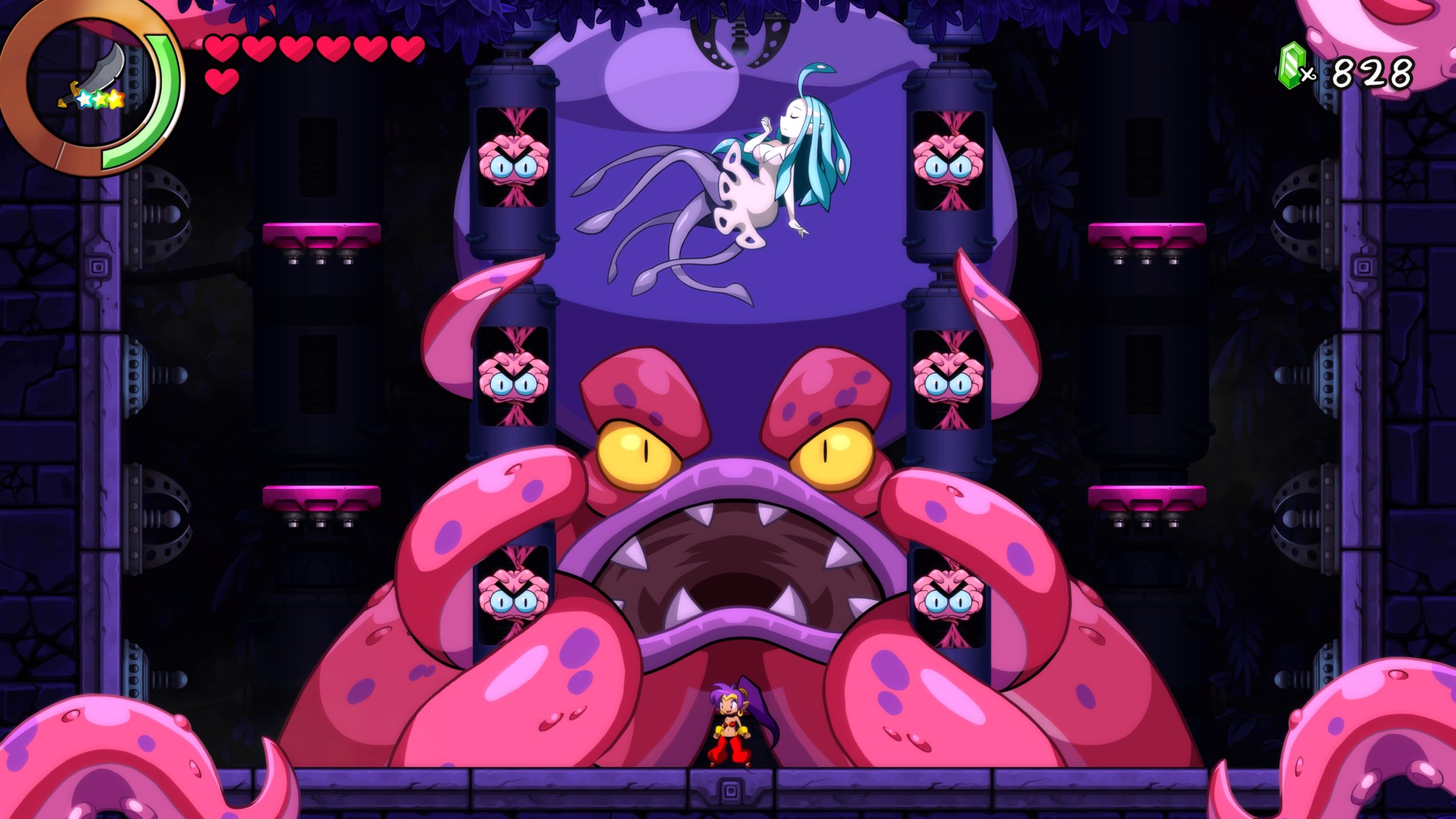
This is just a really fun game. There’s not been that many Metroidvanias that really have high pace gameplay and almost purely melee combat, and the Shantae series continues to be at the forefront of that style. Movement is fun, combat is fun, the bosses are fun. It’s just all fun and I can’t think of many better series to recommend in this genre right now.

….and don’t worry. Everyone’s favorite Squid Baron makes his return.
Game Ramblings #118 – Ghost of Tsushima

More Info from Sucker Punch

  • Genre: Action/Adventure
  • Platform: PS4

There’s no doubt that this is the feudal Japan Assassin’s Creed that everyone has been asking for, but I’m not saying that as a bad thing. This takes a lot of what’s made the past few AC games great with some clever changes to the overall structure. It also features combat that clicked for me way more than it ever did in those titles. Overall I was left playing a game that surprised me in how much I enjoyed it, despite its familiarity.

If there’s two main things that I think separate this one from AC, it’s that there’s generally less to do, and that combat is a bit more nuanced. The first one provides a greater focus on the overall meta game, steering you to do fewer activities, but ones that generally feel like they have a great impact on your character progression. The second provides changes to the moment to moment action as you go through. Combined with a high level of polish, this gives us what feels like the next step in this type of gameplay, and hopefully a bar for Ubisoft to hit with Valhalla.

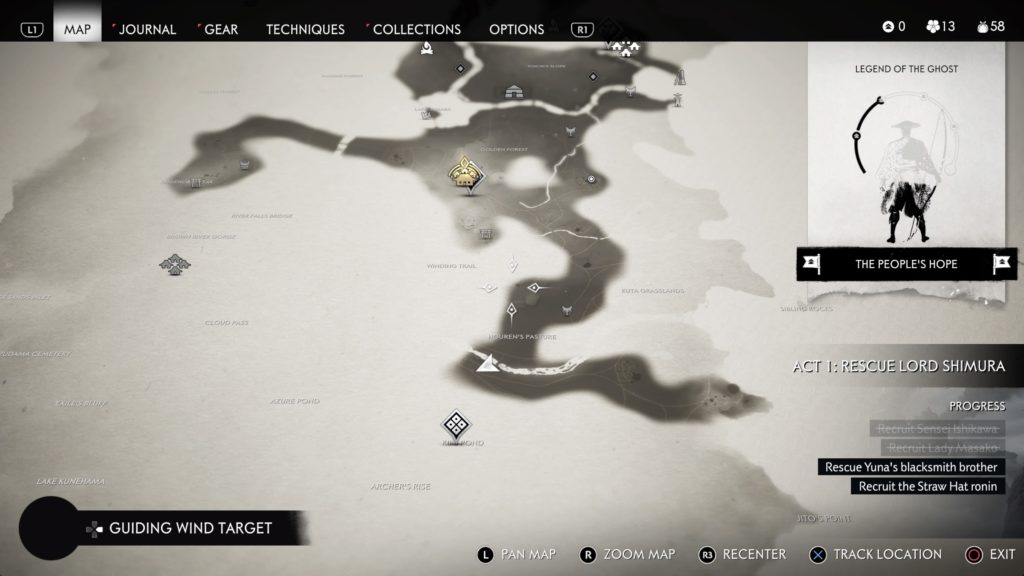
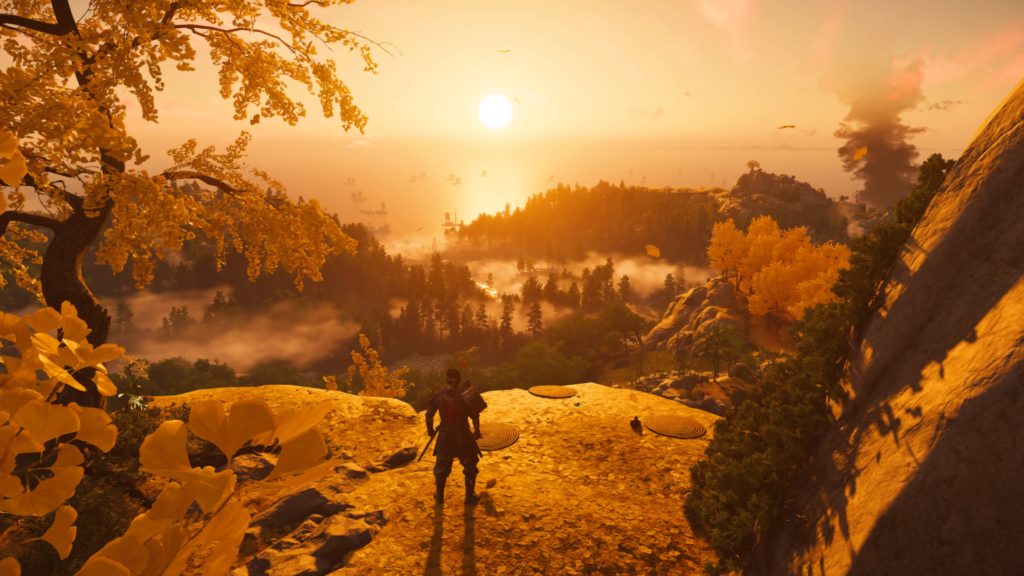
Taking a look at the map, you get that immediate feeling of familiarity. There’s fog of war in areas you haven’t been to. There’s icons for quests and towns and activities all over that pop up. However, they all serve some sort of purpose. Rather than climbing towers to lift fog of war in an area, you have to invade Mongol camps and take out their leaders. Side quest aren’t just fun little story points – they also give rare resources to upgrade existing gear, and in some cases completely new gear. In many cases, you won’t even know what the icons on the map are for until you get up close to them.

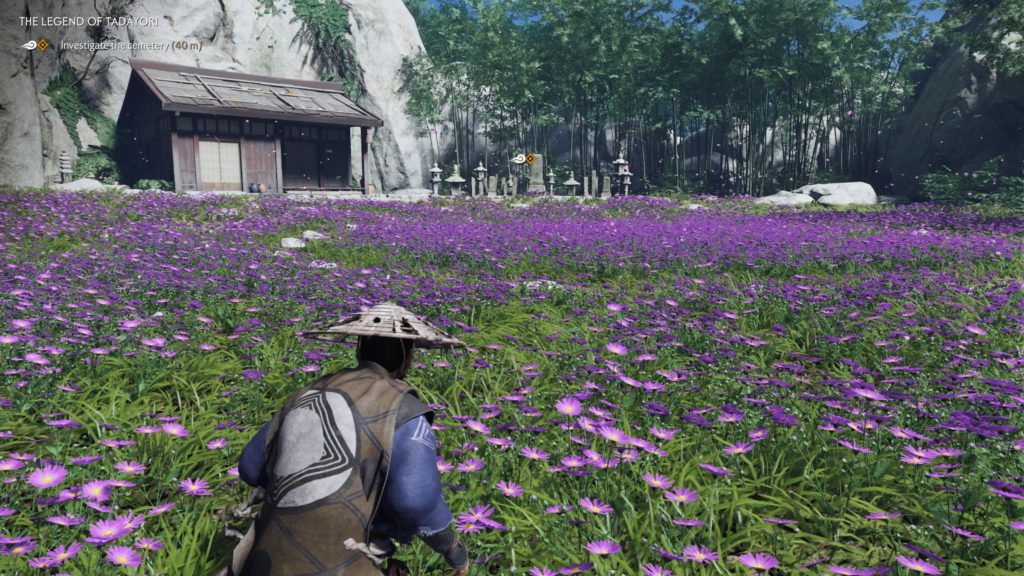
However, there’s a lot of in-world hints as well to help steer your exploration. If you want to focus on gaining some health, you’ve got to keep an eye out for steam columns where you can use hotsprings. If you need to boost your resolve to have access to more special moves, you’ll be on the look out for banners marking the location of bamboo strikes. If you want to get some accessory charms, you’ll want to keep an eye out for small yellow-leaved trees to follow foxes around.

All of these little things do a lot to make that exploration focus just work. There’s always some visual clue to pull your attention and there’s always some tangible reward at the end of it. None of the things feel like a waste or a grind. You do a thing, you get an immediate reward, and you immediately know what it does. It all just feels really natural in practice. Where AC Origins and Odyssey started to shed some of their collection-heavy past, this one feels like it took the next step that Ubisoft was perhaps hesitant to do.

Combat has a similar thing where it feels like a logical next step in the process. Stealth is still in play, and is still super useful. Parries and dodging are there like in AC and are still your main means of avoiding damage. Combat still kind of breaks down when there’s large groups, largely because there’s only so many directions you can focus on at once. However, where things really clicked for me were in the duels.

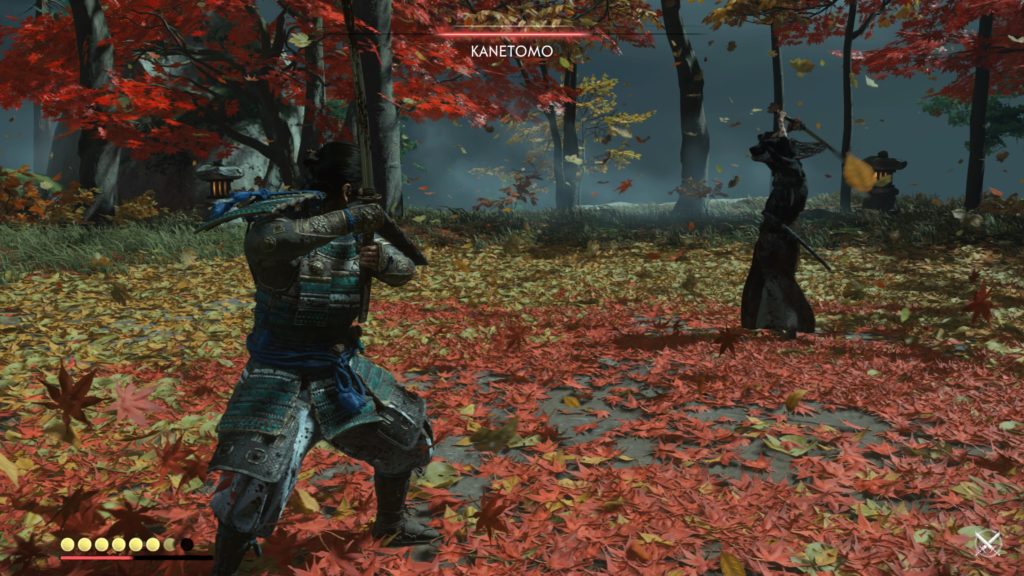
Duels are effectively your boss fights for this game. Starting one off always has a great intro cutscene to establish the fight, then your camera comes in super tight and you’re off. The actual combat is still the same, but the one-on-one focus allows for a lot tighter overall action. Where dodging without care for timing will generally work well against trash mobs, mistiming your dodges here could put you in a spot where the opponent can immediately hit you with a second attack before you can respond. On the other hand, timing your dodge perfectly puts you in slow motion with the ability to quickly attack. The same thing also stands with parries. Time it well, and instead of just a simple parry you will break your opponent’s defense and have them lined up for a critical strike. It’s also hugely beneficial that parryable and dodgeable attacks are different and have obviously different visual tells. It puts the combat into a place where there’s no guessing and it’s all about timing and skill, then solid execution of attacks when you’ve put yourself in a place to go on the offense.

There’s also something to be said of the fact that there’s very distinctly strong stances in this game, and in that regard it feels like it’s pulling a lot from the Yakuza series. As a player you have 4 main stances, each good against specific enemy types – swords, shields, spears, and brutes. While you can definitely fight any enemy with any stance, the skill of identifying and fighting with the right stance is hugely beneficial to clearing out enemies as quick as possible, while also minimizing the damage that you end up taking. This ends up being the real saving grace for group combat, as using the stance switching can allow you to quickly clear up the easier targets, leaving you to focus on one or two of the more problematic ones.

It also dawns on me that I didn’t take any screenshots of me using either of the bows. That’s kind of a shame because they’re honestly very good. You have a short bow (quick draw, lower damage) and a long bow (slow draw, large damage, can pierce metal) that are both very effective at their role, especially in stealth situations when taking out sentry units. They’ve got a pretty solid impact feel to them, they’re generally easy to fire, but with gravity effecting the arrows they aren’t trivially easy. There’s also a bit of aim assist typical of gamepad, but it’s not overbearing. It ends up falling in a place where there’s enough skill involved to make using it feel fair, but enough assists in place to make it still feel natural with gamepad aiming.

I certainly won’t sit here and claim that this is generally an original title, but it didn’t necessarily have to be. It takes the framework established by the recent Assassin’s Creed titles, and iterates enough on it to feel like its own thing. What it does do is give me hope that we see it push Ubisoft to take that next step with Valhalla or Sony with the next God of War, because as a genre these open world action games just work very well. This one added a really well developed feudal Japan setting and interesting story to the overall game framework, and it hit really well as an end-of-generation title. It also served as a really interesting change in direction for Sucker Punch after wrapping up some of their Infamous story line early on in the generation. Now, admittedly I wouldn’t mind seeing them go back to Sly Cooper after this, but they did a hell of a job pushing the open world action game in a direction of continued improvement here.

Mini Ramblings #4 – Gap Fillers

I had a bit of time to fill in between Dark Cloud 2 and the release of Final Fantasy VII Remake, so I took the opportunity to run through a whole slew of short games on my backlog. Below are some of the random notes about the ones I selected.

Gorogoa

  • Genre: Puzzle
  • Platform: Switch
  • Also Available On: Windows, iOS, PS4, Xbox One

Ultimately this is a really well crafted puzzle game that is meant for touch screens or mice, so I’m glad I played it on Switch. Originally released for Windows and iOS, the Switch version came over with full touch screen support, and that’s how I ended up playing it.

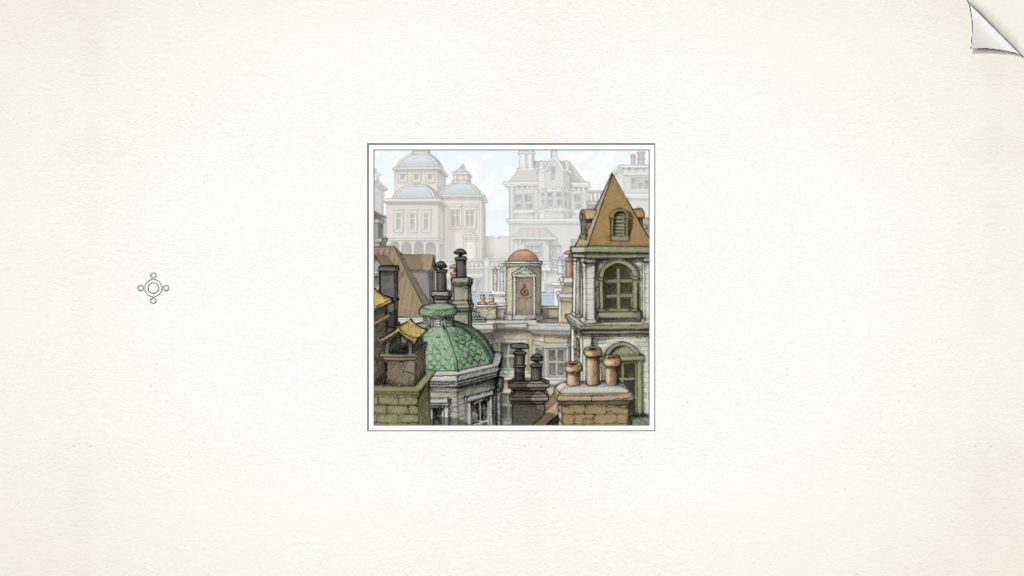
The core loop involves a 2×2 square board where interactive tiles can be moved around, layered on top of each other, pulled apart, and more. As a player, you end up interacting with multiple of these tiles at once to try and find the connections between them and move the story forward. This could be as simple as changing the zoom on a couple tiles until they can be placed next to each other, allowing a person to walk between tiles. This could be something like lining up two tiles with parts of a gear in order to rotate a third tile and find a new way to zoom into the interaction.

In practice, it’s incredible how much the game finds ways to just keep the interaction moving. At the start of the game you have one tile, and until the end of the game, you’ll never be at zero tiles. It sounds so simple to have a puzzle game of 2×2 tiles, but the amount of interactions that come out of it was astounding. This is all helped by a really vibrant art style that really pushes color as a helper for finding those puzzle connections. All of that made this a really enjoyable couple hour experience that I think is worth playing, particularly on a touch screen.

The Garden’s Between

  • Genre: Puzzle
  • Platform: Switch
  • Also Available On: Linux, macOS, Windows, PS4, Xbox One, iOS

This was another surprising puzzle game that I pulled out of the pile. The core idea is that you manipulate time to move the main characters through a linear level. The only other thing you really can do is interact with a handful of in-level objects that can move around, or pick up torches to clear away some obstacles.

The bulk of the puzzles involve generally passing the torch around in a fairly common pattern, moving time forward to grab the torch, backing up to get it to some important thing that is moving around or needs to be cleared, then moving time forward again through the new path. On the surface, it sounds simple but it’s an effective pattern that is used in surprisingly varied ways.

This was a pretty quick play through in about an hour and a half or so, but was an enjoyable experience that didn’t overstay its welcome.

Old Man’s Journey

  • Genre: Adventure
  • Platform: Switch
  • Also Available On: Android, iOS, macOS, Windows, PS4, Xbox One

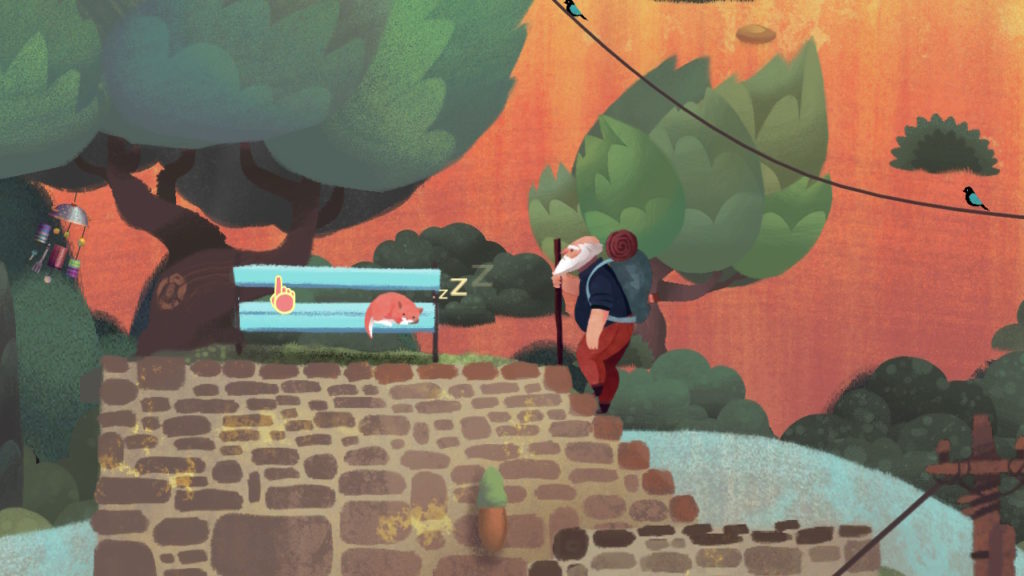
This was my complete relaxation game during this whole stretch. While it’s technically an adventure game, and technically has puzzles, the game is really best thought of as a relaxing visual journey. The only real mechanic at play is the ability to drag the landscape in different directions, opening up the path for the title’s old man to move around.

Beyond the core mechanic, this was just a really relaxing little adventure. It tells a light story about an old man travelling to see an ex before her passing, but really it’s a replay of his memories along the way. If you’ve got an hour to kill, and want something to hit on the same relaxation level of a book, this is a good place to end up.

Gunvolt Chronicles: Luminous Avenger iX

  • Genre: Action/Platformer
  • Platform: Switch
  • Also Available On: PS4, Windows, Xbox One

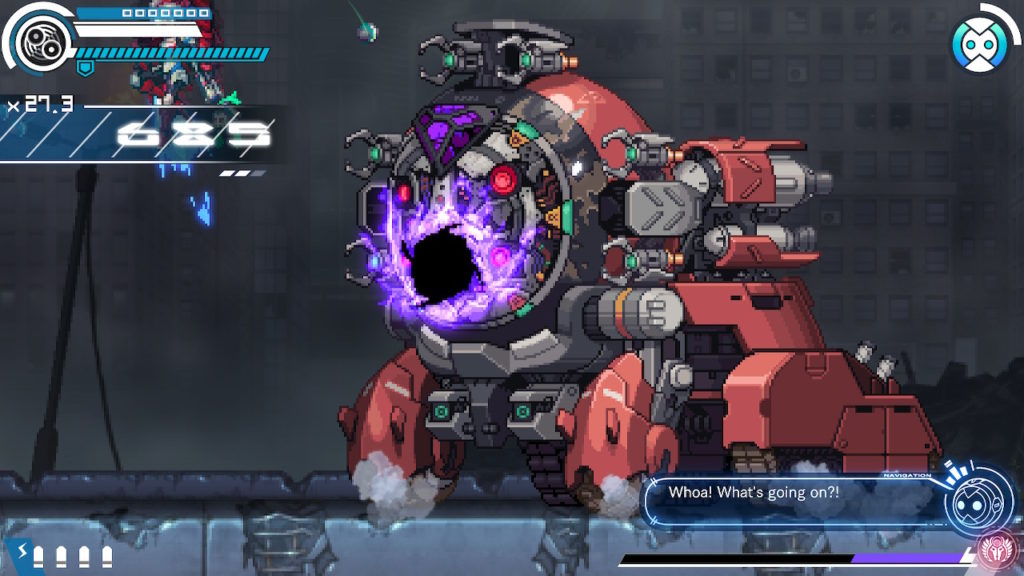
Describing this as anything but Mega Man X would be a complete lie. The gameplay is the same, the pattern of killing bosses to unlock their powers is the same, the game’s structure is the same. Where it’s different though is in how it handles health, and it’s far more forgiving for it.

While there is a standard health pool there, if the player is playing well they won’t ever use it. Core to the experience is a reloadable energy store that powers both an impenetrable shield as well as things like an air dash. It can be reloaded quickly at any time with a quick double tap down, leaving it up to the player to manage it effectively. At its core, the real sway becomes less of a health management game and more of a choice of doing more damage quickly or staying safe.

While this may sound like it’s just making the experience easy, there’s still options for truly skilled players to show off. Avoiding being hit allows a score combo to grow, so truly good players are able to use the score and completion time as true measures, while less skilled players can still complete the game on their own terms. It’s one of the more interesting ways I’ve seen in this style game to open up the experience to more players, and I think it ends up working really well.

Jupiter & Mars

  • Genre: Adventure
  • Platform: PS4

In a lot of ways, this was a modern take on specifically the Dreamcast version of Ecco the Dolphin. You play a dolphin going around trying to save the planet from environmental catastrophe, either shutting down machines or rescuing other animals along the way.

This was ultimately a better experience than it is a game though. There’s nothing particularly offensive about it, but there’s nothing particularly standout either. Controls are alright, but weird since you control a dolphin in first-person. The AI companion that you command generally does what you want, but often gets stuck behind obstacles. Your goal is generally not that clear, but there’s not a ton of exploration to do so you generally end up finding your way. From a gameplay experience, I’d probably describe it as something akin to Flower, but with significantly less polish.

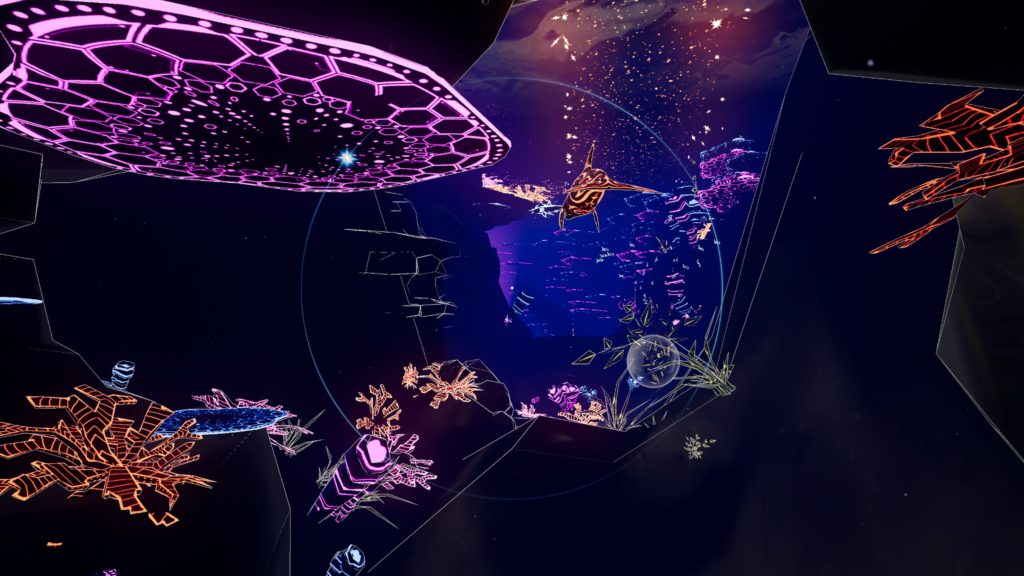
However, this is an absolute standout visually. The entire game takes on a sort of realistic, but also sort of Tron style and it’s generally a sight to behold. Things are already lit up in interesting ways, but then you activate sonar and the whole scene lights up in crazy colors. If there’s anything to point at as a reason to experience this one, it’s easily the visuals.