Game Ramblings #77 – Assassin’s Creed: Odyssey

More Info from Ubisoft

  • Genre: Action RPG
  • Platform: PS4
  • Also Available On: Windows, Xbox One

TL;DR

  • Another great entry in the series that iterates on the new AC style established in Origins
  • Stealth was still the most fun way to play, but both melee and bow combat were not detriments
  • Ancient Greek environment is a lot of fun to run through, especially for history nerds
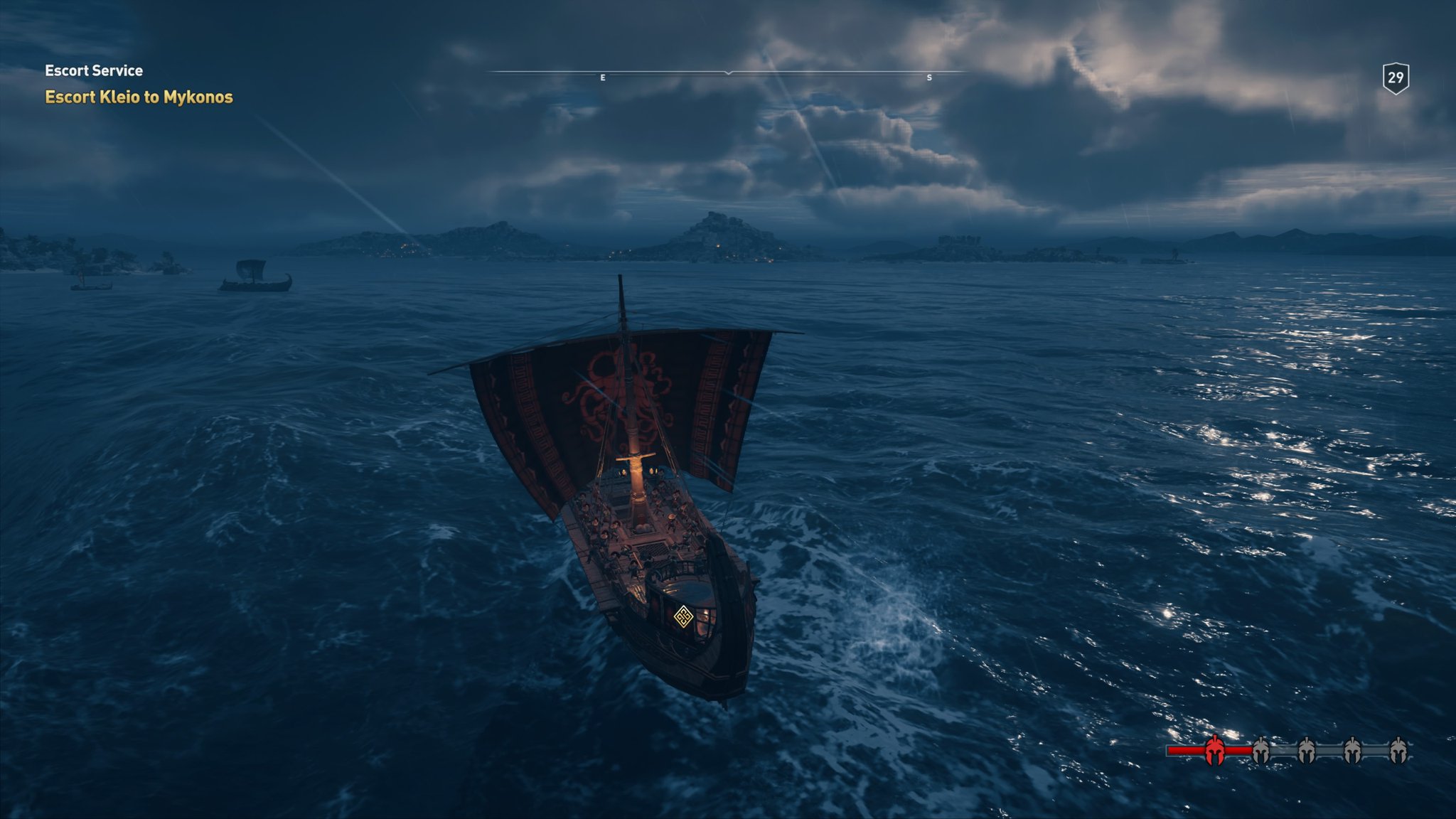
Sailing is back, and it’s gorgeous.

While it would be easy to look at this game and assume it’s simply a mashup of Origins and the sailing from Black Flag, there’s a lot more going on under the hood here.  Where last year’s Origins explored the starting point of the assassins, this year’s Odyssey explores where some of the series artifacts come from.  In doing so, the game leans way into the supernatural/alien elements that have been hinted at for so long in the series’ back story, and really give us a game that fans of Greek mythology can dig into.

The place to start really is to just point at my ramblings about Origins last year as it covers a lot of what I normally would have said about combat.  That’s not to say that Odyssey is a straight copy, but really this is a solid iteration on the ideas from last year.  What this does differently is brings back the large scale sailing of Black Flag and really leans into the RPG side of things through skill trees, even more emphasis on gearing, and a lot less hand holding if you decide to go with the developer’s recommended options.

The game generally gives you an idea of where to go, but it’s up to you to find the goal.

It’s going to sound weird that such a simple change drastically changes the game, but the default style of this game doesn’t really give you goal locations.  Because of story reasons, you’ll often have a rough idea of where to, but if something isn’t in the dialog options presented to you, it’s often up to you to find the location.  What this ends up doing is really encouraging the thing that Origins started; the push to simply explore.  On your way towards a general area, you’ll run into any number of areas that can be cleared out of enemies and treasure, and it’s generally worth going through them.  One of the systems that was added to this game to also encourage exploration is a series of hunts against the Cult of Kosmos, which is basically a precursor to the series’ templars.

These cult leaders are the driving force behind the game’s story, and a number of them simply show up as targets during the story.  However, the rest have to be found.  They might simply be leaders of the various cities.  They may be out living on their own, taking care of a fort or a farm.  They may also be mercenaries sent to try and kill you.  However, behind all of it are clues that you can find by completing the small invasion areas; clues that lead you to the cultists location so you can take them out.
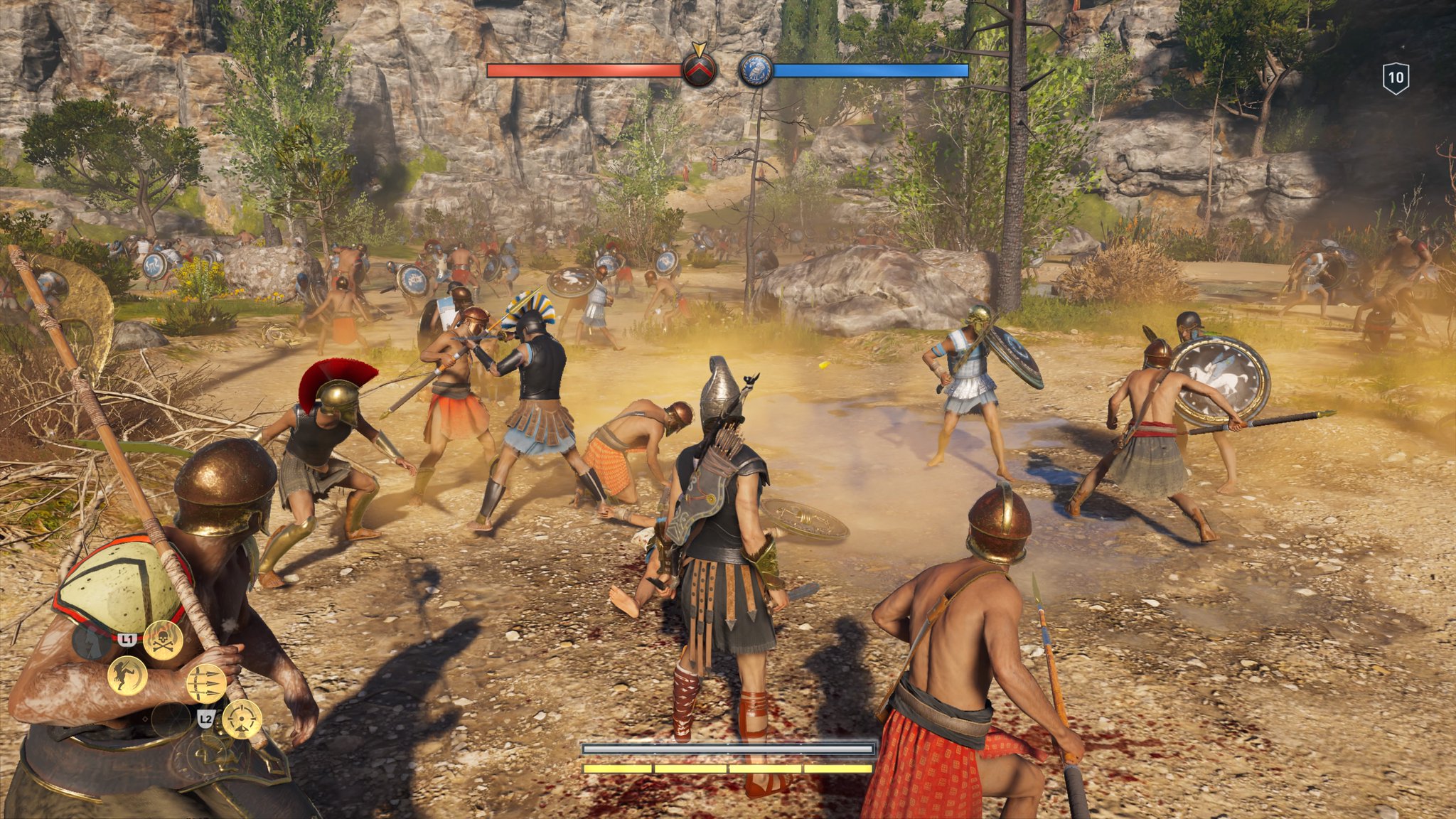
War is active, and it’s up to you to fight in it.

There’s also a large emphasis on war in this game, and you can generally get yourself directly involved in the battles.  This game takes place a few decades after the events of the movie 300, and Athens and Sparta are nipping at each other’s heels.  One of the consequences of you taking soldiers out is that the regions you’re in become weaker, exposing their leaders to be killed, and eventually the region for invasion.  In doing so, you can open up battles like the above screenshot for extra rewards, as well as to potentially turn over the region to the opposite side.  It’s a neat system that exists effectively as a distraction, but offers up something to do as a result of all the sneaking around you’re doing.
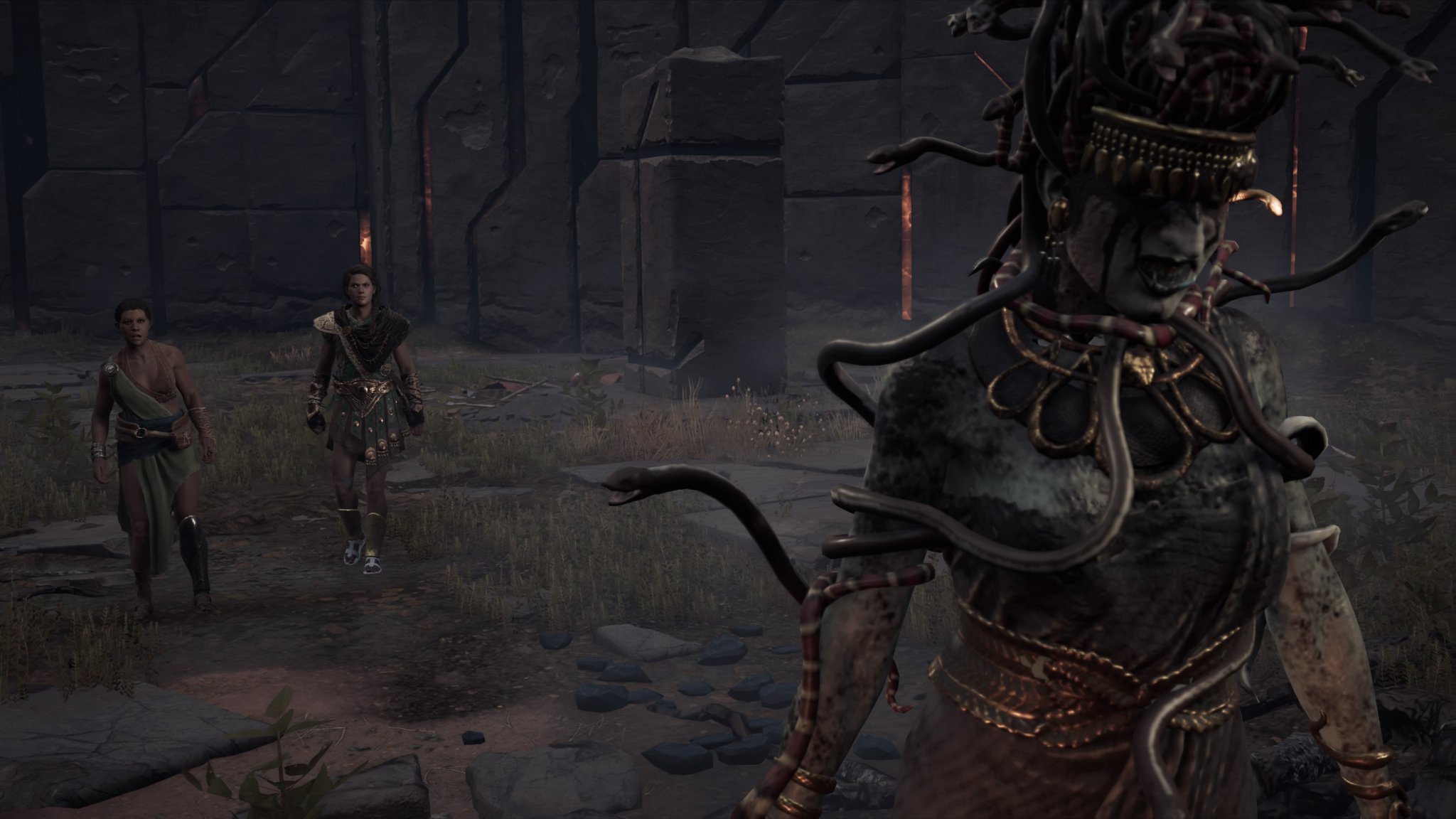
Mythology comes to life here, including a really fun fight against Medusa.

However, the lore behind the world is also a huge driving factor in exploring.  There’s fights against creatures like Medusa or Theseus’ minotaur.  There’s an entire segment of lore around the city of Atlantis and how it ties into the greater Assassin’s story.  There’s also the historic locations to see like the Parthenon in Athens or the famous people you meet like Sokrates or Hippokrates.  Basically, the entire game is a historian buff’s dream, and you’ll consistently be seeing things that you’d only ever seen in books.

All said, this is another great entry in the series.  It takes everything that worked about Origins and iterates in great ways.  The game has really leaned further into RPG territory than ever before, but it’s working out well for the series.  The fact that I can sit here having played it for 80 hours and still want to do more is a testament to them having really perfected their formula.  I guess I’m basically recommending this, especially if you liked Origins or Black Flag.

Also for what it’s worth, sync points are still great.

Game Ramblings #70 – God of War

More Info from Sony

  • Genre: ARPG
  • Platform: PS4

TL;DR

  • Phenomenally well made game that brings the series out of its brawler roots and straight into a full blown action RPG.
  • Well written characters and story, to the point where they effectively make you hate the son when he’s acting like an ass.  Does a good job blending in Norse mythology to what was previously a Greek-focused series.

God of War is one of those series that screams Sony first-party, but it’s been eight years since the Greek timeline games ended.  Ya we had Ascension, but that was a prequel and even that was give years ago.  After such a long gap, announcing a Norse reboot / sequel was already a head turner.  Announcing it as a drastic genre departure was another, with this game now being very much an action RPG with all the free roam trappings that come with it.  Side quests, item collection, crafting, upgrades, skill trees and more are all there.  Despite it all, this is both extremely fitting for the series, and quite possibly the best entry of them all.

The entire game is the story of Kratos and his son’s travels, and that’s where the differences begin.

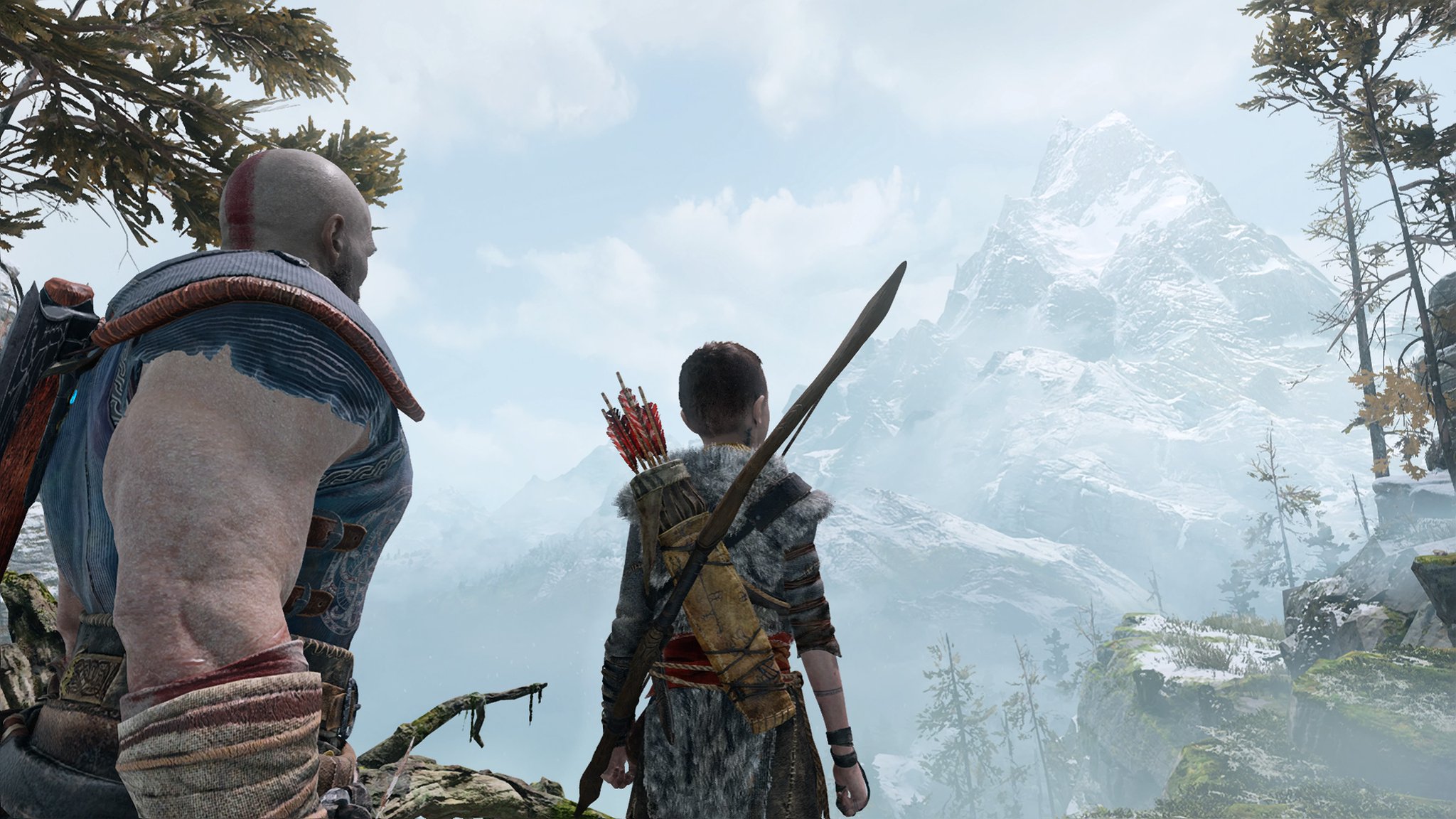
This first screen shot says a lot about the differences in this game relative to the original.  For one thing, Kratos now has a son and he hasn’t managed to accidentally kill him in a rage.  Beyond that though, you start to see little details.  The son brings in a set of ranged combat possibilities that add some new depth to the core combat.  Kratos is wearing gear that was crafted at a vendor.  We’re clearly no longer romping around in Greece.  On the far left, Kratos is using an axe instead of blades (although the blades come back later).  Basically, this is still God of War, but it’s not quite what we’re used to.

The combat front straddles that line between familiar and new in a really good fashion.  This is still melee-chain combat, but it’s not quite as high speed as the original.  You still have your light and heavy attacks, but there’s a much larger focus on parrying and dodging.  Later on in the game, you end up juggling between frost and fire weapons based on the enemies that you are attacking, so there’s some built-in strategy.  The skill tree that is there brings in some familiar special attacks, but the risk of being hit during them is much higher, so their timed use becomes much more important.

It’s the son that ultimately brings in some of the big changes.  While his positioning isn’t directly controllable by the player, his basic move set is.  He’s got arrows that can be fired at enemies, sometimes for additional damage, sometimes for the use of crowd control, sometimes for the use of stunning to allow Kratos to get damage in.  He’s also got some special attacks that can be triggered on cooldowns.  However, it’s his passive skill growth that becomes the most useful.  By late game, he’s got skills that allow him to engage in melee combat more often, including things like hopping on enemies backs as distractions and doing his own quick hitting melee.  Basically, as the son grows as a plot device, he becomes inherently more useful as a combat device, and it eliminates the frustration that typically comes with escort-based secondary characters.

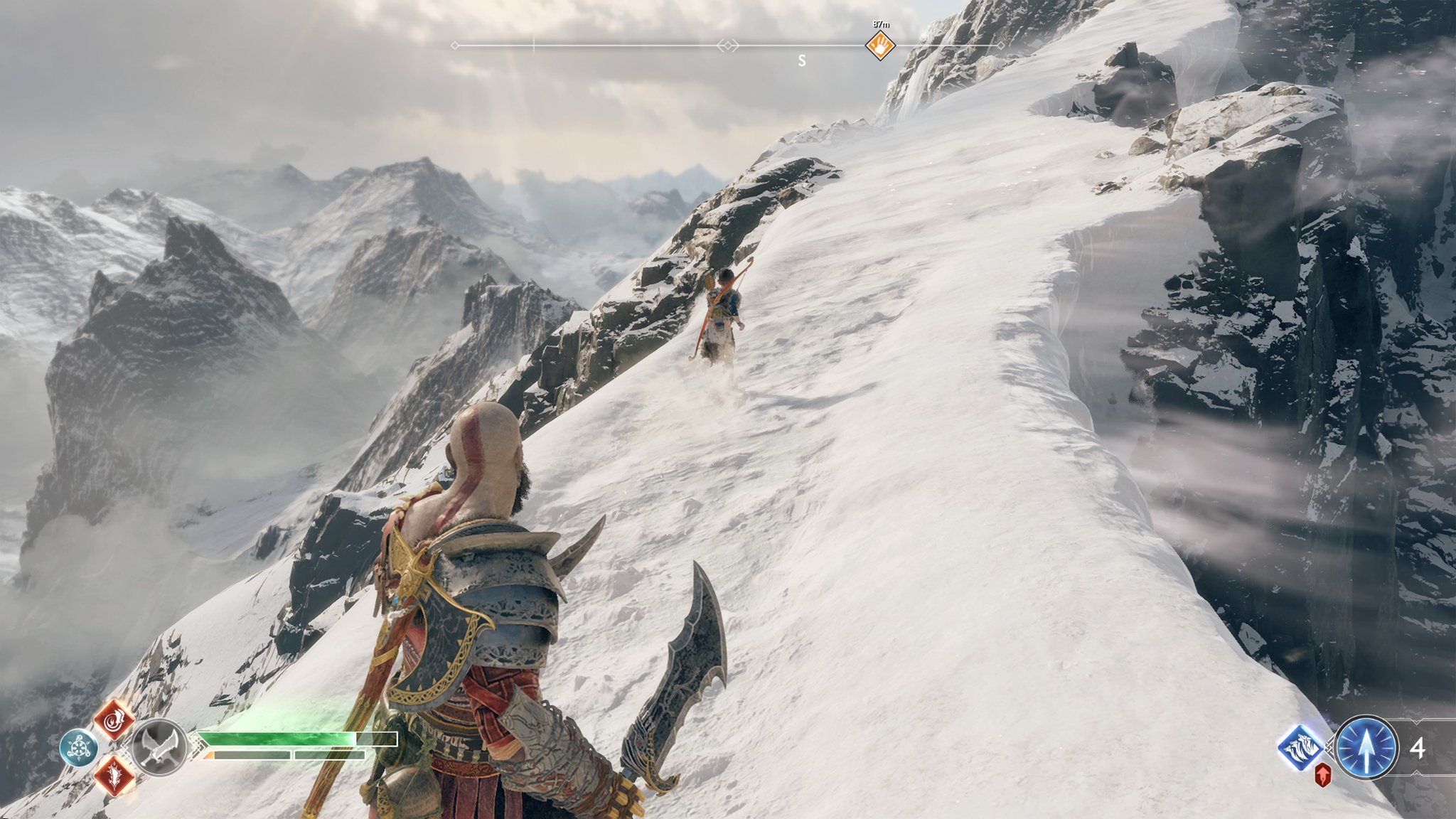
Now, that’s not to say that moving to more of a core RPG combat has removed some of the flashiness. Case in point:

The big flashy scenes are largely reserved for finishers in battle, and more specifically generally against bosses and minibosses.  Stun kills on trash enemies also have mini-cutscenes, but these are quick hitters and don’t try to keep you out of combat for very long.

Despite the changes, the flow of combat feels phenomenal overall.  Most engagements are going to be a heavy mix of attacking, watching for enemy tells to parry, or really large attacks to dodge.  Its a system of constant movement, rather than a system of waiting for moments, and it really works well.

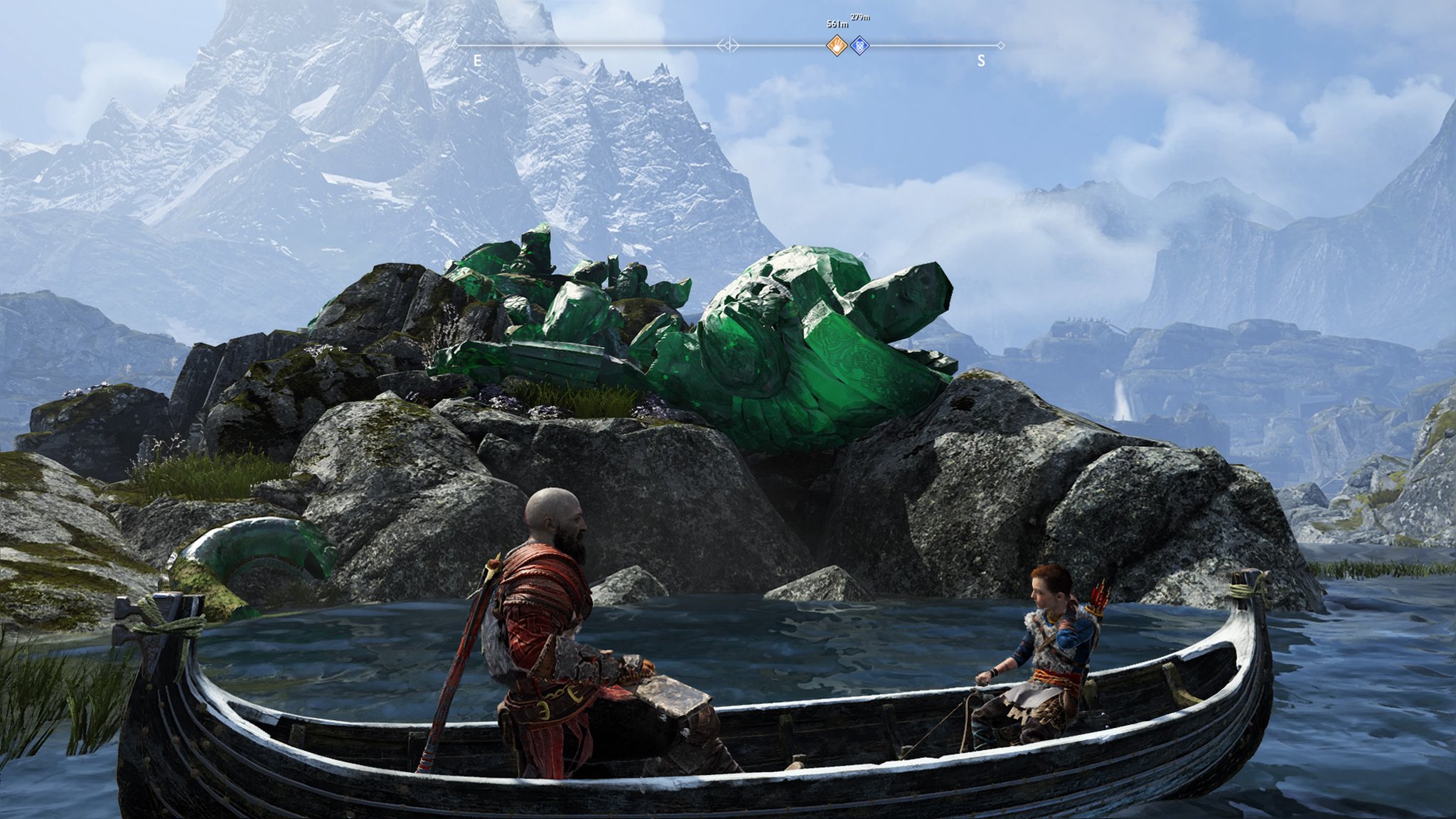
If you want to, you can spend a lot of time in boats exploring

If you really have that RPG itch though, this is also a great game for that.  Beyond the main story line, there’s side quests and collection galore.  For the most part, these simply exist for purposes of getting more gear, but that becomes important for the post-game content.  The end boss is by a long shot easier than some of the creatures out in the world and some of those fights are among the most fun in the game to engage in, so you have a lot of reasons to get out there exploring.  If you’re a lore or collection nut, there’s also a lot there.  Shrines, treasure hunts, rare ingredients, dragons to free, and more are there for exploring.  If you’re really feeling brave, there’s also two realms that exist purely for the sake of side quests.  Basically, once you finish the game you aren’t really finished if you think you want to get a bunch of hours out of this one.

At this point in the game I wanted to kill the kid, and that’s a lot larger of a complement to the developers than it sounds.

However, the thing that kept me coming back is that this was a well told story.  The interplay between Kratos and his son starts off as somewhat hilarious on the surface as Kratos pretty much spends hours yelling BOY GET OVER HERE.  However, once the boy finds out what he really is, he becomes effectively a pompous ass for an arc of the game.  The fact that I was legitimately pissed at the kid says a lot about how effective their writing was.  The gods they meet throughout, the secrets beneath the surface, and to the end of the game the little plot twists that were thrown in were all part of what would make this one great, even for folks watching it like a movie alongside someone playing.

So, I guess I’m somewhat surprised even if I shouldn’t be.  The God of War series has always been somewhat of a hallmark for the quality of Sony’s first-party teams.  However, it always was kind of a brawler with a cool theme, and not necessarily a super deep experience.  This one turns all that on its head, giving us an extremely deep action RPG that still feels familiar despite all the changes.  The fact that they so fundamentally evolved this series is a phenomenal achievement.  This is the type of game that turns other platform traditionalists into PlayStation owners, and I can’t recommend it enough to go out and play it now.

Game Ramblings #69 – Ni no Kuni II: Revenant Kingdom

More Info from Bandai Namco

  • Genre: ARPG
  • Platform: PS4
  • Also Available On: Windows

TL;DR

  • Action-focused RPG battle system that is a lot of fun, even if it’s drastically different than its predecessor
  • Biggest negative is the ease of the main story path through the game
  • Kingdom-building content is the biggest focus for the player’s power curve improvements, but is going to be love it or hate it
  • Lots of side content between collecting citizens and killing tainted monsters

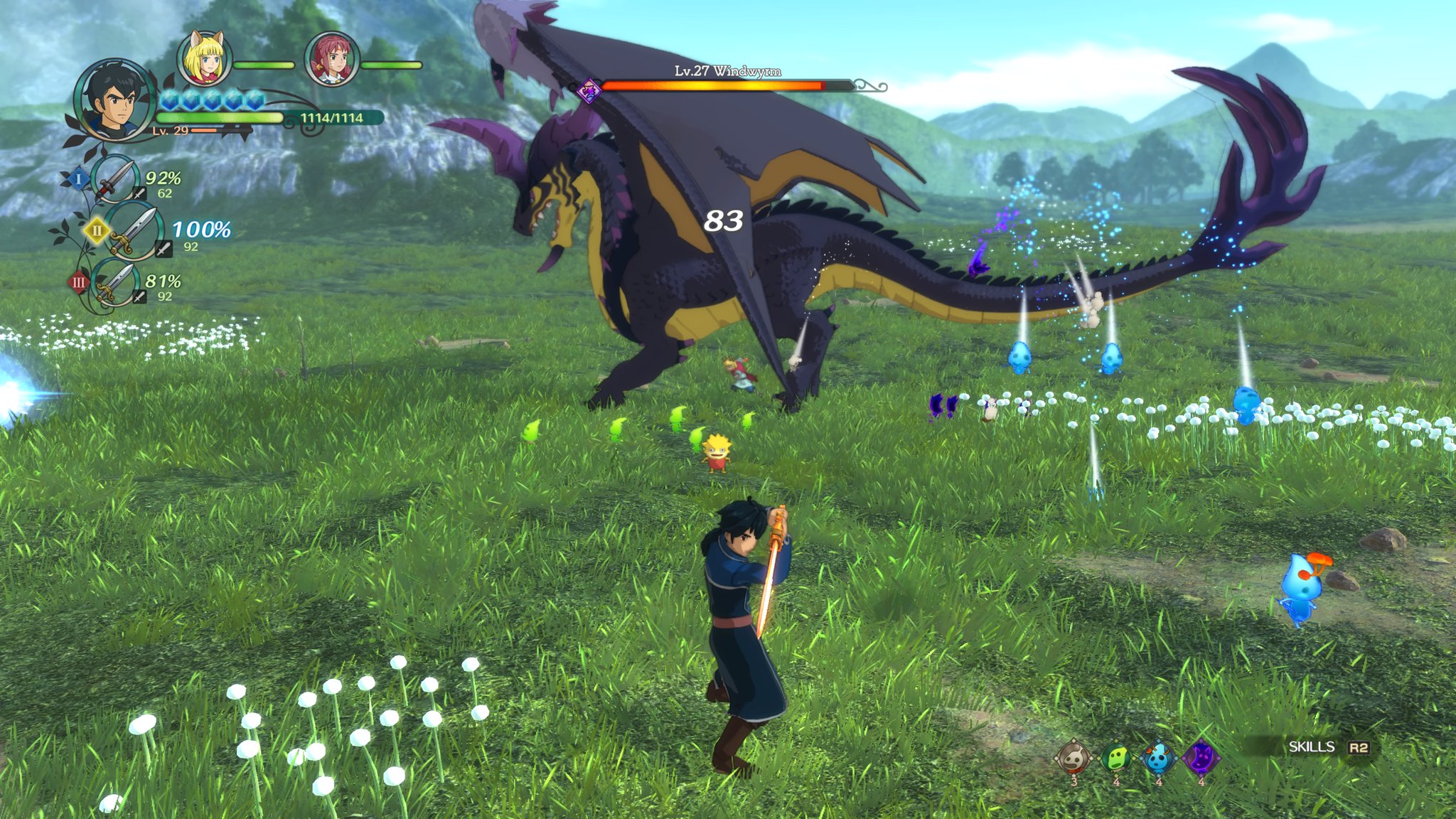
Ni no Kuni II is a bit of a strange game.  While it’s technically a sequel, it only loosely shares a setting with the original, completely scrapped the original’s battle system, and more or less scrapped the originals Pokemon-style collection.  While it also brought over the visual style of the first game, this one was not done in tandem with Studio Ghibli, so it’s missing a lot of the world charm of the first one. Taken on its own though, this is a really good game.  Visually this is still fantastic and is obviously helped being on a generation newer hardware.  The characters and story are still light hearted and enjoyable to play.  In place of the first game’s combat, we now have a very Tales of action combat system that is strengthened by the inclusion of some collectible helpers.  While it doesn’t necessarily succeed across the board, the fact that I got a platinum trophy on it says a lot about how much I enjoyed my time in the game.

While not necessarily as unique as the original was at the time, this is still one of the finer examples of visuals in an RPG.

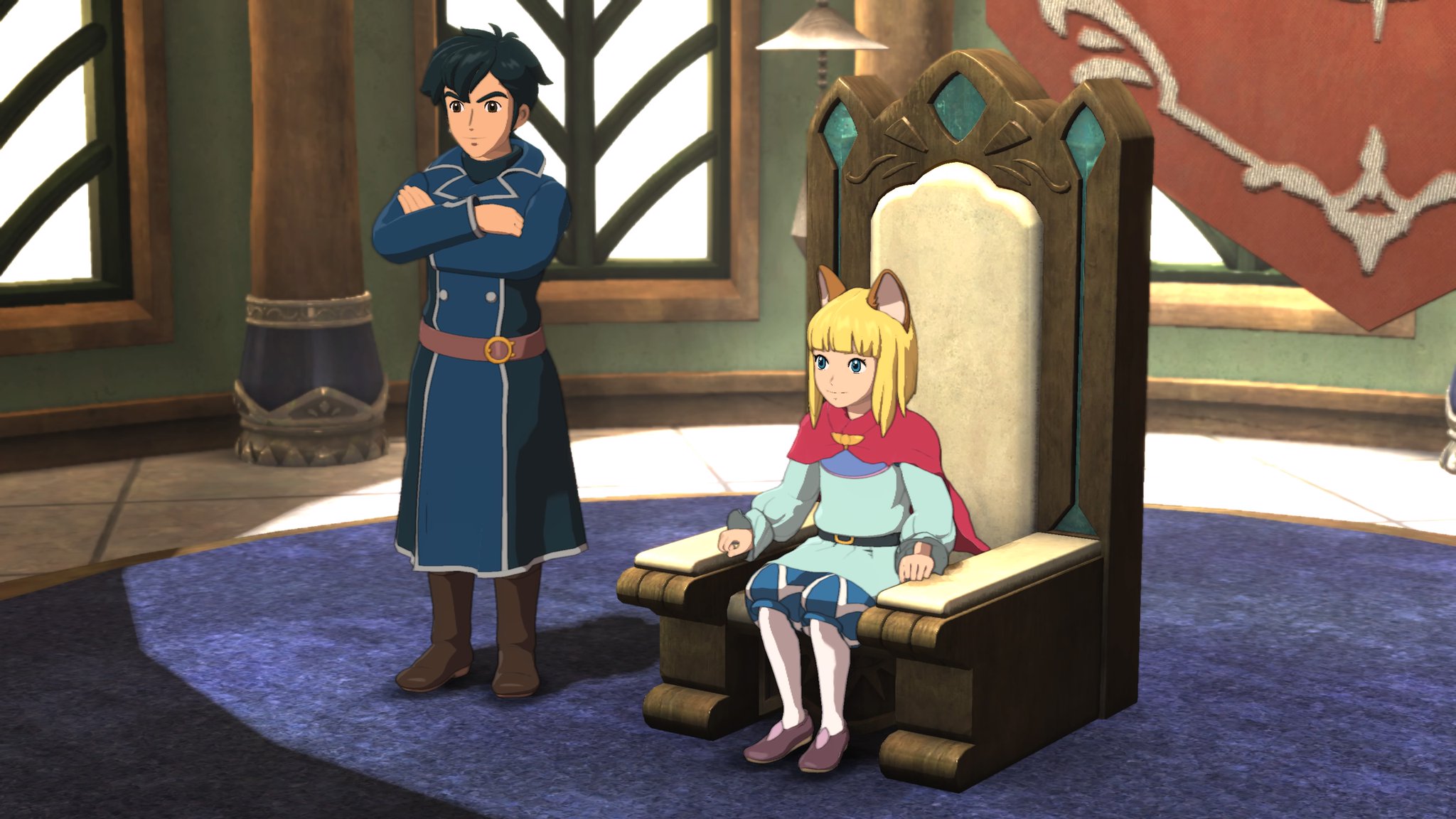
While there are a lot of differences, it’s still pretty obvious this is in the Ni no Kuni franchise and universe.  Visually, this is another pretty astounding game.  While not directly a Ghibli product, it’s pretty clear that the employees they brought over into Level-5 have continued their legacy in the sequel.  The writing also has a lot of that Ghibli feel.  Despite the serious underlying story of a child king losing his rule to a coup, the interactions between the story’s main characters are often lighthearted and often pretty funny.  It’s not shy about having serious moments, but it also doesn’t take itself too seriously.  There’s even a few nods for fans of the original game throughout, despite the sequel taking place presumably a few hundred years in the future.

However, that’s about where the similarities end.

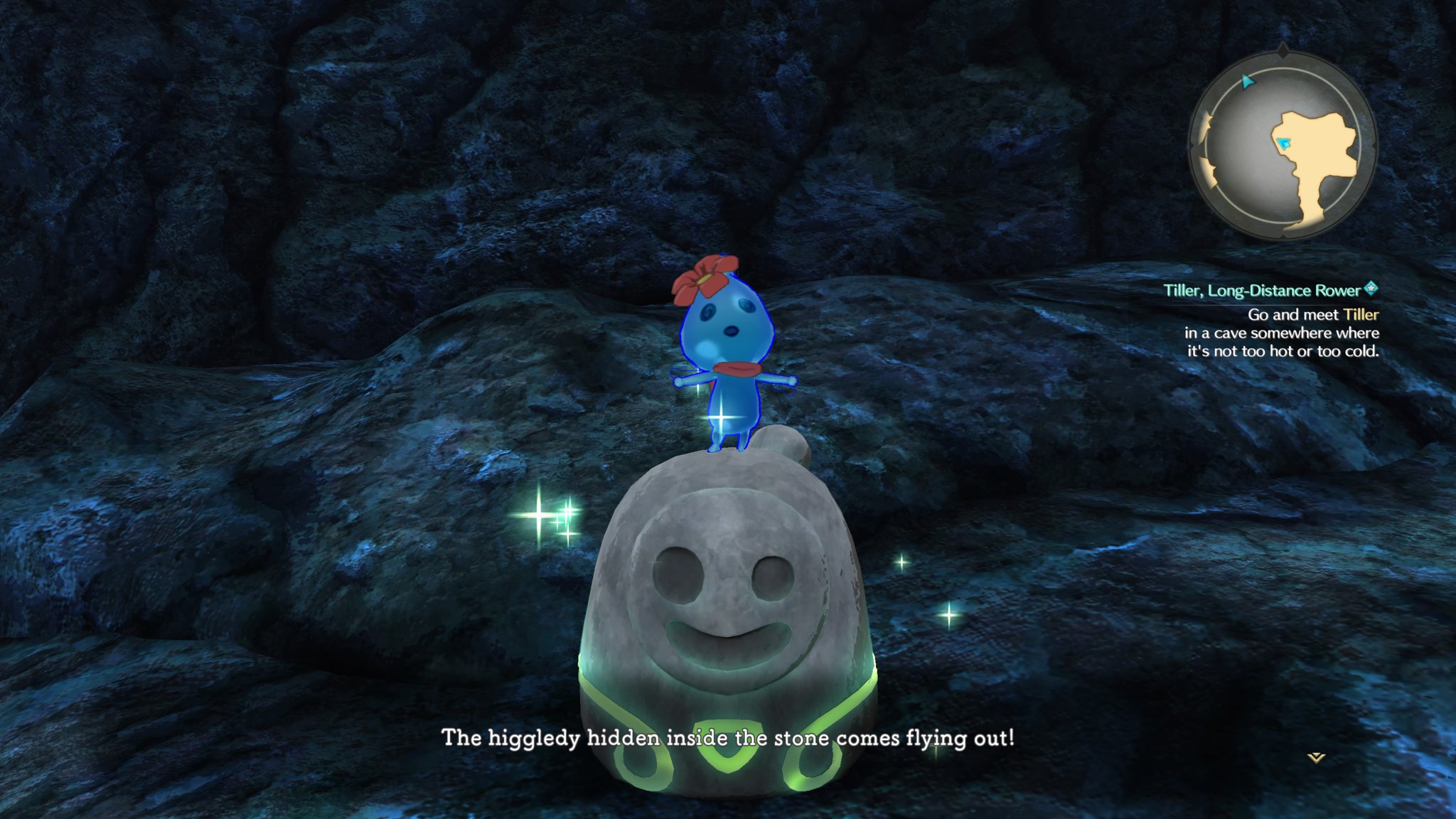
Higgledys may not feel that useful, but they sure are kind of adorable.

The first obvious difference is that capture and collecting of monsters that you fight in the world is gone.  In its place are the capture and collection of Higgledys.  These act as little helpers in battle that for the most part act autonomously.  Some are attack focused, some are healing focused, etc.  While they do all have special attacks that can be used to provide additional support, they generally just kind of existed in my peripheral vision in-battle.  Once I had a party of four that worked for me early on, I never switched them out for a new crew, despite the fact that there were dozens to collect.  They could also be upgraded for better stats, but again I never really noticed the difference in practical use.

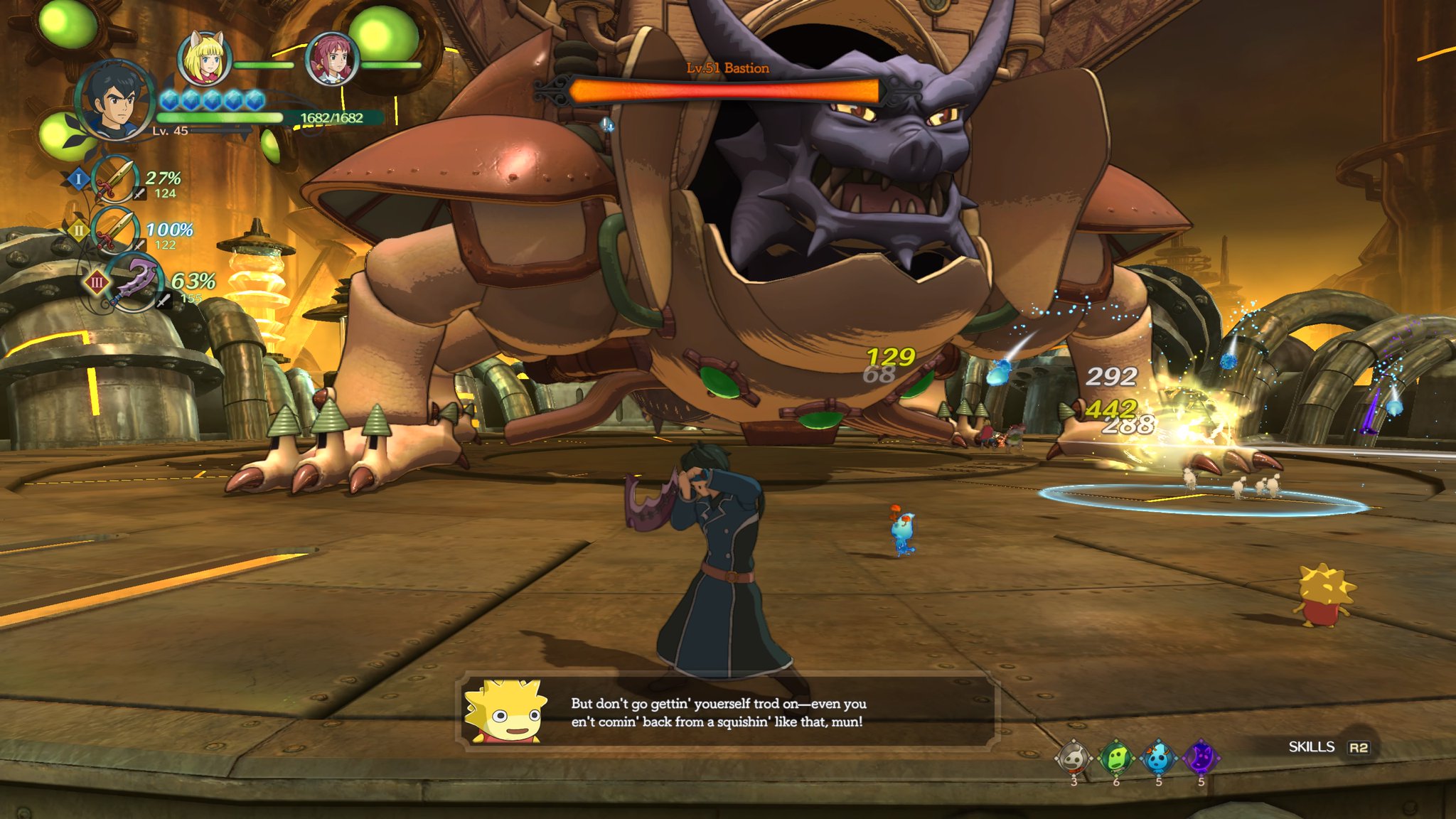
Combat is simple, but a lot of fun in practice.

However, the higgledys not being obviously useful didn’t really matter because the combat was a lot of fun on its own.  At the end of the day this is pretty close to a straight rip of the Tales of series combat.  You have skills and ranged attacks that use a mana resource, two kinds of basic attacks that also recharge mana, items that can be fired off if needed, and occasional special attacks.  If that rings like Tales of it’s because it is, but the pace of combat is just as fast as the source and everything feels impactful.

If there’s one real problem with the combat, it’s that the core story path really is just too easy.  Most trash can be cleared with an opening skill to clear away the bulk of the pack.  Enemies that get killed end up dropping frequent mana and health orbs, so I didn’t really need to use items that frequently.  Even on the boss end, the core mechanics around immunity during dodging often meant that I could take literally no damage in a fight if I was being even a little cautious.  This is alleviated somewhat by the ability to fight 60 “tainted” monsters, which end up being the real difficult content in the game if done at appropriate levels.  However, if you’re the type of player that skips side content in favor of breezing through the story, this won’t help you at all.

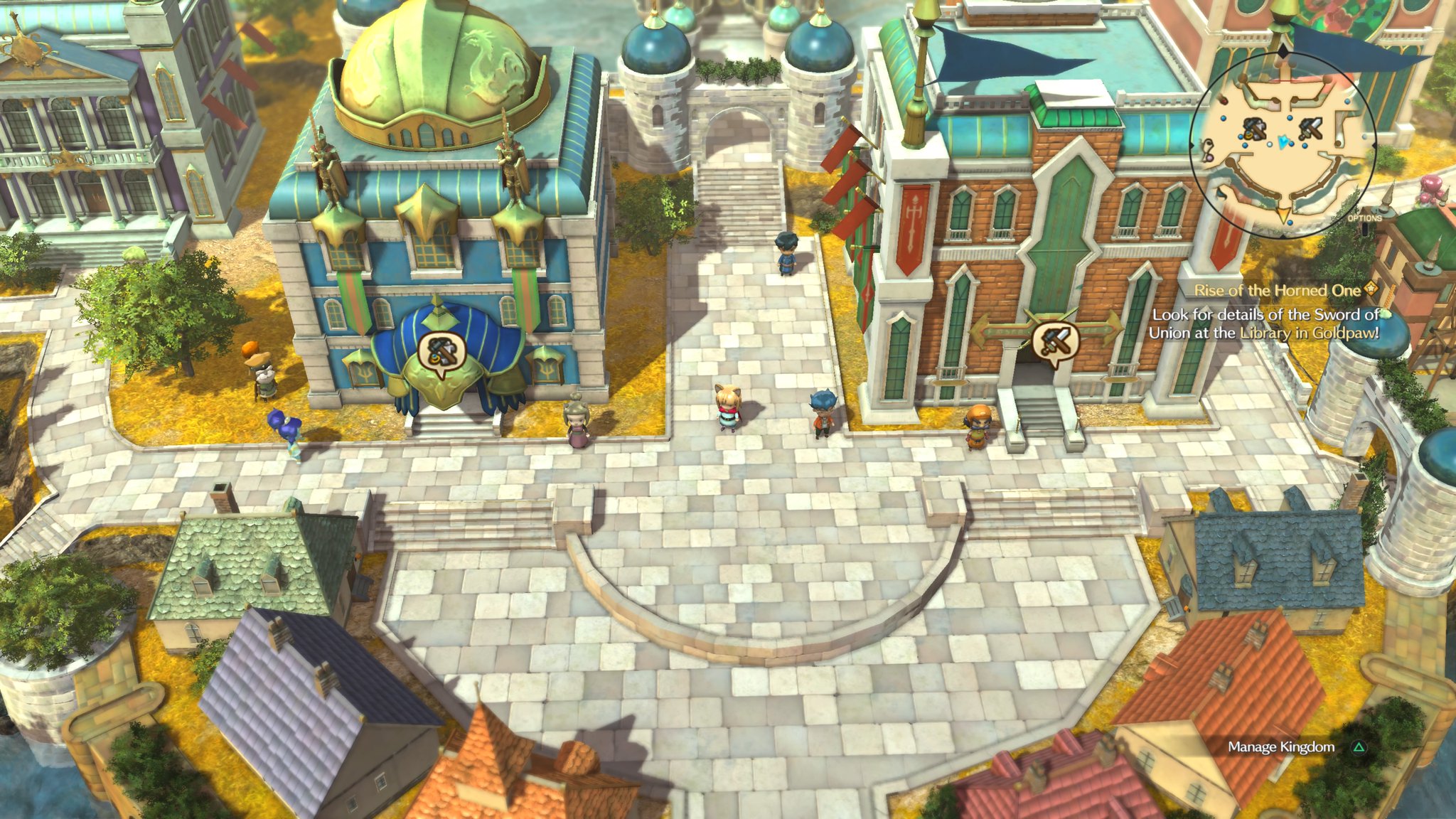
I’m a fan of city builders so when I was told to start building I couldn’t stop.

Also on the side content front is the entire ability to build your own kingdom.  For me, building the kingdom and dealing with activities associated with it was very likely close to 50% of the time spent in the game.  The core loop for kingdom building is to recruit characters, build buildings for their specialty skills, have them work in the buildings, and then either gather resources they find or have them research upgrades.  On the upgrade front this could be anything from the ability to craft and upgrade weapons and armor, to buildings that allow you to upgrade your higgledys, to buildings that provide passive effects in battle, and more.  In addition, characters must be recruited via completion of side quests AND the characters you recruit also often give their own side quests, so you’ll have the option of spending a lot of time directly dealing with your own citizens.

This is another section where if you don’t like side content, you’re going to simply miss out on a lot what is there.  On the other hand, if you want the difficulty of the game to be higher, not upgrading your kingdom is a good way to miss out on a significant portion of your party’s power curve via all the available upgrades.  However, if the completionist bug hits you, this is where you will be spending a lot of time.

It’s good to be king.

Realistically I enjoyed the hell out of this game and want to recommend it to everyone, but I suspect it’s more niche than my brain is telling me it is.  While the action combat system is probably more approachable than the first game’s system, you won’t really see it at its best unless you want to go searching for the actual difficult side monsters.  While I enjoyed the kingdom building and side quest process of searching for new citizens, I can see where people would think it’s slow and grindy.  While the story is entertaining for me, it definitely tends to lean into some pretty predictable results.  If that all still sounds fine to you though, go give this one a try; you certainly won’t find me telling you not to.