Game Ramblings #99 – Sparklite

More Info from Red Blue Games

  • Genre: ARPG
  • Platform: Switch
  • Also Available On: Steam (Windows/Mac), PS4, Xbox One

This one’s kind of been floating around in my brain for a while. One of the folks working on this did some contract work with my team a couple years ago at Tripwire, and I couldn’t be more thrilled to see the game finally come out. I’m even more thrilled to find that it lives up to what I was envisioning back when I was hearing their plans. While it’s easy to look at this and shake it off as a Link to the Past clone, the game makes some clever use of roguelike mechanics to provide both a way to change the environment throughout the game, as well as a positive feedback loop to the process of dying. It’s an interesting change to a genre that typically penalizes dying, and it ended up working out well.
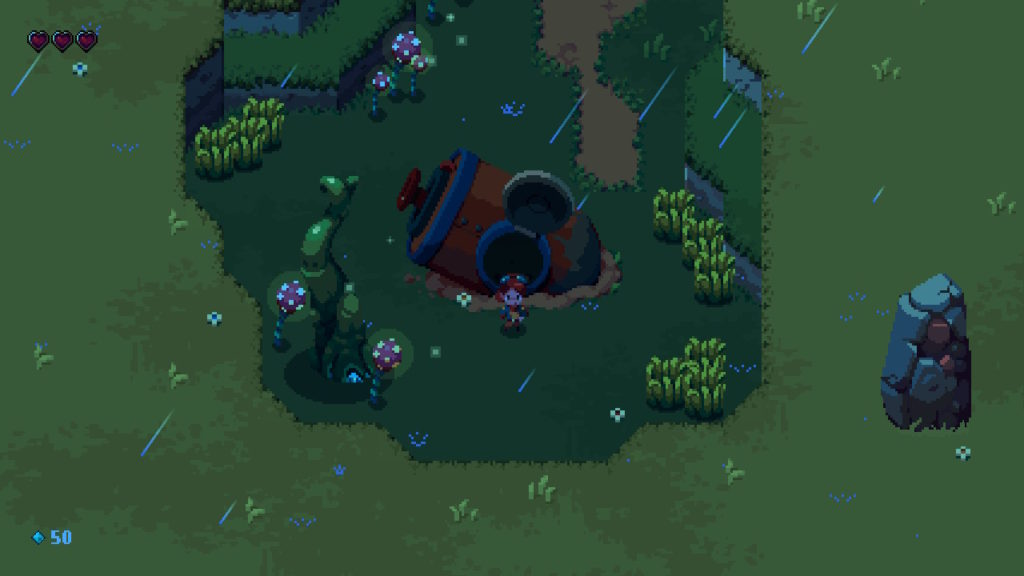
Let’s get the simple things out of the way in a real hurry. The game uses an entirely pixel-based visual style and it’s pretty damn gorgeous. The soundtrack is also fairly catchy and never started to wear on me despite hearing the same general set of themes throughout each region. Yes, the core gameplay loop here is LttP. You have a melee weapon that swings in an arc. You run around the environment killing things for upgrades. You eventually get to pattern-based bosses that you take out to get your big upgrades. That all is pretty familiar to fans of the genre, and really it’s done well here. It feels mechanically solid, and probably most importantly, I was never feeling cheated if I was taking damage. If I was taking a bunch of damage, it was entirely my fault. It’s worth noting that damage does ramp up REALLY fast here, and it’s easy to get one shot later in the game if you’re not paying attention. That’s entirely where the roguelike mechanics start to come into play.
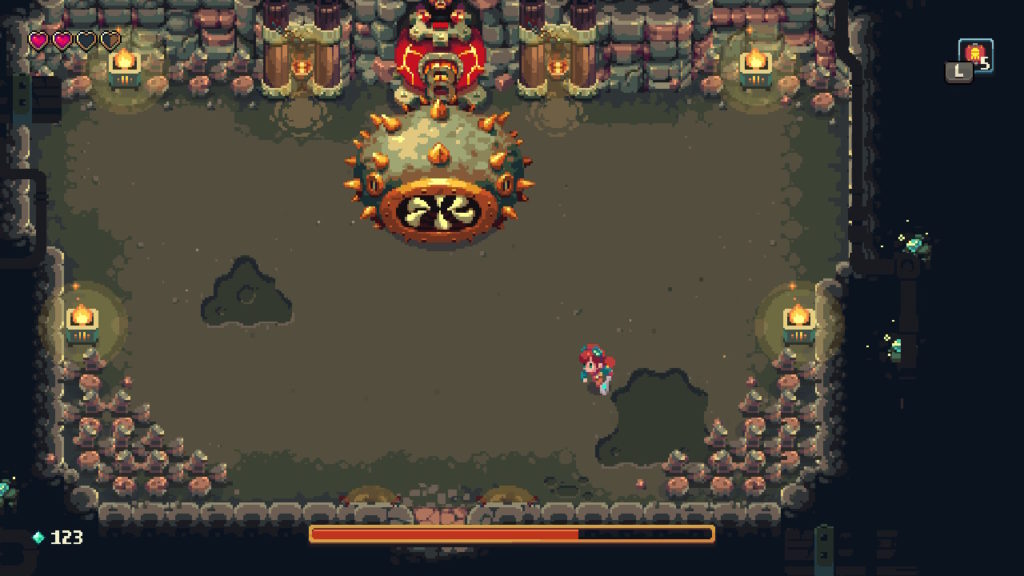
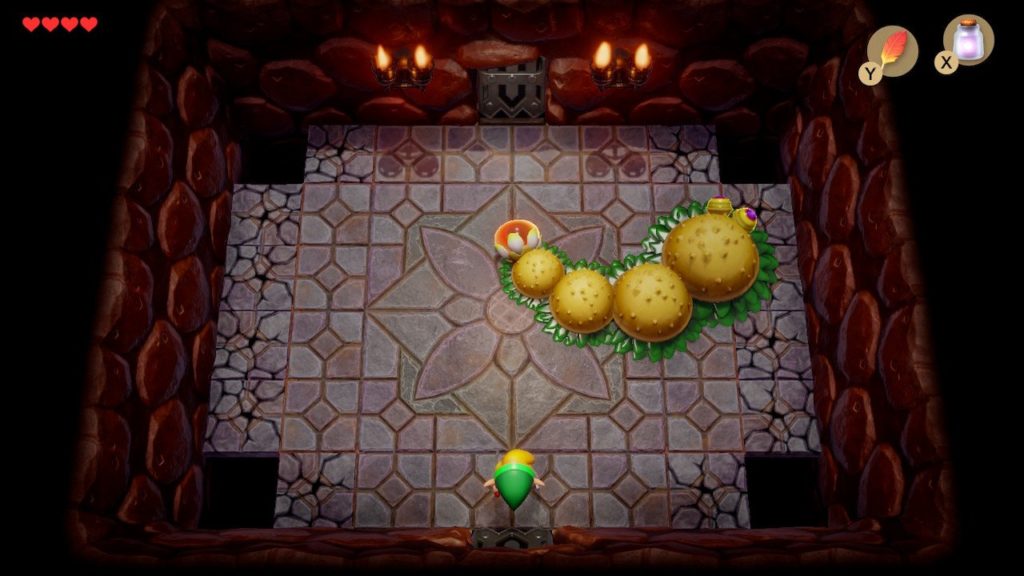
Boss fights are where you typically die the most, and where the roguelike growth elements really come into play.

The first thing to note is that the world changes each time you play through it. This plays a nice balance of randomness and non-randomness in that the regions are always in the same general area (desert is west, snow is north, etc) but the regions themselves are fairly randomized each run. There’s always going to be a set of standard features in each region (boss dungeon, random enemy dungeon, an area to pick up an upgrade, etc) but the rest of the area is going to be pretty different between runs. Sometimes you’ll find random underground areas with currency to grab. Sometimes you’ll find areas with people that you can rescue. Sometimes you’ll find areas with side-quest collection stuff to do. Basically, you’ll always have some reason to both move forward to new spots, but also return to old spots just to see what else you can find.

The core hub that you end up at on death also follows the roguelike pattern of slow incremental upgrades. There’s a main shop with player upgrades for purchase that also serves as a spot to handle the equipment chain. There’s a spot that can be upgraded that provides some free consumable items (ex: health potions, bombs, etc) that you can grab before going down for a world run. There’s a shop that can be upgraded to build out secondary ranged items. This is also the core spot where you’re going to find a lot of the lore of the game. Overall the town serves its purpose well as a bit of a power curve spot for the player. It’s easy to get around in the town, the purpose of the shops is always super obvious, and you’re going to be finding some reason to dump all your currency into something before heading back down to the main game world.
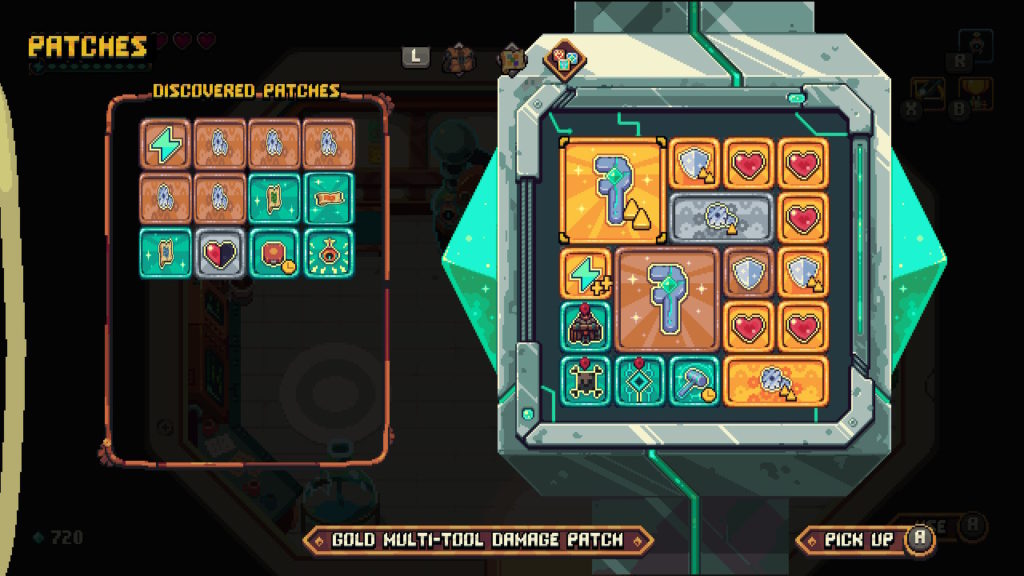
The main weapon’s upgrade system is super customizable and ends up being an interesting way to build in limits and choices in a meaningful way.

However, the main power curve comes all together in the hammer equipment. The hammer is both the main weapon in the game, as well as the main equipment handler. It can be packed with a bunch of upgrades ranging from damage to armor to health to map helpers and more. However, this takes the form of a grid-based screen that honestly reminded me a lot of the sort of classic PC ARPG approach. These upgrades all have some specific grid size and shape, so you spend a bunch of time min/maxing both the upgrades themselves, as well as the space they take up within the grid to get everything you want packed in there. As an example, a shield upgrade is a 1×1 square, attack upgrades are 2×2, but something like the gadget power is a 2×1 bar. The upgrades of common types can also be combined at a cost into more powerful versions from bronze to silver to gold.

This process of upgrading and playing a bit of inventory Tetris is the core power curve loop of the game, and it’s really effective at playing into how I got through the game. I initially started off stacking health upgrades just to stay alive. As I got more comfortable with the game mechanics, I started backing off of health and going more towards offensive upgrades. However, boss fights started doing a lot of damage all at once, so I started pulling some direct armor in to keep the individual hits down to smaller amounts. It was a really fun way to manage my overall power, and is a lot more interactive than the typical ARPG style of hunting a dungeon for the same direct upgrade that everyone else was going to take.
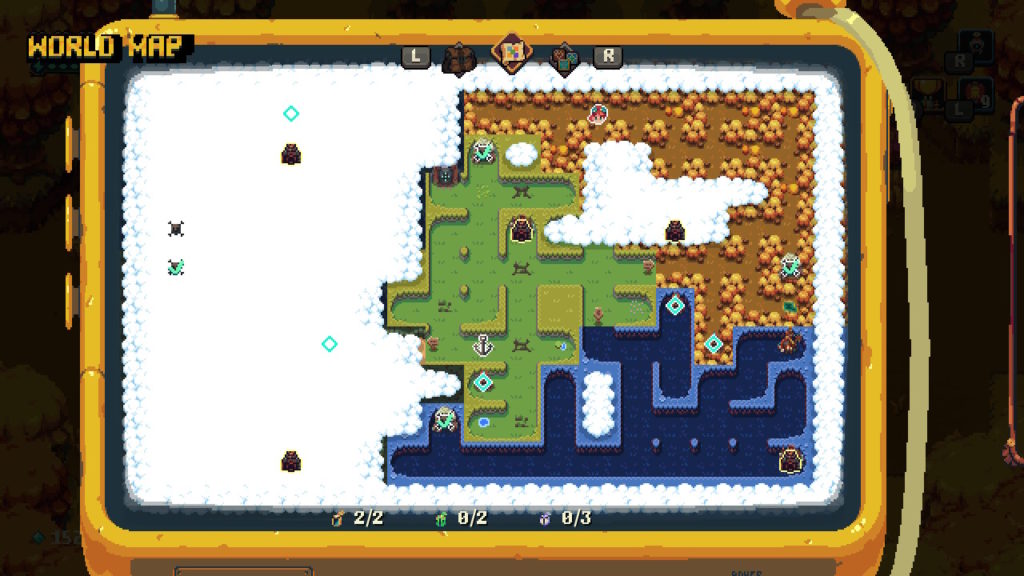
I really just wanted an excuse to post this map, because damn is it gorgeous.

For as cynical as I can often be about working in the game industry, it’s always fun to see something come out made by folks you know and have worked on. It’s even better when the thing they’ve been working on as a passion project comes out and is a lot of fun to play. This is definitely one of those cases. It’s a game in a small niche genre mix made by a small team because it’s what they wanted to make. If the idea of playing a roguelike Link to the Past sounds at all appealing, this is definitely worth the play.

Game Ramblings #94 – The Legend of Zelda: Link’s Awakening

More Info from Nintendo

  • Genre: Action RPG
  • Platform: Switch
  • Original Versions: Game Boy, Game Boy Color (DX)
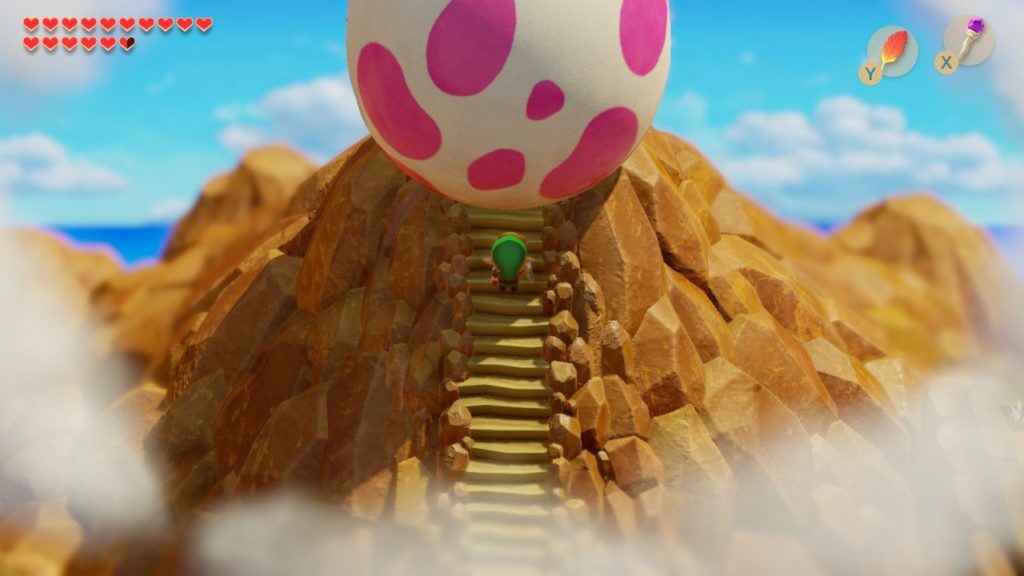
It was nice seeing this again after all these years.

This was the first game I got on the Game Boy. When my family got me the Game Boy for Christmas, Nintendo wasn’t doing Tetris as the pack-in, and boy was that a lucky thing for me. I played this for way too many hours as a kid, wracked my brain over the puzzles, and I’ve loved the Zelda series ever since. Even at the time of its release, this was a special game, and now that it’s been given the modern treatment it’s worth playing more than ever.

From a high level, there’s not much of a surprise here – it’s a 2D Zelda game. You go to dungeons, you get an item, you use that item to get through the dungeon, by the end of the game you’ve got a tool set to take out the boss. It’s not that this one was necessarily breaking totally new ground, but that it was doing so in a handheld game, and was STILL as good as (and I’d argue better overall) Link to the Past.

There was just something about this one that always hit better for me, and I think I figured it out with this play through. Link’s Awakening plays a constantly good balance of both telling you what to do, and giving you a bunch of leash to go exploring on your own. There’s always a bit of a hint coming out of a dungeon about where to go next. That gives you enough of a bread crumb to go on. But those spots you walk past that you don’t have an item for yet? That item you just got in a trade quest and don’t know who the next step is for? You’re always going to want to go off and explore. Even on the Game Boy that always worked better for me than Lttp‘s somewhat more open ended nature, and it hasn’t stopped working well here.

It helps that the items here are still a ton of fun to use. There’s some of your usual suspects here (bow, swords, shield, weight bracelets, etc) to get you into the game – and boy doesn the inclusion of dedicated sword and shield buttons REALLY help this remake. However, this game also had its weird items that just WORKED. Roc’s feather to jump over things? Fun item at the start. Combine with the Pegasus Boots to really jump far? Now you’ve got a great combo. A shovel to give you more of an excuse to find treasure? Why not. Some magic powder that you can use to stun enemies or turn a raccoon back into a human? Why the hell not. This game really just embraced the weird in a way that the rest of the 2D games often didn’t want to do and it’s all the better for it.

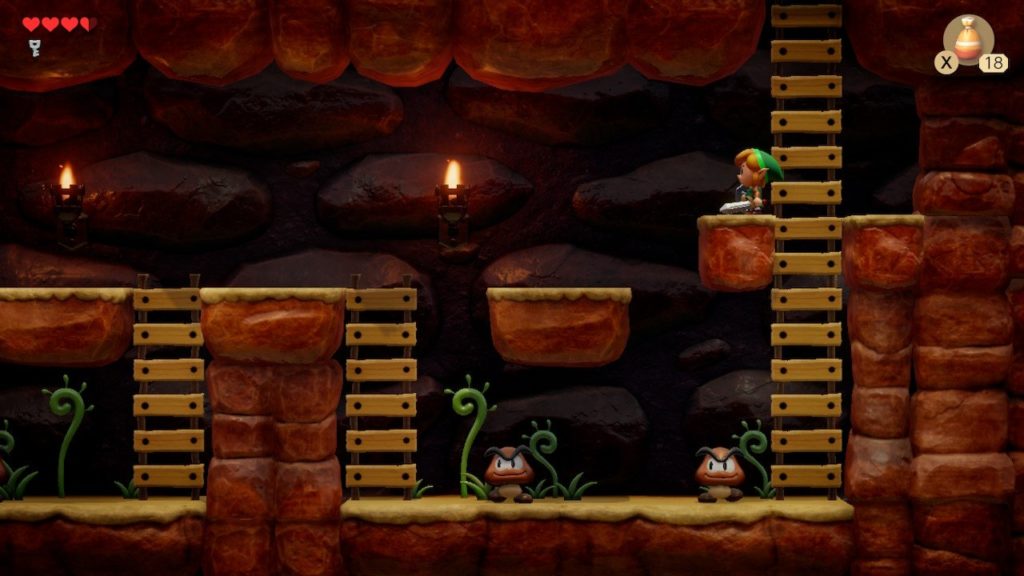
The dungeons themselves are also really solid. I’m assuming it was due to the limited nature of the system, but these dungeons really lean on puzzles over combat. You’ve got your usual puzzles tied to the dungeon’s main item, but this one also does a bunch of puzzles that slowly build upon each other across multiple dungeons. A lot of these end up being some variant of switch manipulation that modifies where you can go throughout the level. These are typically tied into the item puzzles to add multiple layers of solving in one. It ends up really reducing combat to boss fights, which is a benefit for how simple the combat really is. It leaves the boss fights down to puzzle solving with the right item and sword spam to kill, and the rest of the game to swinging only when necessary.

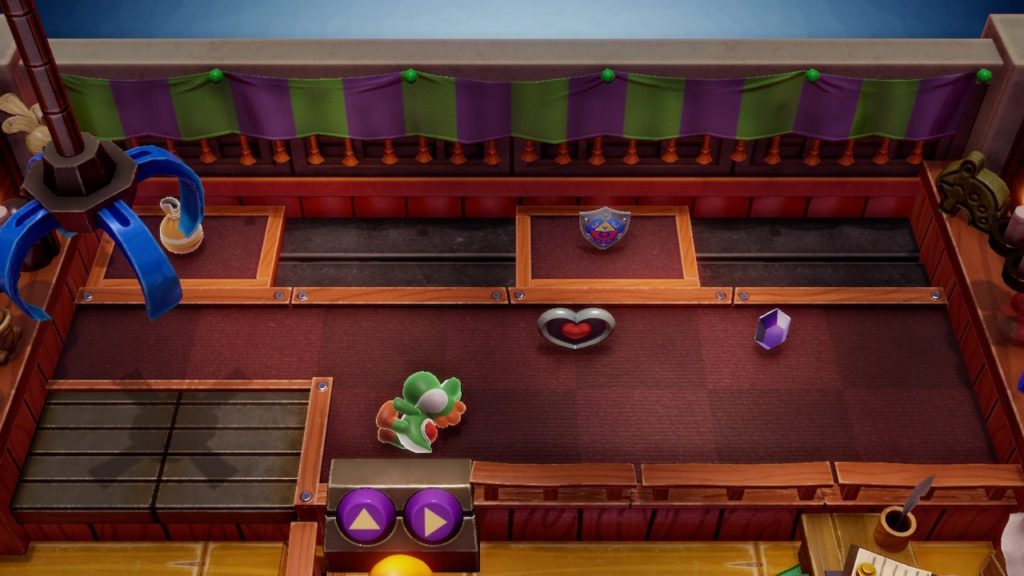
All that said, fuck adding physics to this damn crane game.

This one’s pretty simple – this is one of my favorite games in the Zelda series in general made pretty for modern consoles. The gameplay that made it so good 25 years ago has been tweaked a bit to feel up to date, but not changed where it wasn’t necessary. There’s a lot to be said about not messing with what worked and Link’s Awakening is definitely a good example of that. Where Breath of the Wild proved that a rethinking of the formula was a good direction for the series, this one proves that it’s not always a bad thing to be a bit classic.

Game Ramblings #88.3 – Revisiting Kingdom Hearts – Kingdom Hearts 3

More Info from Square-Enix

  • Genre: Action RPG
  • Platform: PS4

I finally got around to KH3. Ya I skipped some of the side games, and ya I should go back and play Birth by Sleep on a TV, but frankly I was ready to get this one off the list. KH3 was a bit of an oddball – it combines bits and pieces of all the past games while adding a ton of cinematic flare now possible on current generation hardware. What comes out of it falls somewhere between great and complete disaster, which I suppose could be said for a lot of this series as a whole.

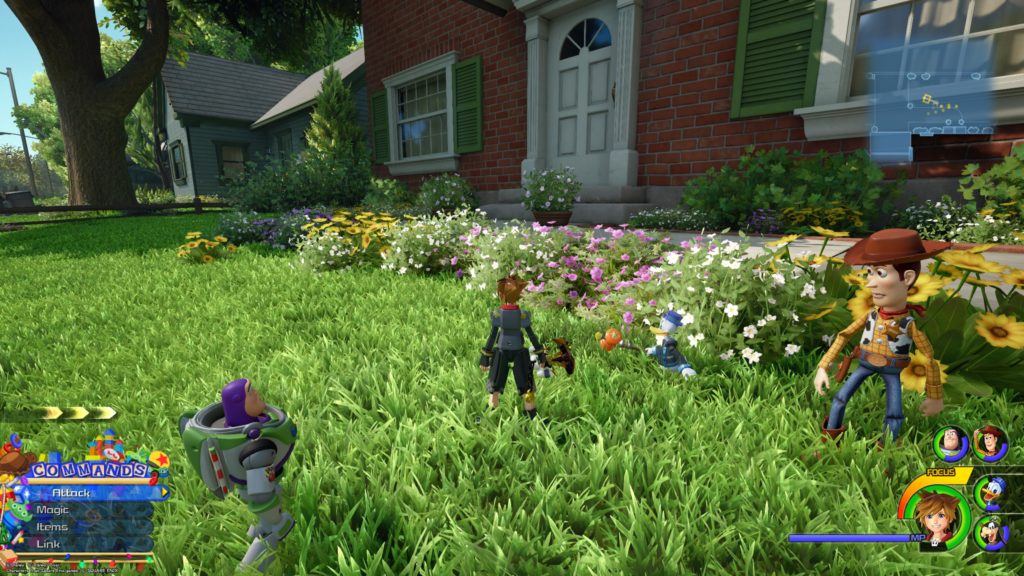
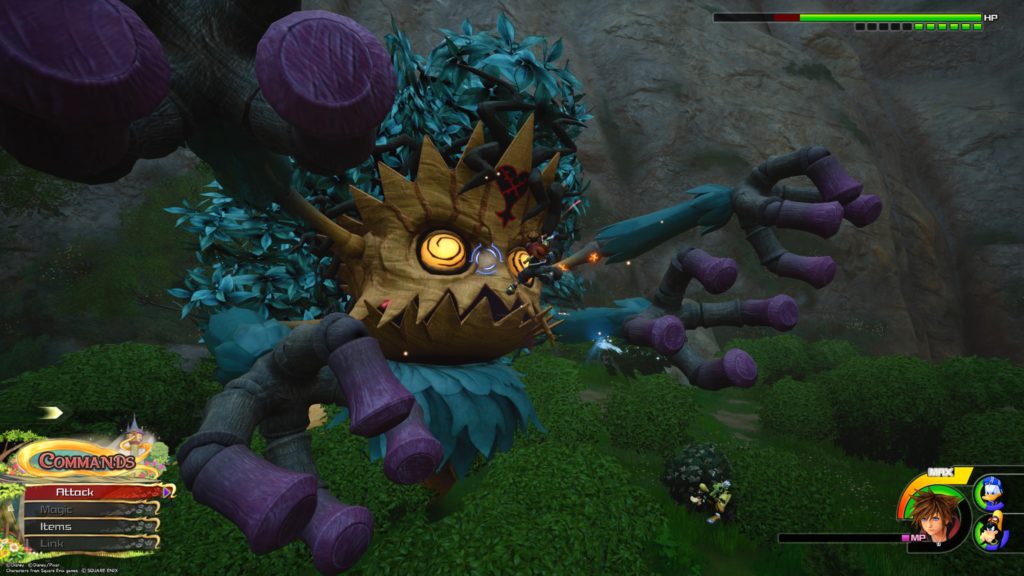
This is really the game that finally feels like a modern experience. If there’s one thing that really speaks next-gen to me, it’s not necessarily new complex gameplay elements, or flashy new effects, but of worlds that feel alive and cinematic scenes that look like the game world. Kingdom Hearts 3 finally delivers on that. Visually, it’s definitely a looker, but importantly the worlds feel believable. Whether it’s San Fransokyo from Big Hero 6 or the world of Toy Story, these worlds no longer feel reminiscent of the movies, but actually feel exactly like the movies. It’s completely uncanny. The style also lends well to spectacular cinematic elements in traversal, such as wall running up Mount Olympus during a boss fight, dodging fire and rocks, instead of simply being somewhere vaguely in the area.

It’s also worth noting that this is probably the best mix of pure new content and pure Disney fandom experience that I think I’ve seen in the series. As a fan of KH, it was great to finally have visibility on both the Keyblade Graveyard, as well as some of the worlds behind Xehanort, and they gave a LOT of time at the end to him. At the same time, they quite literally remade Let it Go within the lore of KH3, which is a huge shot of Disney fandom adrenaline to be hit by. Every moment felt like I was seeing some new cool thing that brought me back to a movie or character I wanted to see more of, and given the lore of the series I was frankly surprised at how well it pulled together.

What gets lost in all of this though is the Final Fantasy connection. The folks from FF10 are nowhere to be seen on Destiny Islands. The FF cast members in Radiant Garden no longer appear. There’s no resolution to the plot between Cloud and Sephiroth in KH2. While the progression of the game lore kind of forces it in this direction, this game is now more accurately described as Disney + Square, not Disney + Final Fantasy. It’s not a deal breaker, but it’s definitely a disappointment.

Combat is a bit of a mixed bag, and it’s definitely a mash up of past games.

  • Core combat is still how it’s been since KH1, and it still has its issues with targeting and lock ons. It’s straight hack and slash, but the combo count trends more towards KH2 so it’s generally effective and easy to pull off.
  • Your partners are still kind of useless, but now your party occasionally grows up to 5 characters, which is kind of neat.
  • Magic and mana regen has been pulled in from KH2, which is a huge perk.
  • The Flowmotion system from Dream Drop Distance is there again, but it’s been neutered by the removal of most of its triggers, so it’s kind of useless.
  • Dream Eaters have been merged into the Summon system from past games, and the summons use both a full mana bar and are still kind of useless.
  • The dark form from KH2 still pops up from time to time, and is still kind of annoying when it shows up. Since it now gets in the way of triggering other group attacks, it’s particularly flow breaking.
  • Fortunately the dark form is hilariously effective against bosses, so when it pops up in a boss fight it’s pretty much an instant win.

Basically, mixed bag.

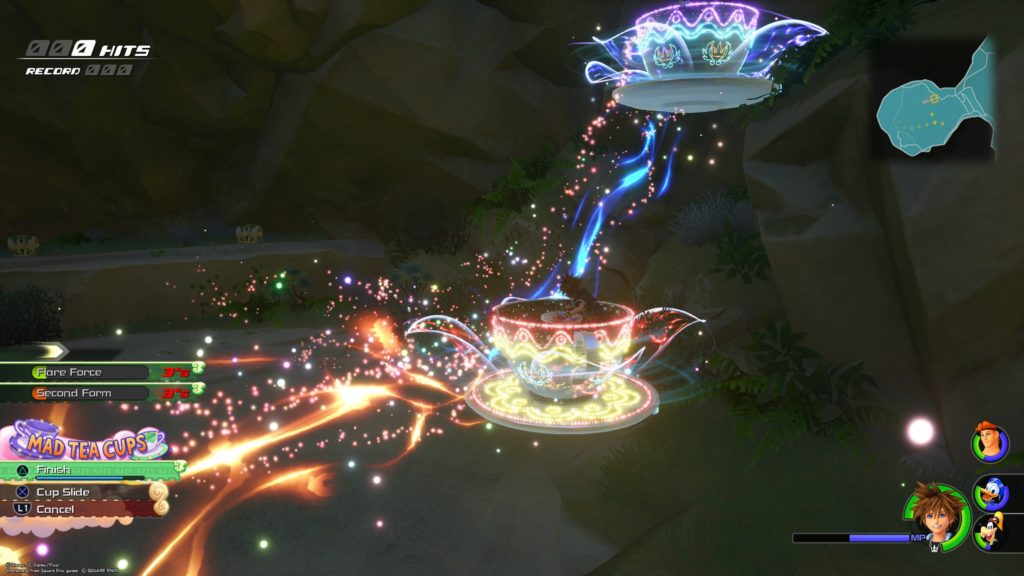
However, it’s the special attacks like the tea cups above that are the most egregious. These are basically triggered group attacks that do a ton of damage and effectively provide you with immunity. They are hilariously overpowered and completely unbalance combat in most situations. There are encounters where it’s pretty obvious that things were balanced around these, so it’s particularly bad that they become a bit of a necessity. In Kingdom Hearts fashion, it’s another case of something that is flashy and cool that gets used way too much, and quickly becomes annoying and necessary.

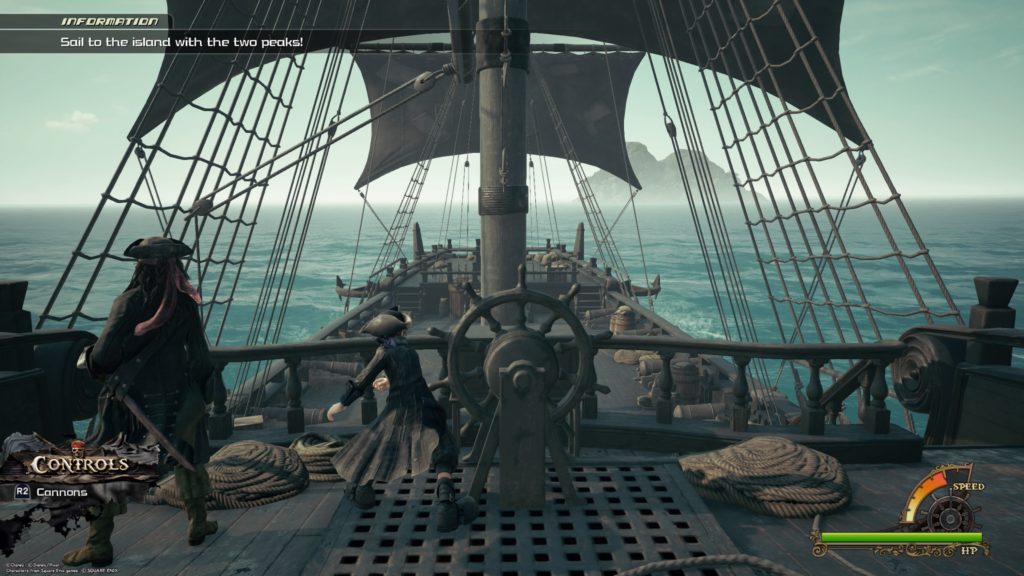
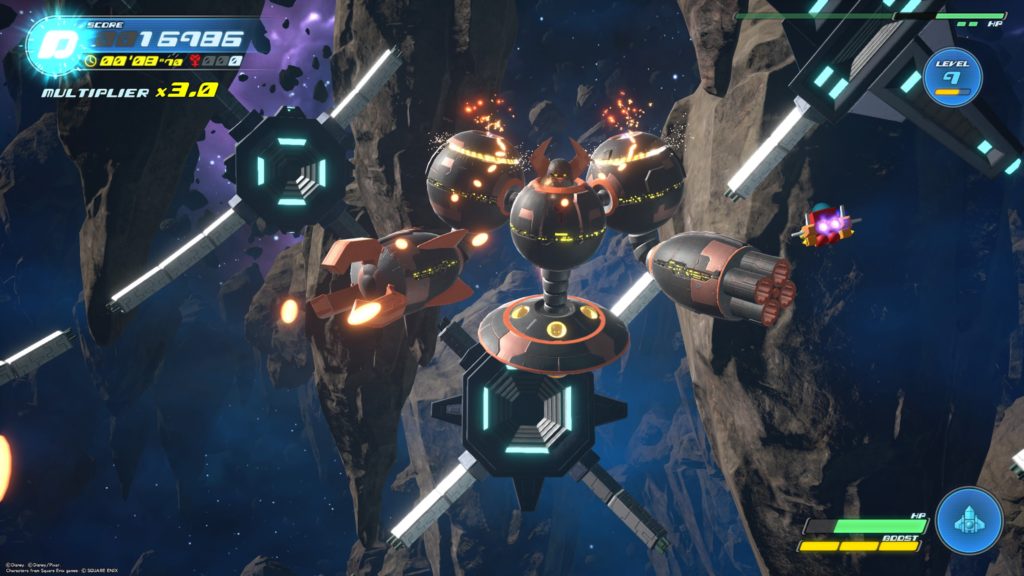
In good news, the non-standard stuff is way better in this game. The Gummi ship sequence is now a pseudo open space experience. Combat is triggered by the player by chasing after Heartless ships, and some of the sequences turn into large scale boss fights. It provides a lot more gameplay than simply the annoying experience flying between worlds, and becomes an entire great change of pace after a bunch of RPG combat. Some worlds also provide their own entire experiences. The obvious example is the Caribbean world, which now has an entire Assassin’s Creed 4-style pirate ship gameplay experience, including ship upgrades, boat to boat combat, and plenty of small islands to hop off at and explore for treasure.

The improvements to the meta experience are really what make this feel like that modern experience. The game goes back and forth between extremely linear sequences and semi-open exploration, so there’s enough of a change in pace going on to allow for some breathing room as I went through the game.

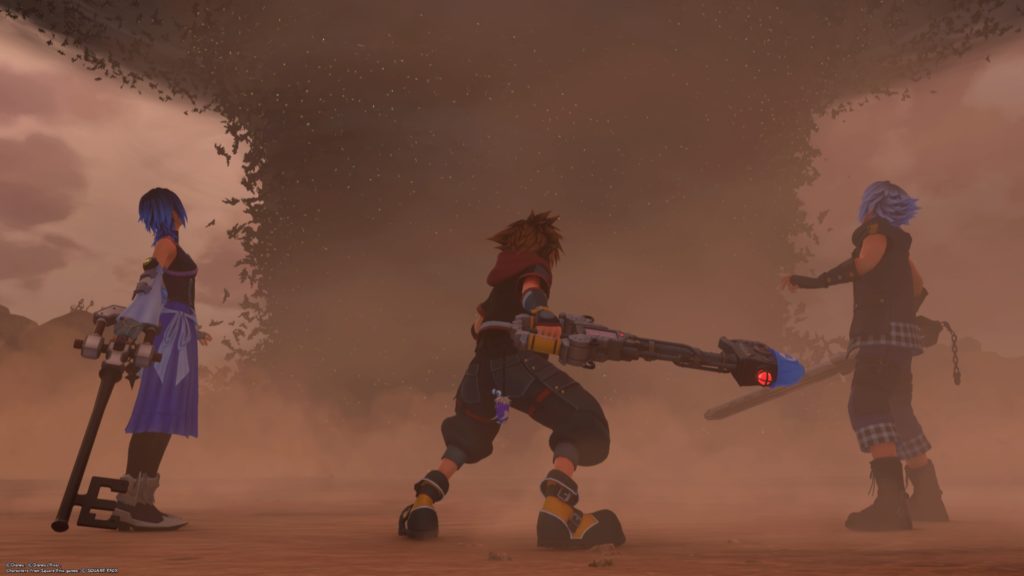
So, many games and more hours than I care to admit later, I’ve gotten through the Xehanort story. I still couldn’t tell you most of what happened, because quite frankly the lore is batshit. I couldn’t tell you I really enjoyed the gameplay a lot of the time, because quite frankly the combat really isn’t that good. But did I enjoy it all anyway? Hell ya I did. These games are the most spectacularly stupid mix of Disney and JRPG aesthetic possible, and now that technology has caught up to that, it was a sight to behold.