Game Ramblings #207 – Bayonetta Origins: Cereza and the Lost Demon

More Info from PlatinumGames

  • Genre: Action/Adventure
  • Platform: Switch

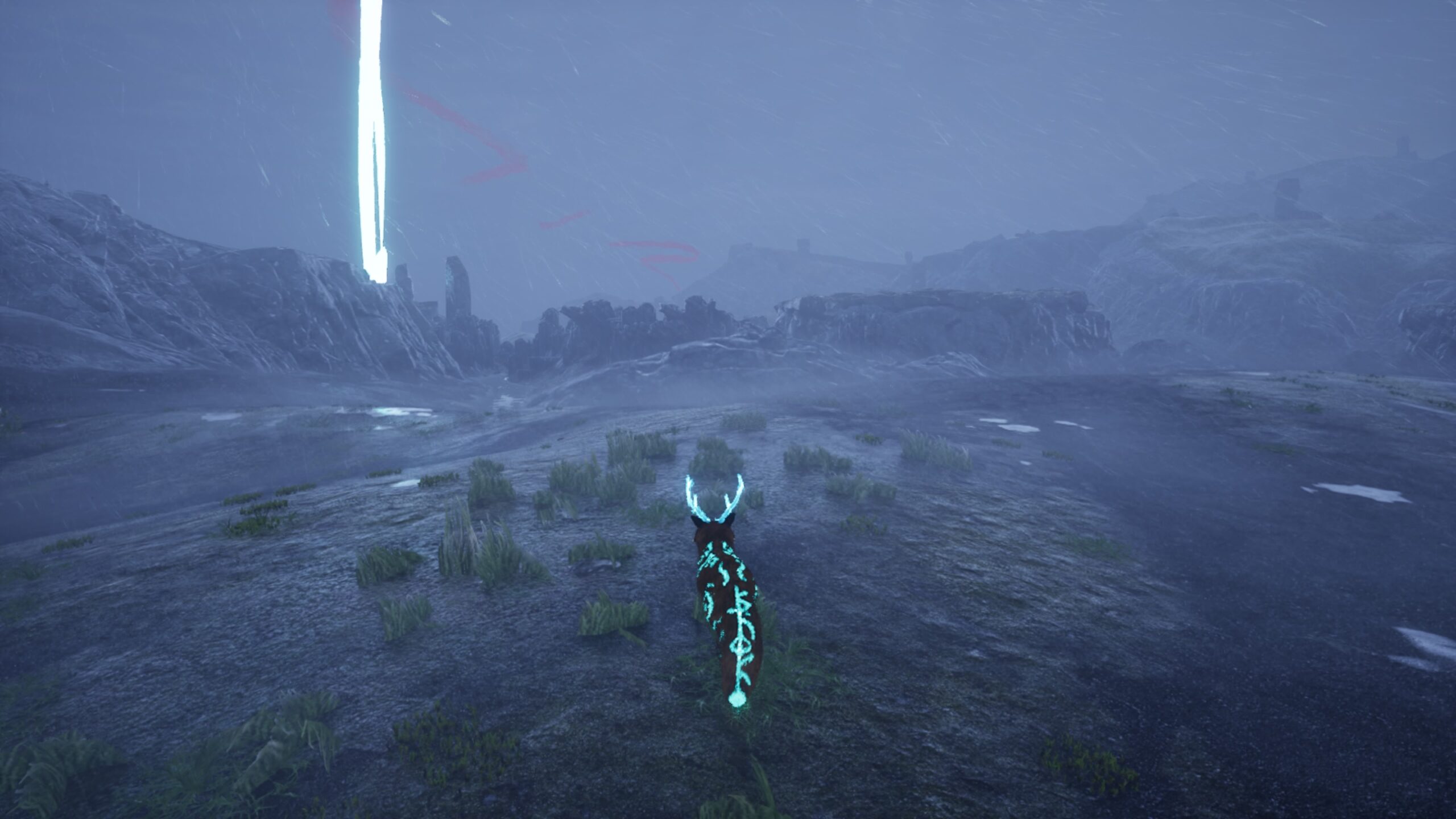
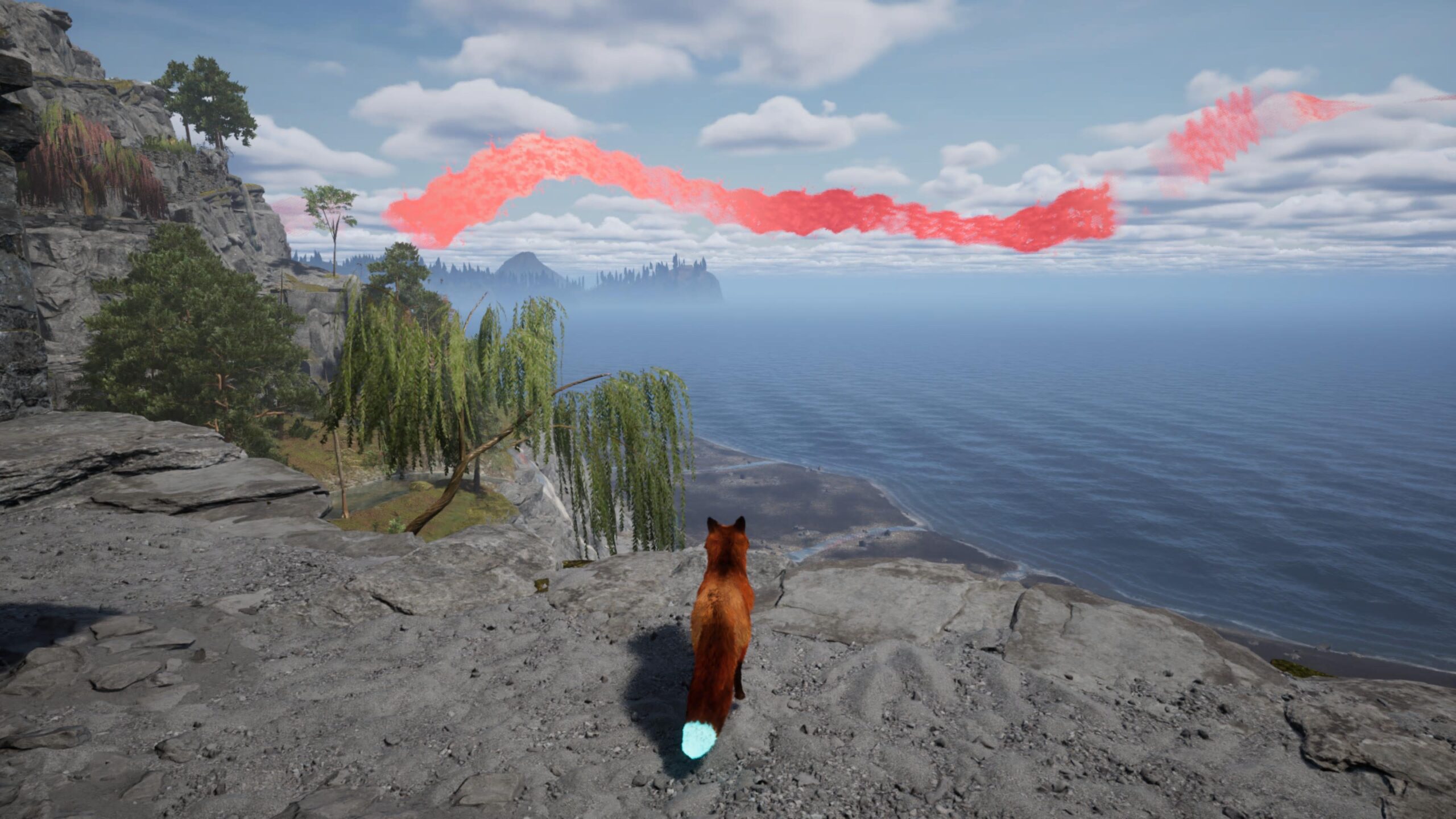
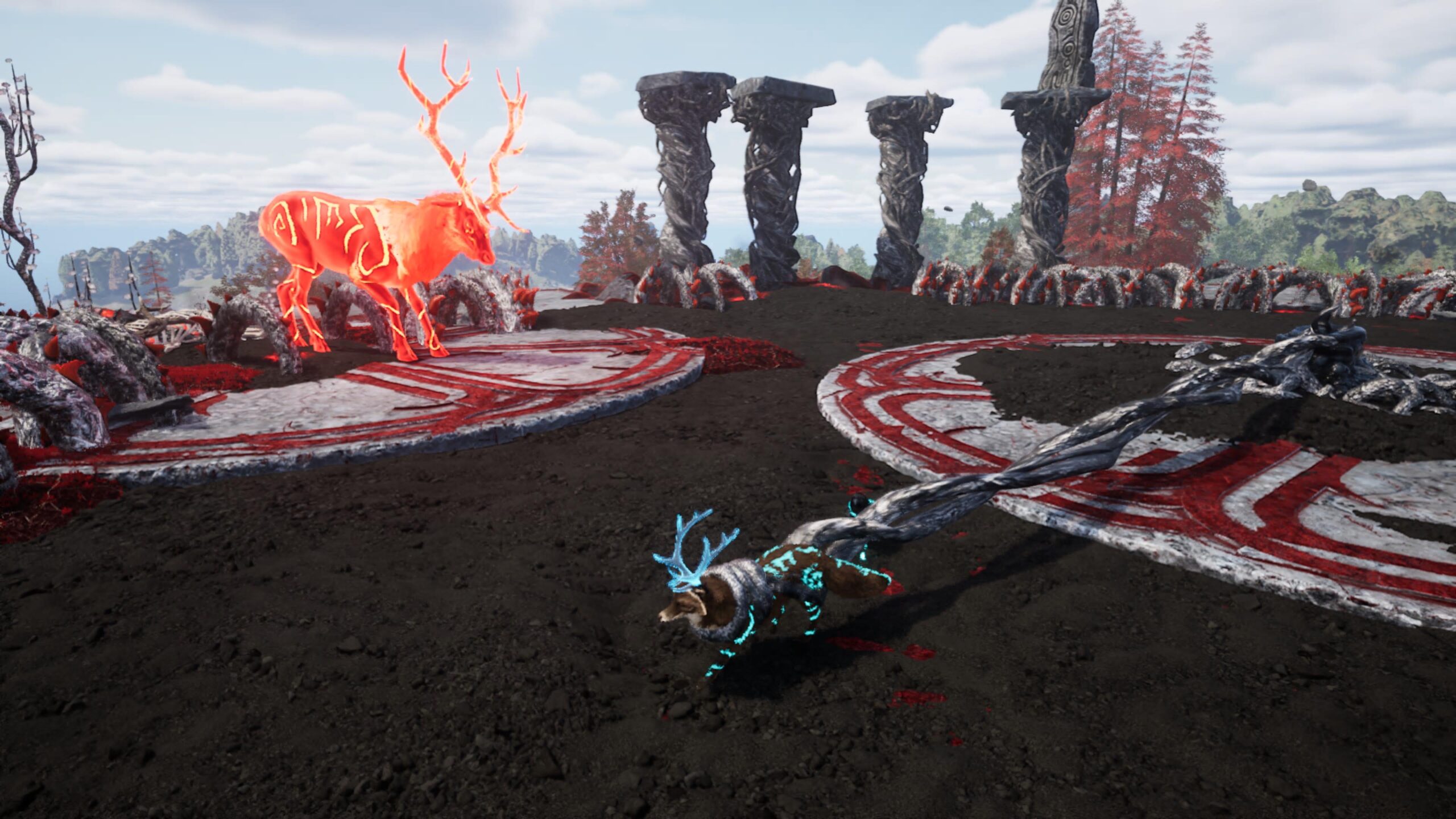
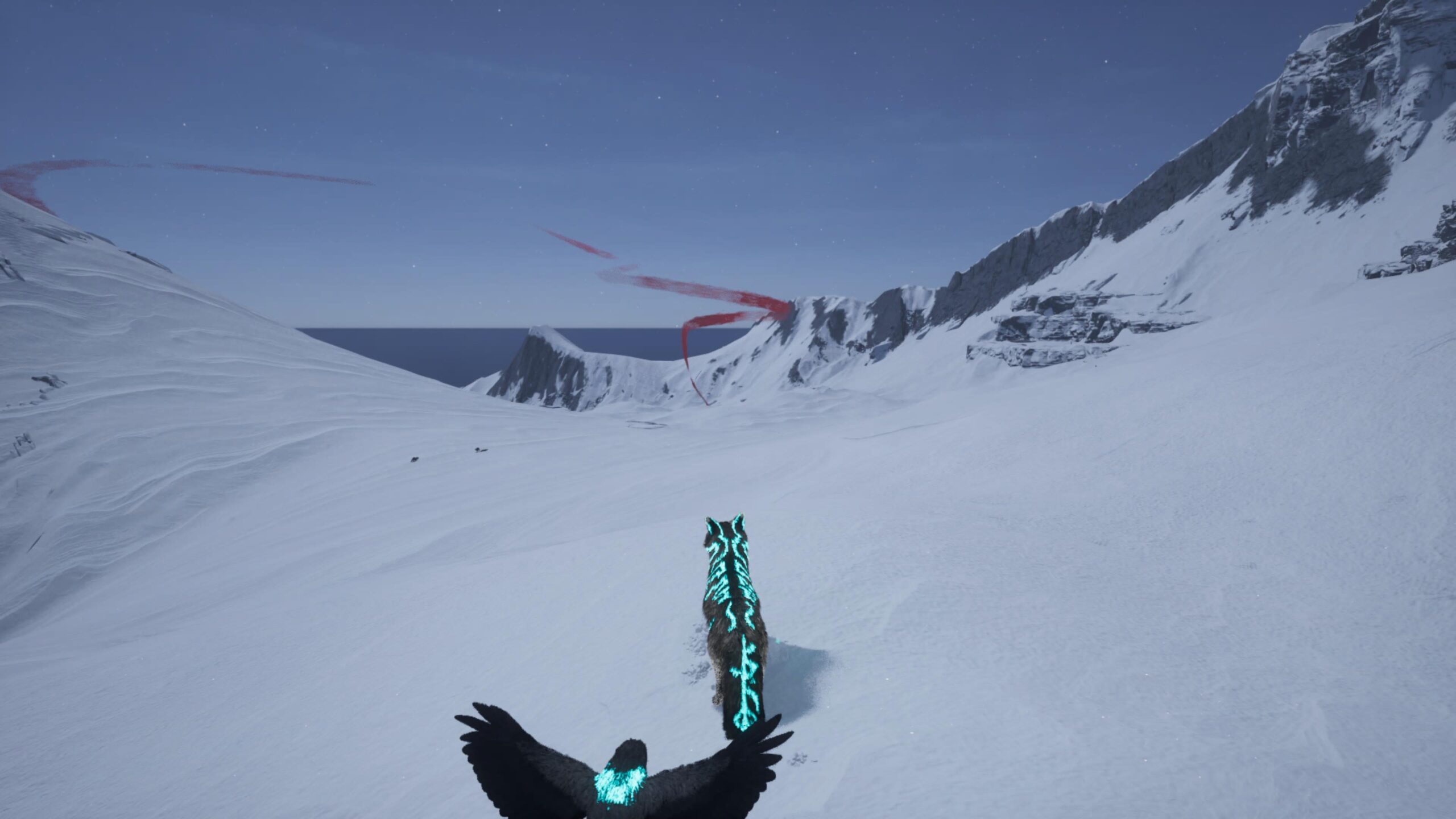
This game surprised me in a lot of ways. Unlike Bayonetta, it’s a low slower paced. Unlike many action/adventure games, it’s focused more on puzzle solving. Unlike most Nintendo titles, it has what initially feels like a complicated and confounding control scheme but trusts that its players will put the pieces together. It drops the series’ relatively realistic visuals for a storybook painter feel while also dropping as much of the over the top bombastic elements as a game about witches, demons, and fairies realistically could. If anything could be an anti-Bayonetta yet still exist in the IP, I suppose it makes sense that this is what it would come out being.

The control scheme is going to be the thing that makes most people pause when they look at this and go did Nintendo really allow this? It’s not bad, but it’s decidedly weird. The left analog stick and shoulders control Cereza. The right analog stick and shoulders control her demon. This is active at all times and a camera restriction forces them to be within a reasonable distance of each other. The thing that is unusual about this is that in an action game, splitting focus is typically wildly dangerous. I’m not going to say that I didn’t get into situations where I totally lost a character on screen, because it happened. However, I was often moving the two as a unit because of the mechanics that were chosen.

Cereza’s not really a combat unit in this case. What her powers are focused around is crowd control. She increasingly becomes able to stun lock one to multiple units throughout combat via her magic. This then lets her demon deal out extra damage, or in a lot of cases for my play style allowed me to focus damage on units that were not crowd controlled. The demon also has elemental powers to help specific situations – rock to break shields, water to kill fire, etc – so most of my time in combat was really a minimal portion of my brain dedicated to using my crowd control, then most of my brain focusing on demon attacks.

It surprised me how often this just worked pretty well. The game generally didn’t toss a ton of units at you at one time so losing focus on one of your characters wasn’t generally a huge issue. High danger situations for attacks typically involved boss fights, and in those cases there are lots of tools to deal with them as well. You can re-summon the demon to Cereza at any time and with later upgrades allow Cereza to move quicker when they’re together. This is really what made boss fights click. In those cases, the focus was always just the boss and playing around with their tells to stay out of danger vs using the right elements to open opportunities for Cereza to stun them and get damage in.

Ultimately it feels like combat was crafted for the control scheme rather than around it, and I get that feels like a vague distinction. In this case though, the combat is very clearly tuned toward a situation in which the player doesn’t have as good of focus as usual, so all the tools in play are to reduce the speed of needing to think. CC gives the player more safety and time. Damage buffs reinforce the use of CC. Limited enemy counts allow you to focus both characters on one spot with independent movement. Element requirements give you something specific to action upon that doesn’t involve a change in focus. It is all crafted to enhance the experience rather than a 2.5D combat experience being grafted into a weird control scheme.

The rest of the experience surrounding this is just kind of the cherry on top. There’s a decent upgrade system here to grant the player some feeling of a power curve that they can choose the direction of. There’s some light Metroidvania elements in the environment to make retraversal both beneficial and fun. There’s some light time attack elements to optional dungeons to give some side content to hit. There’s a good mix and rhythm to changes between puzzle sections and combat sections to keep the player engaged throughout. It all just kind of works well. Is it anything mind blowing? Not really. It’s all just kind of done at a high enough standard to not be a detriment, and that’s perfect for what it is.

However, this does bring up a thought that I had the entire time. Why does this game not have couch co-op? All of the entirely practical development reasons for couch co-op to not exist – screen real estate and performance with split viewports, game balance, mechanical oddities, etc – have been dealt with here. You always have two characters, they always exist independently, their UI elements are always present on screen, and there are mechanical reasons for the camera to be forcefully restricted to keep them nearby. Couch co-op is literally a drop in for this design. There are a tiny handful of spots that don’t have both characters playable for story reasons, but even then the mechanics of one or the other player having a short solo experience are fine in context for people playing together. Co-op simply just does not exist, and it’s a shame. This is a theoretically great title for people to co-op since you have two characters with two wildly different mechanic sets to allow players to choose the play style – offensive or defensive – that they prefer.

I played this on a whim and came away happily surprised. I’m generally a fan of the Bayonetta series but this was obviously something very different. Where Bayonetta is thematically as anti-Nintendo as they come, this game is for gameplay reasons as anti-Nintendo as they come. However, despite that it all works very well which leads me to believe that this was more carefully considered than I’m imagining. The controls are relatively complex but the gameplay feels tailored toward them. It ends up being an experience that feels like a well thought out package, rather than a game grafted onto a weird control scheme. It ends up just being a really pleasant surprise.

Game Ramblings #206 – Indiana Jones and the Great Circle

More Info from Bethesda

  • Genre: Action/Adventure
  • Platform: Xbox Series
  • Also Available On: Windows, PS5

If I were to really explain what this game is I’d probably describe it as a very good stealth game, but an extraordinary Indiana Jones game. Detached from the license this would still be a fun game in its own right. However, its attachment to the Indiana Jones IP seems to have steered it in such a perfect B-movie direction that it elevates it more than I would have expected.

Looking purely at gameplay, this is a winner on its own. I’ve said it before, but I am an absolute sucker for games that let me stealth the entire time, and this is absolutely one of them. The game didn’t even let me have a gun until at least 5 or 6 hours in, at which point I promptly got killed by the next guard with a gun and decided that was not the way I wanted to approach the game. That’s not to say I didn’t ever use guns, but more often than not my play was to turn them around and use them as a stealth melee weapon anyway.

The game just gives you so many good tools to allow melee/stealth to be the way to play. Visibility itself is incredibly fair, with an indicator over enemies when they see you that gives you a chance to get into hiding. It eliminates one of the core problems I have with some stealth games where things off screen or slightly in less obvious lines of sight break stealth. Areas that require stealth generally have a ton of spots to break line of sight, whether it’s direct line of sight breaking, small alcoves to hide in, or boxes to hide behind. Noise isn’t a huge factor, so you can focus on positioning. Basically, as long as you don’t sprint or use the whip you’re probably good on sound. Stealth kills are fast and efficient, and you can hide bodies (or frankly, just leave them and use them as a distraction for other guards).

This is then helped by the disguise system where each world hub has its own outfit that you can find themed to the area. In Italy, it’s a fascist uniform. In Giza, it’s themed to the occupying Nazi’s desert uniforms. In Asia it’s themed to the more jungle-friendly uniform of the occupying forces. What these inherently do is lower the danger of the entire hub and let you easily get through areas that required a ton of effort before, but not for free. You have to go into dangerous areas first to find them and are given the reward of free reign. It’s a perfect way to encourage exploration beyond the golden path.

That said, when I did screw up stealth melee combat was also simple but satisfying. Melee combat is your basic setup of weak attack, strong attack, block, and dodge. What it does have is a fairly good rhythm. You don’t generally get overloaded with enemies, so melee encounters are generally 1v1 or 2v1 at most. Enemy tells are fairly well telegraphed, giving you time to do a defensive maneuver before laying in for a few attacks. Weapons themselves are also easy to find and pickup in the environment, leading to what is usually a pretty entertaining cat and mouse game of getting in a couple attacks, seeing if I can find something stronger than my fists, blocking attacks, then reaching out and bonking someone over the head with a melee weapon. Sometimes it’s a hammer, sometimes it’s a guitar, sometimes it’s a toilet brush. Luckily even in the comedy moments, the melee weapons are still leaning towards unrealistically effective to prevent negative outcomes.

That little thing there – no negative outcomes – is hugely important to how the overall balance of the game played out. Generally speaking, stealth is totally safe and won’t pull other guards. Melee is fairly safe and only pulls guards nearby. Gun fire will pull guards from everywhere. It basically lets you play the game how you want and at what level of danger you want. Stealth is slow, but if you like that type of game it totally works well here. Melee is a bit quicker overall but adds some danger but is totally safe if you’re good at dodging. Gunfire is by far the quickest option but adds a lot of inherent danger to the experience. Generally I would expect that a game wouldn’t be able to do a great job of balancing such disparate gameplay styles but my experience was that they all worked fairly well as needed.

The game does like to remind you that it’s an Indiana Jones game though, and it does it very often. Obviously you have Indy’s whip, and it’s effective here. It can be used as a hookshot for swinging over things. It can be used as a rope to climb up walls when you’re diving through a tomb. It can be used as a weapon to stun enemies. It’s all the things that you would expect in terms of gameplay mechanics to come from such an icon of the series.

However, it’s also the comedy and sci-fi bits that you see scattered around. It’s the twang of a guitar as you whack it over someone’s head or picking up a toilet brush because it’s the only stealth weapon available. It’s enemies setting off traps to their own detriment, leaving Indy safe and healthy. It’s the absolute over the top acting of the Nazi side of the story straight out of Raiders. It’s the fact that the story has teleportation across the world as a core story beat that reminds you that this isn’t grounded in reality. It’s the fact that there’s a pre-Christian race of giants that somehow has its hands in every ancient civilization known to man.

It’s the sum of all these things that truly makes this a great Indy game. It’s not just going full circle and doing a first-person Tomb Raider. It’s Indiana Jones through and through.

The sum of all this is that a great game is already there that is then elevated by it taking the Indiana Jones IP seriously and using it to its advantage. Put this under any IP and it scratches my stealth itch but the way they integrated the things you expect out of Indy brings it to an easy recommendation for me.

Game Ramblings #203 – Garden Story

More Info from Rose City Games

  • Genre: Action/Adventure
  • Platform: Switch
  • Also Available On: Steam, Xbox

There’s some games that I finish and I’m really not sure why. This is one of those. It’s totally a small indie experience where it pulls a lot of things from existing titles at a smaller scope so a lot of the systems don’t feel quite up to scratch. However, it’s got a certain charm that just kept me in the game and it has such low user friction that nothing is ever really stopping me from moving forward. As a result, I just hammered straight through and before I knew it I was done.

Given the similarities to 2D Zelda games combat will obviously be a big focus. If I look at this from a purely combat perspective it really isn’t doing much special. It has a bunch of weapons but in a lot of cases I found them to all be a little off. The first weapon you get is a sword analogue, but if I put it up against a Link’s Awakening sword the hit boxes feel inconsistent, causing a lot of misses. Later in the game you get a sickle that hits twice, but the speed of attacks with it always felt slow enough to not be valuable over other choices. The weapon I ended up using a lot was a parasol due to its rapid attack speed, but it had such a narrow hit box that I was constantly missing smaller enemies by literal pixels.

It was always little things like that that made it feel off compared to the more traditionally AAA titles in this style of game. It wasn’t helped by the lack of secondary items in combat, so for the most part combat was attack spam and dodge. That said, it being a compact indie meant that this was over before it became a problem for me. I was simply finished.

This also extended to the metagame systems in place. There’s a day-night cycle that allows you to do daily missions, but the daily missions are so simple that I was often finishing them before the morning segment of the day. That let me just move the plot forward regularly. There’s a building/crafting system, but it so infrequently required me to build something story-related that I simply skipped it under most circumstances. There are weapon upgrades that require you to farm items, but they often require so few resources and the resources are so easy to get that I never really felt held back in progress. There are side quests that exist and give rewards, but again they are so easy to complete that they might as well just get done but the rewards are so low impact that skipping them is irrelevant.

Again, this is typical of small indie. The systems are there and not damaging to the experience but if they weren’t there they also would not hurt the experience.

So then why do I play indie games like this? Because they’re charming as all hell. The entire premise of the game is that you play as a young grape working as a guardian of a realm of other fruits and vegetables by killing living rot. It’s such a complete theming package from the level of characters all the way up to the world and it all just feels right. You’re helping heal towns so they can get cleaner water or grow plants and ultimately so new plant people can be born on the literal vine. This is the charm that you get from small budget indies. Yes the games may be shorter, but in doing so they are limiting their content scope and allowing themselves to do unique things with theming that you just won’t see at higher budgets.

I suppose ultimately this isn’t really a rambling about much. The game itself could have been any indie game. It probably feels like I’m picking on this specific one but it just happened to be what I pulled at the time. I don’t know that I’ll ever be in a position to make indie games because frankly I enjoy working on larger things. I just love that these things exist in general. I can pull good indies off the shelf and just play them and just finish them. There’s rough edges, there’s missing content, but they’re charming and fun. They’re finishable, and that’s huge.