
More Info from Brace Yourself Games
- Genre: Rhythm RPG
- Platform: Switch
This is definitely one of those games that I assumed would work when it was announced, but you can never really be sure. Outside of the obvious rhythm gameplay of Crypt of the Necrodancer, it’s not that far off of Zelda. It’s still basically an action RPG with a bunch of inventory. It still encourages you to romp through effectively dungeons to progress. It’s god a damn good soundtrack. But still, this is Zelda. Somehow this has come out and feels great, feeling like each of their series at the same time without losing anything in the process.
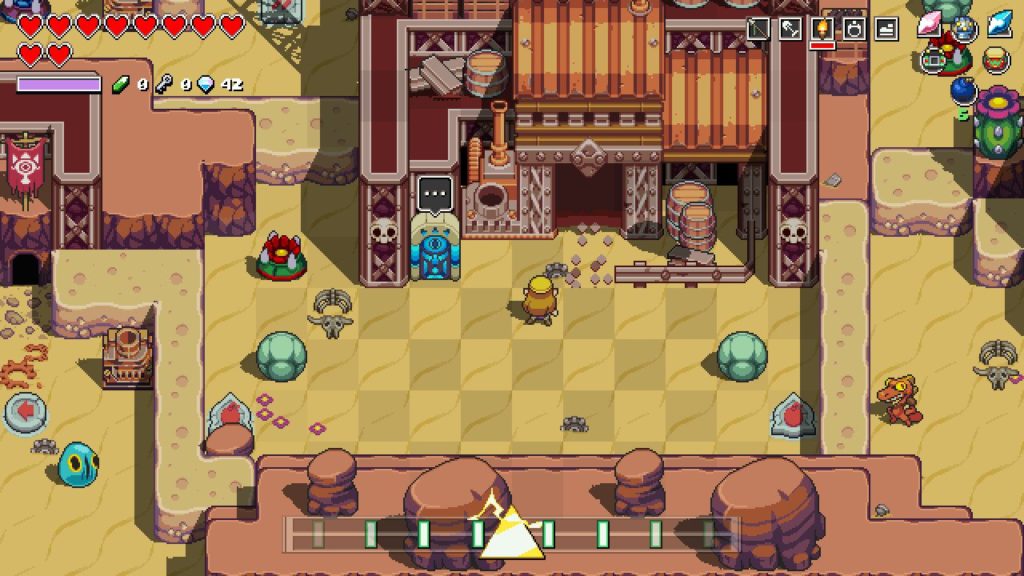
The screenshot above does a good job of visually laying out how much things are the same, but totally different. On the surface, this looks like a 2D Zelda-series RPG. There’s some familiar looking enemies, a normal item wheel, hearts, rupees, keys, a slightly angled camera viewpoint. However, that little bar at the bottom and the specifics of the grid are where you start getting the Necrodancer gameplay.
Like Necrodancer, any movement or attack is most effective when done on the beat of the music. At the same time, enemies also move and attack on the beat, so you’ve got a play around keeping on eye on what you’re doing and an eye on the enemies to make sure you aren’t getting trapped. While it’s technically a turn-based game as a result, the practical pace is really close to an action RPG and it ends up straddling the line between familiar and new really well.
Combat is also a bit different than expected for a Zelda game, mostly due to a large unexpected variety in ways to attack. Each character that you control has its own specialty, and you can swap between Link, Zelda, or Necrodancer’s Cadence at any time once you reach them. You’ve still got your Link-style broadsword attacks that hit a wide line in front of the player. However, you can also use spears for extended range straight attacks, flails for L-shaped AoE style attacks, or daggers for real close-range combat. Even on defense you have more variety than just Hylian shields, with characters like Zelda able to activate a projectile-reflecting magic shield if timed correctly. You can even add modifiers to your weapons like health drain or poison to add some additional flexibility to your loadout.
The positive outcome of all of this is that I really spent time modifying my gear loadout and character selection based on what I knew would be most beneficial to me at the time. Early on I went more spear-focused in order to keep enemies at a larger range from me. As I gained some hearts and defensive items, I started moving into broadswords in order to take out more than one enemy at a time, even if it allowed them to get closer at range and occasionally hit me. As a whole it ends up in a battle system that has tremendously good flow due to the rhythm focus, but still has a ton of ways to play to your strengths at any time in a way very reminiscent of high end ARPGs.
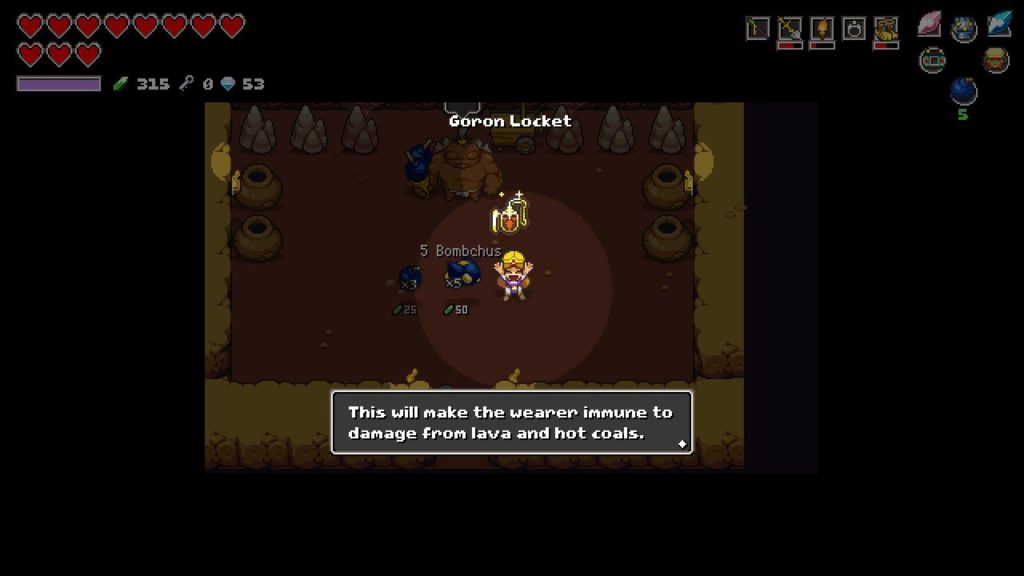
It definitely helps that there’s a lot of familiar things in the gameplay though despite all the changes. You’ve still got to save up your rupees to buy things in shops. You’ve still got to visit Kakariko Village to move forward. Hell, you’ve still got to get lost in Lost Woods as part of your quest. However, through it all the focus on rhythm gameplay really feels like a fun fresh take on the Zelda formula.
And oh boy that soundtrack. The Zelda soundtracks on their own are really special, and really familiar to a lot of gamers. Living up to that alone is something that shouldn’t be taken lightly. However, the need to really hit a music pace that allows for a good gameplay pace added a level of technical need that the team really nailed. The familiar Zelda themes are morphed into new genres – whether it’s jazzier takes on the main theme or Song of Storms, or more dance-based overworld themes, or even rock-focused takes on the Gerudo Valley theme – that really push a fast gameplay pace while still being fantastic takes on familiar themes. This is the rare game where the soundtrack alone is worth the price of purchase, but you still get a great game on top of it.
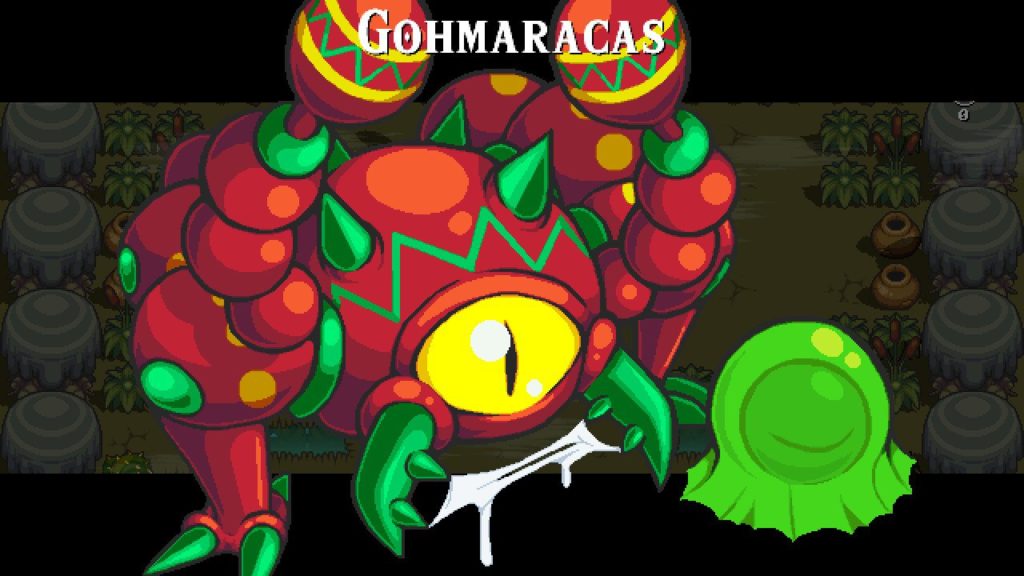
It also helps that the bosses are punny as hell.
This is definitely a game out of left field. While Necrodancer on its own is a fantastic game, the fact that Nintendo allowed for the Zelda license to run wild in the Necrodancer universe. What ends up coming out of it is something that just works fantastically well – as long as you’re comfortable in the rhythm style. Is this going to be a replacement for the upcoming Link’s Awakening remake? No not really. Is this better than I could have hoped for as a way to get more Necrodancer content? You better believe it.
