Shelved It #18 – Halo Infinite

More Info from Microsoft

  • Genre: FPS
  • Platform: Xbox Series X
  • Also Available On: Windows, Xbox One

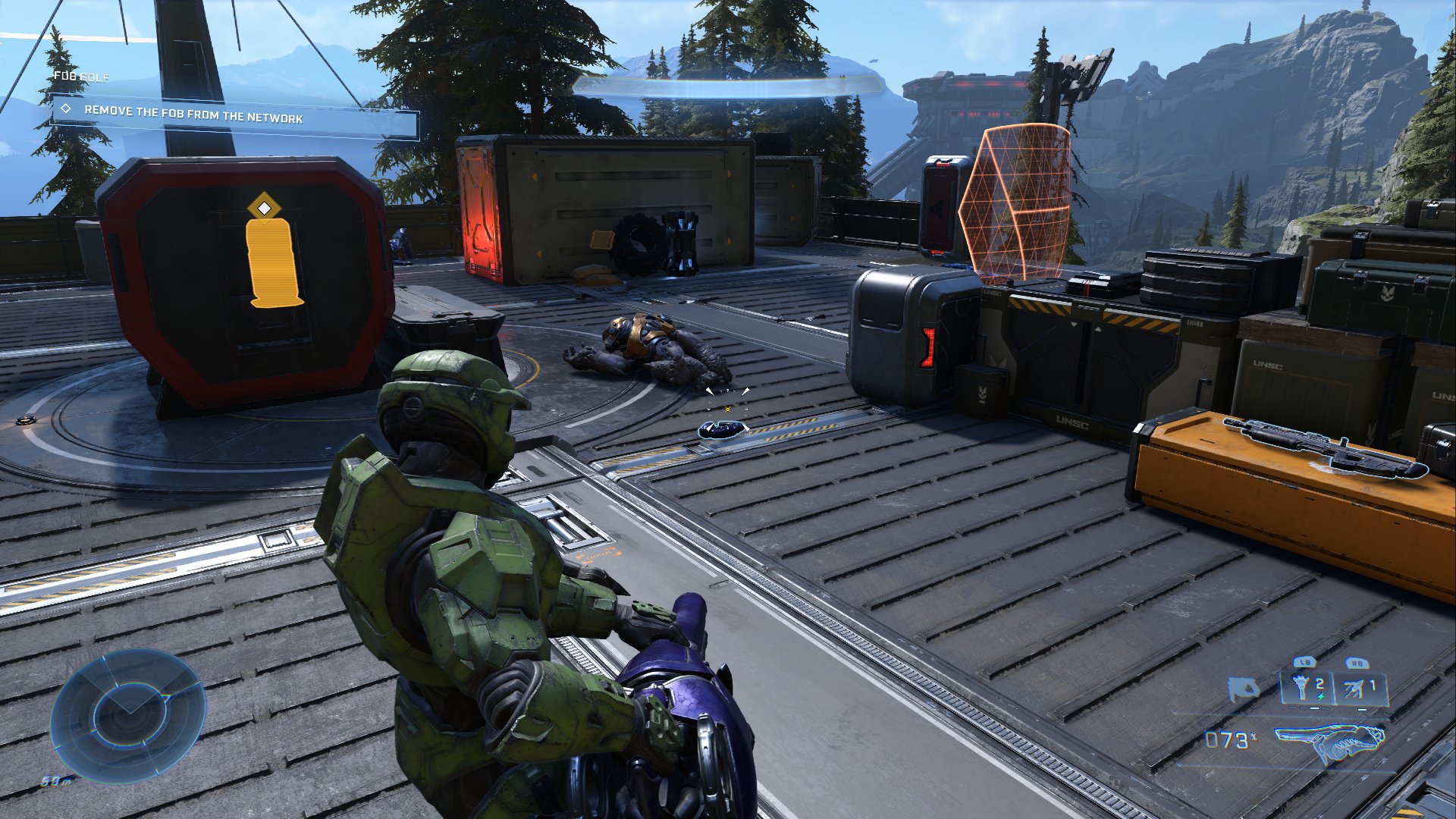
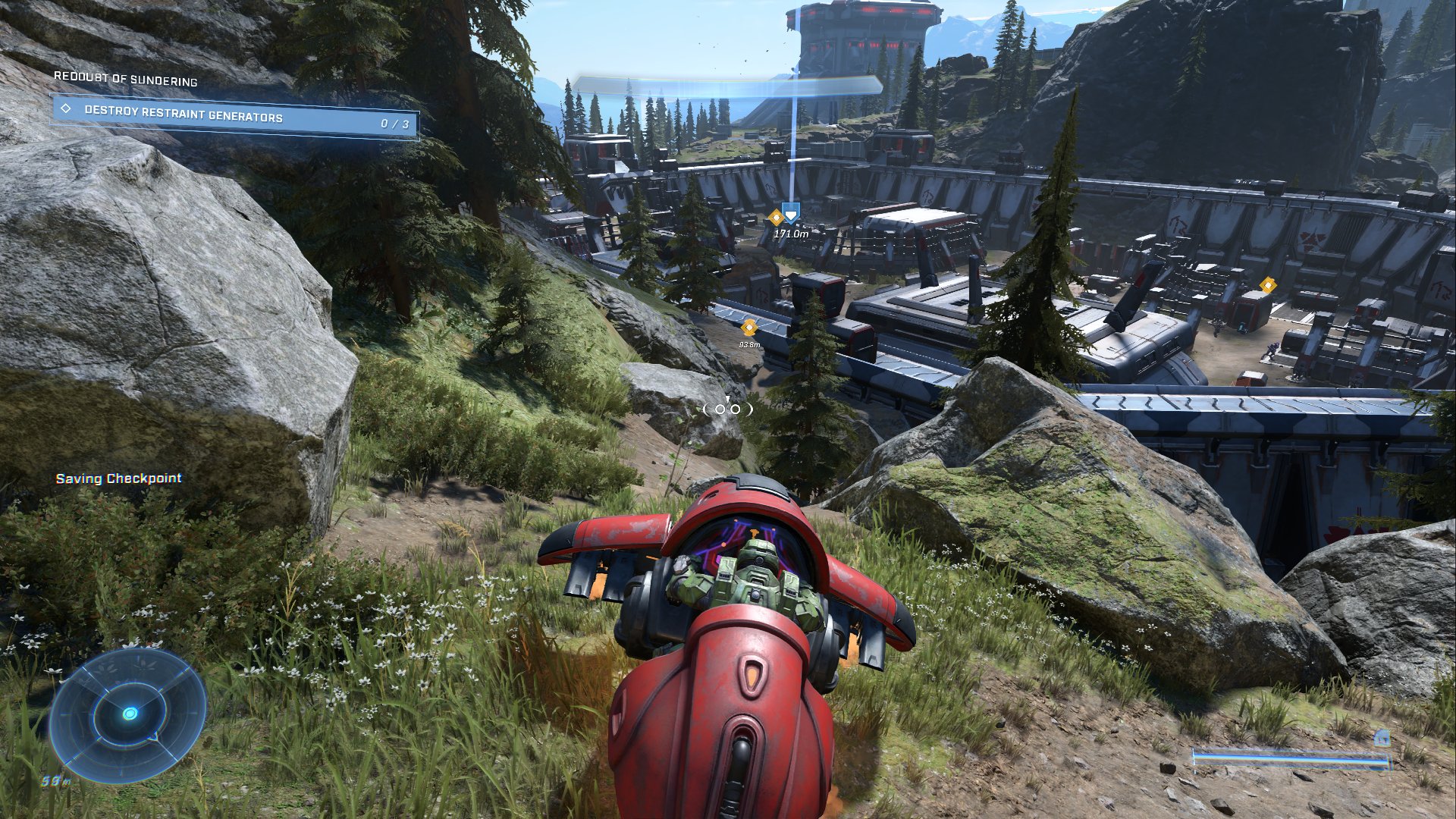
This feels like a game that was searching for an identity that it never found. It’s very clearly Halo, but it tried to push too far into the Ubisoft open world formula, and it doesn’t really feel like it made it there. While the shooter part of it works really well, it felt dragged down by the rest of the metagame in the half dozen or so hours I put into it to the point where I just didn’t feel like picking it back up.

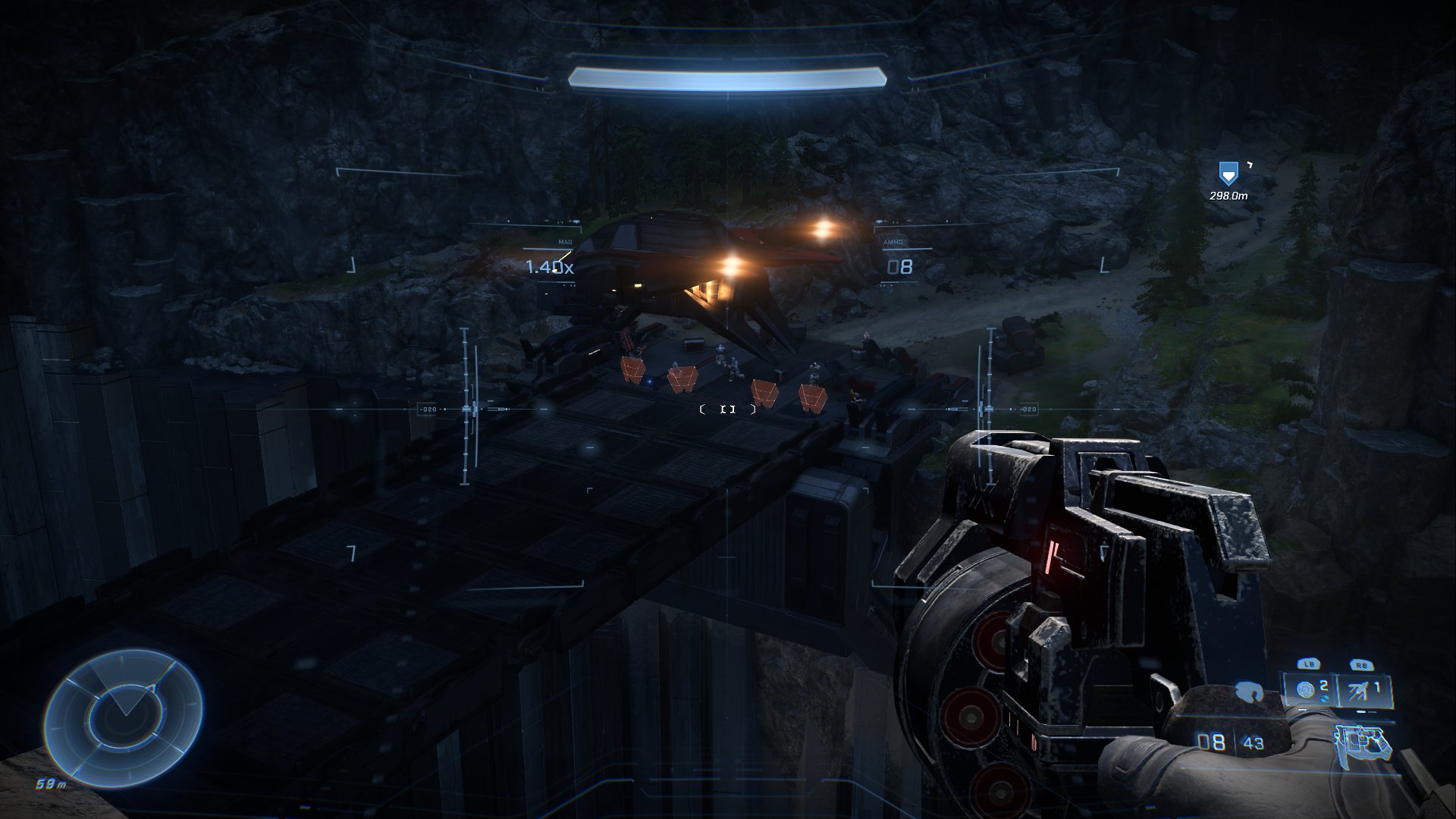
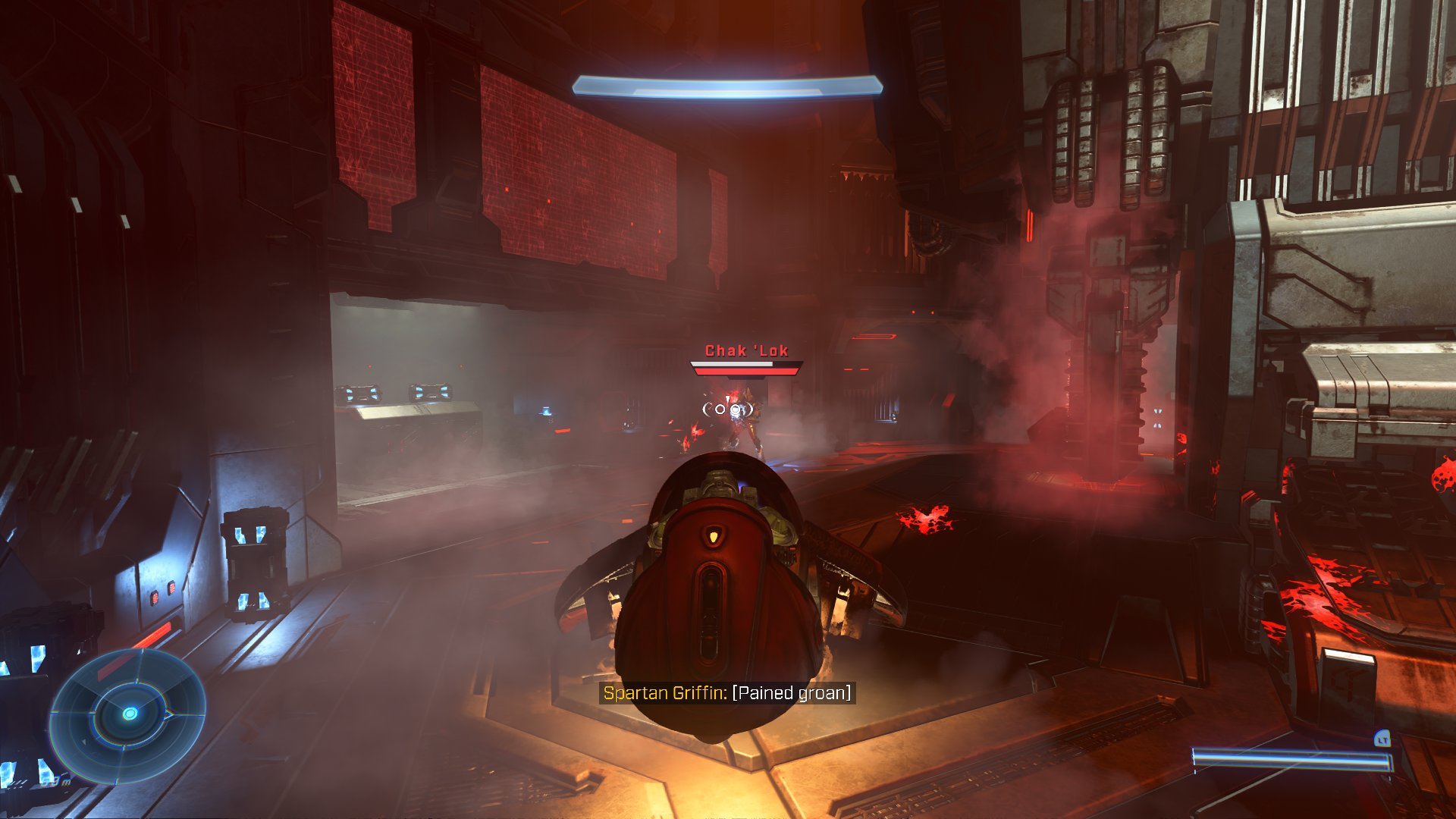
The core mechanics of this game are still as good as ever. Ya I get if a console shooter isn’t your cup of tea, but for what it’s aiming for it’s still incredibly fun in moment to moment combat. The guns have really clear archetypes and you kind of fade into the ones that you like to play with the most. Aim assist is just present enough to reduce the frustration of aiming on a gamepad. Running enemies over in vehicles is still fun. The Ghost being as small as it is meant that I could pretty much bring it anywhere, including into encounters it didn’t belong. However, it’s the enemies that still work the best.

Halo enemies always had really clear purposes, and that still works here. Grunts are still your fodder and effectively die in one hit, but they fit the role of distracting you well. Jackals still have the pain in the ass shield, which encourages you to get into melee range or use explosives to clear them out. Larger enemies like Brutes encourage precision in order to kill them faster via headshots. New enemies like the Skimmer add a level of verticality to throw you off just scanning at ground level. In general, the encounters are built well around sprinkling a few different types of enemies to make you approach them in varied ways based on the environment. In a vacuum it works well, and in past games it’s been able to be balanced against slow growth due to the linearity of the experience. That is all gone here.

The open world nature of this entry just feels like a mistake. Rather than having crafted encounters along a relatively linear path, you’ve got random encounters that constantly pop up going between points. Rather than the core gameplay being progression through a story, you’ve got a lot of miscellaneous stuff scattered about. The problem is that there’s only so much you can do with this kind of gameplay. It’s Assassin’s Creed or Ghost of Tsushima without the variety. You don’t really have the ability to do large scale traversal puzzles like that series. You don’t really have the choice to do stealth-focused gameplay or action-heavy sequences as a distinct choice. You just have guns blazing.

Where this ends up dragging is that every encounter feels the same. As you’re going from story point to story point you’ll inevitably see a bunch of encounters. However, it all bleeds together. You’ll see your half dozen grunts, a couple jackals, and a couple brutes/hunters/elites. Rinse and repeat. Between story spots you might see a half dozen of these. You’ll also see typically a handful of side quests – rescue a squad, destroy a base, kill a target – that also just have the same combat. Because the open world just has so much ambient combat, you quickly reach a point where it becomes a chore to traverse, rather than fun to traverse.

Within a pretty short time I basically just started hijacking the first Ghost I could find and running around guns blazing. From a practical standpoint, it made encounters much easier to skip because I could just zoom right on past. When I got to an encounter I did need to engage in, it also meant that I was in a moving resource with infinite ammunition and pretty predictably high power. From a min/max standpoint it was just far more effective. However, whenever I didn’t have a Ghost the game instead just felt like a chore. At that point I knew this one wasn’t working out for me.

It also ultimately didn’t help that there’s no co-op. I’ve played almost every entry in the series exclusively in co-op, so not having that is a huge drag. I could see this style of metagame working well in co-op because I could log in with the same group of people, run around for a while doing whatever as we shoot the shit, and over time we could progress through the game. Doing repetitive things over time wouldn’t matter as much because that’s kind of not the point of just having fun playing games in that group setting. Not having co-op at launch – although it’s apparently coming soon™ – is a baffling decision for a series built on co-op stories and multiplayer gameplay.

Infinite just kind of feels open world for the sake of being open world, and it feels to me like an anchor around the game’s neck. The core shooting mechanics are still fantastic, but when you are doing repetitive ambient encounters instead of crafted linear segments, there just doesn’t feel like any sense of progression or growth. Every encounter gets kind of samey, and over time I just felt like avoiding them entirely. For a game built around combat, not engaging is a weird thing. In all likelihood I’ll revisit this when co-op finally launches, but for now this one feels like a swerve that isn’t working for me.

Game Ramblings #159 – Tiny Tina’s Wonderlands

More Info from 2K

  • Genre: FPS
  • Platform: PS5
  • Also Available On: PS4, Xbox One, Xbox Series X|S, Windows

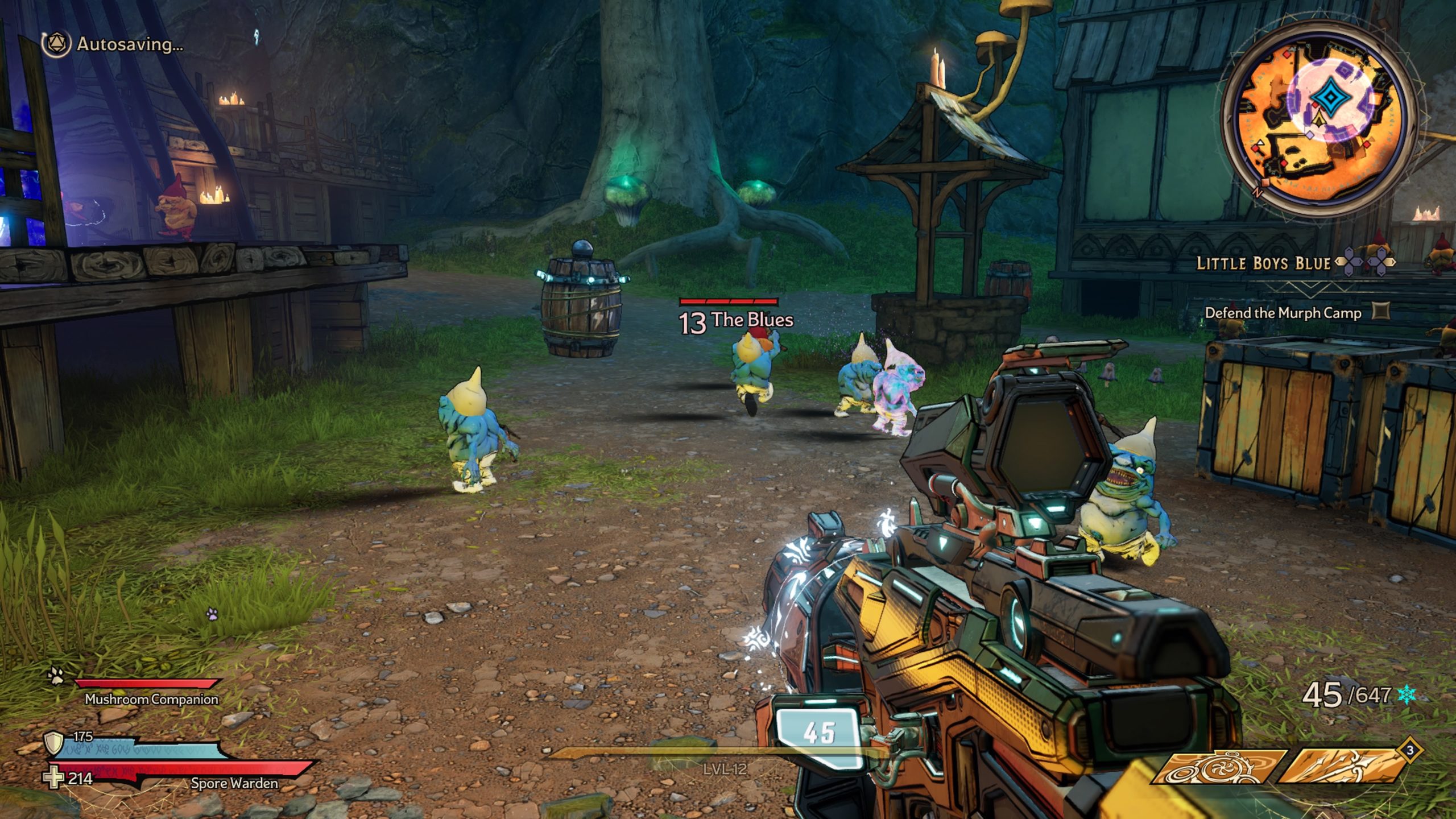
It’s been a long time since I played a Borderlands. I loved the first couple, quickly fell off The Pre-Sequel and altogether skipped 3. However, this one pulled me back in with a somewhat more unique setting thanks to them diving full into Tiny Tina’s shenanigans. I’m not going to pretend that the writing felt like it was aimed at anyone older than 12 years old, but boy does the game loop still just work.

If I was to point at one thing that made this work so well for me, it’s that the typical Borderlands gameplay just slots right in. Those games already had elemental attacks, so there’s your fantasy magic. Those games already had alien creatures, so fantasy-focused characters just slot in. Those games had the sirens, so mages just fit in place. The core was there, so even in a completely D&D focused setting it all feels entirely familiar. Guns are perhaps a bit weird, but whatever it’s D&D. I’m sure someone has made it work.

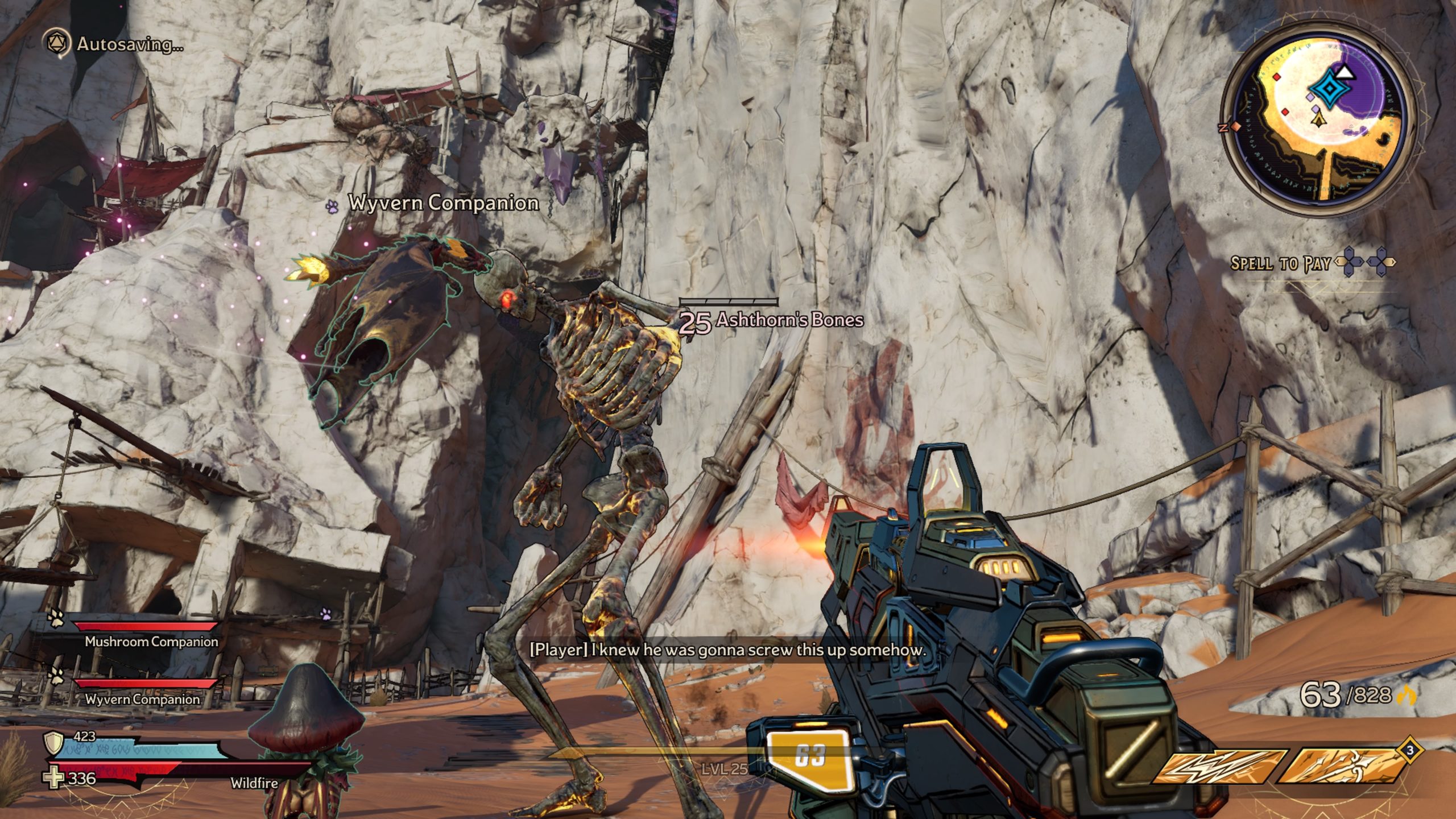
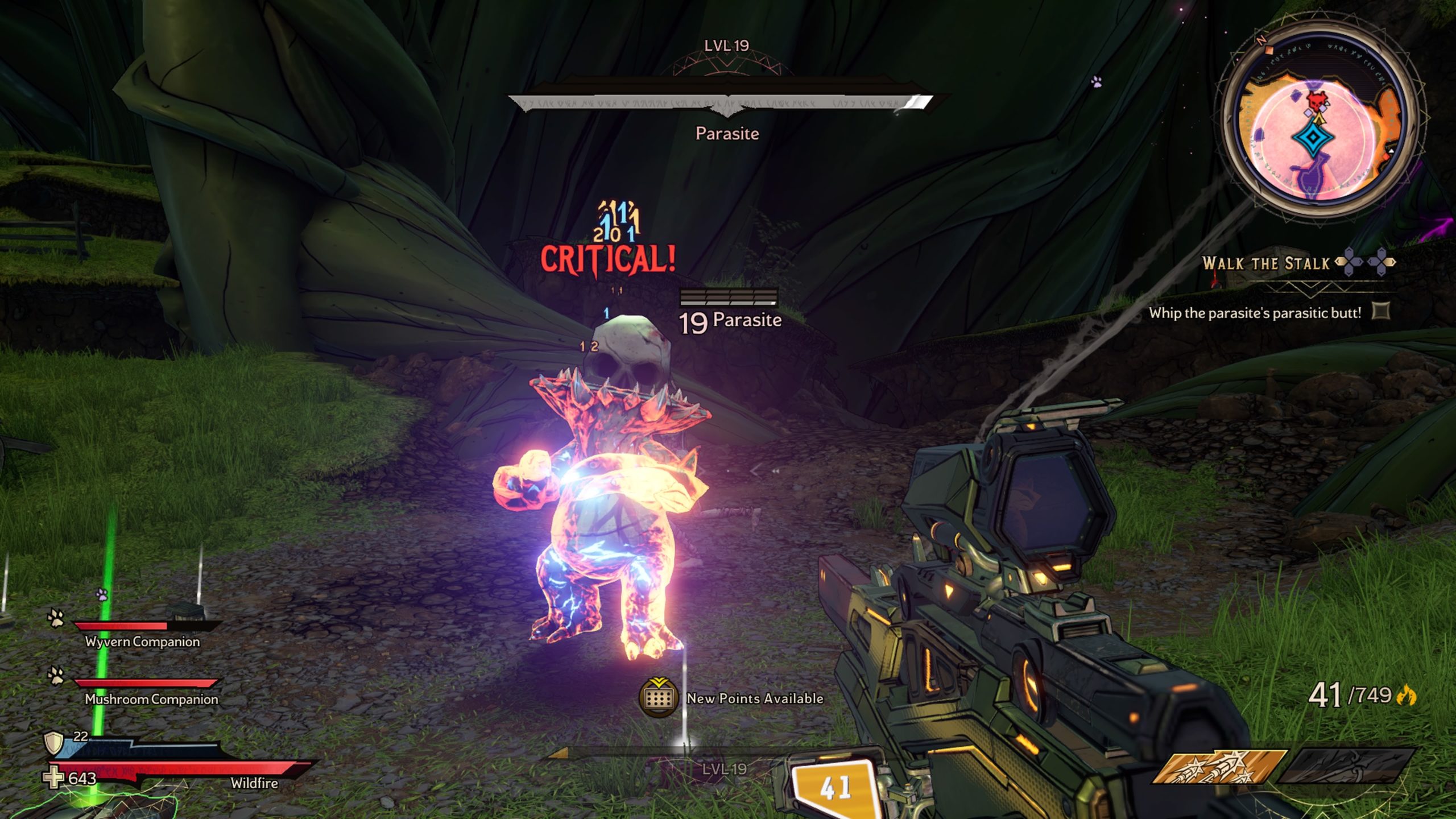
That’s not to say that things felt stale though. The way I built out my character felt unique in a way that I don’t remember being able to push in previous games. I ultimately went with a two-class combination of the Spore Warden and Clawbringer class archetypes. The first of those is a poison summon-focused class with an emphasis on critical hits. The second is a fire/lightning summon-focused class with an emphasis on damage mitigation. The obvious thing to notice there is that I’ve got three elemental damage sources already, but it’s more than that. The crit + damage mitigation let me do silly things with stats.

Ultimately my character ended up being a glass cannon. All of my stats went into three things – crit chance, crit damage, and elemental damage. I did nothing with any mitigation stats so if I took damage I was more often than not dead. However, my increased crits meant I could save myself in almost all situations extremely effectively with a kill while bleeding out. If not, my mushroom summon could also revive me while my secondary wyvern contined to dish out damage. Also, because my summons had three elemental types I could build into a fourth (in this case, health drain) that helped me stay alive at a higher rate while still hitting enemy weaknesses. I furthered this by exclusively picking shield wards with low health pools but quick recharges, where my goal was to have its recharge be less than 2 seconds. Basically, I could probably take one hit but would need to be getting out of harm’s way, but could quickly rejoin the fight afterwards.

It’s a build that for me really hit into the strengths of how they setup the classes for this game. They really kind of just turned the ridiculousness knob a bit more and pulled out some unique combos that feel like they’re pushing the mechanical boundaries for the game in fun ways. It let me mould my gearing around my class setup, and in this case allowed me to treat the game as more of a cooperative experience despite playing in single player. It’s the kind of thing that really is truly unique to the Borderlands series.

I will give a shout out to their overworld change as well. Getting rid of vehicles is one of the best things about the metagame here. Rather than travel through miles of garbage to get to your main story locations, you have a relatively nice area to explore. It’s got a lot of side quests and collectables and combat encounters to do. However, it’s also much faster to get through. It’s a fairly common improvement that the game has shown. Everything here is much tighter. As an example, the side quests feel much better integrated into the story’s golden path, so you can do them as you wander through instead of going out of your way. They’re also generally more often substantial side stories rather than collection quests. The whole experience is very much Borderlands with less padding, and it’s to the benefit of the game.

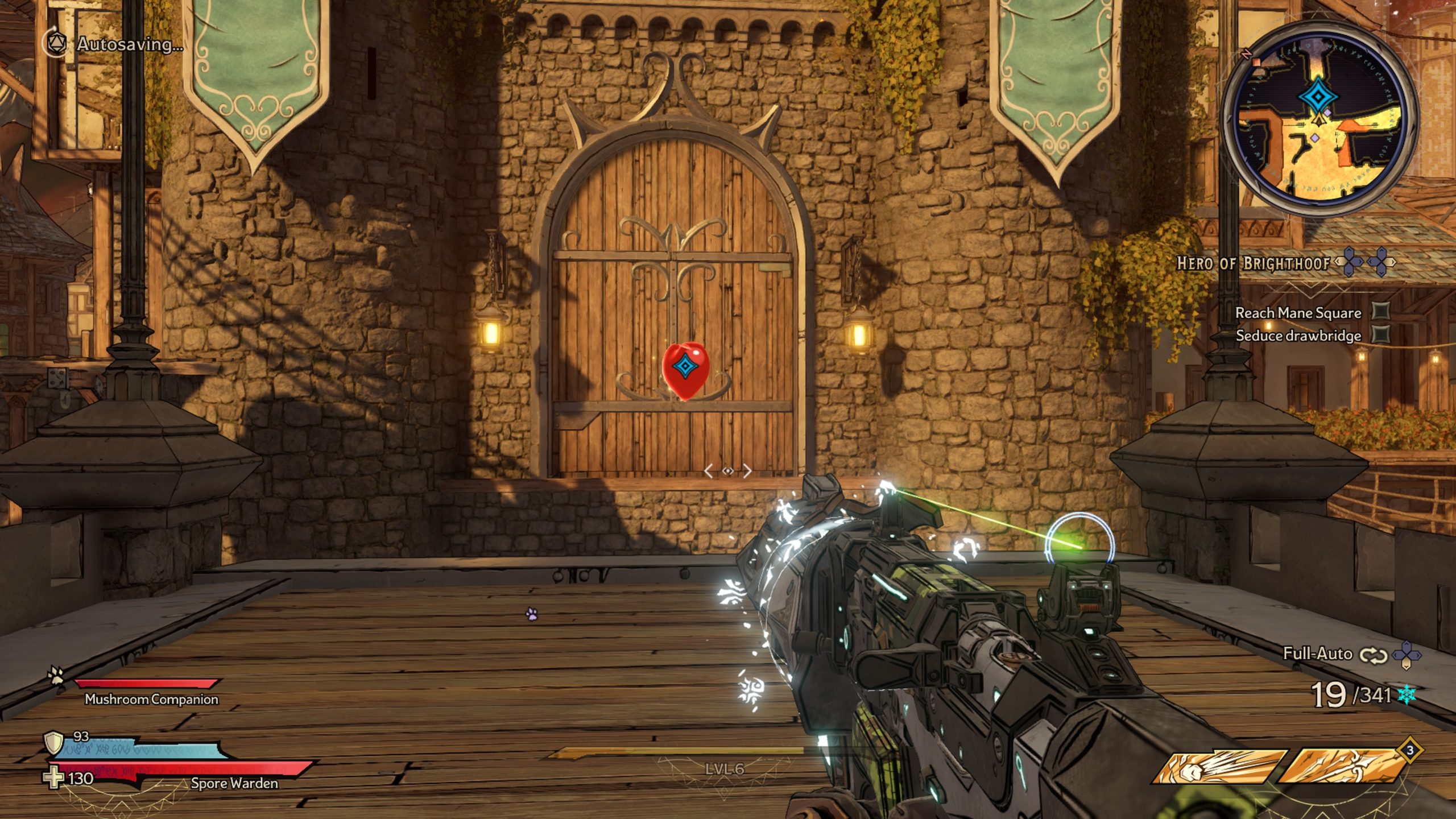
That said, the screenshot above in which you seduce a drawbridge is indicative of my main problem with the game. The comedy just feels immature. Some of it is funny, but I found myself groaning instead of laughing more often than not. In a lot of ways, it really just made me feel old…..which might be true, but it’s not something that I ran into in past games. It’s things like the queen of the land being a unicorn named Butt Stallion, or seducing the drawbridge, or Torgue’s cursing being bleeped while being far more common under the guise of trying to stick to a teen rating. Rather than trying to hit a rating, it just feels like it was written for that level of audience. It was never egregious enough for me to not want to play the game, but the writing definitely was not helping the game for me.

This game feels like it’s going to end up on my long term short list. Borderlands 2 filled that role for a long time as the game I could hop into and just play for the sake of playing. Diablo 3 filled that role for a while, especially on the Switch. Of late that distinction has gone more towards games like Forza Horizon. However, this one may take over for a bit. It’s just such a well refined gameplay loop that it’s easy to hop in, and for me it’s made the series feel fresh again. In good news, gear hunting after the first play through also means I can just ignore the comedy and gear grind, which is probably what I wanted anyway.

Game Ramblings #113 – The Outer Worlds

More Info from Obsidian Entertainment

  • Genre: FPS / ARPG
  • Platform: PS4
  • Also Available On: Xbox One, Windows, Switch

I’m not a huge fan of the recent Fallout games, so it may seem weird that I decided to play the spiritual followup to New Vegas. However, it was never the world or story I had a problem with. It was entirely the shooting mechanics. The Outer Worlds from the outside seemed like it was at least attempting to play more like a typical shooter that has RPG mechanics, rather than an RPG that uses guns. This definitely leans closer to a game I can enjoy, but it’s not without its mechanical issues that knock it down a few notches.

The first-person Fallout games never really made sense to play without using the VATS system. The straight shooting mechanics were pretty garbage, and leaned heavily on stats in ways not typical of FPS games, while the VATS system provided a much more accurate way of figuring out your chance of hitting things without having to deal with aiming. The Outer Worlds on the other hand is very distinctly an FPS with RPG wrapping. Shooting is much more of the core experience, with only a bit of an ability to slow down time for limited periods to help with aiming. In that regard, this is definitely a much smoother shooting experience.

However, that’s not to say that I found it to be a mechanically good FPS, especially with respect to playing it on console. At a base level the weapons generally feel kind of lifeless in a lot of respects, with pretty weak recoil and camera shake. As an example, the difference between high damage pistols and rifles or mid damage automatics is pretty irrelevant, so I tended to just go for highest single-shot damage and spam fire since I wasn’t going to deal with a typical single-shot high damage doom recoil.

On a gamepad, the feature set there was even more disappointing. They have the typical trappings of a gamepad shooter with some amount of aim acceleration, target adhesion, etc. However, it pretty uniformly felt like the activation range of gamepad aim assist features was significantly below the functional range of the weapons I was choosing, and also well closer to enemies than I wanted to play in the style I chose. The result of this was that it felt more like playing a pre-Halo console FPS, where I was just tapping the camera stick to get close enough to use strafing to finalize my aim and guarantee hits. Compared to the high-end of console FPS, it just felt like the features were a secondary thing that hadn’t been put through much testing.

This all kind of came to a head in the general player UX. It was more often than not that I didn’t really realize I was dying or nearly dead until it was too late. I’d be trying to effectively aim at things beyond the assist range while depending on my team to prevent flanking. They would occasionally get killed, allowing enemies to flank and kill me. The big issue throughout all of that is that it was never that obvious that either my team or myself were dead or dying. The UI elements for health are small and packed in the corner, so they’re out of focus. Damage indicators at least to me weren’t in your face, up until the point where I was at very low health, which typically was too late. The aiming issues combined with that were the leading cause of death for me, and it was generally a frustration point because it felt entirely preventable on both accounts.

That said, the rest of the game was generally of the style that I really wanted it to be.

The core progression of the game is a series of quests that take you around to small hub worlds. Each world has its own set of side quests to do, factions to help or hurt, and secrets to find. Blowing straight through the storyline would have been a quick affair, but there’s so much to miss just doing that. The side quest lines that you get involved in all have fun storylines to run through, with their own entertaining set of people to meet. In a lot of ways, this felt more similar to Mass Effect than to Fallout to me, where the main story would get me to a planet, but then I’d get lost in the local story for a while until I later got back on track. Generally speaking, if a game has me playing the side quests for the sake of them being fun rather than for needing the rewards, then I’m pretty happy with the end result.

This is all helped by a visual style that is distinctly not Fallout. This is a supremely colorful game, which is both a blessing and a curse. You’ll never mistake this for a brown post-apocalypse setting. While this is a lot of fun to look at in isolation, it’s also exceedingly busy. While this isn’t usually a problem, I did lose enemies in the visuals from time to time, especially on the smaller end of things. That said, I much prefer visual brightness and loudness to the drab wasteland of the Fallout series, so I’ll take losing some silhouettes from time to time as the downside.

The rest of the RPG trappings are also a lot of fun. There’s a ton of variety to build out with regard to your stats and inventory. Of note for me was my ability to build out what ended up becoming basically a lockpick master. I leaned heavily into increasing stats in 3 main areas – long guns for offense, lockpicking for crates, and hacking for electronics. In doing so, I was able to break into almost anything that was locked. This allowed me to make up for my deficiency on the defensive side of things by having a much larger ammunition and weapon upgrade pool to choose from than I’d otherwise have typically had. It’s this kind of customization that brings me to play more western-style RPGs, where mechanically they’re often otherwise kind of slow and clunky. The customization on top of being more action-leaning did a lot to keep me playing this one until the end.

This one is curious, and definitely shows some growth for Obsidian now that they’re disconnected from the Fallout IP. Ya their shooting mechanics aren’t the best, but they’re distinctly a step in the right direction. The rest of what’s there feels like what made New Vegas work to begin with. Good writing, good RPG underpinnings, fun characters, and an entertaining world. With the budget of Microsoft behind them and some time bringing their FPS mechanics towards industry-leading this could be a special series.