Game Ramblings #98 – Pokemon Sword

More Info from Nintendo

  • Genre: JRPG
  • Platform: Switch

There was a lot of noise about this release in the general gaming sphere – a bunch of Pokemon were removed, people got up in arms, they then started picking apart every little thing as reasons why the game was lazy or low quality or whatever the complaint of the day was. Frankly, it felt like a bunch of whining prior to release. Having played the game now, it’s definitely a bunch of whining. While Pokemon Sword is a pretty straightforward Pokemon game in general, it’s still extremely high quality and also takes some important steps forward for the series in a general sense, giving us what is another solid entry worth playing through.

The obvious change here is that despite the Switch’s ability to be played on the go, this is the first mainline release that’s actually playable on the TV, unless you count the Super Game Boy on SNES or Game Boy Player on the Gamecube as console option entries. This definitely made playing the game in long sessions at least a lot more comfortable. The main focus though is definitely on gameplay features, which kind of falls into two main things – the Wild Area and Dynamax Pokemon.
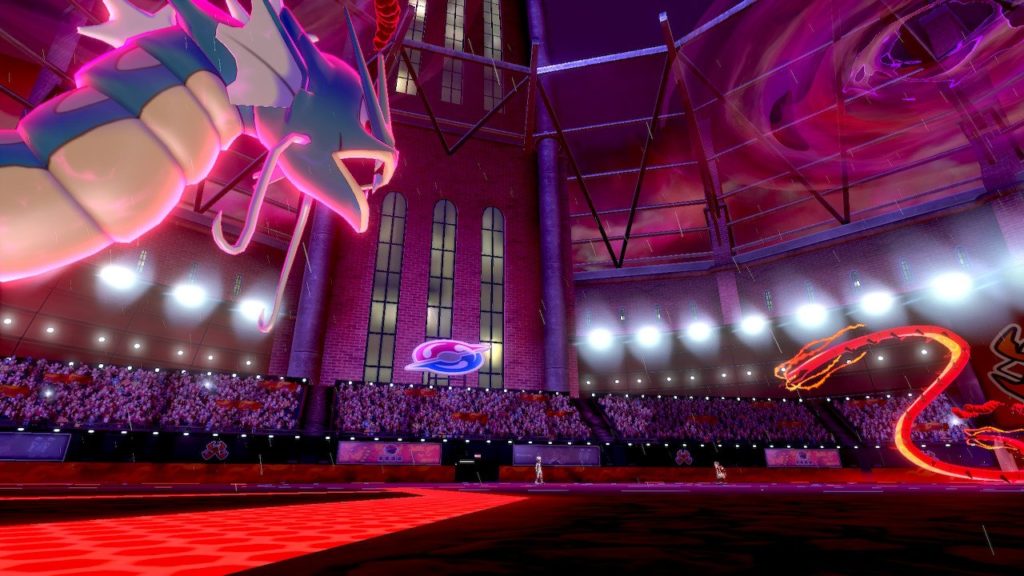
Dynamax is the replacement for Mega Evolution and Z Moves from previous generations. In this case, it feels like it’s been integrated in a much better fashion. For one thing, it’s available to damn near all Pokemon, apart from a handful of legendaries. There’s an additional tier available called Gigantamaxing that also adds some unique moves and fun visual forms, but it’s there as an additional layer. This leaves your entire party as being useful in these situations, which is a much better situation than the limits in place in X/Y + Sun/Moon. The ability to use it is also limited to specific battles – generally speaking, Gym battles and specific wild battles against other Dynamax Pokemon. Overall it means that the system isn’t available to be spammed all the time, but is always equally useful when it is available.
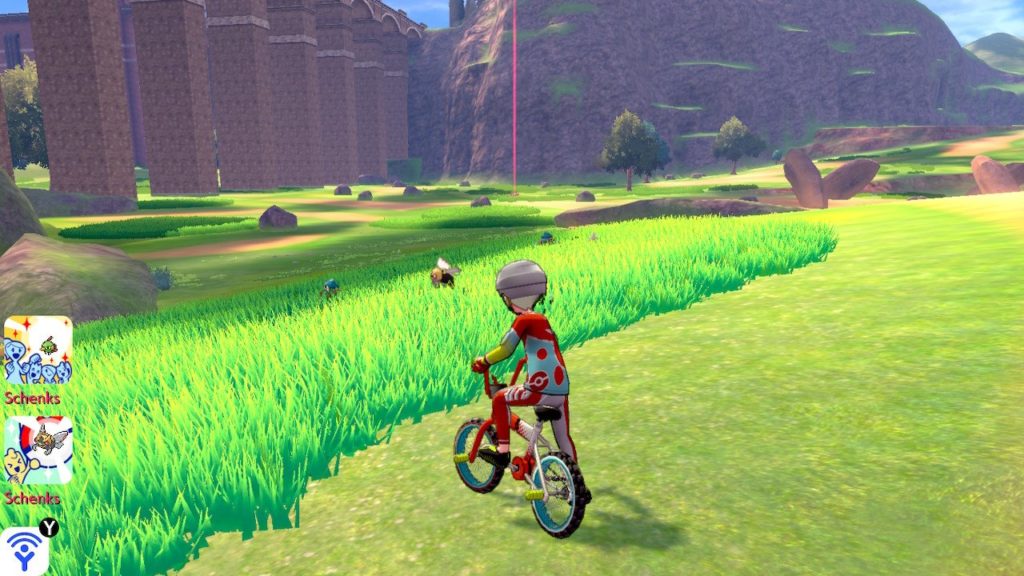
The other big one, and probably the biggest feature, is the Wild Area. What this ends up being from a feature perspective is just another route to catch Pokemon. However, from a visual perspective it’s a huge leap forward for the series. It turns a large portion of the game into a pseudo open world area where you can catch stuff, but also run into Pokemon that are way too strong for your current team, go into multiplayer Dynamax fights, and just generally run around. It’s as close to reaching for a modern RPG experience as the series has ever gotten, and it’s a much larger modernization step than has been typical for the series.

There’s a bunch of little user experience things that have also improved the game in small ways. The player is automatically healed to full after gym fights, including the Elite Four replacement because the player was going to heal up anyway. Pokemon are visible in the world in the grass areas like in Pokemon Let’s Go!, because random fights are fairly silly. HMs continue to go away, with flying open almost immediately at the start of the game via a taxi service and Surf being replaced entirely by a bike upgrade. The player can now setup camp while in the field replacing the need to run back to Pokemon Centers to heal. There’s a portable Pokemon Box device to grab Pokemon in and out of your storage on the go. EXP share for your party makes a return and EXP gain is also around when catching Pokemon, leaving it practical to go for either as a leveling setup.
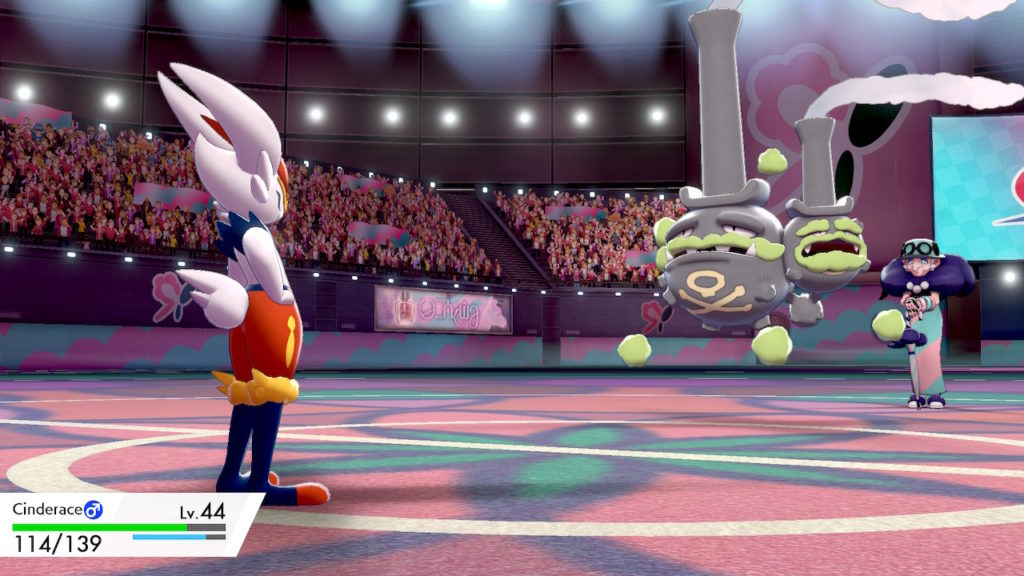
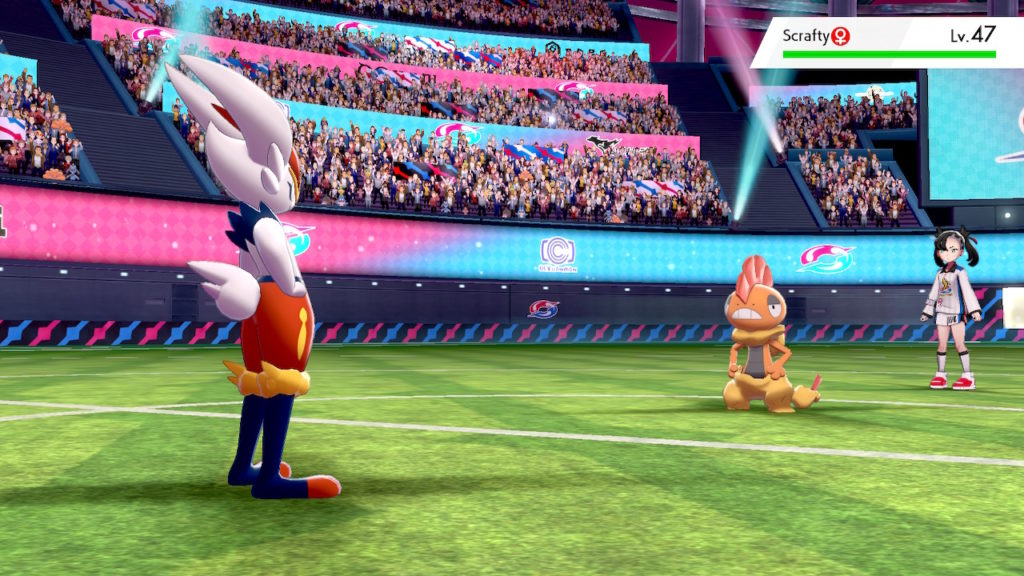
It’s also worth mentioning just how fucking cool it is to do the gym battles. It’s a little thing, but having a huge crowd chanting and yelling, and having good fight music on is such a huge experience change from the past that I’m honestly surprised they haven’t gone in this direction before. It actually feels like a sport now, which animal rights problems aside, is a fantastic change.

At the same time, there’s still some things they’re stubbornly holding on to for seemingly no reason. The box storage system still exists, and it still can’t be sorted despite the fact that there’s no technical reason to not allow for better storage solutions. Despite the fact that you can see move advantages when switching Pokemon, you can only see that if the opponent’s Pokemon is already out, even though you explicitly know which Pokemon will come out next. Evolution methods are still not shown anywhere in-game, despite the fact that all the information is available on the internet all the time. It’s little things like that that are really going to go a long way to making the series feel like it’s finally really moving forward, and also currently go a long way towards ammo about the series feeling lazy.

However, the core of the series is still as strong as ever. It’s still just straight enjoyable to play the stat game, play the type advantages, and build out the party that suits you the most. I’m also not sure if it’s a placebo, but the game felt much better balanced in general, and certainly balanced more difficult than in the past. I found myself using a significantly larger amount of Pokemon to use my type advantages, even in just fighting wild Pokemon and Route trainers. By the end of the game, my party’s level range was only around 60-65 for all members, which is an extremely narrow range for my typical use. In general I had to use those as well. I was almost always around level parity with the opponents, so going in with type disadvantage was a good way to get killed. In good news, I didn’t feel a need to grind either, so the curve felt pretty appropriate to a first-run through.
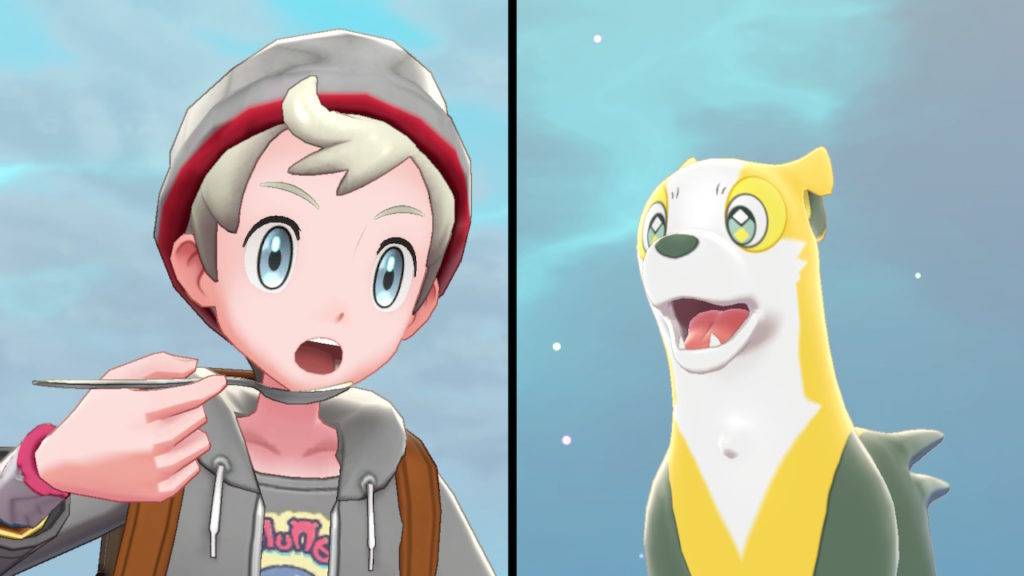
End of the day, this one is a pretty simple thing to recommend. If you’ve liked Pokemon in the past, you’ll still like Pokemon now. At the same time, while I sort of get where people are coming from, I think it’s worth ignoring the pre-release noise. The loss of Pokedex did not effect the quality of the game and only helped the game’s overall balance, and the game that is there is still as good as ever. Frankly, if removing more Pokemon results in steps as big as the Wild Area for Gen 9, remove even more. If there’s anything to take out of this generation it’s that there’s been a big jump in the quality of what’s there, but they’ve definitely still got a lot of room to grow now that they’re fully embracing their console future.

Game Ramblings #90 – Super Neptunia RPG

More Info from Idea Factory

  • Genre: JRPG
  • Platform: PS4
  • Also Available On: Switch, Steam

I’ve played a bunch of the Neptunia games, and they’re always a nice breather from my typical run of titles. They tend to take a known genre, craft a story around it that makes fun of the genre, and still manage to make a game that more often than not is shallow, but fun. Unsurprisingly, Super Neptunia RPG is more of that style. In this case, they take the 2D overworld movement of something like Muramasa, give it a battle system like any normal 2D JRPG, and manage to spit out a game that works, even with some grinding flaws. In this case, the Neptunia gang get transported to a place in which 3D games are banned, and the entire world is now 2D – and that’s about as serious as this series is ever going to be.

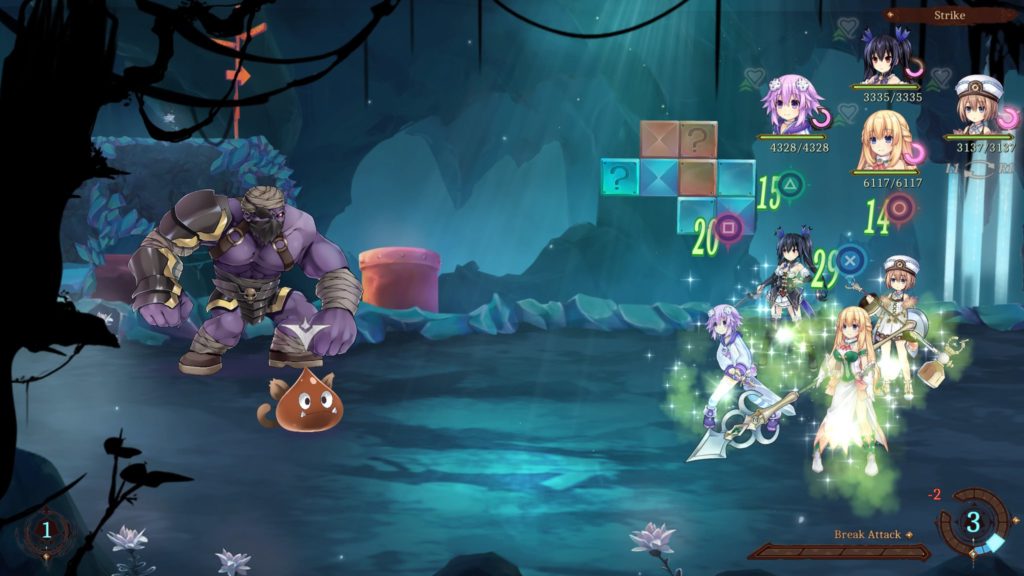
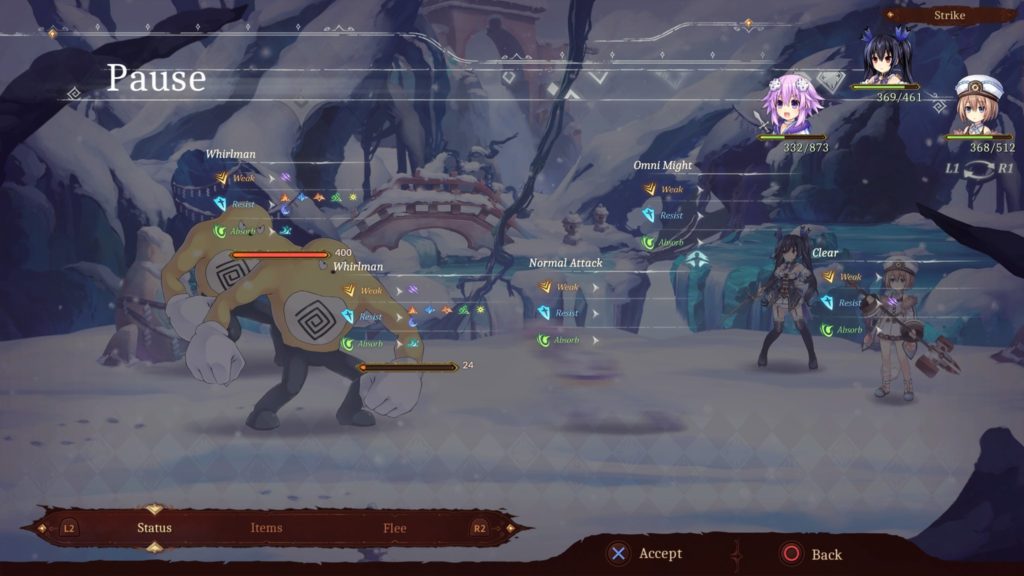
This screen will become your friend throughout the entire game. It gives you everything you need to quickly clear enemies.

Combat is the real focus here, and the entire flow of the game is built around the combat system. The closest description I can come up with is basically this: take the ATB system from SNES Final Fantasies, apply that to your entire party so they share the pool, and have the weakness exploiting of Shin Megami Tensei recharge your ATB pool if you land a weak hit. That combination of mechanics basically has the game working in vastly different ways depending on whether you’re in a trash or boss fight.

For trash fights, the name of the game is completing the battle as quickly as possible by exploiting as many weaknesses as possible. Hit the weakness, keep your ATB, and immediately spam the next attack. By doing this, you can generally complete any weakness-focused battle in seconds. However, this does have a significant problem in the late game.

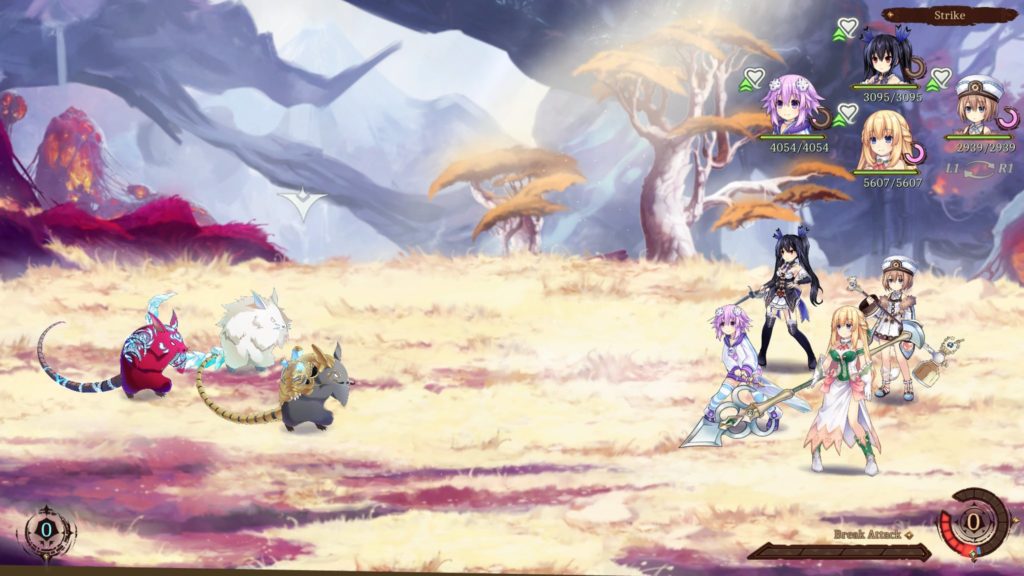
Ratasteam? Ratasnow? Rataspell? Definitely not Rattata.

Near the end of the game, a lot of the enemies simply stopped having weak points. Any trash fight without weak points plain and simply sucked. Your attack numbers were never really high enough to do large chunking damage on their own, and the ATB meter charging isn’t super fast. Because the meter is shared amongst the entire party, you’re never in a situation in these kinds of fights where you can attack with multiple people. The enemies themselves were generally never dangerous enough to make a risk/reward interesting in whether or not to save ATB charges, so the fights simply dragged out. My tendency ended up being to run from fights without weaknesses, avoid entire regions of battle, and then go to areas with known weaknesses to grind if needed. It just dragged the pace of the last 3-4 hours so much that I wish they’d have balanced the weakness system better to have it be used always at a cost of not being as powerful.

On the other hand, bosses generally had no weaknesses, but were often dangerous, so the risk/reward of saving ATB charges really came into play here. More often than not, I was saving nearly a full meter within a boss fight, then activating either a full attack combo, or some mix of buffs, heals, and spot attacks. This slowed the pace of the fights way down, but also brought them into a place where the strategy more typical of a JRPG was really combing into focus. I wouldn’t say the bosses were ever all that hard, but they were definitely the more interesting of the fights even without exploiting the weakness setup.

Mix Dragon Quest Slimes with Goombas and avoid getting sued? Sure why not.

Luckily, non-battle gameplay was also fairly entertaining. The traversal mechanics and level setup are basically a straight rip of the Vanillaware-style 2D game. Visually, the game has the same sort of hand-drawn-ish, but still very smooth Flash animated characters. The backgrounds are all super colorful with a bunch of parallax layers to fill out the scene. Movement is fast, and with the right amount of exploration you’ll find hidden items or entire hidden areas. As you play through the game, you end up earning more traversal abilities, so going back and revisiting areas has added benefits. If the combat had been in real-time, this would easily have fit in against Odin Sphere or Muramasa, even if it wouldn’t be anywhere on the level of seriousness of those games.

There’s also a bunch of added depth simply in gearing your squad. This game takes the modern Tales of approach of adding acquireable skills to gear, and once earned the skills can be permanently equipped. Their weapons are unique equips, but accessory gear is often shared between party members. In this way I was always playing a balance between finding skills that fit the character’s strengths, while also trying to rush skills that I knew would be beneficial to the entire party. As an example, by end game I’d earned a permanent HP refresh (1% heal per ATB bar generated) across my entire party, so rather than having to have a dedicated full time healer, I was able to craft my party into a mixed physical/magical damage rush party with only weak heals to fill out during burst damage times.

All that being said, there’s really not a whole lot of depth to the rest of the experience. The gameplay is all solid, but the game is less than 20 hours long. There’s definitely a lot of side quests, but they’re all of the gather x thing / kill y enemy variety. You could probably entirely ignore them and get by just fine. Even in combat, you could squeak by without paying any attention at all to the weakness system, although it would probably take a significantly longer amount of time to finish. However, as a breather between serious games this one really hit a good mark. It’s enough of a game to still be fun to play, strong enough mechanically to be interesting enough, and have a stupid enough story to let me just enjoy the comedy for what it is. Is this going to win any game of the years? Unlikely. However, it does exactly what it needed to do – be fun.

Game Ramblings #62.1 – Xenoblade Chronicles 2: Torna ~ The Golden Country

More Info from Nintendo

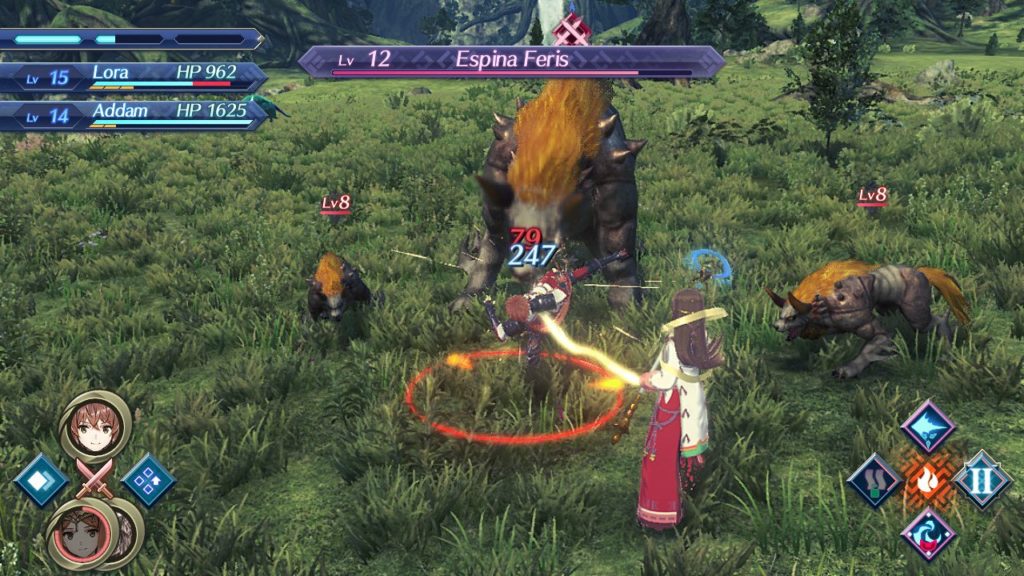
Xenoblade Chronicles 2 was a fairly enjoyable game overall. It had a great universe, enjoyable story, fun characters, and a ton of depth. However, it wasn’t without its issues. The game, like its predecessors was somewhat grindy. The UI was often in the way of streamlined leveling. Overall, despite its depth, the game often felt like it was pushing for more for the sake of more.

Torna however feels like they really embraced the idea of less is more, and the experience is much better as a result. This is an entirely standalone experience, billed as an expansion. It’s a much shorter experience with a significantly streamlined story, rips outs a whole bunch of extraneous systems to focus the leveling aspect, and narrows you onto two main titans. Some clever changes to the battle system really finish up the tweaks, and the total package ends up being much better than the base game, despite the reduction in bullet point features.

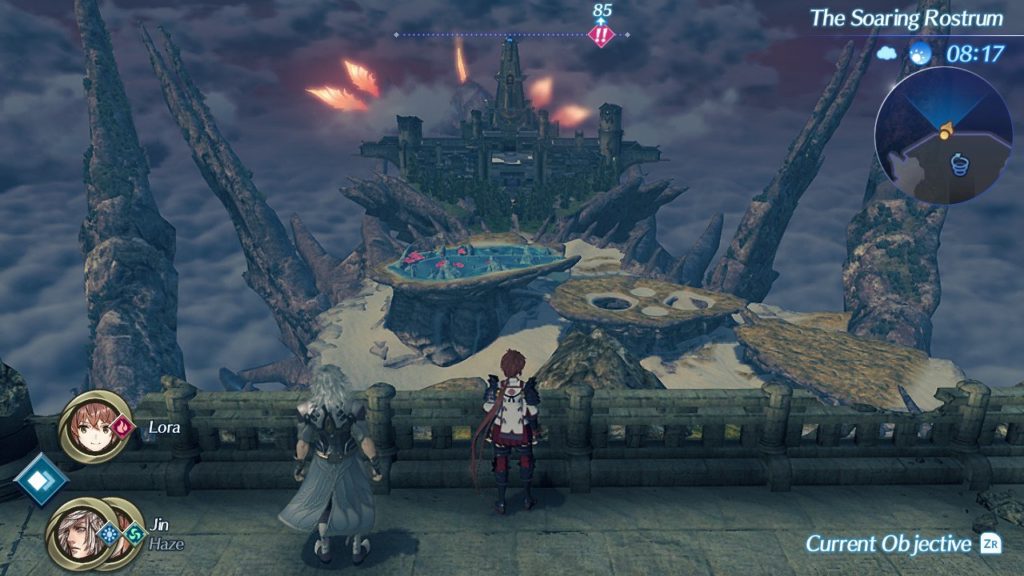
Welcome to Torna. After hearing so much about this land in the original game, it’s nice to finally be able to run around on it.

The most obvious immediate change is that almost all of the blade collecting, and therefore a lot of the metagame leveling is gone. You only get blades that are important to the story, and each party member ends up having two blades of different types. By the end of the expansion, you’ve basically got exactly what you need to finish the game with the full suite of ability types. There’s also no longer any special blades, no multi form blades, any robot blade replacements, and no mercenary guild to level up. This all sounds like a lot of removal, but that also meant that a lot of the tedious grind simply went away. It’s entirely addition by subtraction.

The rest of the leveling setup is maintained. You get XP from kills and quests, weapon points from kills, skill points from kills, and various things can be activated in each blade’s affinity chart. As a core set this ends up playing a nice balance between having a nice range of systems without having too many, and also gives you some specific subgoals to focus on, particularly with respect to the blade affinities.

Combat should feel extremely familiar to XC2 fans, though it has some tweaks.

The battle system has also been tweaked to generally feel more streamlined, as well as a fair bit quicker paced. For the most part, people familiar with XC2 will drop in quickly and feel right at home, and I suspect they will like the changes in place.

The first big change is that blade swapping is used as a way to switch the active passive attacker, and swapping between the blades and the driver activate an attack on swap. This is used to inflict a number of status effects, particularly things like topple or smash, as well as providing a full recharge of the blade artes. In practice, it basically means that you can do a combo as follows:

  • Activate Break on one character while using all of their artes.
  • Swap to another character to inflict Topple and quickly use the full suite of artes.
  • While this is happening, the AI will typically inflict Launch
  • Swap to the third character to inflict Smash, finishing a full chain combo.

This pattern is done way faster than any similar combo would have been done in the original release. In also having the blades be the primary attacker, there’s a much more direct feel to the swap, instead of it simply being the blade out of frame swapping out.

The elemental orb / chain attack setup has also been tweaked a bit to reduce clutter. There are still orbs applied on successful blade artes, elemental orbs can be broken in a final combo attack, etc. However, the elemental chaining no longer is used to seal attacks, so a big UI element that I generally ignored is no longer there, and honestly I didn’t miss it at all.

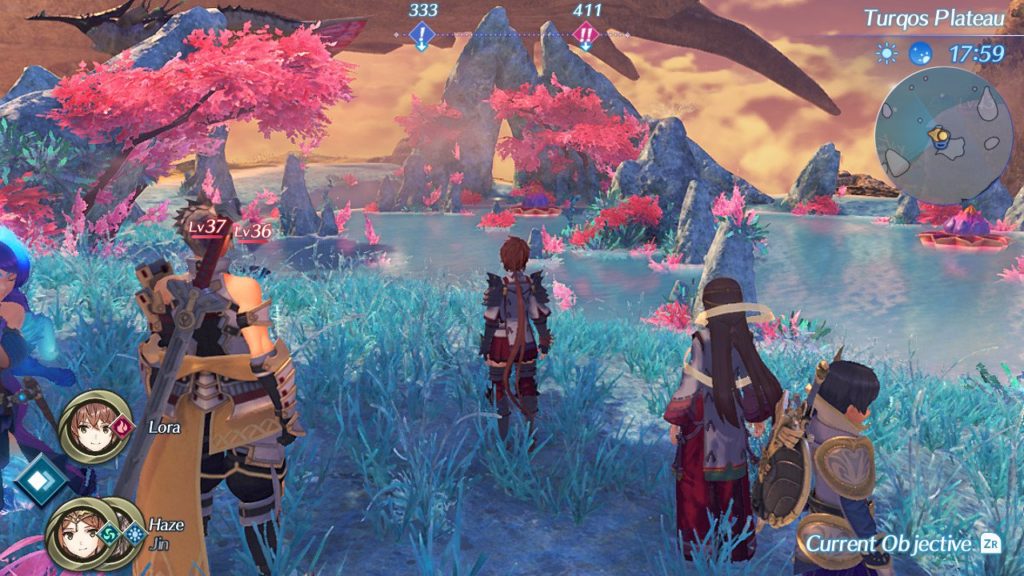
This is still a spectacularly gorgeous game, especially for an open-world Switch experience.

So in the end, this is both a great expansion on the XC2 universe, as well as a way to generally improve on the overall gameplay at the same time. As a prequel, this covers a bunch of story that was hinted at throughout the original game in a way that only improves the universe. On its own that’s enough for me to recommend it to fans of the original. However, the gameplay improvements definitely clinch it for me. This is a much better experience than XC2, and it’s clear that the dev team is learning some lessons from their past releases. Here’s to hoping whatever comes next continues that improvement.