Game Ramblings #220 – Retro City Rampage DX

More Info from Vblank Entertainment

  • Genre: Action/Adventure
  • Platform: Switch
  • Also Available On: Steam, MS-DOS, PS3, PS4, PSP, Vita, Xbox 360, Wii, 3DS, iOS, Android

This game is an absolute guilty pleasure. I’ve played this game a number of times on a number of different platforms and every time I play it it’s a great time. I don’t think I really need to cover what the game is that much here, but I was instead surprised by how much the Switch really brought the game into an interesting new place for me. Each platform has its own set of quirks – the Wii had NES-style controls, the PSP had its small screen experience, the PlayStation consoles had the big screen. I think the Switch might be the best of all worlds.

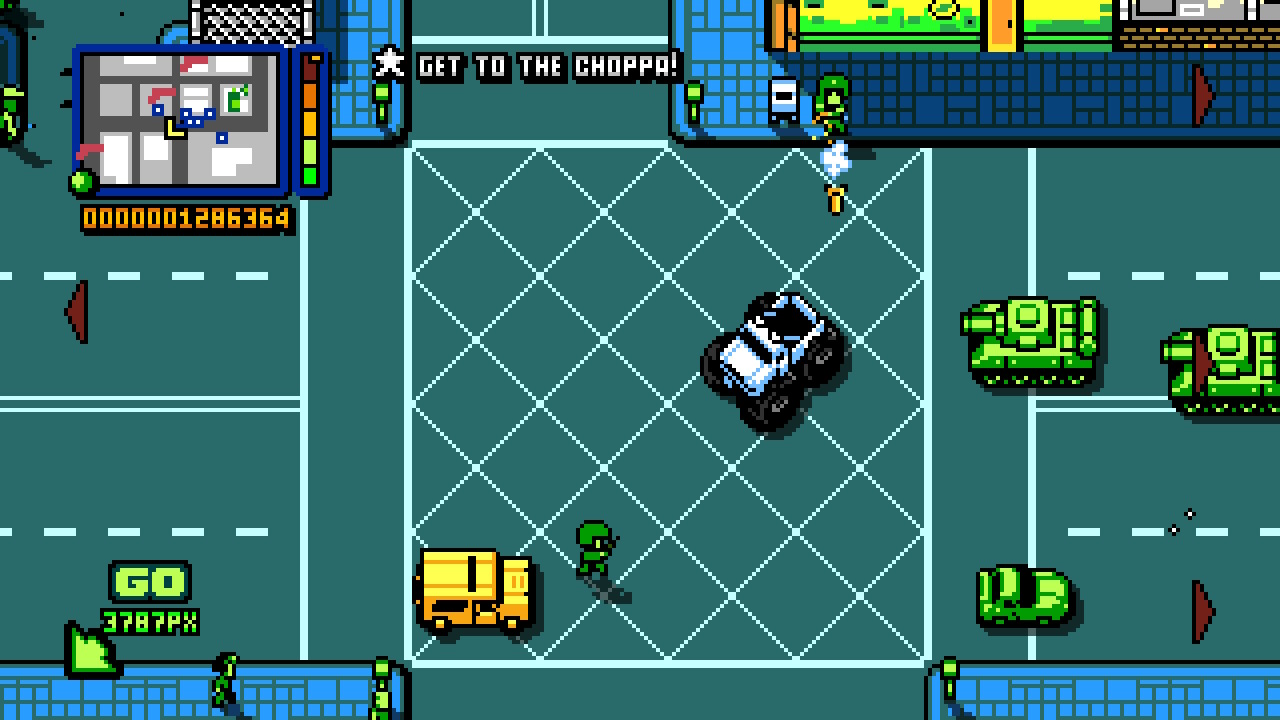
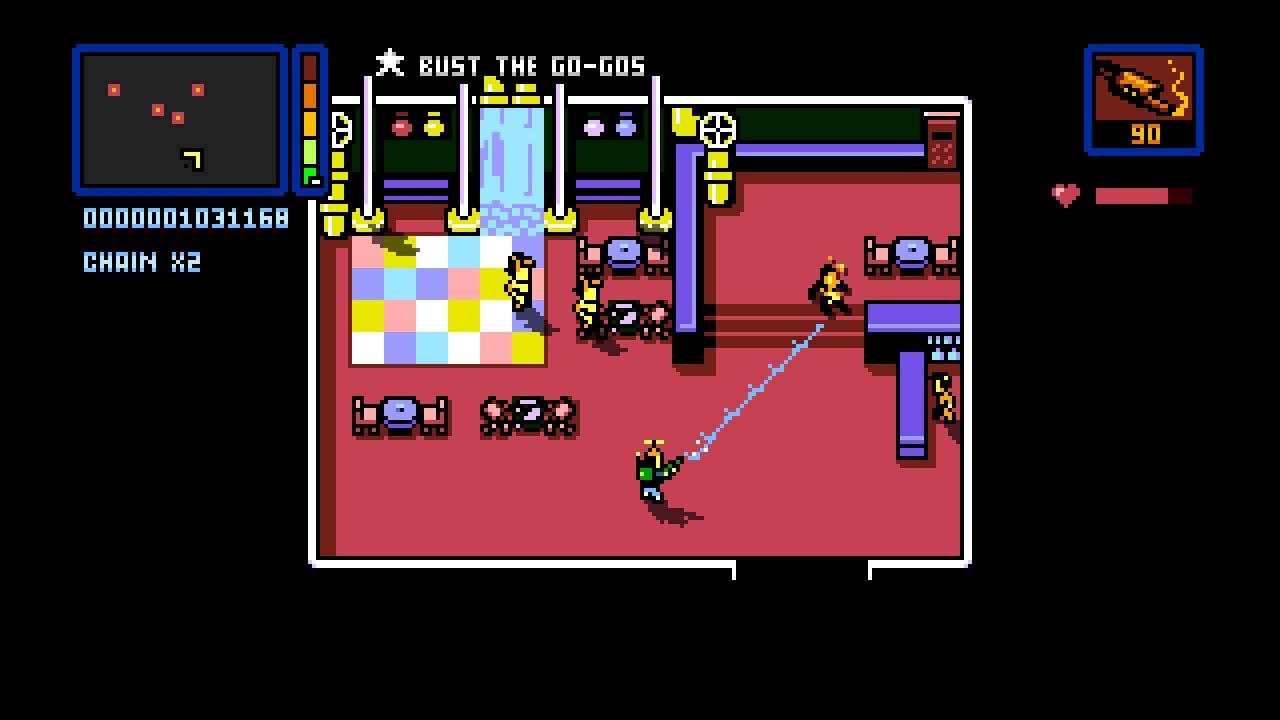
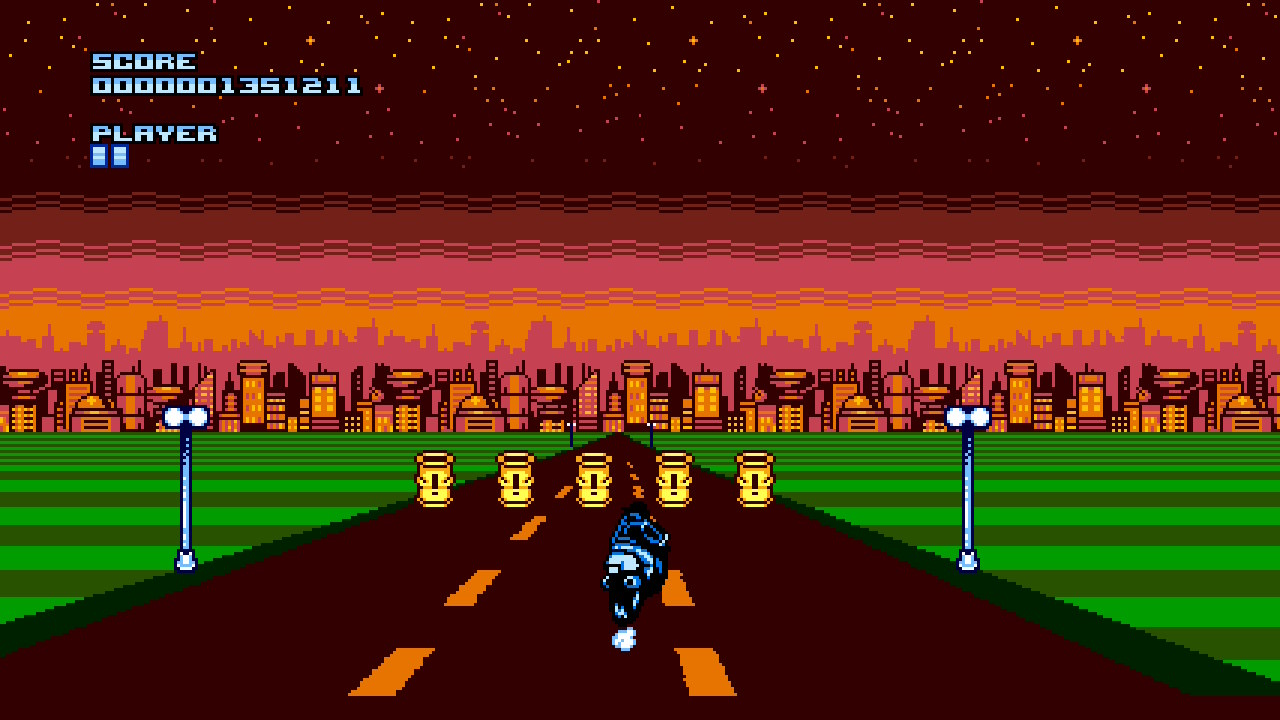
If you haven’t played this game before, the best way I can describe it is pre-3 Grand Theft Auto through a modern lens, fed through retro nostalgia. It’s top-down action largely involving over the top set pieces, stealing and driving cars around the city, and a bunch of missions you can play in generally a linear order. If you’ve played GTA 1 or 2, you know basically what you’re getting into.

So, why did it work so well on the Switch? Changing modes. I pulled this out to be my work day waiting on a build and can’t touch my computer which meant the Switch was sitting on my desk with a controller and being played in short segments. I then brought it up after work to play while other things were going on. After the kids went to sleep it then got docked and played in a long session on the TV. All three modes worked equally well for different reasons, but importantly they were all fun and they worked seamlessly. This game’s ability to context switch between short and long forms of game is really its biggest strength. If I had two minutes waiting for a build to deploy, I could turn it on and run through a couple of weapon challenges completely separate from the story. At night I could instead run through the entire chain of story missions without stopping. Both types of play were fun and just worked.

Importantly though, all modes of play also controlled well. The game is fun on some of the other platforms I played it on, but frankly this game works best as a twin stick shooter and that wasn’t always available. The Wii Remote doesn’t have any analog sticks. The PSP had the small screen, but only one stick. On the other hand, the PS3/PS4 have the good controls, but not the easy pick up and play short segments. The Switch simply turns on and is in-game in seconds in all variants. Some other platforms like the 3DS could do that but suffered on controls. The Switch is like picking the best parts of each and running with it.

It’s probably an easy conclusion to draw that the Switch works so well here, but I don’t really have that many points of comparison like this. There aren’t many games that are widely available on so many platforms that fit into a performance envelope where the Switch port isn’t obviously being hurt by the lack of hardware strength. Even with the Switch 2, it is often obviously sacrificing image and gameplay quality to choose it as your lead platform over a PC or current generation console. This game is a perfect storm where it just fits the platform perfectly.

Game Ramblings #214 – Ghost of Yotei

More Info from Sony

  • Genre: Action/Adventure
  • Platform: PS5

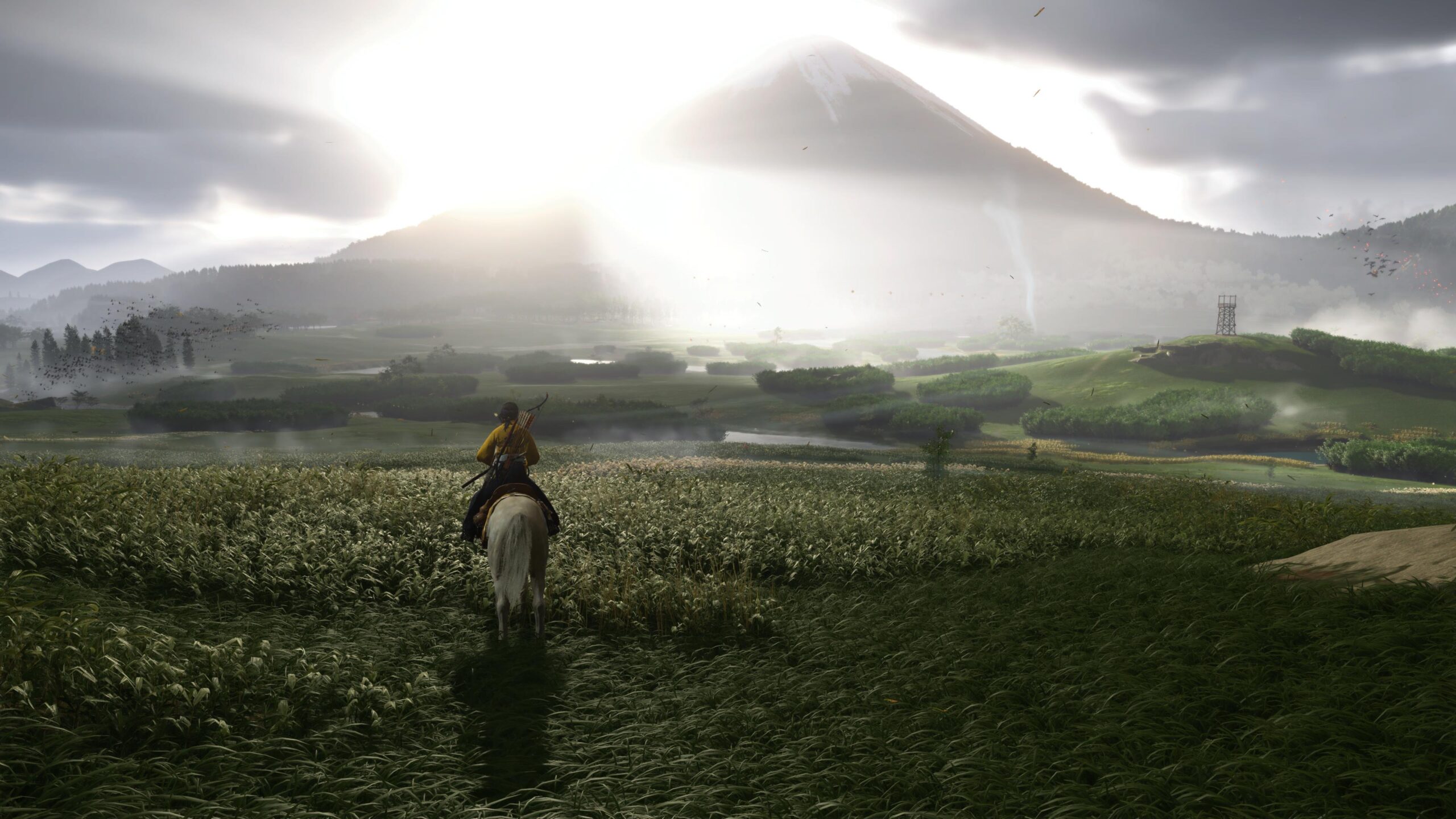
For all intents and purposes, this is a perfect iterative sequel. It’s familiar enough to not be different from what I enjoyed about the original, but it’s got enough changes to feel fresh. In some ways that is probably something that people would criticize as feeling safe, but for me it’s hitting a fine line of moving the gameplay forward without losing what it was, and that’s a tough balance to hit.

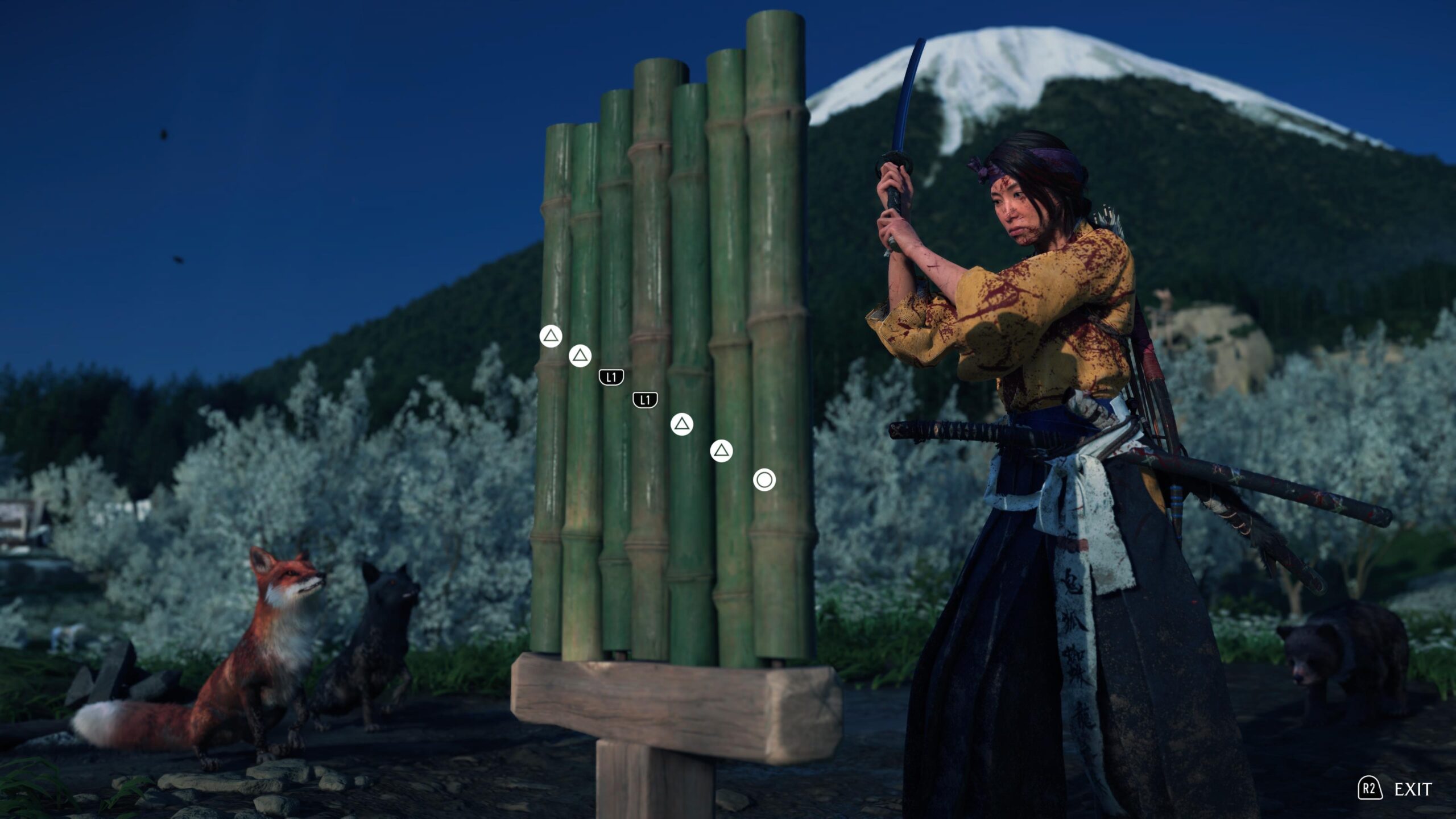
If I put this up against what I thought of Tsushima there really isn’t a huge difference in my mind. They both do the Assassin’s Creed combat hub and free range stuff meta loop very well. They both have incredibly good combat aligned with some really effective stealth moments. They both have the same general discovery loop of looking for landmarks in the world (ex: steam -> hot springs, big fire -> inn, for all of them you can find a yellow bird to follow). Where this one improved for me really did end up being in the iterative nature of its combat.

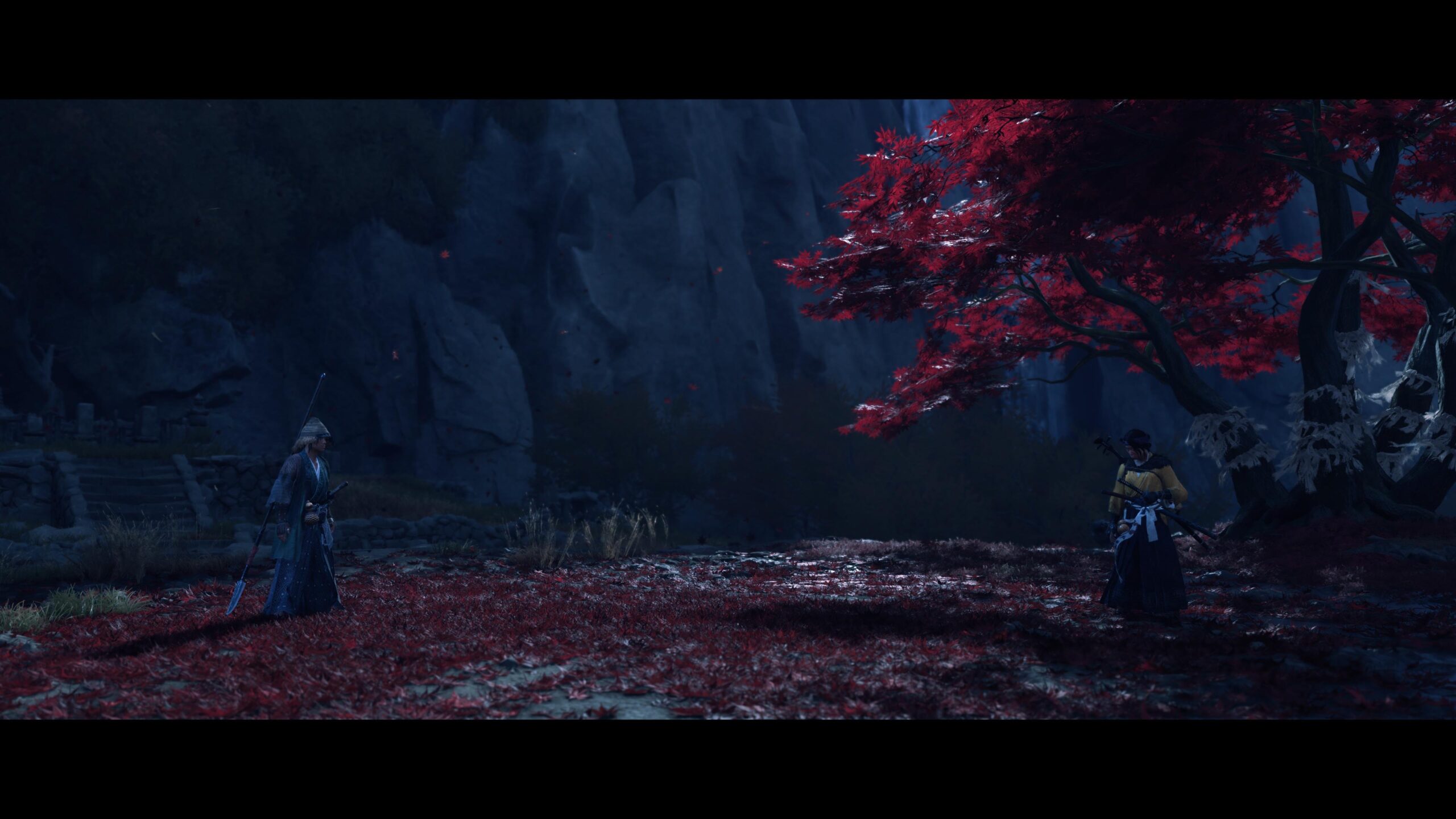
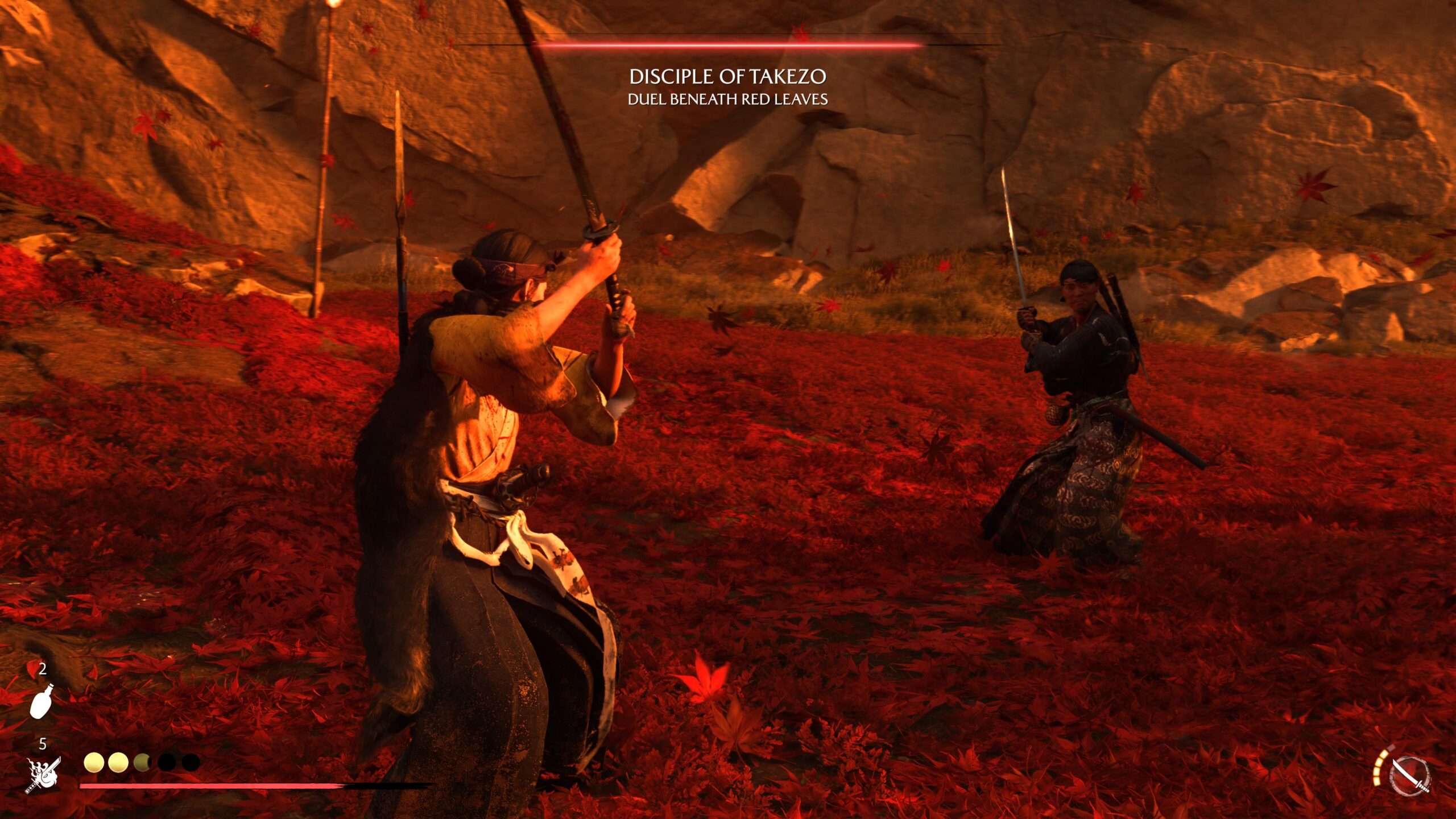
In Tsushima I specifically mentioned that duels were where I felt combat really hit its stride, and while that is still largely the case here I do think that the wider group combat saw enough of an improvement to be of note. My problem with the previous title was that group combat never felt like I had a good way to focus on where to look, and a lot of that came down to what felt like a lack of obvious prioritization of incoming damage. That feels much improved here.

Part of it is that NPCs simply are better at taking turns. I know it sounds weird for a group of enemies to attack one-on-one, but from a gameplay perspective it makes sense for the player. Spamming dodge or parry buttons because multiple NPCs come after you more or less simultaneously is not a fun experience. Having the NPCs take turns – and more importantly giving the player time to attack the NPC that they successfully dodge or parry – is a big win in playability and letting the player feel powerful against a larger group of enemies. From a danger perspective it also felt like the NPCs would attack more quickly in succession if I wasn’t correctly dodging or parrying, so it encouraged me to be precise in order to not be overwhelmed. Another part of it for me is that rather than using stance switching to go against enemy weaknesses, Yotei uses weapon switching. From a result perspective this is exactly the same – you switch stance/weapon in both games to give yourself an advantage. However, recontextualizing this to something even more obviously visual feels better in a way that I can’t really place my finger on.

It also may just be placebo or fading memory, but it also felt like the general tells about incoming attacks were more obvious. Visually there were fewer large feints to make you guess incorrectly. The visual language of things that are dodgeable or parryable felt more clear. The audible tells of ranged attacks felt like they punched through the general noise of combat better. These are all things that were important to the larger group combat scenarios to make them feel more immediately manageable compared to the original title to really elevate that part of the experience to allow it to shine. It may not quite match the spectacle of duels yet, but rather than feeling like a negative of the experience I was generally able to enjoy combat in all situations much more easily in the sequel.

If there was one thing that I felt did take a step back here it would be the presentation of the story. The story is a generally non-linear set of sections sandwiched between a fixed start and end. What this means for the player is that once they get into the world, they can generally pick the direction they want to go. Each smaller region of the overall game world was its own self-contained experience where entering the zone triggers some story moment to occur, with the zone having its own plot line, side characters, and wrap up moment. However, that section of the game could occur in any order, so it had very little in terms of ties to anything else.

The practical impact for me is that this title felt like what would normally be a series of smaller independent expansion packs, rather than a whole new title. Each section kind of gets you an upgrade path of some sort and a character that ends up being important later-ish but because they have to work independently it often feels a lot like the zones are – for lack of a better description – nerfed down to just kind of be played through. Narratively it works well, but I’m not sure it was the best for gameplay purposes. On the other hand, when it does tie together for the final zone of the game, the toolbox as a whole works incredibly well so I’m not sure I’m overly fussed that each tool you gained had its own zone to learn the thing in with repeated use.

In some respects it also felt like this change might have forced a bit more simplification of side content, which was something I enjoyed about Tsushima over the larger Assassin’s Creed games. There is still some side content in place, but apart from a couple small specific places there isn’t side content that reaches across zone lines. It helps keep the side content locked to very specific upgrade-focused bits, alongside some side quest lines that deal with things specific to zones – for example, all upgrades for kunai take place in the zone where you earn kunai. I can’t tell whether it was an intentional change to match the narrative setup, but I do think the reduced stuff continues to be a benefit to reducing boredom in games of this scope.

I said this of Tsushima:

I certainly won’t sit here and claim that this is generally an original title, but it didn’t necessarily have to be. It takes the framework established by the recent Assassin’s Creed titles, and iterates enough on it to feel like its own thing.

I think that is particularly relevant here. Ghost of Yotei feels even less original, but I don’t think it needed to be original. Tsushima was a wildly successful and fun game. This takes the core put in place there and iterates on it, and in doing so didn’t lose what made the game a standout. Yotei is a wildly gorgeous game with extremely tight combat and that’s all I really needed it to be.

Game Ramblings #213 – Star Wars Outlaws

More Info from Ubisoft

  • Genre: Action/Adventure
  • Platform: Xbox Series
  • Also Available On: PS5, Windows, Switch 2

Non-Jedi Star Wars games need what I would consider a mix of few things to succeed. They need to have you going up against weird aliens and imperials. They need you to be visiting strange alien planets and the cantinas in their towns. They need space flight of some sort, preferably with combat. To some extent they need callbacks to the movies to at least ground them within the universe. Those are important to the games being Star Wars, but it then has to prove itself as a good game and this one delivered.

This fills the void that the lack of a recent Tomb Raider left me with. For me, the most recent trilogy in that series is a stealth and ranged game. Where a lot of games in the realm of Assassin’s Creed are stealth and melee, TR leaned on the bow for ranged. There is very little else that worked effectively in those two modes for me like TR, but this one does and it does it with a perfect Star Wars universe wrapping.

It might seem strange to consider this and Tomb Raider in the same general vicinity since ranged here is almost entirely blaster weapons, but my use of them was pretty similar. For any sort of large scenario I would go in intending to do it completely in stealth. The blasters bring a bunch of options to do ranged stuns that worked in a similar way to TR bow kills in that they are silent and effective. This would be paired with me sneaking around doing melee takedowns to get rid of as much of the enemy presence as possible. The stealth portion was a lot of fun and had elements to it that were relatively IP specific.

For example, there’s situations where you’ll be sneaking into an Imperial base, full of enemies, cameras, and turrets. You could approach this by taking everyone out and getting away through relatively brute force. You could also approach it by finding a computer to hack the turrets and turn them on the Imperials. You could also approach it by shutting down the cameras and finding safe paths through the base. You could also approach it by finding vents that can be unlocked and coming into your objective via a back route. While some of the story stuff is a little more singularly focused than that, there’s almost always multiple ways to approach a scenario, and that variety and ability to change tactics on the fly really gave a lot of life to the stealth gameplay in particular as it was always a little bit different based on the location you’re at.

When I then inevitably screwed something up I could then lean on the blasters to do actual damage. Where this differs from the TR bow is that the blaster is much more of a third person shooter style weapon where kills are fast and effective. The toolbox here is a lot of chaotic fun when this does happen. Equipping shock damage to disable droids is obvious in-universe and a lot of fun. Shooting the wide array of explosive barrels conveniently placed in combat areas and watching bodies fly is the type of stupid physics thing that adds secondary fun to games like this.

However, it’s also got a really nice power curve and more granular customization than that. An example of the type of thing they have is three upgrade paths for the core plasma blaster. You can go into light firing, heavy firing, or rapid firing. This gives you three types of gameplay that fit different preference styles. Light is a semi auto that can be rapidly fired, but with lower damage. Rapid fire is a pray and spray auto fire that gives you more speed but less accuracy. Heavy firing gives you big damage but lower rate of fire and frequency of reloading. Giving the player the ability to bend combat to their preferences is a powerful way to get a lot of mileage out of small changes that don’t really require a lot of new work. It’s some basic tech and configuration to completely change the gameplay experience in a way that empowers the player to play their way.

You may notice that this is all talking about moment to moment gameplay in what are essentially small places, but this is an open world game with space combat. Frankly, that’s because that stuff simply exists. The meta loop of this game is that it’s an Ubisoft game and it plays like an Ubisoft game. It’s a big ol open world with stuff scattered around that you can do, stuff scattered around that you can collect, and random event stuff that pops up. This extends to space combat where the same stuff happens, but now in a space ship with space combat. Like a lot of their games it’s not that it’s bad but it simply exists and works well, but it’s been done before. The meta loop is no different than Assassin’s Creed, Watch Dogs, or Immortals. Like a lot of AAA game meta loops, it’s all well put together and exists without getting in the way, but it was distinctly not the draw of the experience for me by the end of the game.

I’m not going to pretend that there isn’t some portion of me that likes this game because of the nostalgia of being able to work for Jabba or shoot Imperials or go visit Mos Eisley. That absolutely is a portion of the experience that enhances this game over the same loop without the license. However, this game absolutely stands out as a fun experience enhanced by the IP and how they could work that into gameplay mechanics. This takes bits and pieces that work within a stealth experience like Jabba and bounty hunting and blaster pistols and mashes it together into an experience that really surprised me.